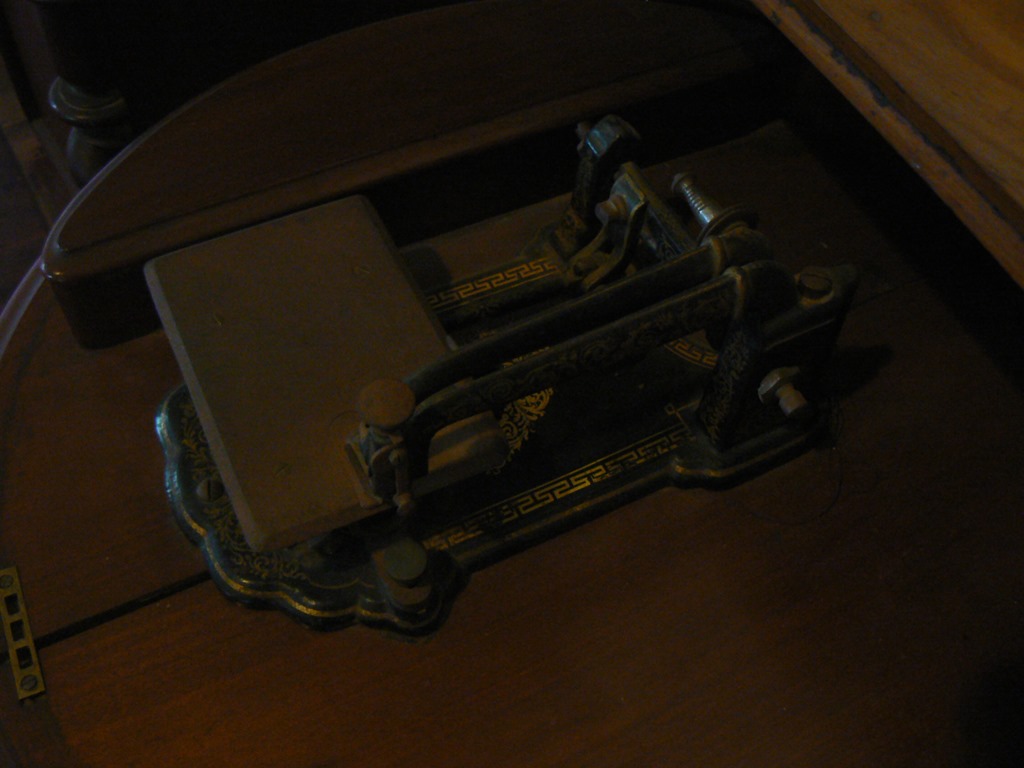
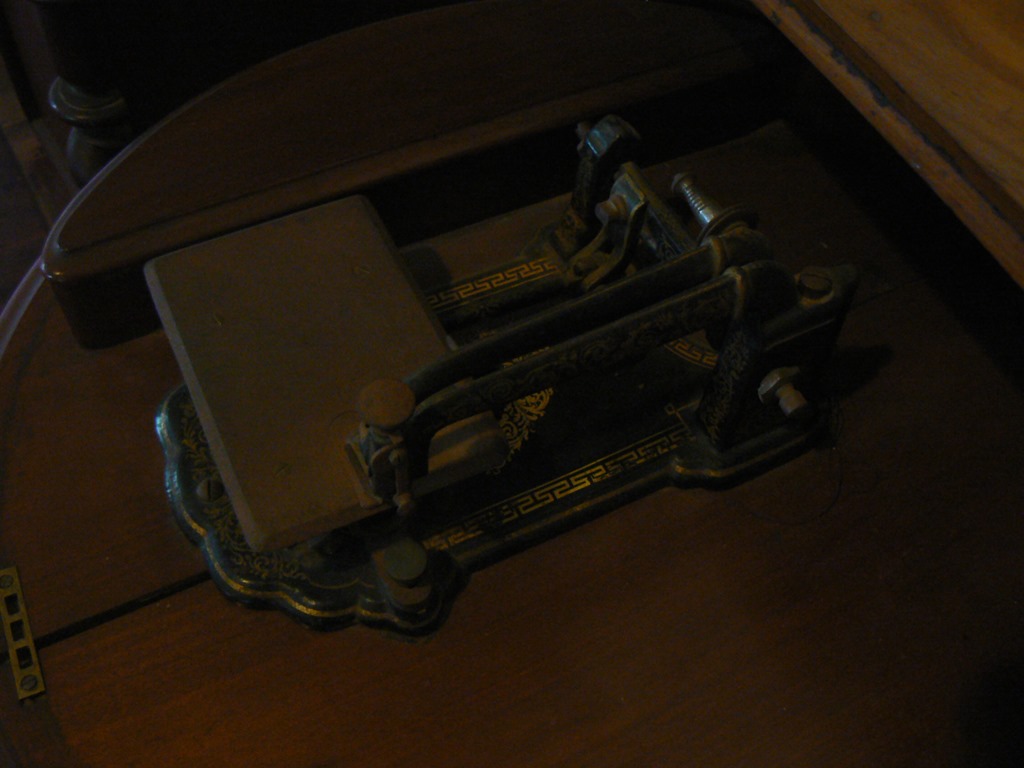
Down at Lake View yesterday, one of the items I documented was an 1867 Britannia sewing machine made in Colchester in England
Britannia machines were extensively advertised at the time

and at a cost of GBP 9 – which works out at around $1700 in today’s money – represented a substantial investment.
Yet people bought them, because prior to then all clothes had to be hand made, either at home or by a professional tailor or seamstress.
And a good seamstress was a well paid job for a woman, and she would likely never be wanting for work.
A sewing machine simplified the making of clothes at home, and at the same time made the mass production of clothes possible, and cheaper. (It has also got to be admitted that also opened up the drudgery of mass production – piece work – literally sewing pieces of fabric together to make a shirt or a dress.)
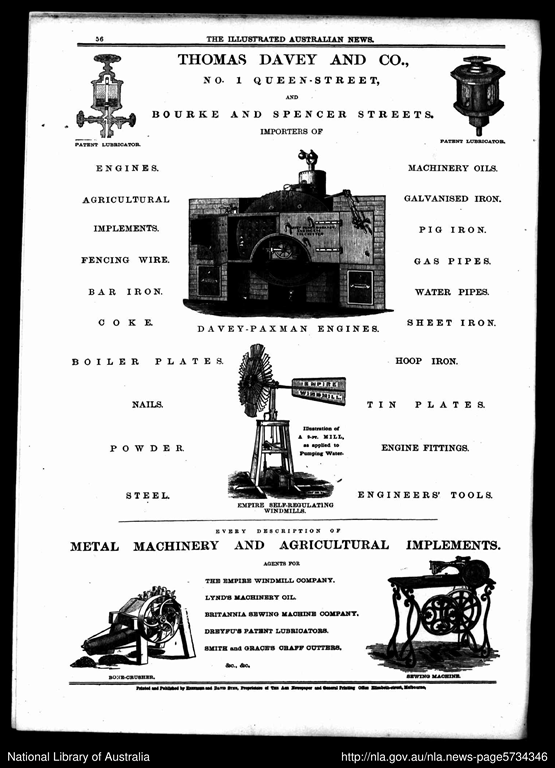
And of course in rural Australia sewing machines meant that people could make and repair their own clothes rather than having to trek to a larger town or city.
Sewing machines were the first mass produced bits of complex hardware – it is telling that Britannia, and some other sewing machine manufacturers also began to produce safety bicycles, and in the case of Remington, typewriters.
And just as the sewing machine freed women from the drudgery of sewing at home, the bicycle allowed women greater freedom to travel to and from work, while typewriters allowed women to have a ‘respectable’ profession …


 stuff 'n other stuff