
While researching something else entirely I came across the story of the Agapemone, a nineteenth century quasi christian cult in England.
I came across the cult due to the misuse of the laws governing lunacy in England in the mid Victorian period – essentially, after marriage a womans’s property became her husband’s, at which point due to rather lax criteria to establish insanity, the husband could get his wife commited to a lunatic asylum, and then spend her money on whatever he liked, for example his mistress.
In this Victorian cult men were encouraged to marry wealthy women and then pass the money to the religious community, possibly in an age of religiosity with the consent of their wives.
In one case, the Nottidge case, there was an attempt made by family members to have a cult member, Louisa Nottidge, declared insane and hence unable to enter into marriage as her judgement was impaired, and of course allow her brothers to reclaim her money and act as trustees.
Concern about wealth and the control of a married woman’s property were of great concern to Victorians and it has been suggested that the Nottidge case partly inspired Wilkie Collins’s The Woman in White.
Within the cult, marriages were supposed to be purely spiritual, but clearly weren’t, as a number of children were born to cult members.
As with any cult, there were lurid tales, such as new brides for the cult leader being chosen from women sitting on chairs on a giant ‘lazy susan’ rotating table and ritual public copulation on a billiard table pressed into duty as an altar (the Victorians seem to have had a thing about billiard tables, it was an urban myth of the late nineteenth century that Palmerston, who had something of a reputation as a philanderer, had died from apoplexy after attempting to have sex with a housemaid on a billiard table – the rather more prosaic truth is that he died of pneumonia after catching a severe chill.)
Cults often seem to involve a lot of sexual shenanigans, which always enourages lurid and exagerated stories about going on inside the cult, but strangely cult members seem to have lived together quite happily, and strangely, played large anarchic games of hockey together at a time when the game was little known.

Agapomenites playing hockey (Punch 1850)
Cults are peculiar things and are often dependent on the cult leader’s personality to continue, and often break apart after the leader dies.
In this case the Agapemone cult survived the death of its founder and persisted until 1956, when the last member died.
The cult had been relatively wealthy, and this allowed them to build a substantial communal house in Somerset – and after the cult dissolved the house went through various owners and at one time housed the production studios for the BBC children’s animated programmes Trumpington and Camberwick Green.
And there is a sort of Australian connection to this story as well.
Due to the notoriety of the Agapemone cult in England in the light of the Nottidge case, the Fisherite cult which had grown up around Nunawading, which like the English agapomenites, subscribed to a set of millenarian beliefs, and may have practised polygamy, was described as a ‘colonial Agapomone’ when its leader was sued in court by a man named Rintel for abducting and corrupting a woman who had run away from her husband to join the cult.
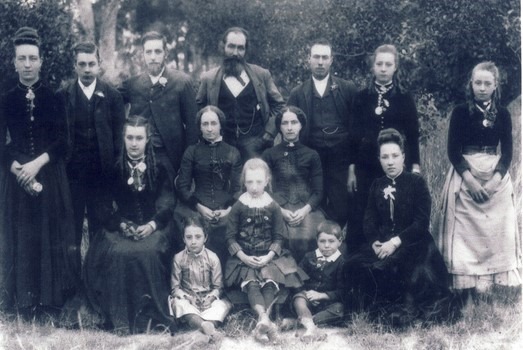
members of the Fisherite sect c 1890 (Victorian Collections)
In fact there was no connection between the two cult groups, and the parallels drawn in the court case was an attempt to make the Fisherite cult seem more extreme than it was and present a moral danger to the colony of Victoria


 stuff 'n other stuff
