
We’ve had ourselves a road trip out west, as far west as Port Lincoln in South Australia.
It was really just a little vacation, but we had ourselves a good time and visited some interesting places along the way.
We began by driving down to Apollo Bay, where we celebrated my 69th birthday with a walk along a (small, very small) part of the Great Ocean Walk track at Cape Otway, before driving on to Goolwa in South Australia via an overnight stop in Mount Gambier.
The day we drove to Goolwa was over 40C.
Rather than go direct to Goolwa, we looped down to Robe, and then along the wild, scrubby and desolate coast of the Coorong before reaching Goolwa.
Goolwa used to be a major paddle steamer port for the Murray river trade and a workaday sort of place, though it is rapidly gentrifying, with some nice old buildings and some excellent cafes.
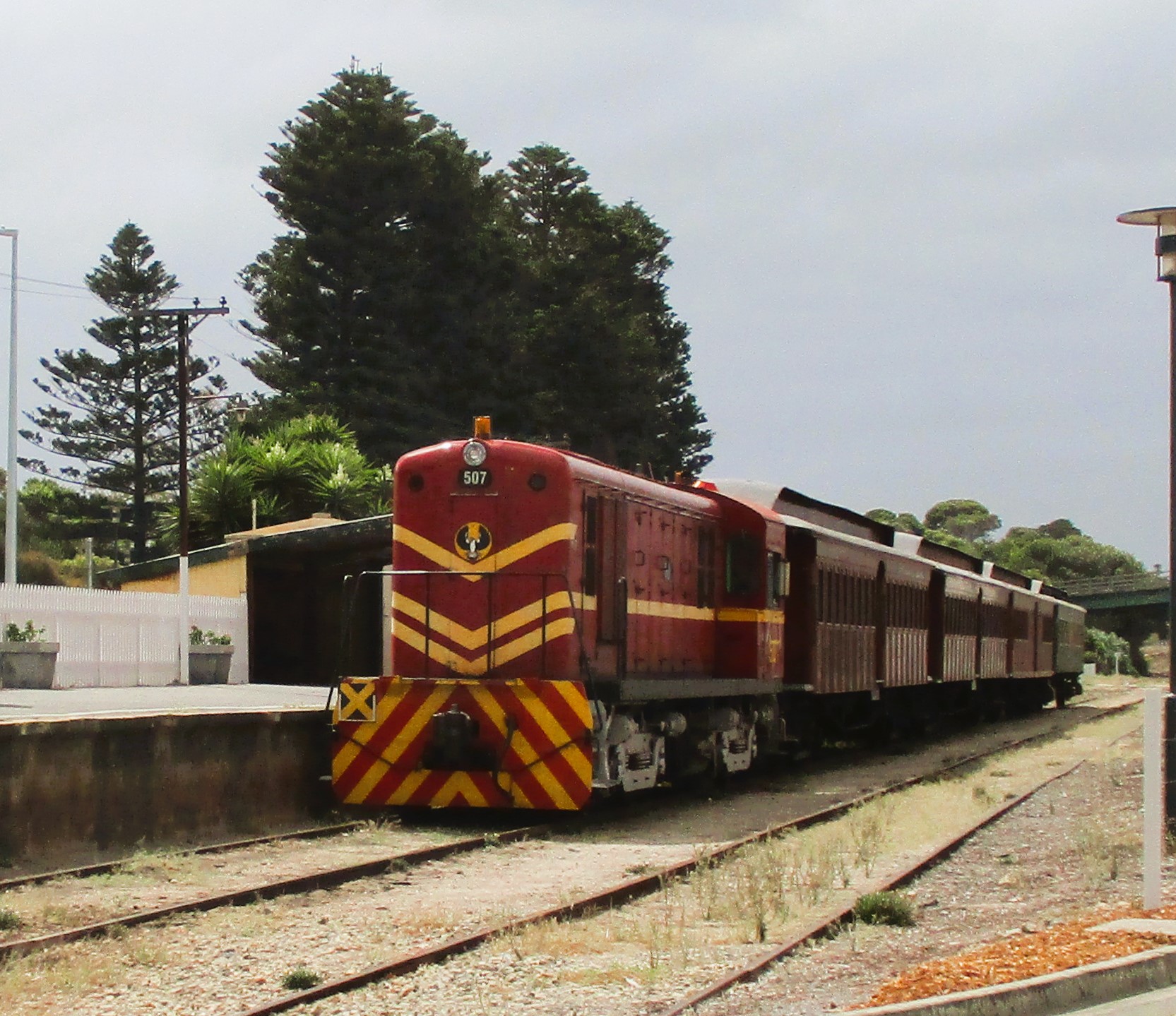
In the nineteenth century people and goods would travel up the Murray on paddle steamers, and grain and wool would come back down the Murray to either Goolwa, or Morgan where they would be transhipped by rail to Adelaide, and while there is no longer a commercial railway service in Goolwa, the old railway line has been preserved as a heritage railway.
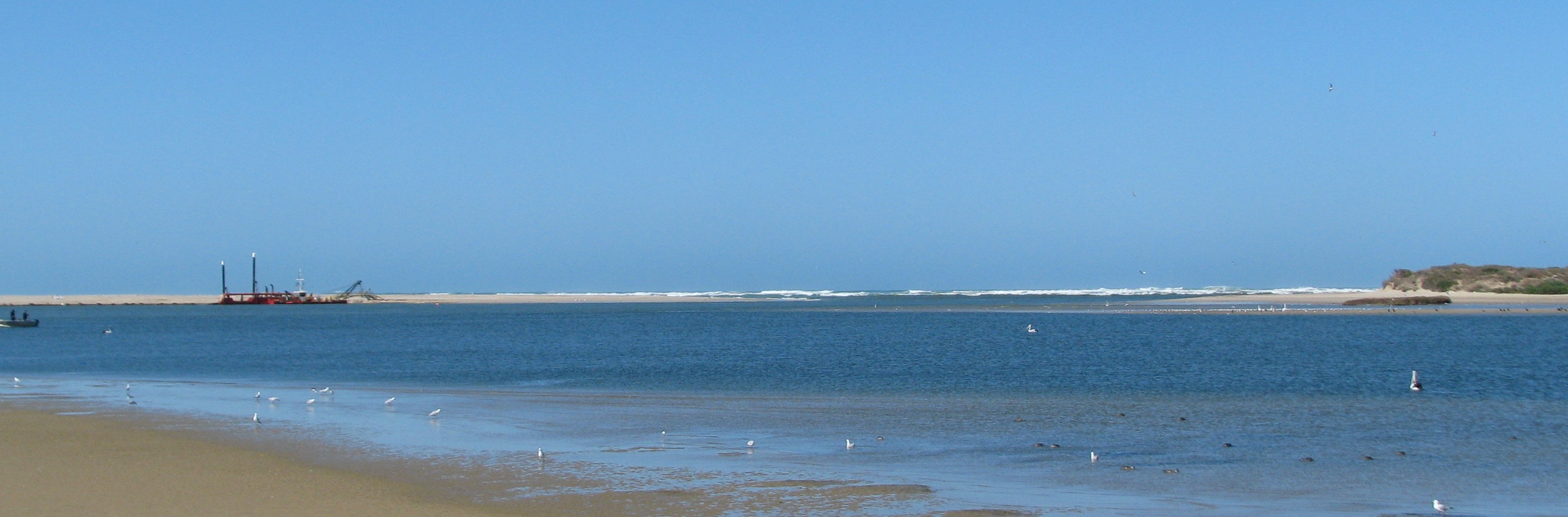
The mouth of the Murray was treacherous with sand bars, and Goolwa never became an ocean port.
The wharf area is being prettied up but there are still some nice old buildings like the chart room, and also sports a nineteenth century morgue, built in the 1880s to deal with drowning victims, which I was intrigued to see, as an unadorned example of a Victorian morgue.
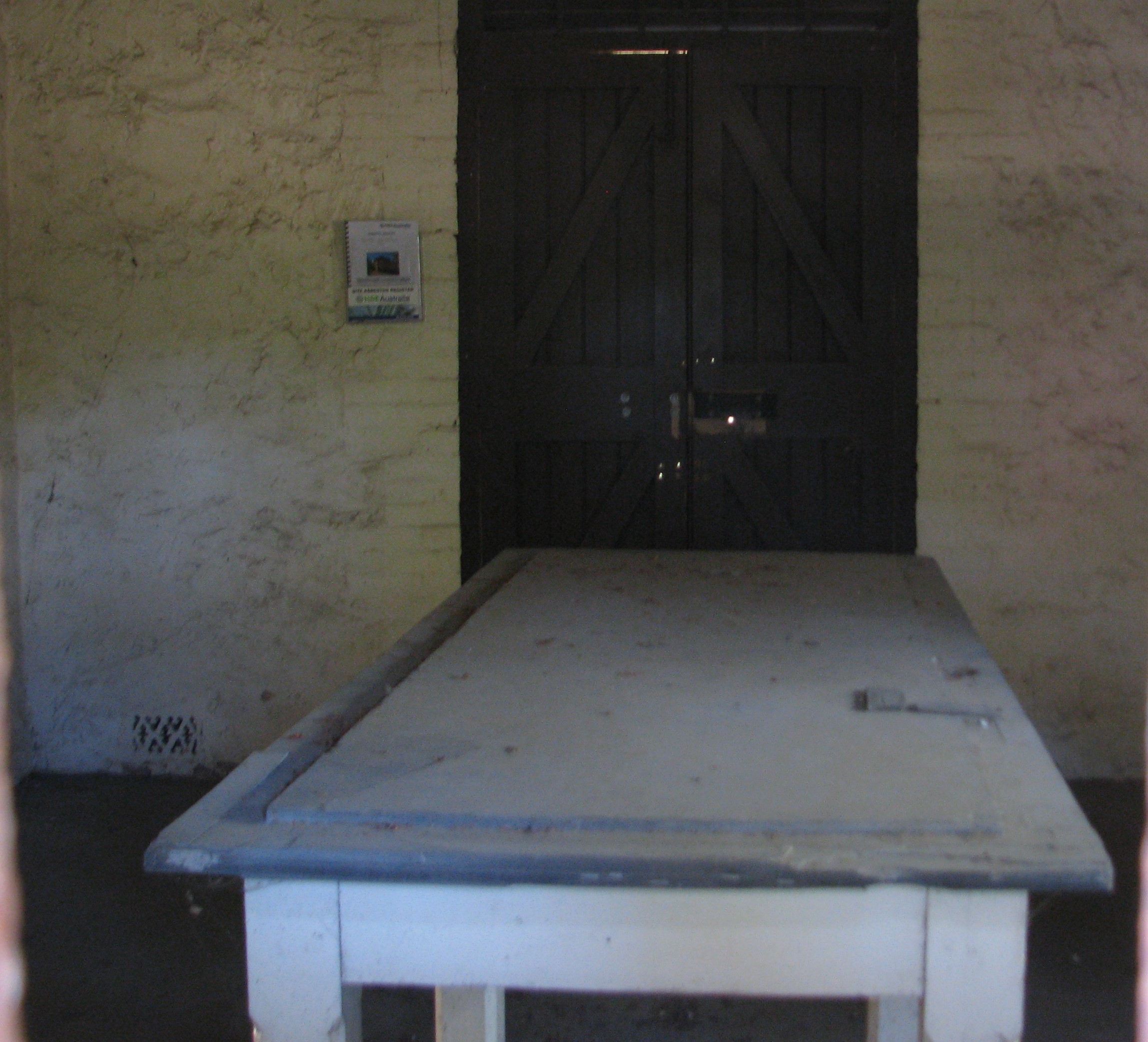
Unfortunately it’s a bit neglected and access is difficult but I did get a look at the examination table by poking my camera through a hole in the shutters and taking some low light pictures.
From Goolwa, we drove to Glenelg, an iconic beachside suburb of Adelaide, where we stayed in a short term rental apartment.
It had been eighteen years since we last visited Glenelg and it had changed a lot with a new Marina complex and ocean front apartments but the old pier was still there as was the beach.
One of the advantages of Glenelg over other beachside suburbs in Adelaide is that you can get the tram Moseley Square at the jetty into the city centre making it easy to visit the South Australian Museum and the Art galley, which we did to visit the Galloway Hoard exhibition.
Being a sad anorak at heart I was on the lookout for colonial era relics like post boxes and was rewarded with one next to Moseley Square.
Unlike Victoria, where colonial period post boxes are quite common there seemed to be few colonial period boxes left in South Australia.
I was worried that the Moseley Square example was a dummy, but I did spot a rather more neglected example in Kingston Street in Burra, which looked as if it might actually be in use as a post box. Unfortunately I was driving when I spotted it, and is always the way could not stop easily, so no photograph I’m afraid.
After Glenelg we did a mammoth six hundred and more kilometre drive to Port Lincoln at the base of the Eyre peninsula, via Port Augusta and Whyalla.
Driving north out of Adelaide the country became increasingly dry, and about halfway to Port Augusta agriculture more or less disappeared with the grain paddocks giving way to dry semi desert scrub.
Port Augusta was once a port with grain ships sailing to Europe (shades of Eric Newby’s The Last Grain Race), and still has some nice old buildings in the town centre. The old wooden wharf is still there, although fenced off for safety reasons, and gradually being restored as a walking area beside the water.
From Port Augusta on past Whyalla across more scrubby desert and then gradually agriculture began to return, with large paddocks that had been growing grain and then on to Port Lincoln – which is actually where Eric Newby sailed to.
Port Lincoln is still a major grain port and the town is dominated by a huge silo and grain loading facility. Until a few years ago the narrow gauge railway carried the bulk of the grain, but that has now been abandoned in favour of massive grain trucks.
So why Port Lincoln?
Port Lincoln was as far west as we could go without the trip turning into something major as anything further would have taken us on a transcontinental trip across the Nullarbor to Perth. We’d already passed the junction where the highway to Perth split from the highway to Darwin on the western edge of Port Augusta.
Port Lincoln promised us relaxation and access to both the Lincoln and the Coffin Bay national parks.
While there, we swam at Tumby Bay, walked a little of the Investigator Track in Lincoln national park from Surfleet Bay to Spalding Cove.
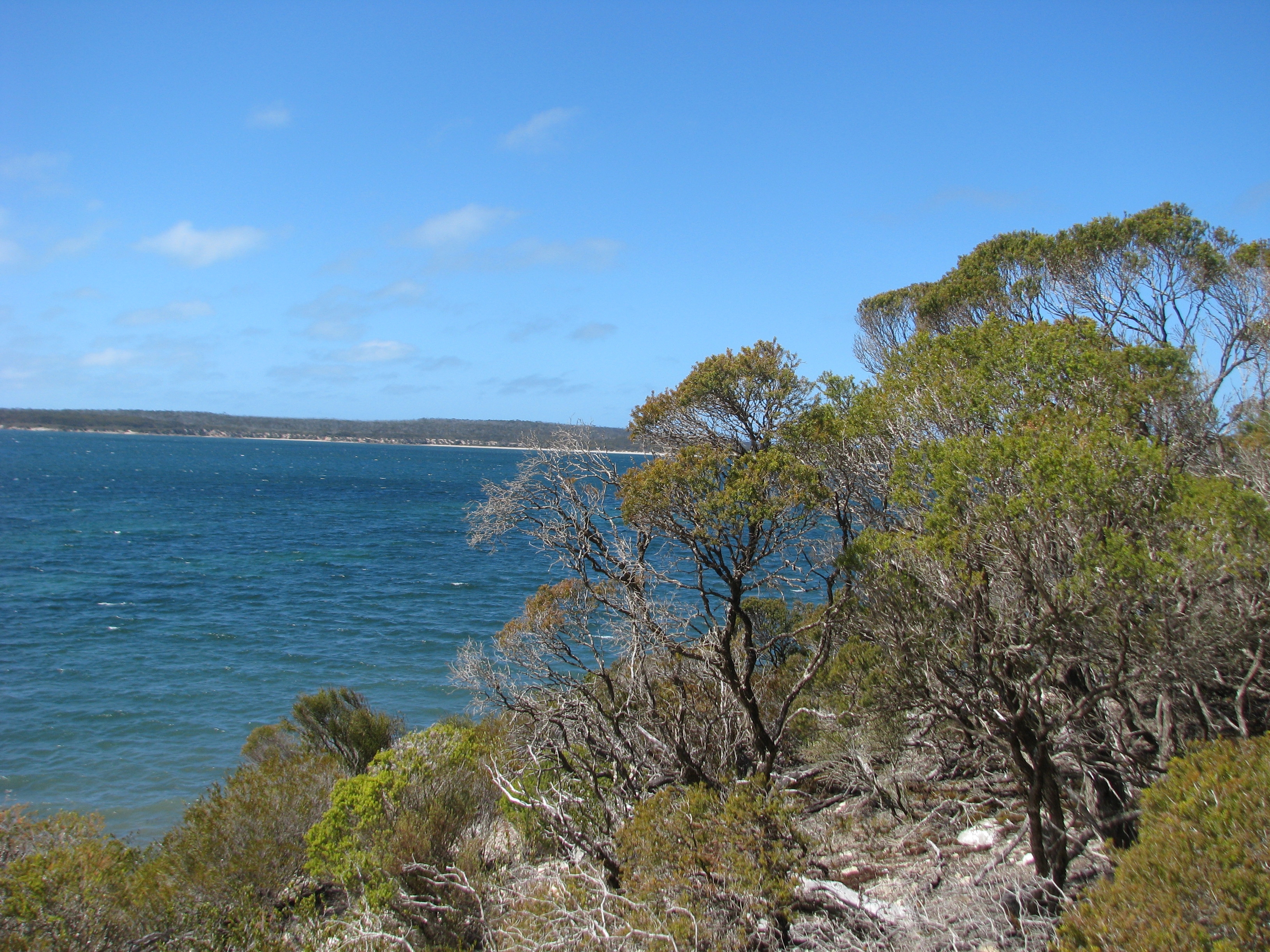
Coffin Bay national park was a bit of a letdown as part of the park was closed for European Bee control measures. The township at Coffin Bay itself is in a pretty stunning location but seems to lack safe swimming beaches.
Port Lincoln itself is a working town, but the old wharf area has been prettied up and is now a recreation area with a shark proof swimming enclosure off the old jetty.
And then we were done.
We drove back retracing our route to Port Augusta and from there we drove on to Burra, an old tin mining town on the edge of the wilderness with some quite nice heritage buildings.
From there we drove on to Morgan and then Mildura in Victoria, before crossing into NSW for bit (the road on the NSW side of the Murray is better than the road on the Victorian side) before crossing back into Victoria at Robinvale and then on to Echuca, which was once a major paddle steamer port on the Murray.
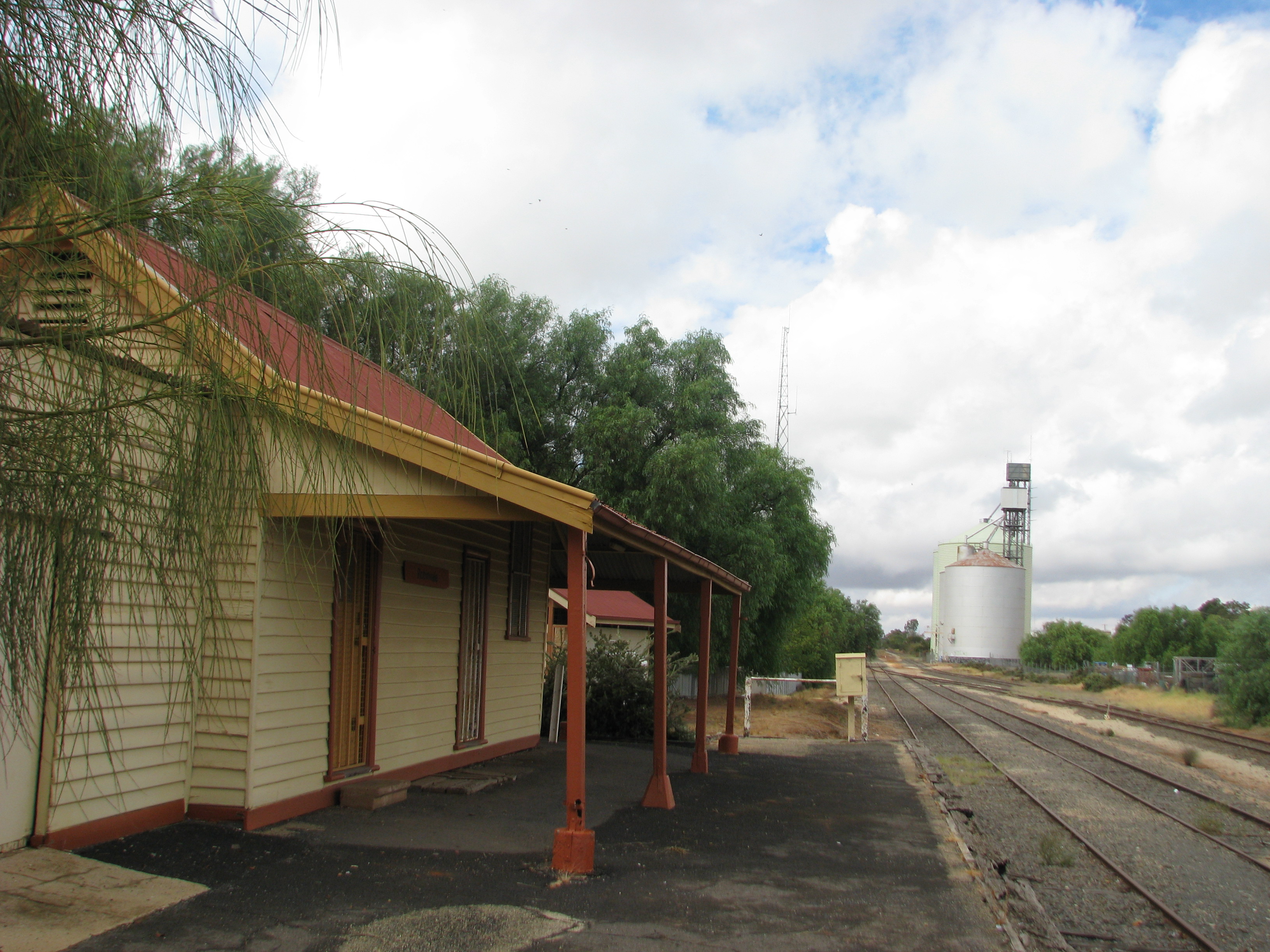
After three long days of driving, we had a day in Echuca – which we kind of like despite its slightly cheesy aspects before driving home.
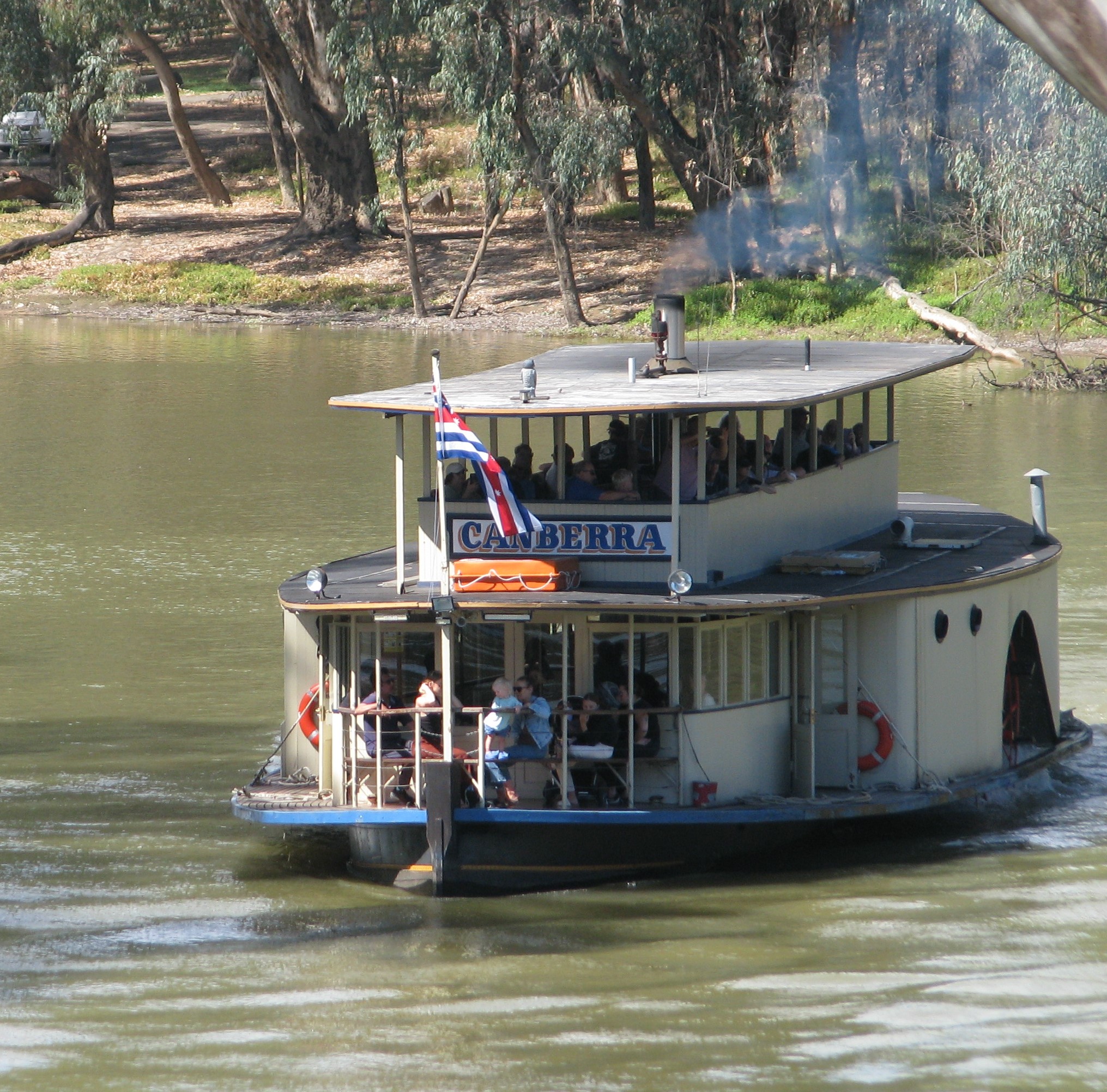
We’d done a tad over 4000km in around three weeks – roughly the same distance as London to Malaga and back, except of course there are no freeways on the route other than a bit out of Adelaide on the way north…


 stuff 'n other stuff
Pingback: The time before the internet … | stuff 'n other stuff
Pingback: Adelaide to Port Lincoln 1877 | stuff 'n other stuff