
Over the past year or so I’ve developed a slow burn fascination with late Victorian and Edwardian postcards.
I don’t simply collect them, when I get a new one I try my hand at transcribing the card and trying to trace the addressees.
It sounds voyeuristic, and perhaps it is, but it allows me to practice my family history research skills as well as my ability to read late nineteenth century handwriting.
I’m not a regular collector by any means, only buying four or five a year, but I do spend some time scouring ebay and etsy for interesting looking examples.
And in the process of looking for postcards to transcribe, I occasionally come across items described as letter cards
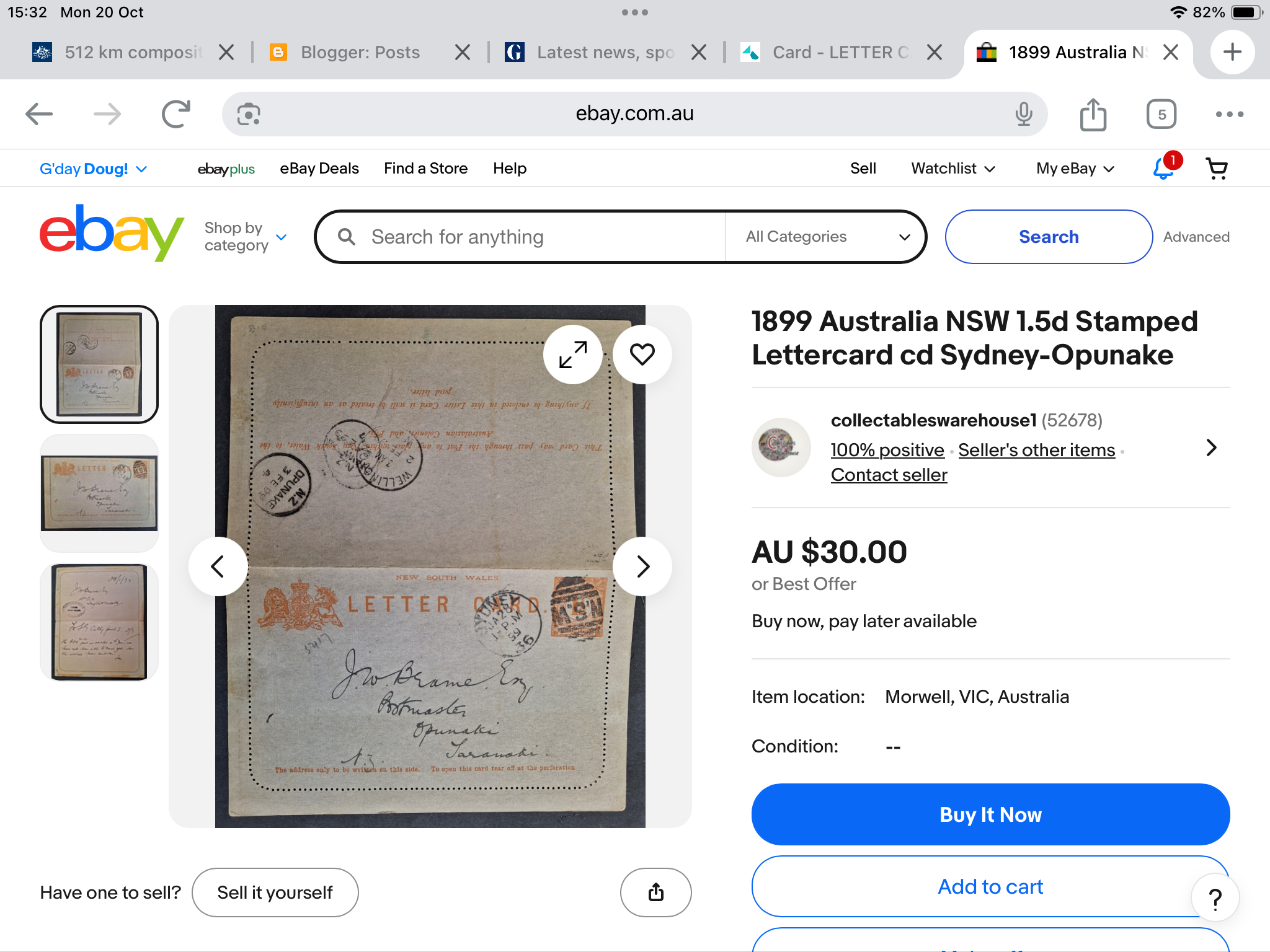
So what were letter cards?
First issued by the Belgian post office in 1882, they consisted of a sheet of postcard weight card which was prefolded and had a line of adhesive around the edge that gave you an area slightly smaller than a standard sheet of Victorian era writing paper – about one and a half times the size of an A6 page today -on which to write your message. You then sealed the card and posted it.
The recipient then tore round the perforation to open the card and read the message.
The principal advantages of the letter card, as opposed to a post card were that they were private and you could send a longer message. The disadvantage was that they cost as much to send as an ordinary letter.
In Australia, the Victorian Post Office was the first to issue them in 1889, three years before the United Kingdom in 1892.
Letter cards were never terribly popular as they didn’t offer any real advantage over a standard letter, but they clung on as an item of postal stationery until the late seventies, or perhaps early eighties.
One advantage was that if you needed to send a letter and didn’t have stamps, paper and envelopes to hand you could buy a letter card from a post office, write your message and drop them in the mail.
I remember using one myself in the very late seventies during a cycling trip round the Western Isles of Scotland when I missed a ferry due to mechanical trouble and had to write to a friend to reschedule a catch-up on the way back and ask them to buy me a couple of spare inner tubes and a new tyre.
Nowadays it would be a text message or an email.
I’ve come across so few examples on collectors’ websites, that unlike postcards, I’ve no real picture in my mind of how they were used in the early part of the twentieth century.
There’s some evidence that they were used by members of the AIF to send messages home during world war one (and perhaps also world war two), but I havn’t been able as yet to find any definitive record of their use on a regular basis.
Certainly, being made of card they would have been as easy for the military postal service to handle as a field postcard, but would have provided service men a way of sending a private or intimate message, although the military censors might have had something to say about that….


 stuff 'n other stuff