
Over ten years ago, before we moved to Beechworth, I became fascinated by the provenance of the old Krupp 75 mm gun outside the RSL.
It didn’t have an Ottoman cipher, or a German or Austro Hungarian crest but instead the cipher of Carol I of Romania
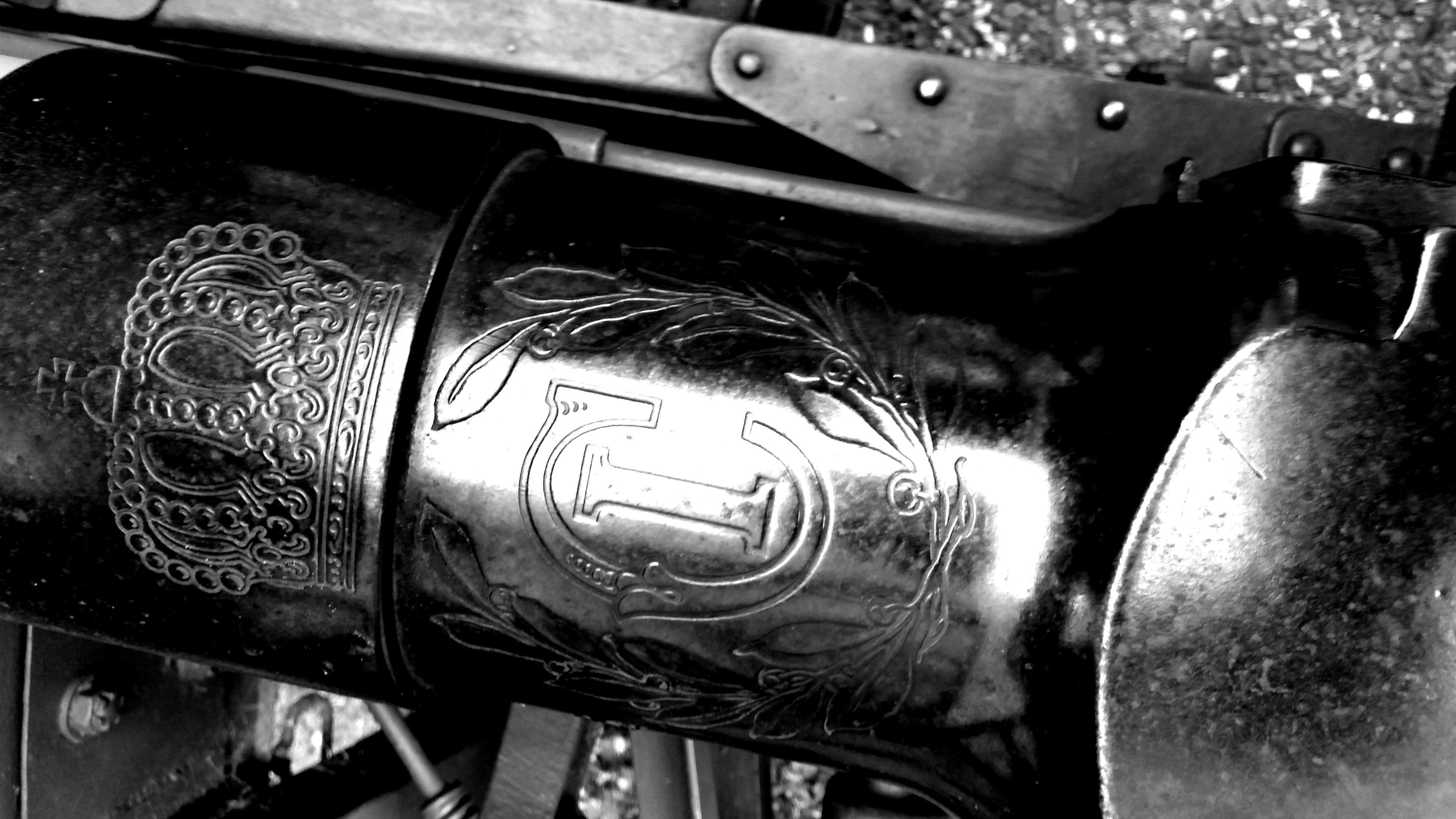
The defining characteristic is the crown, a representation of the Steel crown of Romania.
The question is of course, how did a 75mm gun made by Krupp in 1905 for Romania end up Beechworth as a war trophy, as after all, Romania was on the side of the Entente in World War I.
The story is both simple and complex, so we’ll go for the simple version, but even that requires a recap on the history of the Balkans prior to World War One.
After participating in the Balkan wars that led to the Ottoman presence in Europe being reduced to a rump around Edirne, Romania initially stayed neutral in the First World War, unlike Bulgaria which sided with the Central Powers and Serbia, who sided with the Entente.
Bulgaria had been unhappy with the division of Ottoman territory between itself and Serbia as a result of the first Balkan war, and had then fought Serbia in the second Balkan war in the hope of gaining more of what is now Northern Macedonia.
Bulgarian participation in the First World war was really an attempt to ensure that if Austria Hungary defeated Serbia, it would be able to claim more of Macedonia.
And this is where the story gets tricky. Bear with me, people have written PhD theses on this, but we also need to discuss the Eastern Front and the Russian army in World War I.
There’s a view that during the First World War the Imperial Russian army simply wasn’t very good, and that Russia was too underdeveloped to produce the sheer amount of ammunition required by the army, and that eventually the rank and file got pissed off and went home to spread revolution and anarchy.
That’s not actually true.
It’s true that in the north against the German forces the Russian army was unsuccessful, but against Austria Hungary it was a different story, advancing to the edge of the Carpathians, and occupying Austro Hungarian cities such as Lemberg (now Lviv in the west of the Ukraine).
It’s also the case that in the early stages of the war all sides found they had underestimated the amount of ammunition required and had problems with supply. While the Gallipoli landings are sometimes presented as an attempt to seize the Dardanelles and Constantinople, to allow the resupply of the Russian army via Odessa (now Odesa), in truth, it was just as much about allowing Russian wheat exports via the Black Sea to help feed Britain and France.
By the time of the Brusilov offensive in 1916 the Russian army had all the military supplies they needed and it looked very much like they were about to break the Austro Hungarian army, so much so that Germany panicked and diverted scarce troops from the Western front to the Carpathian front to stiffen the Austro Hungarian forces.
At the same time Romania saw this as an opportunity to reclaim Transylvania from Austria Hungary and sided with the Entente and attempted to seize Transylvania from the Hungarians.
With Bulgarian attacks in the south and German forces advancing through Transylvania, the war didn’t go Romania’s way, and not even the Kerensky offensive of 1917 when post February Revolution Russia managed to assemble an army and push back against the combined German and Austro Hungarian forces, saved them and they were forced to sue for peace.
The Krupp gun, along with others, were seized by the occupying German forces, and passed to the Ottomans who had previously bought a lot of the same artillery piece from Germany, and was captured by Australia forces somewhere in what was then Palestine.
Quite a story.
It’s not the only Romanian gun on display in Australia – there are a few others, along with some Ottoman Krupp 75mm guns including the one nearby on the war memorial in Chiltern.
But there’s always been something that puzzled me. Romanian coins from the period used a different crown

And then I came across an online antique dealer in Bulgaria who had some Romanian uniform buttons from the period of the Balkan wars and World War I. I checked out the dealer on line and they appeared to have a good reputation.
The buttons came with a partial provenance, suggesting that they were legitimately acquired – I’m guessing from a metal detectorist or field walker.

And there they were – any gilding has long gone and the buttons look to have been cleaned – and again the Romanian Steel crown is used, and not the other crown which was used on coins of the period suggesting that the Steel Crown was used as the Romanian army logo. If I was more anally retentive than I am I would search for other examples of its use by the Romanian military, but I’m happy with the army buttons as confirmation. (Just to confuse matters, some German regiments used buttons in a very similar design with the Prussian crown – it would be possible to go slightly mad comparing images on ebay and etsy)
So, there we have it, the crown used on the Krupp cannon is the same as that used on Romanian army uniforms of the period and something that to me, at least, closes the mystery of the provenance of the Beechworth gun and the crown used in the cipher…


 stuff 'n other stuff