When we first visited Bologna back in 2003 the airport was a small regional airport, and you got there by bus from the city centre.
From memory the driver put your bags in the storage area for you and the bus was something like a standard long distance coach.
Since then the airport has expanded and they have built a monorail that allegedly gets you from the airport to the main railway station in seven minutes.
It’s also expensive at €11 each – by comparison a single ticket from Bologna to Ravenna costs €8.
That is when it runs.
It has continually been plagued by technical problems and often does not run and is replaced by a bus.
And that was the case on the day we tried to use it. After lugging our bags through the station and paying eleven euros each for the monorail they told us it was not running and to use the replacement bus.
The replacement bus was not one of the long distance coaches waiting outside of the station but and ordinary Bologna city bus with no space for luggage. Everyone crammed on somehow but the whole experience was slow and unpleasant.
And then we discovered that a cab from the airport to the railway station costs between twenty and twenty five euros. This is the cost for a standard Bologna city licensed cab – Uber and the rest may be cheaper.
And when we dropped our rental car off we got a cab into the city centre to our overnight hotel it cost us €20, including a tip. The next morning, in the middle of rush hour to get our morning flight to London it cost us €25, again including a tip for the driver.
Sure a cab takes longer – between twenty and thirty minutes depending on traffic, but it will take you straight to your city centre hotel, and the cost is not that different to the monorail.
So, while the monorail is a really cool idea, I’d take a cab if there’s two of you – it might even be cheaper!
Like everyone, our travel plans over the last few years were disrupted by the pandemic.
We had planned to go to South Africa in March 2020.
For obvious reasons that didn’t happen, and while we got most of the money we’d paid out back, that left us with a flight credit with Qantas – it had to be a flight credit as I’d paid for the original tickets with a mixture of points and cash.
If you’ve been following the news in Australia at all in the last year, you’ll be aware that Qantas have kept on changing the redemption rules on flight credits making the redemption process a bit like a bizarre poker game, do we twist or fold?
Well, earlier this year, we decided to fold.
We had family reasons to go to the UK, so we cashed in our flight credit and tried not to grimace at the excess we had to tin up for two economy return tickets to the UK.
So, in late September, off we went.
Rather than fly directly, we deliberately had a night in a hotel in Singapore, as the flight to Britain from Singapore as a 14 hour overnight marathon, in the hope that we would not be complete zombies on arrival.
Staying in Singapore in a hotel next to La Pau Sat was one of our better ideas as we could eat in the food court, collapse into bed, and then have a swim the next morning.
We wanted to go to Manchester to see J’s family, including Ben and Jen who visited with us earlier this year, so we asked Qantas to book us on a morning flight to Manchester.
Qantas, with great optimism, and believing that their flight from Singapore would arrive on time, put us on an 0830 flight to Manchester.
Qantas were of course almost an hour late into London, meaning a frantic dash from terminal 3 to terminal 5, through security, back through security for the domestic flight to Manchester, something not helped by some of the most snarky, obstructive and downright rude security staff in terminal 5 we have encountered anywhere, but we made it just as the gate was about to close.
We then sat on the tarmac for forty minutes as the plane missed its take off slot as BA decided to wait for other Qantas customers who were still stuck in security.
However, we made it, and tired and frazzled, checked in to a hotel at the airport – we’d emailed them in advance asking for an early check in – and collapsed into bed for a few hours.
Dinner, in a Turkish fusion restaurant attached to the hotel, and a decent night’s sleep we were more or less dezombiefied and ready to face the world.
So after we picked up our rental car, we headed first for the Trafford Centre to buy some supplies, and then to our AirBnB in Hebden bridge.
We picked Hebden Bridge as a place to stay as
we like Hebden Bridge
it’s a few kilometres from where Judi’s cousin, Alison, lives
Alison’s husband had been quite ill, and when we booked the trip we weren’t sure how his health would be and whether or not we would have to ration our time with them to let him have a time out or two.
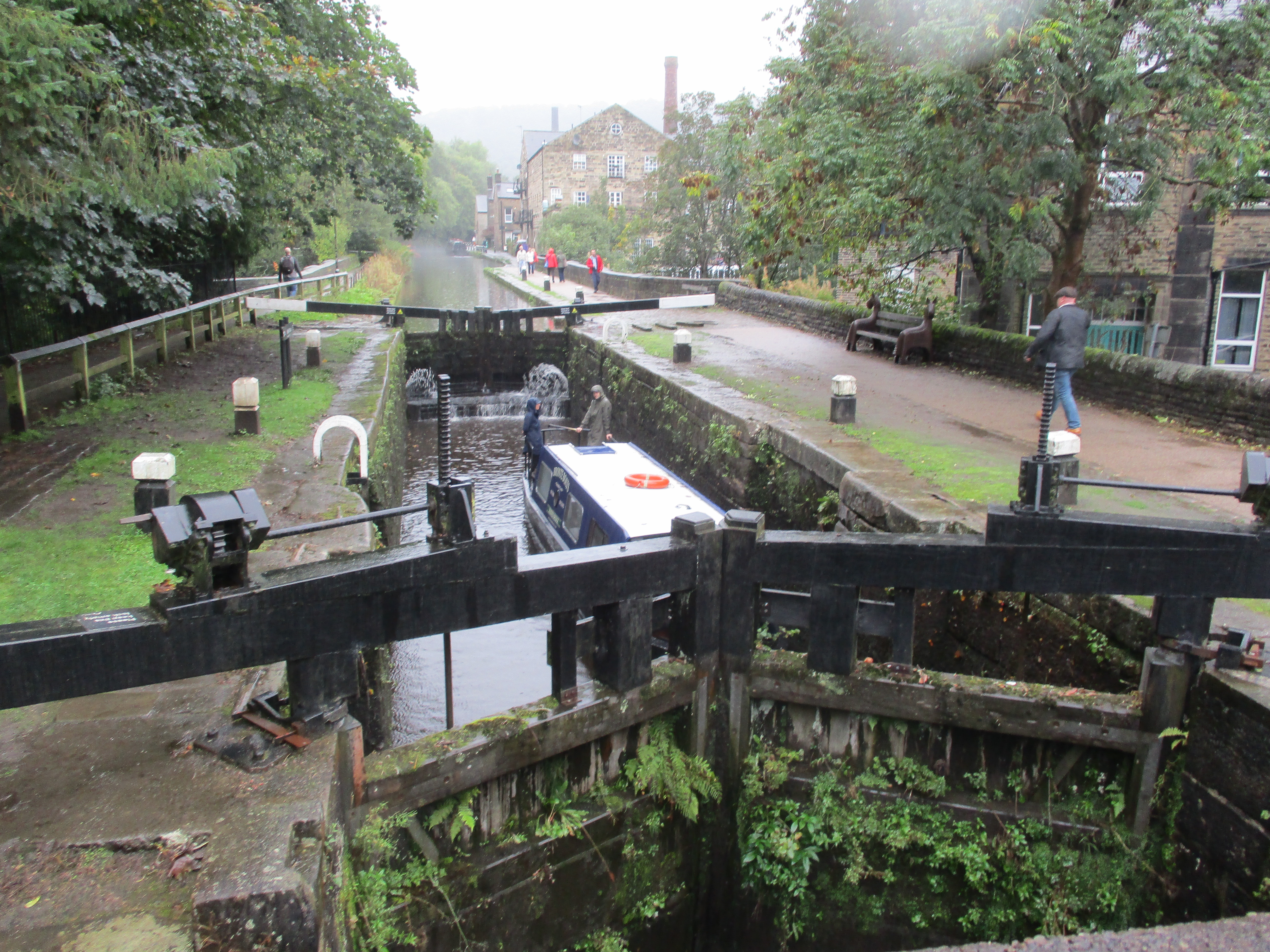
As it was, all was well, and we had dinner with them a couple of times, as well as a couple of canal side walks, plus lunch with Ben and Jen.
Egyptology will have to wait until another trip.
Our original plan had been to return the car, get the train to London, have a couple of days in London, and then go onto the South of France where we’d rented an apartment in Uzes for a week.
Didn’t happen, or at least not like we’d planned.
One of J’s other cousins had emailed her to say that an auntie that J had stayed with twenty five years ago when she came to London was going to turn ninety, and was there any chance we could make her birthday party.
Well, her birthday as a couple of weeks before our flight, but we decided we must pay a visit, however belated.
So we scrapped our train trips, kept the rental car for longer – insanely it worked out cheaper than taking the train to Hampshire – and decided to fly from Gatwick to Marseilles.
So, after checking out of Hebden Bridge we drove down to Lyme Regis in Dorset, where we had a day to ourselves to walk on the beach, and the plan was to drive from Lyme toHampshire for more family stuff before dropping the rental car back to Gatwick and a flight at stupid o’clock the next morning to Marseilles.
Along the way we stopped off in Southampton to buy a cake, flowers and some other things like that. To keep things simple we had lunch in John Lewis which has a Waitrose in the basement, and were amused and a little embarrassed by an elderly woman with a voice redolent of a vanished empire asking a hapless Turkish waiter for ‘Froot cake’.
He clearly didn’t know what ‘froot cake’ was and gestured helplessly at the rather nice cake selection. And no, there was no froot cake or even fruit cake. Tastes change.
After the family stuff, including a traditional and enjoyable pub lunch, it was off again that afternoon across the south of England to Gatwick to drop off the rental car, followed by a night in a hotel at the airport and an EasyJet checkin at a truly ungodly hour in the morning.
From Marseilles we picked up another rental car, and drove to Uzes, something that involved driving round the one way system in Avignon twice, where we had an apartment in a medieval building and within easy walking distance of the main square.
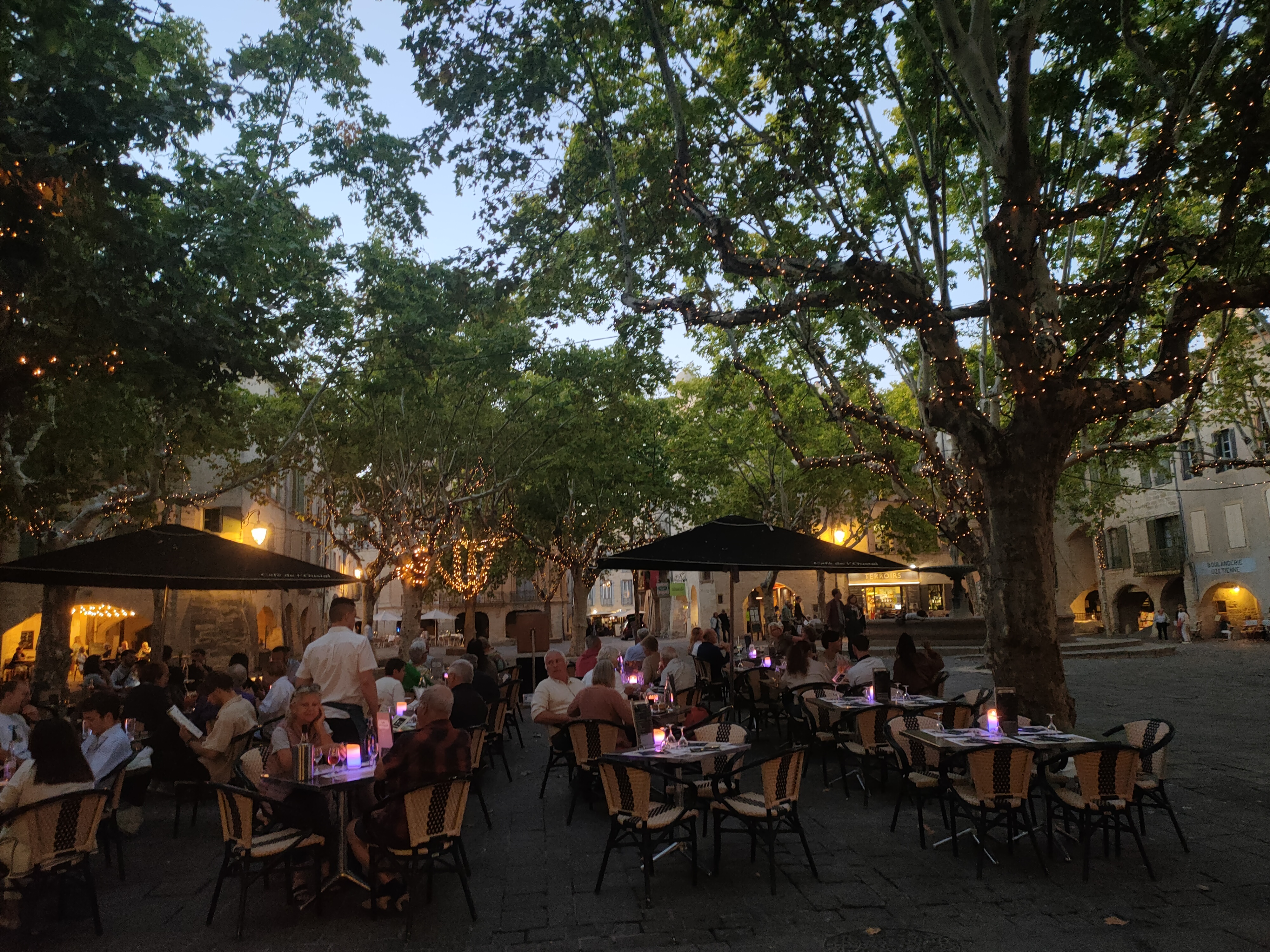
Uzes is a compact medieval city, and supremely walkable. Parking is a nightmare but our apartment had come with parking – admittedly about a kilometre from the apartment – medieval apartment buildings on the whole don’t have parking garages, and a lot of the town is semi pedestrianised, with entry to the medieval core guarded by fearsome automatic bollards during the day.
A typical tawny limestone Provencal town that had been there since the Romans, it was built around the castle and a large central square cum market place. The walls have gone, to be replaced by a one way loop round the city centre, and the railway station has also disappeared, though nowadays there is a bus to Avignon and the high speed TGV line.
Other than a medieval garden there’s nothing remarkable about Uzes. People work, live and love in the town, while there are tourists it is not, at least in autumn, overwhelmingly touristed. It is simply a working town with a lot of medieval buildings, and none the worse for that
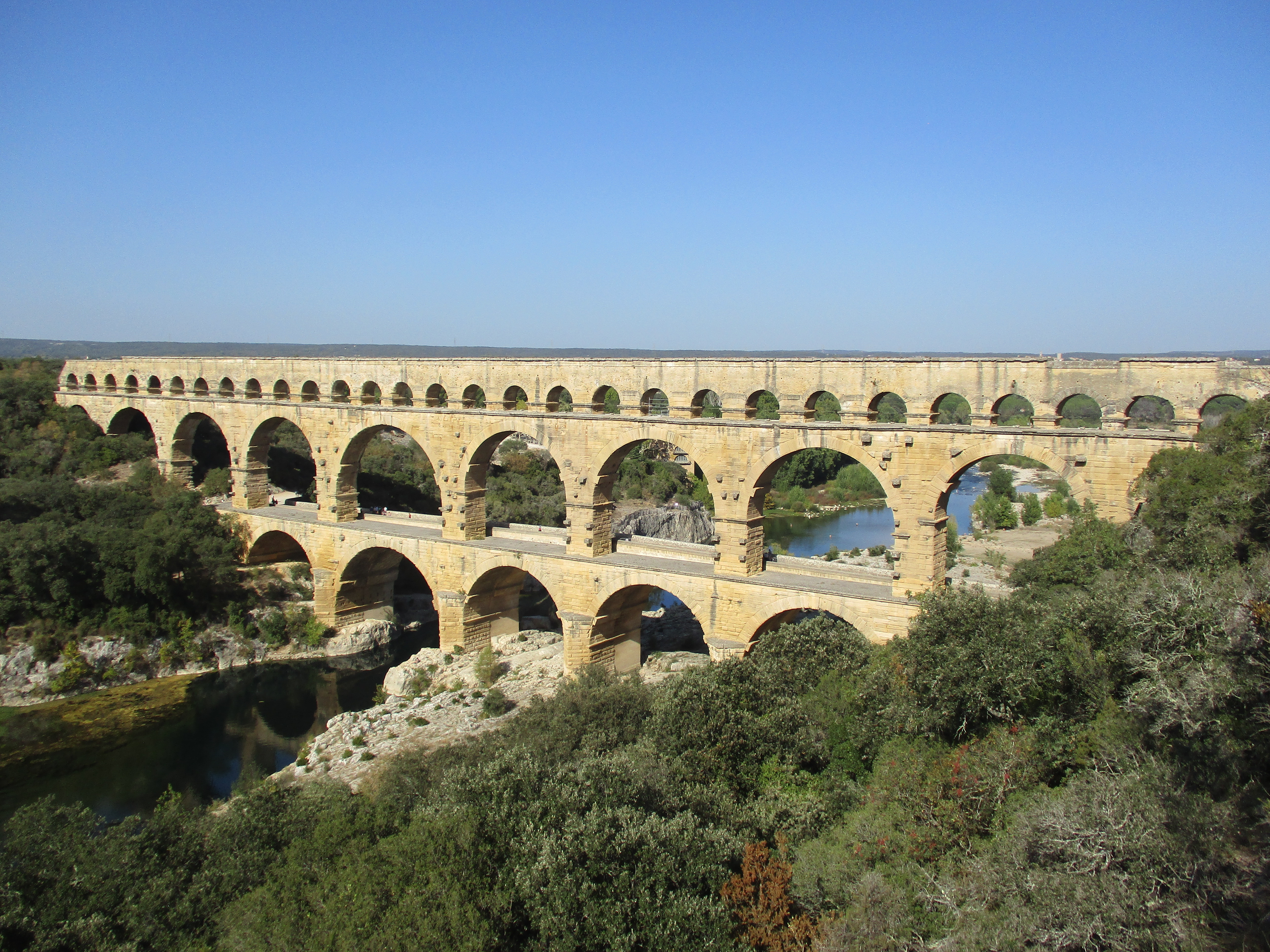
Basically we just relaxed and walked around and enjoyed the town. We did, however have some days out, including a trip to the Pont du Gard, somewhere I’d always wanted to visit since I was a geeky Roman obsessed ten year old.
It more than met expectations, and by chance we hit the dead part of the day after the morning school groups had left and before the buses full of elderly polyester trousered Americans arrived, meaning we had the site, if not exactly to ourselves, near enough so.
After Uzes, we dropped the rental car back to Marseilles airport.
Dropping the car back took far longer than it should as the rental company was having IT problems – more exactly they were unable to print any of the documentation required, so rather than get the bus to the main train station in Marseilles, we ended up with a taxi that got us there in thirty minutes.
From there, it was on to a TGV to Nice.
J had wanted a day or two in Nice to go the the Chagall and Matisse museums. Unfortunately the Matisse museum was closed for refurbishment, so we made do with Chagall, which, though up a steep hill was in walking distance of the hotel
After the museum, plus lunch at the cafe, we walked down the hill to the Promenade de Anglais for a stroll by the sea and an ice cream.
This was about a week into the Israel/Hamas conflict and there was a heavy police presence in Nice with riot vans and patrol cars parked up in strategic location.
Nice was also showing its gritty side with homeless people sleeping under the railway viaduct, plus the usual array of derros and clochards, including one man who was quite obviously wearing nothing but a rather grimy shirt.
However, it didn’t feel unsafe with plenty of ‘normal’ people about, plus the obvious police presence.
Then, it was on to Bologna, where we planned a side trip to Ravenna to pay our respects to Gallia Placida, and pick up a rental car drive to a hill village in Tuscany where we’d rented an apartment for a week.
Once there were direct trains from Nice to Milan, but no more, we first of all had to get a local train to the border with Italy to meet with the express to Milan.
Despite dire warnings from the man in seat 61, the local train turned up on time and delivered us on time to our connecting service at Ventimiglia.
Accidentally we’d timed it just as the sun was coming up so were rewarded by set of quite stunning dawn views of the Riviera coast.
After changing trains we set off for Milan, via Genoa.
There’s no catering on Italian expresses any more, just a couple of self service machines that didn’t work so we had to make do with a couple of bananas and bottled water that we’d had the foresight to buy the night before.
Despite not being the newest, our Trenitalia express delivered us to Milan on time.
People tell you that Milan is a wonderful station and you should take time to admire the architecture.
That Sunday afternoon it was a chaotic but functioning anarchy of people wandering about looking for trains, trying to get something to eat, plus the odd lost and confused tourist.
Still, we managed to get a couple of coffees and focaccias, and the it was on to our final train, the Italo high speed train to Bologna and points south.
It was fast. It was impressive, but had no space to put our luggage – fortunately the seats behind us were empty, so we used them.
We’ve been to Bologna several times before, and the railway station has always been a maze of confusing passages. It’s now doubly so as they have now built what looks to be a new high speed train station, strangly reminiscent of Birmingham New Street in the eighties, under the existing station, plus a monorail link to the airport (of which more later)
Sign posting inside the station is confusing and at times contradictory (you are in a maze of twisty passages, all different) but eventually we emerged into the main square outside the station and into our hotel.
I like Bologna. It’s a proper city, not a tourist showpiece.
Yes, there are the Unesco listed colonades, the grand Renaissance buildings, a Duomo, the museums, but it remains a city in which people live and work.
And you have got to like a city that still has a TAFE named after Rosa Luxemburg – you can catch a bus to it – and just to add to the feel of being somewhere different, it still has trolleybuses.
However, it’s also an easy day trip from Bologna to Ravenna, and that’s exactly what we did the next day, catching the local train across the Emiligia Romana plain.
Up to then, the weather had been fine – in England it had been early Autumn – Hebden Bridge had been showery and tin he south of England the season was beginning to turn, but in Uzes it had still been late summer.
The day we spent on the train from Nice had been warm and summery, The next day it turned grey and drizzly.
However, off we went to Ravenna.
Perhaps because it was a grey Monday in mid-October, it was quieter than last time we visited, but the mosaics did not disappoint, and I got some better and clearer pictures of them than last time.
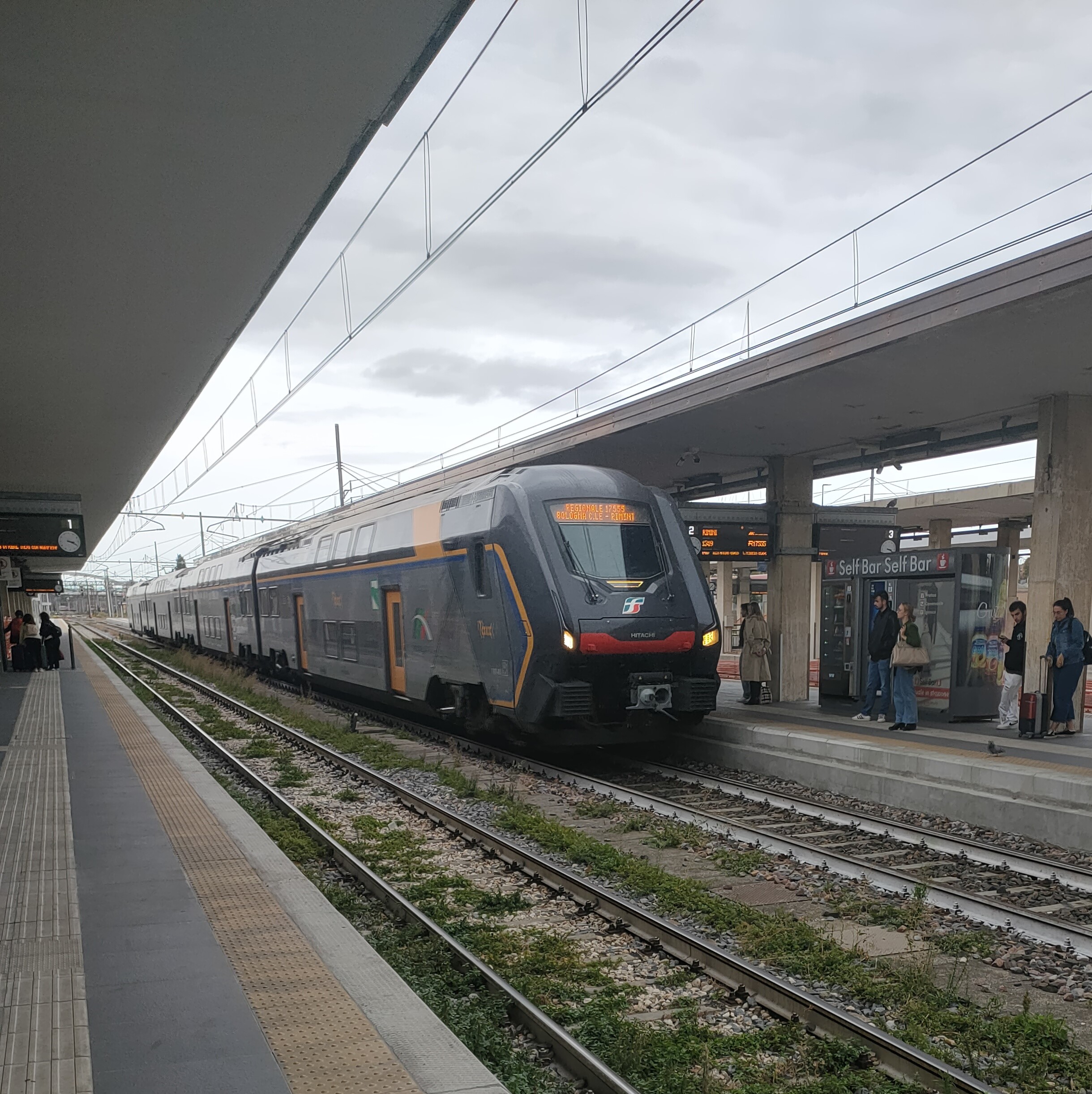
The other thing, and it’s a minor point, in the intervening decade or so there’s been a marked investment in railways in Italy, with new trains and station rebuilds, so instead of a thirty year old rattletrap, the train to Ravenna is now a sleek new commuter train
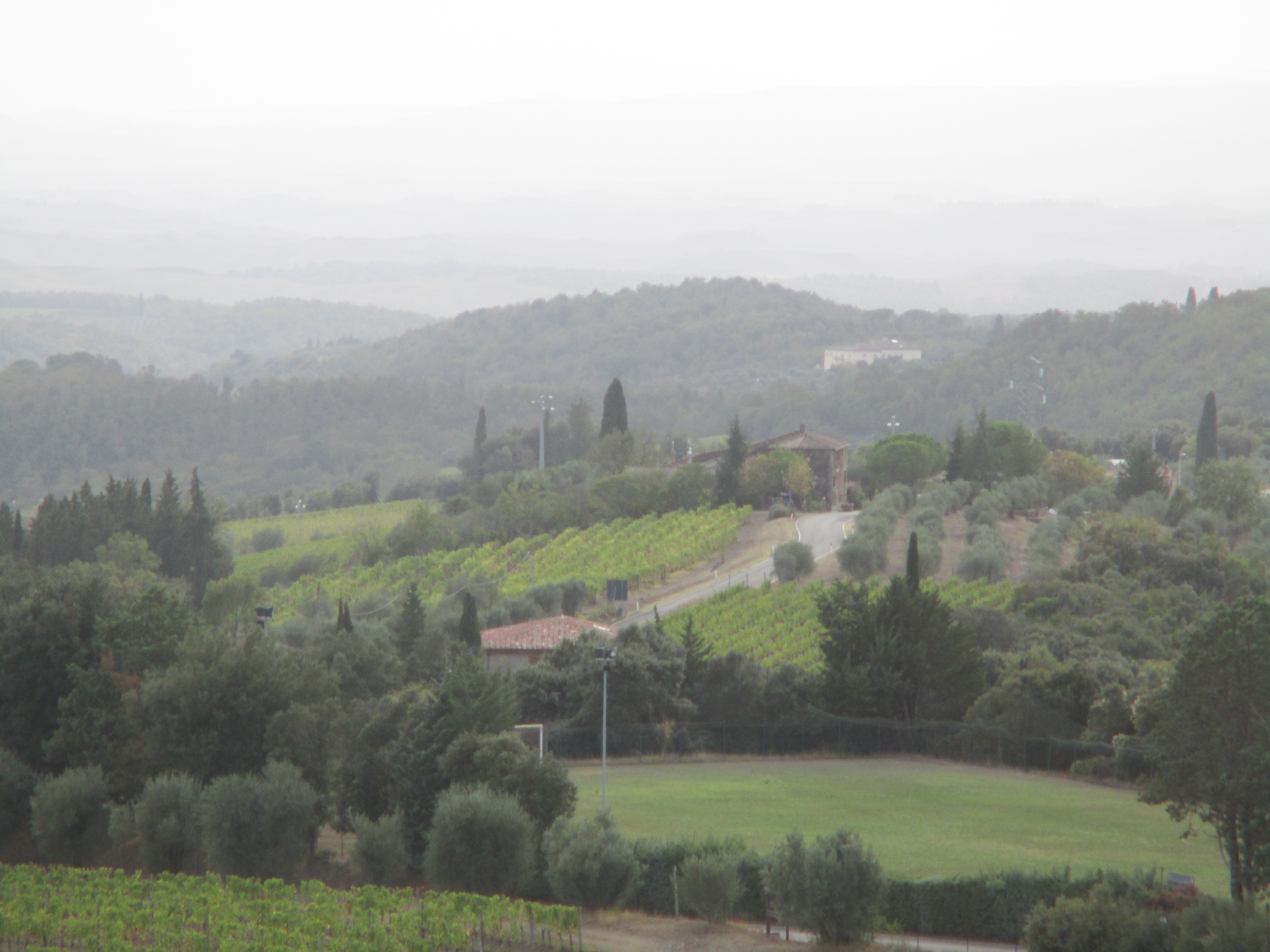
Then, on to our final destination – a traditional hill top borgo in Tuscany. It actually was on the rising slope of the foothills of the Apennines and actually half way up the slope with a view across the plain to Siena.
This wasn’t without drama, although pretty minor on a scale of one to ten. We picked up a rental car at the airport. And as always with rental cars and tight spaces there’s sometimes a bit of back and forth to get it out of the rental company’s yard. Forth wasn’t a problem but back was as I put the car into reverse and the gear knob came off in my hand.
The rental company had no problem giving me a replacement, but they only had an automatic spare, was that a problem?
Of course it wasn’t – in fact it was a bit of a plus so off we went in a slightly clunky Brazilian made VW – obviously the economy version as it didn’t have a reversing camera or a GPS or the various beepers one expects on a car these days.
Given the need to wiggle and jiggle through traffic in some small Italian towns, being beeper free might actually have been an advantage.
Anyway we got there.
A small sone built thirteenth century walled settlement clustered around an older church with stunning views and walking tracks. No mobile phone reception – not unless you walked up to the Etruscan tomb higher up the hill or drove down to the small town at the bottom of the hill – however there was wifi, and the two osteria in the village were happy to take bookings via Whatsapp – not that it was necessary – they were only a fifty metre walk from our apartment.
So, we walked following the trails and drove around the area enjoying autumn in Tuscany. Very low key and supremely pleasant.
And then it was over.
On the day we drove back it began to rain on the autostrada. Seriously rain. Some villages had bad flooding, but we got there. I did drop the tollway ticket in a puddle putting it into the machine and had to call for help, but fortunately there was someone English speaking at the end of the help button.
An afternoon in Bologna, with enough time to sit and have a drink in the main square, dinner and a night in a hotel.
Then a flight to London, an afternoon at the V&A before an overnight flight to Singapore, where we checked into a hotel for a night and another, crowded, cramped overnight flight to Melbourne before driving home.
Due to timezones our evening departure from London arrived on what was the early evening the next day Singapore time, allowing us time for a food court dinner before collapsing into bed and waking up more or less refreshed. That evening we flew to Melbourne on what should have been a relatively pleasant flight.
It wasn’t. The plane was crammed with extra passengers transferred from another cancelled flight, food service took forever and they ran out of options. However we got enough sleep to drive home safely. and driving out of Melbourne before the Sunday traffic started was pretty pleasant.
We stopped off in Euroa for morning tea at the bakery and a bit of fresh food shopping at the supermarket, before arriving home around midday to an overgrown garden.
I’ve been reading Daniel Mason’s The Piano Tuner as my evening reading – a change from outback noir crime novels – when I came across Steven’s Consumption cure.
Even though I’ve finished with Dows’ Pharmacy for the moment, I’ve acquired an interest in nineteenth century medicine along the way, something that dovetails into my interest in Victorian murders and the way that newspapers sensationalised the most graphic of them in order to sell papers.
So when I came across Steven’s Consumption cure I had to do some background reading about it. And it’s a curious tale.
Tuberculosis, or consumption was the scourge of the nineteenth century.
My grandfather’s first wife, Catherine Gracie, died of it, his mother died of it, and if you plough through the death certificates quite a few other family members died of it – and these were relatively middle class people who lived in relatively nice airy apartments, and living in Dundee had access to the Tay estuary and cleaner air despite the undoubted urban pollution from smoke and industry.
The urban poor, crammed in overcrowded tenements would have had it much, much worse than the middle classes.
Until the advent of antibiotics there was no real cure for tuberculosis. Most people died unpleasantly. If you could afford it, being able to live in the countryside and breathing clean air might let you live a little longer, but really, unless you were one of the roughly twenty percent of cases who recovered spontaneously, a diagnosis meant death sooner or later.
And of course, the figure of twenty percent is based on the middle and upper classes who could afford doctors and treatment. The poor simply suffered and died, and perhaps relied on patent medicines for some relief.
Most patent medicines didn’t do much – a pain killer like laudanum, some herbs to help clear the the chest and let you sleep, and that was about it. Some made outrageous claims as to their effectiveness, and of course there were always those that claimed to be derived from exotic cures from the mystic East.
Perhaps my favourite example of the latter was Bile Beans, claimed to be made from secret herbs used by Australian Aborigines, but in fact made principally from cascara and rhubarb in a factory in Leeds.
The situation regarding patent medicines was so bad that in the early twentieth century the British Medical Association analysed many patent medicines and published the results, invariably showing that they were cheaply made from standard ingredients. They also published an estimated cost of the ingredients showing that many were wildly overpriced for what they contained.
Instinctively, I would have put Steven’s Consumption cure among the quack medicines, selling hope when in reality there was none, but when I began to read about it in detail, I became less sure.
Colonel Stevens, and he liked to be called Colonel, claimed that as junior officer in South Africa he became ill with tuberculosis, and in desperation he went to see an indigenous healer who supplied him with a preparation made of a native pelargonium or geranium.
Given that at the time Europeans in South Africa probably didn’t know much about the therapeutic value of the native flora, it’s entirely possible that the plant used in the cure may have had some bactericidal properties. Or it could simply be that Colonel Stevens was one of the lucky twenty percent that went into remission.
In time Colonel Stevens returned to England and began to market his cure.
The BMA, who clearly to a man thought Stevens was a charlatan, analysed his patent medicine and claimed that his preparation contained Krameria, which is still used in herbal medicine today, but not Pelargonium as Stevens claimed.
However, this didn’t stop Stevens, who clearly believed in his medicine’s efficacy, from continuing to publicise his cure, so eventually the BMA took him to court, intending to prove he was just another charlatan exploiting poor and desperate people.
Stevens lost the court case. He appealed, and lost that case too. He was refused further leave to appeal, and you might think that would be that, but no, Stevens continued to prosper, serving in the Royal Flying Corps during the first world war, and to market his cure.
And this is where it gets interesting. After the first world war, a doctor in Switzerland started using the ‘English Cure’, ie Steven’s consumption cure, in treating his patients.
As a doctor practising in Geneva he was outside the control of the British Medical Association and free to prescribe what he liked, and he obviously thought that this preparation did some good. In fact, he made the interesting anecdotal observation that during the second world war, when supplies of Steven’s Consumption cure became unobtainable, some of his patients who had been in remission suddenly developed the full and fatal form of the disease.
With the arrival of streptomycin after the war, this all became moot, as tuberculosis ceased to be the scourge it once was.
Stevens clearly believed in his cure. He may have been deluded, but I think he was honest in his delusion. He may have profited from it, but I think he was sincere.
And, given the Swiss doctor’s observation, it may have been that it did some good.
The doctor in Switzerland strangely didn’t see it as cure but thought it might stimulate the immune system to better fight the disease.
No one today is interested in investigating Steven’s cure, but given the rise of drug resistant tuberculosis, perhaps it might be worthy of further investigation.
Strangely, you can still buy herbal preparations containing Steven’s pelargonium for chest and bronchial complaints from pharmacies in Germany …
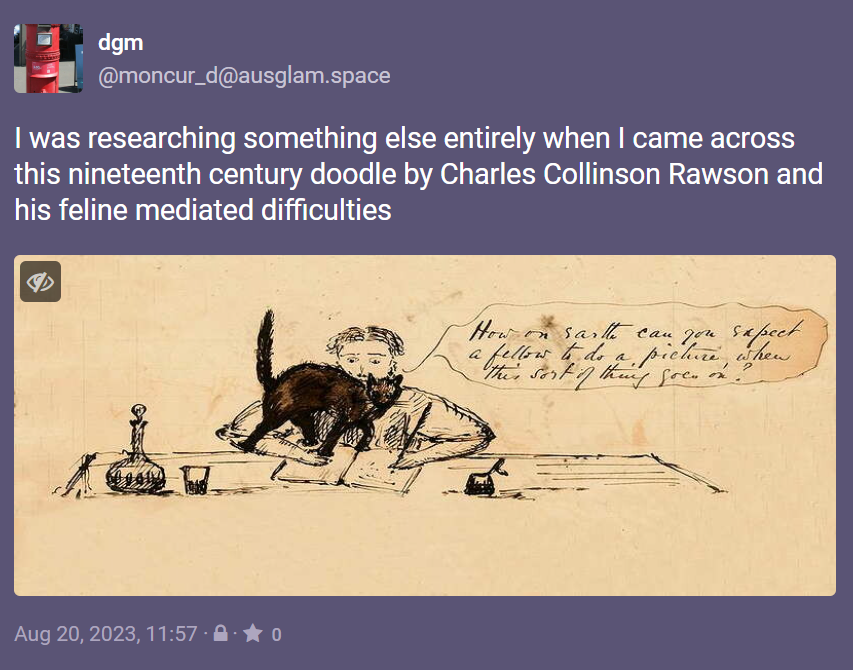
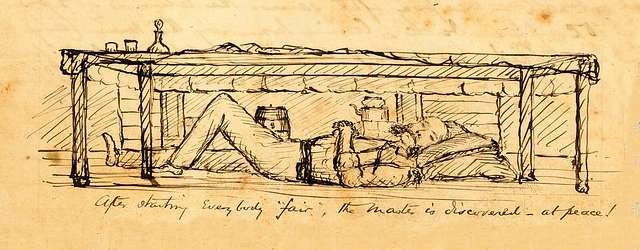
Charles Collinson Rawson was a migrant from England who settled in Port Mackay, now simply Mackay, in Queensland in 1867.
As well as being a grazier, a Justice of the Peace, a minor artist Rawson was diarist who frequently illustrated his journal with doodles. I first came across him during the pandemic when his 1877 sketch of vaccination day in Port Mackay was widely reposted.
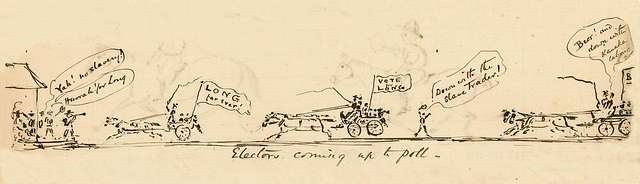
He also doodled about the 1877 election and appears to have been against blackbirding, the process of inducing Kanaka labourers to come and work in the canefields as indentured labourers and virtually enslaving them
His diaries are lodged in the State Library of Queensland in Brisbane, which is where most of these images come from.
All in all he seems to have been an engaging character, and unafraid to make fun of himself
J was down in Melbourne for a meeting in Heidelberg ast Thursday.
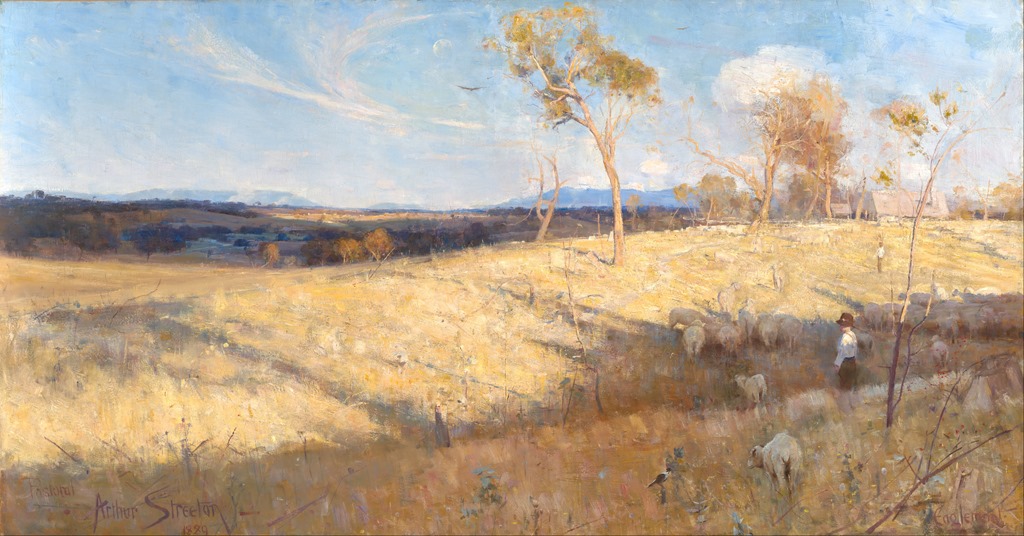
Chatting over breakfast this morning she said ‘Did I tell you that I saw a view that’s similar to Streeton’s Golden summer?’
Not terribly surprising, even if the area is now built up suburbia.
Streeton was a member of what’s the Heidelberg School of Australian impressionist painters, who were basically a group of artists who went out on camping and painting expeditions around Melbourne in the late 1880’s.
But actually they didn’t really go that far out of the city, simply because they went on the train – after all how else would one carry easels, tents, art supplies and the rest?
And, as a consequence they were limited by how far the suburban train network round Melbourne went out of the city.
This is neatly illustrated by their first camp in 1885 being on a property near Box Hill.
Box Hill is nowhere near Heidelberg, in fact it’s on a completely different train line, but in 1885 it had a railway station, which had only opened three years previously in 1882, and was still a relatively rural location.
It was only after the Heidelberg railway station opened in 1888 on what is now the Hurstbridge line that the artists started using the area round Heidelberg for their summer camps, as it became possible to haul all their paraphernalia out to a summer camp site without resorting to hiring carts from the city.
At the time Heidelberg, even though the town had been established in the early 1840’s, was quite rural and remote and set in bushland. The station was as far as the train went until 1902 when the line was extended as far as Eltham.
I’ve been down an internet rabbit hole with this one.
I was reading Peter Hopkirk’s ‘Trespassers on the Roof of the World’, which summarises the adventures and misadventures of late nineteenth and early twentieth century travellers to Tibet, which for much of that time was closed to outsiders, when I came across a reference to ‘self- heating soup’.
The reference was in an account of Sir George Littledale’s expedition in 1895, and I was astounded that they had self heating soup in 1895.
So first of all I checked Google Books to check we didn’t have a transcription error
which was a little bit problematical as the search didn’t bring up the Littledale’s own account of the journey.
However I tracked down a searchable full text version of the Littledale’s own account of the journey and there it was
Silver’s self boiling soups, which are also described as self heating elsewhere in the text.
This is quite interesting as self heating cans were not supposed to have been invented until 1897 by the Russian engineer Yevgeny Fedorov, yet the Littledale’s had some self heating soup in 1895.
Unfortunately I could not trace any information about Silver’s self-heating soups, and how they worked.
I’m guessing that, like contemporary self heating cans you broke a seal allowing two chemicals to mix and generate an exothermic reaction, a bit like these disposable single use handwarmers you see for sale in ski shops.
The interesting thing is that they seem to have dropped out use.
I couldn’t find any record of any of the early twentieth century Antarctic explorers using them, but apparently Hiram Bingham used them during his expeditions in Peru around 1910.
Strangely, searching Trove, I did find an article in the Cobram Courier of 25 March 1915 on self heating cans, where they were described as a ‘new Yankee invention’, even though they had been around for almost twenty years.
Self heating soups had their heyday during world war two, when the allies issued their soldiers with cans of self heating soup. These cans worked slightly differently from current self heating cans with a compartment filled with a mixture of iron oxide and aluminium in the middle of the can, and a magnesium fuse.
Inert until the fuse was lit, the iron oxide mixture reacted to give an exothermic reaction to heat the soup.
I couldn’t find an example of a self heating soup can, but the Scott Polar Research Institute’s museum does contain two self heating cans of cocoa that work on the same principle
Every time I drove down to Chiltern to work on the documentation of Dow’s pharmacy, I would pass a dirt road signposted to Yeddonba with a stylised hand on the road sign, and I always wondered what it led to.
The site is well signposted and about two and a half kilometres down a dirt road. I managed it easily in my old Subaru, so any car with decent ground clearance should be able to manage it when the road’s dry.
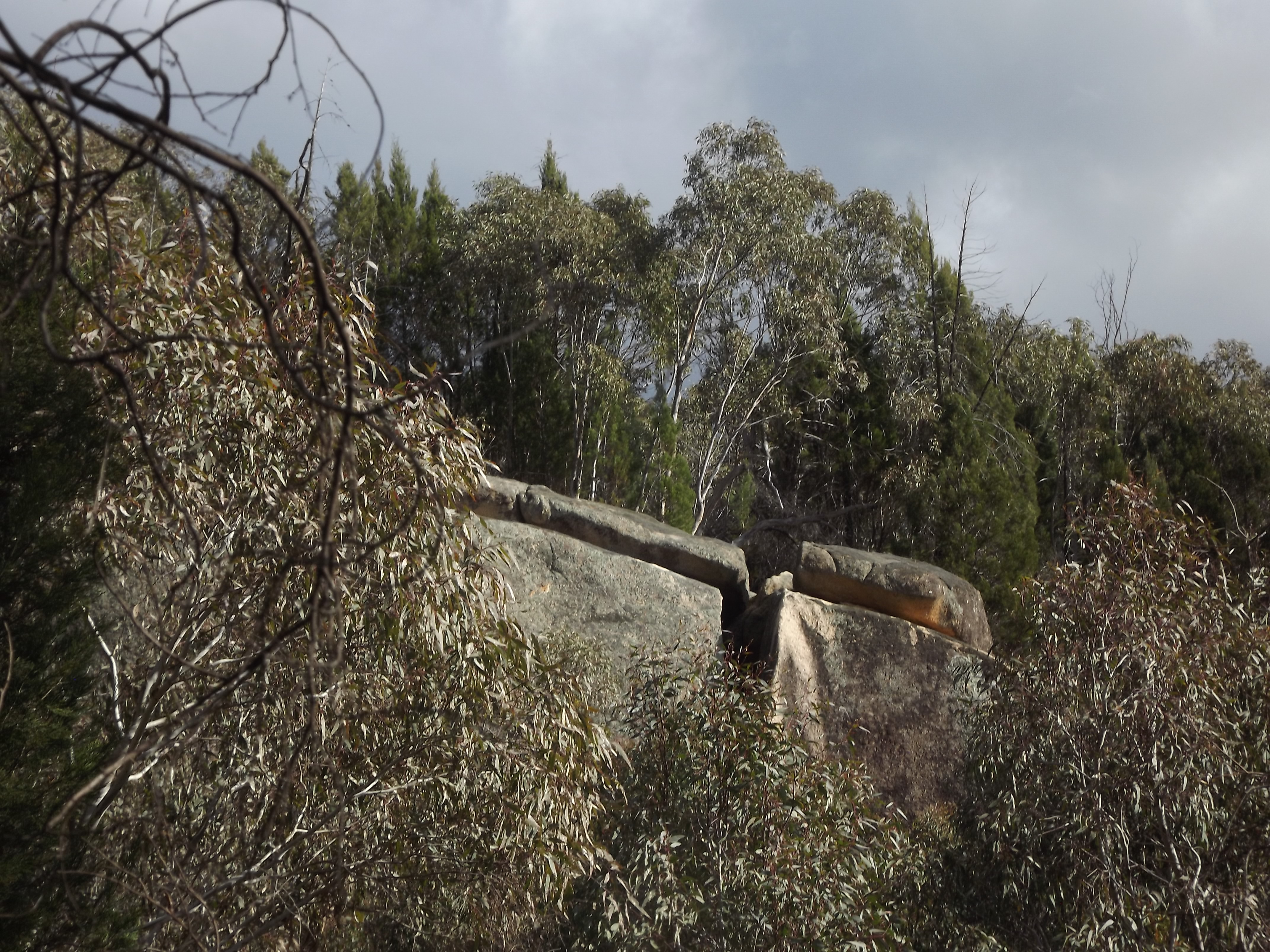
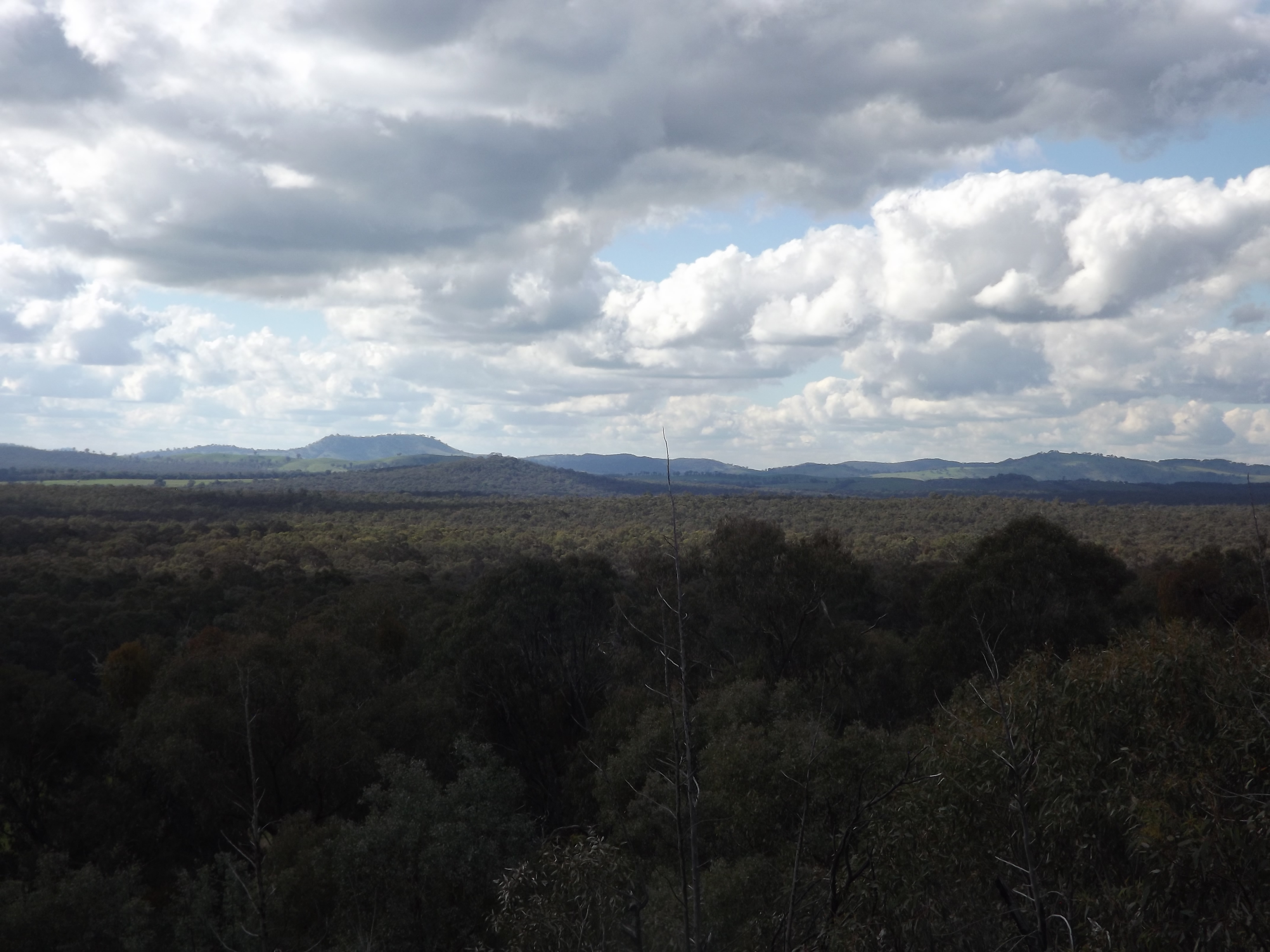
Unfortunately you can’t actually see the rock art at the moment as the wooden access walkway is closed due to weather damage, but it’s possible to bypass the walkway and with a bit of a scramble rejoin the circular walk to be rewarded with some fairly stunning views over towards the ranges
Makes a decent walk, and takes around an hour. Strange I never visited until now …
Lung tonics were common in the nineteenth and early twentieth century – in the days before antibiotics lung infections would hang on, especially in a damp cold winter, not helped by the smoke from coal fires and unregulated industrial air pollution.
Lung tonics were basically formulations to help you cough up phlegm and clear your chest, and occasionally contained something to relax you.
There were various formulations and products around, of which the most well known today is Fisherman’s Friend.
Originally a liquid tonic, Fisherman’s Friend was later thickened to make the lozenges we know today.
Fisherman’s Friends originated in Fleetwood in the North West of England, which was a major deep sea fishing port, and as an immediate hit with fishermen, who would have worked in cold wet conditions on the early steam trawlers. (I also suspect that to a man they smoked coarse pipe tobacco like bogie roll, which wouldn’t exactly have helped their respiratory health.)
Owbridge’s lung tonic was manufactured in Hull on the east coast of England. Like many nineteenth century patent medicines the bottles used were custom made and embossed with the name of the manufacturer, making them easy to identify, and usually made from a heavy glass which added to their longevity.
Hull, like Fleetwood, was a deep sea fishing port and had also been a whaling port, and like Fisherman’s Friend, Owbridge’s was popular among deep sea fishermen and whalers.
Owbridge’s disappeared in the 1960’s, and the factory has now become an apartment block, known as Owbridge Court, in Hull.
What I found particularly striking was the range of locations that Owbridge’s bottles had turned up in – Australia, New Zealand, Scotland, The USA and Canada as well as Jamaica.
Looking online, most of the bottles on sale on Ebay and Etsy are the heavy embossed pattern and seem to date from the late 1800’s and early 1900’s as opposed to the more standard screw top glass bottles used later.
I’ve already argued that the distribution of nineteenth century patent medicine bottles can be used to track increasing globalisation in the nineteenth century, the widespread distribution of Owbridge’s Lung Tonic bottles helps reinforce the point.
Nineteenth and early twentieth century Australia were perpetually short of medicine bottles. Even though Felton and Grimwade, who were originally a specialist medicine bottle importer, started bottle manufacturing in the early 1870’s, Australia was always short of bottles.
This is why quite a few early pharmaceutical bottles were embossed with something like
‘This bottle remains the property R J Higgs, Pharmaceutical Supplier’
And others would have paper labels saying that a deposit was payable if they were not returned after use.
What I didn’t realise, until recently, was that the trade in imported patent medicine bottles continued well after bottle manufacturing began in Australia.
For example, when the Fiji went down in 1891, off what is now known as Wreck Beach, as well as pianos and child’s toys, parts of its cargo included glass bottles made in Germany and destined for use by Bosisto’s.
Now when I’ve been documenting glass bottles at Dow’s I havn’t recorded any of the manufacturer’s marks on the base.
Early bottles didn’t have them, and by the 1920s all the local glass manufacturers (and there were only two or three at most) had combined to form Australian Glass Manufacturers, meaning that cast marks have relatively little value.
There were exceptions, Burroughs Wellcome tended to use their own bottles and have them embossed Wellcome or Burroughs Wellcome on the base.
I’m fairly certain we have no such bottles in the collection at Dow’s but it goes to show that it is worth checking manufacturers cast marks on early Australian bottles …
J, my partner in crime, is an accomplished artist.
While she does do the occasional landscape, what she really likes doing is drawing people and doing portraits.
And like everything, while innate talent helps, you have to practise, one of the exercises is life drawing, which is essentially the exercise of drawing naked people in a variety of poses to see how the body moves and changes.
And it’s not just drawing the young and lithe, the old and wobbly are just as important as subjects, perhaps more so, as being less taut their bodies change more with posture.
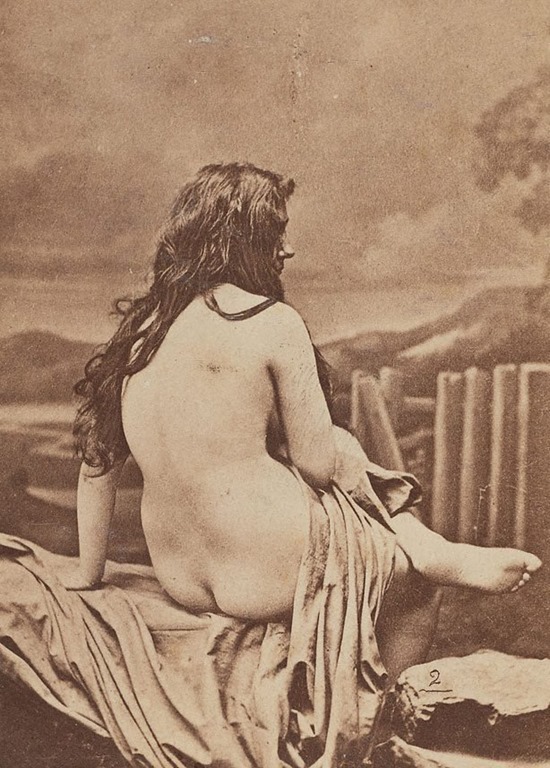
For example in this nineteenth century photograph from the Art Gallery of New South Wales, you can see how the subject’s body fat caused the body to be more solid and block like
Despite the fact we live in a rural area, there’s actually quite a healthy life drawing scene with groups of local artists clubbing together to hire a room and a model for a couple of hours.
All good.
Of course, during the pandemic this all stopped.
And J, like other artists, turned to the web for inspiration. There are a number of websites that host collections of images for use by people practising life drawing.
The images on these are not sexy or erotic, basically they are pictures of naked people of a variety of ages, ethnicities and genders, in a variety of poses.
This actually isn’t new or innovative.
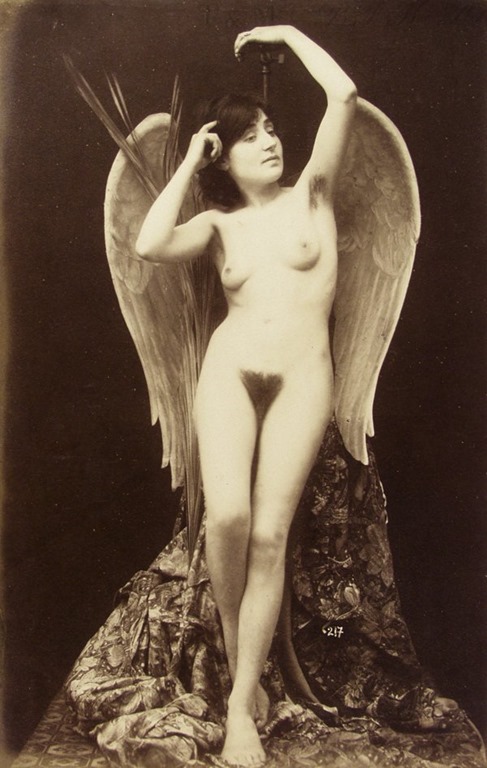
Artists have used nude photographs of models ever since they became available, as in the work of Gaudenzio Marconi, a photographer working in Paris in the 1860 and 70s, who we knew took photographs for various artists working in Paris at the time, including Auguste Rodin.
Some of Marconi’s photographs are quite arresting as in this one of a female model posing as angel
I did try to find who commissioned this image, without any success, nor could I find who the model was, but using Google Lens to do a reverse image search, I did find an image on a Catalan auction site which seems to feature the same model in a less successful pose, perhaps suggesting that the artist was trying to find an image that worked.
I’m equally unsure why the image was commissioned – I’m guessing that it was for some devotional art or a funerary monument rather than a Christmas card.
Marconi was not just a studio photographer. He was in Paris during the siege and the Commune and photographed some of the victims of both.
Back to the present day.
After the pandemic faded away, life drawing with real live humans became possible again and some of the life drawing websites shut down because they weren’t making any money, but slightly disturbingly, one of the websites that shut down said it was closing because the company hosting the site had deemed the content obscene and wished to terminate the hosting agreement.
The other thing that artists started doing was building up little collections of images such as those by Marconi, Muybridge and others, and putting them on photosharing sites.
Increasingly, they are being asked to remove these images as they are ‘not nice’.
Site owners, of course have a perfect right to change the rules as what they will and will not host.
However many of these site are run by American businesses, and there are some very strange things happening in America at the moment with the Christian right increasing in influence.
I don’t understand the ins and outs of American politics, and I’m very much of the view ‘their country, their rules’.
However, because American content hosting and sharing sites are so dominant we are at risk of importing their restrictions by default, and I think that’s something that needs discussion …








 stuff 'n other stuff