Iron 2 heller

A few weeks ago I wrote about how both Imperial Germany and Austria Hungary replaced their small change during world war one with coins made of base metals such as iron as the as the metal from the original coins was needed for the war effort.

At the time I only had examples from Germany and the Hungarian half of the AustriaHungary.

Since then I’ve acquired this example of a 2 Heller Austrian coin

Note the complete lack of any inscription other than the value and the date.

Unlike the Hungarian part of the empire, in the German speaking part of the empire there was a recognition that not everyone spoke German, and hence the low value coins simply carried the imperial eagle on one side and the value and date of issue on the reverse.

Higher value coins such as 1krone coins usually carried the value on the reverse and the emperor’s image and titles (in Latin in the German half of the empire, after all no one spoke Latin, and in Hungarian in Hungarian portion of the empire).

Posted in Uncategorized | Leave a comment

Cooktown and the Panjdeh crisis of 1885

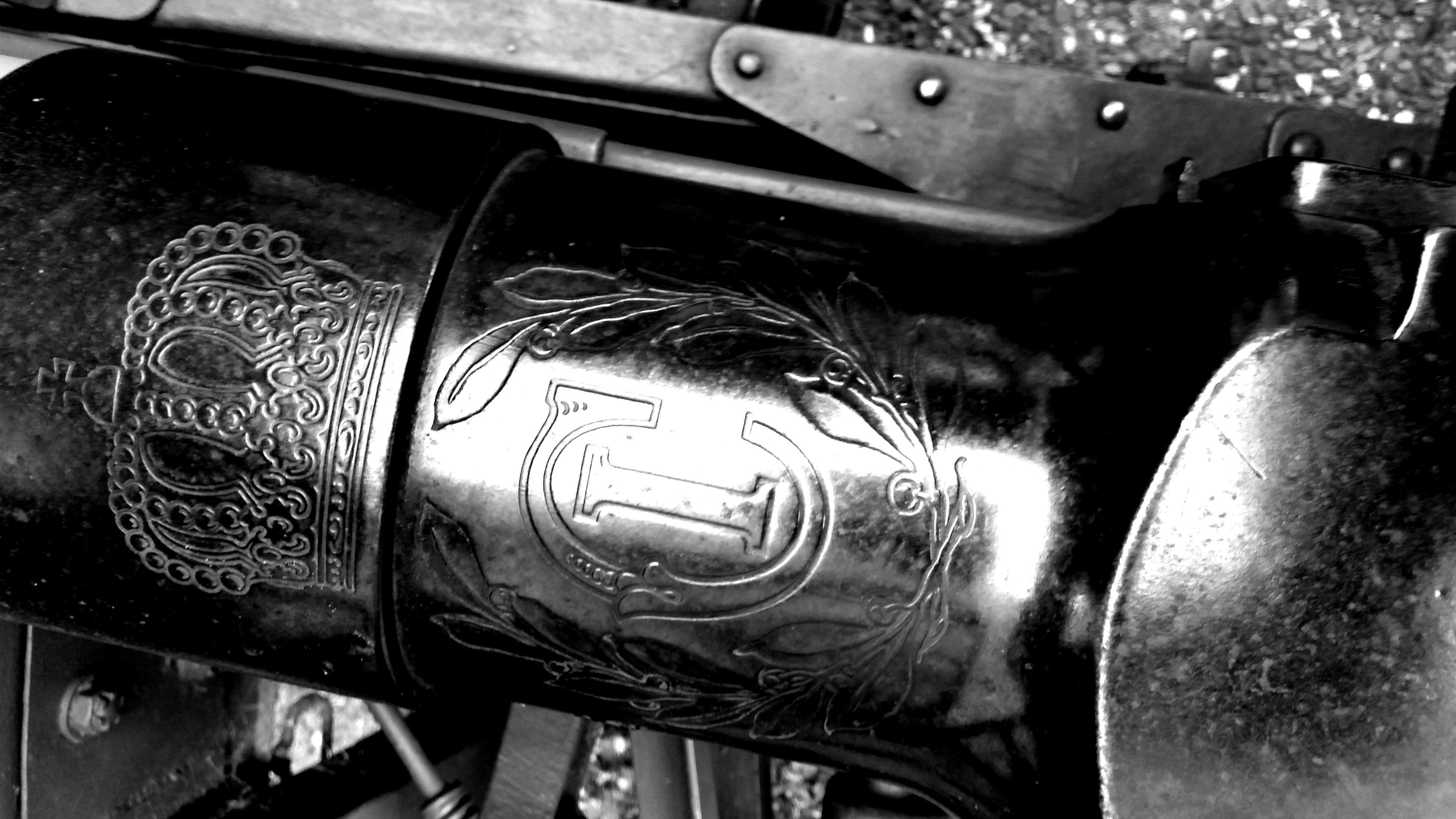
Over on one of my other blogs I mention that there seems to be some confusion over the provenance of the Cooktown gun.

The myth is that in 1885 the town council was worried about a Russian invasion an requested help to defend the town, and were sent a single old and useless Napoleonic wars cannon

I havn’t got to the end of the story, but it’s true that in 1885 there was a major panic in Australia about the possibility of war with Russia over a border incident between Russia and the nominally independent emirate of Afghanistan – I say nominally independent, as while after various disastrous wars in Afghanistan throughout the nineteenth century, Britain had largely left Afghanistan to the Afghans, except for foreign policy, especially where Imperial Russia was concerned.

The British were worried, seriously worried, that as part of the Great Game Russia may somehow absorb Afghanistan as it had absorbed various other central Asian emirates, and that they would have Imperial Russia on the borders British India.

British India was key to the finances of the British Empire – without it the Empire was unsustainable, especially as the Australian colonies, New Zealand and Canada were self governing and did not contribute to the overall running of the Empire.

After the departure of British forces in the 1870s the Australian colonies largely looked after their own defence.

Some, such as gold rich Victoria took matters seriously and invested in defence with coastal defence batteries as at Port Fairy and a small coastal defence fleet. Others did less, and others such as Queensland were sort of in the middle with some coastal defence ships and a militia of sorts.

And then came 1885.

Imperial Germany was in the process of occupying what is now the northern half of PNG, and German warships were prowling off the coast of northern Australia, and somewhere, out in the Pacific was the Russian Empire’s pacific fleet.

Australia suddenly seemed very alone.

There was something not far short of panic, something reflected in the newspapers of the time.

And Cooktown, despite being an important steamship port and telegraph station was suddenly uncomfortably close to both the German forces in New Guinea and the Russian fleet, and a long way from the nearest help.

Not surprisingly there was a degree of panic with the town council asking if the government in Brisbane would pay to evecuate the (white) women and children, presumably while the men stayed to defend the town and hinterland from the tsar’s forces.

And this is where I suspect the myth of Cooktown being sent a Napoleonic war cannon to defend itself against the Russian fleet comes from.

I’ve no doubt the cannon was gifted by Queen Victoria, perhaps in connection with her 1887 Jubilee, and that this has somehow become mixed up with the military preparations in the event of a Russian invasion, and like all stories has grown in the telling….

Posted in Uncategorized | Tagged , , , , , | 1 Comment

Another first world war propaganda postcard

A nice example of a British propaganda card entitled ‘One of our tanks’ showing a British Mark IV tank

The text is quite legible and written in ink

My transcription of the text reads

Addressed to

Mrs Jas Souter
Tassetshill
Auchmacoy
Ellon

Posted

Aberdeen, 12.30PM Feb 5 1918 with standard George V 1/2d stamp

Message

This is the chap to swallow the notes! Hope you are all well, as we are here. How's Willie, he'll make a fine ploughman now. Tell him I was asking for him. From your loving nephew Mac.

Reverse illustration shows British Mark IV tank and caption
'copyright ELP Co - one of our tanks -passed by censor'

Auchmacoy still exists and is a farming estate outside of Ellon in Aberdeenshire. My first guess was that Tassetshill is a house or cottage name, or possibly a now disappeared fermtoun.

Google Maps only finds Auchmacoy, but the Royal Mail postcode finder admits to the existence of a South Tassetshill. The 1903 Ordnance Survey map shows Auchmacoy as a walled estate.

Tassethill lies a kilometre of two to the north east of Auchmacoy and, just to confuse things, is spelled Tassathill on the 1903 ordnance survey map and consists of a small settlement, probably a fermtoun (ie a group of farmworkers cottages clustered around a farmhouse and byres) to the north of Auchmacoy

Looking at a larger scale survey map from roughly the same period, this is confirmed with there being two fermtouns, north and south Tassatshill.

But the Royal Mail address finder only lists South Tassetshill. The 1965 Ordnance survey map still shows two groupings of buildings at Tassathill

My guess is that at some time in the last sixty or so years North Tassatshill was abandoned.

Scotlands people is not much help in identifying the addressee, there is no James Soutar (or his wife) listed in either the 1911 or 1921 census. This is not surprising as the land tenure system in the North East of Scotland meant that people would often move from job to job, rather than settling in one place.

The mention of Willie making a fine ploughman suggests that the Soutars were skilled agricultural workers, with a ploughman being a skilled occupation requiring the ploughman to be able to handle a team of heavy horses and plough a straight furrow – there even used to be annual ploughing championships where ploughmen competed for prize cups, and perhaps a small amount of cash.

As agricultural workers the Soutars would probably been exempt from conscription, as my grandfather, a tenant farmer further down the coast at St Cyrus was…

Posted in Uncategorized | Tagged , , | Leave a comment

Pfennigs and fillers

You may remember that in a previous post I mentioned in passing that during the first world war, the German Empire withdrew the low value cupro nickel coins in favour or iron coins as the metal in the cupro nickel coins was required for the war effort.

In this illustration the top two pictures show a 1908 cupro nickel 5 pfennig coin and the bottom two its 1918 iron replacement.

As you can see they are essentially the same with the imperial eagle on one side and the value on the other, although the layout of the text on the iron replacement coin is slightly different.

But it wasn’t just Germany that was short of valuable raw materials. Its ally, Austria Hungary, a primarily agricultural entity, was also short of raw materials and also replaced its low value coinage with iron substitutes.

The Austro Hungarian currency was the Krone. Like the Euro today, the banknotes were the same across the empire, but  Austrian and Hungarian halves each minted their own coins, which were the same size and weight and circulated equally in both halves of the empire, just as today in the Eurozone your change comprises of a mixture of coins from different member countries.

Just to confuse things, the subdivision of the Krone was called the heller in Austria and the filler in Hungary – this is why the Czech Koruna is still notionally composed of 100 haller – the currency still uses the Czech name of the old Austro Hungarian currency and its subdivision.

The above example is a Hungarian 20 filler from 1920, the year the treaty of the Trianon, which formally ended the war between the allied powers and Hungary.

When the Austro Hungarian empire collapsed in 1918, Hungary was plunged into chaos.

First, it became a liberal republic, and then the communists seized power to set up a socialist people’s republic, which was in turn replaced by a conservative military dominated government.

Its leader, Miklos Horthy, styled himself Regent, although there was never an intention to invite either the last Habsburg emperor Karl, or his children back.

Hungary was a country ruled by a Regent without a king.

In the middle of this chaos, there was a war with Romania over Transylvania, with the Romanian army even occupying Budapest for a few days

Romanian cavalry in Budapest (public domain)

And in this chaos, currency reform was not a high priority and the Hungarian government carried on minting small change using the Habsburg era design, simply changing the date on the dies

Just to add to the confusion the Hungarian mint was located in what is now Slovakia, which in the breakup of the empire became part of the new Czechoslovak Republic.

The Hungarians hurriedly moved the coin minting machinery to Budapest, but while they changed the date on the coins, they left the mint mark (KB) below the value on the rear of the coin the same even though the coins were now being struck in Budapest.

Old iron coins, both heller and filler, can be picked up for a Euro or two in flea markets across central Europe, or else via ebay, which is where this slightly battered example came from …

Posted in Uncategorized | 1 Comment

Air raids in World War One

Sometimes, it seems that my at times dilettante research is a series of rabbit holes.

And so with my attempts to date a world war one propaganda postcard of a cartoon German soldier being pursued by a tank has led me to the little known story of German air raids on Britain.

While the story is almost forgotten today, the first world war saw the first bombing of civilian targets, both by Germany using airships and later large biplane bombers, and by both Britain and France using bombers.

Large bombers were not unknown at the start of world war one. Tsarist Russia was the first to build large biplane bombers, although they were mostly used to attack troop formations rather than civilian targets.

Germany began by using airships to bomb civilian targets in 1915. As attempts to bomb strategic locations they were mostly a failure, missing targets due to poor navigation and the general non manoeuvrability of the airships and poor bomb aiming technology.

However they were extremely effective in sowing fear among a civilian population unused to being attacked directly.

Raids carried on throughout the war but it was not until 1917 that German forces attempted a sustained series of attacks, perhaps because things were becoming increasingly difficult in Germany – there were food riots in 1916, and Ernesta Drinker records seeing increasingly longer queues for rations, in part due to the poor harvest in 1916.

By late 1916, the war had bogged down in the mud of Flanders to a bloody stalemate and had become a war of attrition. While the generals still talked in terms of military breakthroughs, the reality was that it was a war of attrition, and it was Germany, and its ally Austria Hungary, that were running out of resources and were increasingly unable to feed both their armies and civilian population.

It’s a sign of how short of materials Germany by 1916 that that year that the Reichsbank started to withdraw the cupro-nickel and copper small change (basically the copper 1 and 2 pfennig coins and the cupronickel 5 and 10 pfennig coins) replacing them with with aluminum 1 pfennig coins and iron 5 and 10 pfennig coins as the copper and nickel was needed for the war effort, leading to a chronic shortage of small change as they never managed to mint enough of the iron coins to replace the withdrawn cupronickel coins.

They withdrew the aluminum 1 pfennig after a year and never produced a substitute 2 pfennig coin.

The aim of the raids was to both dishearten the British population at large and to cause the British government to divert resources in terms of both aircraft and anti aircraft guns from the western front to defend London and the south east of England.

While, compared to World War 2, few people died as a result of the German air raids, they caused great disruption with at times more people sheltering in the London Underground than there were during the London Blitz of world war 2.

The Underworld – Walter Bayes (public domain via Imperial War Museum London)

Arrangements for the civilian population were initially uncoordinated, but with the increasing frequency of the raids, it became clear to the British government that they hadhhave not only a military response but also that they had to become more organised with regard air raid warnings and delegate local officials to help coordinate the response – in short not only to be seen to be doing something but to actually do something effectively.rit

The raids did not deliver much of an advantage to Germany, although they may have increased war weariness in the British civilian population, but whatever effect they had on the progress of the war was overshadowed by the Russian Revolution and the Bolsheviks suing for peace, allowing Germany to divert troops from the eastern front.

However, one can argue that the early experience of bombing raids helped in 1940 as it gave the British authorities a template as to how to manage the response to the immeasurably larger and effective air raids during the Blitz.

Posted in Uncategorized | Tagged , , , | 1 Comment

A conundrum from the first world war

I’ve been spending my money again and picked up this example of a British world war 1 propaganda postcard

which shows a German soldier running from an advancing (and presumably British) tank.

The rear of the postcard is a bit of a puzzle though

Someone has stuck a King George V green halfpenny stamp on the postcard and then a message has been written using the whole back of the card, including over the stamp.

I’ve done a rough transcription of the message and my reading of it is as follows

Dearest Sister,

just a line hoping to find you in the best of health, as it leaves me abouth the same as kate(?)lifted up.

[I] have not heard anything of your name for ages, but still live in happiness,  alls well at home except kiddies have got bad colds [.] I expect its to do with fetching the poor devils out of bed [...] its damn near time this war ended.

we have had snow for three weeks much so you can {leet?}

it's lovely hearing you are in a perfect state of remaine(?)

you loving B

Notes:

Remaine is an obsolete form of remain and can mean remaining content.

Leet is an older form of let in some english dialects

Post card has a King George V half pence stamp but no address

The message is not quite coherent, but it’s interesting that there is a definite hint of war weariness in the message

My guess is that the postcard had come with the stamp already stuck on and the writer decided to use the whole back of the postcard for the message, perhaps enclosing it in an envelope.

Given that it mentions snow, I presume in England, on the ground for three weeks, it suggests that the card was written in winter, but which winter?

While tanks were first used in combat by the British in September 1916, they did not see significant use until 1917. Both the winters of 1916 and 1917 were particularly harsh on the western front with food riots occurring in Germany in the winter of 1916.

However, my gut feeling is that the card dates from the winter of 1917, simply because it was not until the British began using the Mark IV tank that tanks began to perform effectively…

[update 26/07/2025]

I’ve had a second look at the text and where the writer writes

… fetching the poor devils out of their beds

I now read it as continuing on raid nights

which I’m guessing is a reference to the German air raids on the south east of England by both Zeppelin air ships and in 1917 also by Gotha bombers…

Posted in Uncategorized | Tagged , , | 2 Comments

A ride to Yasnaya Polyana

Off the back of my research into Constance Garnett, and her connections to both the Russian exile community in 1890’s London, I came across the story of her contempories, and competing translators, Louise and Aylmer Maude.

The Maudes were supporters of the Tolstoyan movement, a form of Christian Anarchism inspired by the religious and mystic writings of Leo Tolstoy, and which attracted a not insubstantial number of adherents in late 1890s Britain.

The Maudes initially lived in a Tolstoyan commune in Chelmsford, and were involved in other Tolstoyan groups in England, as well as helping the Dukhobors migrate from Russia to Canada.

And then I went down an internet rabbit hole.

The claim was that two members of the Purleigh commune suffered a crisis of faith and decided to ride their bicycles across Europe to Yasnaya Polyana to discuss matters of belief with Tolstoy in person.

It was such a completely mad story that I had to investigate.

Strangely, at first sight it didn’t seem impossible. Yasnaya Polyana is roughly 2500 km due east of the Hoek van Holland and across the north European plain.

From experience, you can easily ride between 80 and 100km in a day on flattish roads on an old style single-speed, or better, a three-speed bicycle, at an average speed of around 20 km/h, and the roads across the Netherlands would have been famously flat and doubtless the roads across the German empire would have been well maintained and gravelled.

Russia would have been a different case.

In the summer of1941, when the Nazis invaded, the roads were dirt, but the Nazi forces found them navigable as they had dried out to a firm surface. Autumn and winter were a different story.

I doubt that the roads would have been any better in Tsarist times, but were probably no worse, meaning that they would have been able to ride most of the way.

So, allowing them an average 60km a day, more or less, to account for punctures, breakdowns and rest days, they could probably have made the ride in under two months, and this could account for them turning up in late summer at Yasnaya Polyana in shorts – basically they would have spent the warm dry months riding across Europe.

It’s a great story, but it may well not be true.

My only source for the story is an article from an anarchist magazine about the origins of the Stapleton Colony, a Tolstoyan commune outside of Leeds.

The only other reference a websearch turns up is from the Cornwall family history magazine from someone who was researching the life of Bertie Rowe and his involvement in the anarchist movement at the beginning of the twentieth century.

Many of the details are the same including a friendship with Tom Ferris but the journey to Yasanaya Polyana is different.

Ferris and Rowe work their passage on a ship to Riga, and the ride freight trains by climbing into open box cars to Yasnaya Polyana, where they arrive wearing light summer clothing.

Which one is true?

I don’t know, but the cargo ship to Riga route was well used by Russian exiles and dissidents sneaking home, so it’s possible Rowe and Ferris asked for advice and were put in contact with people who could facilitate a clandestine journey to and from Russia.

And the clandestine nature of the journey may be the key.

While  it’s true that before the first world war people could travel western Europe with little or nothing in the way of passports and permits, both Tsarist Russia and the Ottoman Empire required visitors to have passports and supporting documentation.

As anarchists, and Rowe and Ferris appear to have made an attempt to avoid the 1901 census, along with other members of the commune, making it unlikely that they would apply for passports and permits, and let’s face it, two penniless English anarchists wearing shorts and riding bicycles are unlikely to have been waved through border control by Tsarist officialdom.

So why the two stories?

Honest answer, I’ve no idea.

I could make up all sorts of scenarios, such as they actually tried to ride to Yasnaya Polyana, were turned back, and took the more clandestine route via Riga.

Tolstoy’s correspondence suggests that he met with Rowe and Ferris on 01 January 1903, which would have been the depths of the Russian winter.

Tolstoy, really wasn’t very interested in Ferris’s religious view but did courteously wish them a safe journey home on 19 January 1903.

This is still, of course the depths of winter, and makes the ship and box car route far more likely. It also explains Tolstoy’s gift of winter clothing to Rowe and Ferris.

Certainly, the did make it back to England. We can place Rowe in Leeds in August 1904 where he was arrested for protesting on behalf of the unemployed

The interesting thing about the court report is not his conviction but that he had previous convictions, one assumes for similar acts of protest.

Of Ferris, I can find no trace, he doesn’t appear in any of the sources I have access to.

Posted in Uncategorized | Tagged , | 1 Comment

Tolstoy, translators and English utopianism

While spending a little more time with Constance (and the Russian revolutionary community in London at the end of the nineteenth century), I kept coming across the names of Louise and Aylmer Maude who were also translators of Tolstoy’s work at roughly the same time.

Louise and Aylmer Maude were British expatriates in Moscow at the end of the nineteenth century.

Louise was the daughter of a family of Scottish jewellers working in Moscow, Aylmer had originally started out working for Muir and Mirrilees, a large Scottish owned department store in Moscow (which survives to this day under different ownership and is now known by it’s Soviet era name of ЦУМ (TsUM, tsentralni universalni magazin, the Central Department Store, not to be confused with GUM, gosudarstvenni universalni magazin, the State Department Store).

In time Aylmer branched out on his own, set up a successful carpet business, which he subsequently sold. The money allowed Louise and Aylmer to move back to England and devote themselves to the translation of Tolstoy’s works, including his more mystical religious books.

Both Louise and Aylmer had met Tolstoy at Yasnaya Polyana, before they left Russia, and were obviously highly impressed with him, and initially lived in a quasi Tolstoyan commune in Essex outside of Chelmsford, and worked on producing the definitive translations of Tolstoy in English.

(Utopian Tolstoyan communes, such as the Stapleton Colony and the Whiteway Colony were surprisingly common and surprisingly long lived in early twentieth century England.)

While Constance Garnett had met Tolstoy on one of her visits to Russia, and had received his permission to translate his works, the Maudes concentrated on producing more technically accurate translations of his works. Some experts (and I am most definitely no expert) prefer the Maudes’ slightly dry translations over Constance’s at times slightly wooden translations, which might result from her really only knowing Russian as a written language, while the Maudes had of course lived and worked in Russia.

At the same time, some people continued to prefer Constance’s translations over the Maudes’ drier versions. The situation was further confused by Tolstoy waiving his rights to translations of his books, which meant there were various competing translations of his more popular novels around, including those translated at second hand from French and German translations.

Both Constance and the Maudes were members of the Fabian society, though I suspect, given their Tolstoyan views, the Maudes were more enamoured of William Morris faux medieval model of socialism with sturdy artisans producing goods and trading among themselves, than the more revolutionary model espoused by the exiled Russian revolutionaries in England.

Despite their Tolstoyan views, Aylmer Maude did serve as a translator with the British Empire forces (including some ANZACs) in North Russia during Churchill’s ill starred intervention on the side of the White forces during the Russian civil war, but seemed to be more interested in philosophy than the conflict itself, and perhaps identifying more with the people trying to simply bring about social change than with pure ideology.

Both Aylmer and Louise died in England in the late 1930s.

Posted in Uncategorized | Tagged , , , | 1 Comment

Sergei Stepniak

Sergei Stepniak is obviously key to the story of the Friends of Russian Freedom, in 1890s London, as well as to the life of Constance Garnett.

So, as an exercise, I thought I’d try and see what we could learn about Sergei Stepniak’s life in London from publicly available documents.

But by what name was he known by to the British authorities?

He was born Sergei Mikhailovitch Kravchinski, but like many Russian revolutionaries of the time habitually used a pseudonym, in his case Stepniak, which means something like “steppe dweller”. 

At the time most people in England were unfamiliar with Russian names and naming conventions, which made identifying him a tad difficult.

However, in the newspaper reports of his death he was usually referred to a M. Serguis Stepnyak or sometimes Stepniak, so I went with that.

The M is of course short for monsieur, and was used at the time in English to signify that the foreigner was a gentleman or someone of equivalent class to a gentleman – his title would most likely  have been gospodin – having learned Russian in Soviet times I am incredibly vague about pre revolutionary styles and titles, and who would have been referred to as what.

Using familysearch.org, it was easy enough to find his death certificate and probate records, and to find that his wife was indeed known in English as Fanny Stepniak.

Fanny is not really a Russian name, but because it was used for the name of Fanya Kaplan, who tried to assassinate Lenin I assumed that Fanny Stepniak used Fanny as an anglicisation of Fanya.

Unfortunately, Fanya is not really a common Russian name either, and that leads to a problem.

I tried searching for the Stepniaks in the 1891 census, and they are not there, whether because they deliberately dodged the census by wishing to remain anonymous, or were abroad. Fanny Stepniak appears in the 1901 and 1911 censuses as a widow engaged in literary work, so perhaps she really did use the name Fanny in England, and not Fanya as I assumed,  and she is also referred to as Fanny on her death certificate.

Unusually for a Russian, she does not give a patronymic – for example, Sergei was formally Sergei Mikhailovitch as his father’s forename was Mikhail. 

For the moment her actual identity is a mystery to me.

I did try searching for Kravchinski, Sergei’s  original surname, as opposed to his pseudonym, and came up with a complete blank.

While some orthodox church records from Ukraine have been digitised – Sergei was born in the Kherson governate of the Russian empire which is now part of Ukraine –  many have not, and of course as war and revolution have meant that many records have been lost.

More importantly for our purposes, Kravchinski does not appear in the 1891 census, suggesting that if they were in Britain at the time they must have been using yet another pseudonym…

Posted in Uncategorized | Tagged , , | Leave a comment

The Society of Friends of Russian Freedom

Sometimes a diagram is best.

Fabian Society and Russian Freedom members

On the back of my looking into the life of Ethel Voynich, I kept on coming across the same names, sometimes in different contexts, so to try and make sense out of it I drew my self a very rough mud map.

  • Ethel Voynich was a governess to Sergei Stepniak’s sister in law’s children in Russia, and was a translator and a member of the Friends of Russian Freedom.
  • Constance Garnett learned Russian from Feliks Volkhovsky, was a member of the Friends of Russian Freedom
  • Feliks Volkhovsky was a friend of Sergei Stepniak and a fellow exile in London, and a member of the Friends of Russian Freedom
  • Olive Garnett was a sister in law to Constance Garnett, was apolitical, learned Russian from Feliks Volkhovsky. She appears to have had a crush on Sergei Stepniak, cutting off her hair when he died in a railway accident. She later worked as a governess in Russia, before returning to England.
  • Charlotte Wilson knew both Stepniak and Ethel Voynich and also worked as translator of Russian, and was a members of the Friends of Russian Freedom.

As well as the links to the Friends of Russian Freedom, most of the women concerned – apart from the apolitical Olive Garnett – were also connected with the Fabian Society, and in the case of Charlotte Wilson various Russian influenced marxist reading reading groups.

Many of the women involved perfected their Russian by spending time working as governesses in Russia, probably because it was really the only way a young woman could gain experience of real spoken Russian at the time.

It’s an oddity of the times that the only way English speakers could learn Russian in the late Victorian era was via exiled revolutionaries. (Actually it’s not that odd – when I first learned Russian in the early 1970s, the only way one could get experience of spoken Russian was via exile groups, and there used to be these sessions at Strathclyde University where we got to speak to both recent exiles and some people who seemed very old, but who had probably been children or teenagers at the time of the 1917 revolutions)

And while we might laugh at Constance Garnett’s slightly prudish translations today, the women involved in the Friends of Russian Freedom were responsible to introducing Russian literature to a late Victorian and Edwardian audience, including such literary figures as Katherine Mansfield, who became fascinated by Chekhov through translation,

Posted in Uncategorized | Tagged , , | 2 Comments