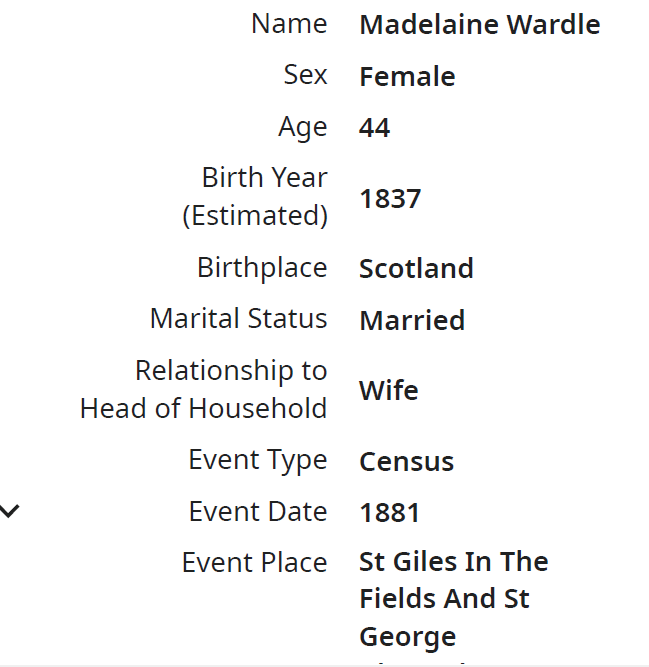
Madeleine Smith is commonly said to have been known as Lena Wardle, and certainly after her second marriage to William Sheehy, she was known as Lena Sheehy, but on the 1881 England an Wales census her name is given as Madaleine Wardle.
So what name did she use?
Well on her 1861 marriage certificate she defiantly scrawls her name as Madeleine Hamilton Smith, but if you search the 1861 census records for England and Wales, there is no Madeleine Smith listed who seems a plausible fit, and exactly one Lena Smith, who also happens to be the correct age, except that she is listed as being in Devon at Stoke Demerel, where she is listed as a visitor – from Middlesex.
I guess it’s just possible that the census details are garbled, but I think we have to say we can’t identify her in the 1861 census with any certainty.
The 1871 census is a different matter.
We know from the census that George Wardle was visiting family in Leek, Staffordshire, and that Madeleine was not with him, perhaps having decided to stay with the children in London.
As George was not at home Madeleine would have completed the census return
And while she’s shaved a year or two off her age it’s clearly her, even if the census return was a bit garbled and will need to be checked against the original scan.
My guess is that she usually called herself Lena, but occasionally reverted to Madeleine.
Why does this matter?
Well if I’m to search the passenger lists for her arrival in New York, knowing she almost certainly called herself Lena Wardle is a help, even if she was a bit elastic with her age and date of birth …
A few years ago, I got interested in the story of Madeleine Smith, a youg woman in Glasgow who was put on trial for murdering her clingy boyfriend by putting arsenic in his cocoa when he refused to break off the relationship and return her letters to him.
The story particularly notorious at the time because, among other things, Madeleine’s letters included a graphic description of alfresco sex with her boyfriend in the woods at Rowardennan.
The letters were read into the court transcript – literally as a court official read them out in open court. The letters were hot stuff in 1857 and were a source of mid Victorian tittilation and were reprinted in various pseudo legal works for the perusal of learned gentlemen.
I was interested in the case for two reasons – the use of arsenic, which was everywhere in the mid ninteteenth century, and the way the story was spread round the world by the first long distance telegrams. (Australia wasn’t connected until 1872, but the telegrams sent to India were sent on on steamships bound for Australia where they were retelegraphed to the east coast newspapers.)
Now, I knew that after her acquittal Madeleine had gone to ground, and later married George Wardle, who was William Morris’s workshop manager printing his wallpapers etc, and a minor artist in his own right.
Recently, when I’ve been researching early British socialists such as Walter Crane and Ethel Voynich, I’ve come across hints that Madeleine Smith, now usualy called Lena Wardle was involved in the early days of the Fabian Society before she separated from George Wardle in 1889.
But I hadn’t been able to find any trace of her, and then I had a brainwave, search for George Wardle and there he was in the 1881 census
And guess what, there was Madeleine Smith with her name mis-spelt
Neither Madeleine or George seem to appear in the 1891 census.
George Wardle, I know spent time painting in Italy after his 1889 separation and Madeleine moved to New York.
My next step is, I guess to search the US passenger records to see if I can find when she arrived.
She doesn’t seem to be in the 1890 US census records, but they are fragmentary due to most of them being lost in a fire in 1921. While some of the New York census returns have survived, by no means all of them have, so it’s not impossible she was already living in the US in 1890…
I’d already established that in both the 1891 and 1901 censuses she was listed as a school teacher living in Cheslyn Hay in Staffordshire.
But then?
Well, the 1911 census for England and Wales shows her still living in Cheslyn Hay, but she is now a school head mistress, and has her 19 year old niece, Annie Aline, living with her.
Unlike in previous censuses, Katherine appears to own her own home rather than lodging with other people
Annie is listed as a student, but of what, the records don’t say.
As would be expected by 1921 Annie was no longer living with Katherine, but Katherine, still a headmistress is obviously doing quite well as she can afford to employ a live in servant cum housekeeper.
And then in 1926, we get into handwaving territory – a marriage between a Katherine Scragg and a Daniel Whitehouse is recorded in Cannock in Staffordshire (Cannock is the district in which Cheslyn Hay is located.)
Unfortunately, the online information available is minimal, to say the least, and without paying for a copy of the marriage certificate, I’m unable to say if it was definitely Katherine’s marriage.
However, there’s some circumstantial evidence to support Katherine marrying late in life.
In 1939, as part of war time emergency regulations the government created a register of everyone living in the United Kingdom as part of the process of issuing identity cards to the civilian population, and in the register for Cannock, there’s a Katherine Whitehouse listed with the same birth date as Katherine Scragg.
She appears to be living on her own, suggesting that her husband had died, and is described as a retired school teacher.
In 1941, the death of Katherine Whitehouse is recorded in Cannock. Again, there is a fee payable for a digital copy of the death certificate to definitively confirm the details, but circumstantial evidence suggests that Katherine Whitehouse is the same person as Katherine Scragg.
I’m pleased to find that despite the trauma of her 1887 assault she appears to have been successful in life and hopefully had a happy few years with her husband, Daniel Whitehouse.
As I’ve said elsewhere I spent part of yesterday afternoon in the library researching Ethel Voynich’s early life to see what I could glean from the England Wales census records
Ignoring the 1871 census which unsurprisingly confirms she was living at home and was a ‘scholar at college’, in the England and Wales1881 census , when she was 16, she is described as a music teacher, which fits, as once she secured a small legacy when she was 18, she took herself off to the Hochschule fűr Muzik in Berlin.
I can’t tell you if she was living at home, as she is listed as a ‘visitor’ which means exactly what it says, but there are two other visitors in the house, also from Ireland but considerably older, so there’s the possibility that visitor was used as a euphemism to cover the fact she was living there long term – one wouldn’t of course want the census people to know you were taking in lodgers, however genteel.
It was in Berlin where she became involved with the Russian dissident community and learned Russian, smuggled banned books into Russia, and spent time as a governess to the family of Sergei Kravchinski’s sister in law in Russia.
By 1891 she was back in London, working for a group supporting Russian dissidents. She still gave her name as Ethel Boole, although she was possibly in a relationship with Wilfrid Voynich by then, and listed her profession as that of journalist and translator.
She was not living at the same address as Wilfrid, but is again listed as a visitor, and was staying with Arthur and Charlotte Wilson.
Interestingly Charlotte Wilson is also listed as a journalist and translator, so it is possible that they both worked together on translating material. Charlotte Wilson is today principally known for her work with the Fabian Society, she was involved with various proto Marxist and anarchist groups, as well as her work supporting Russian dissidents.
It’s also an intriguing thought, to me at least, that Madeleine Smith, who was by then known as Lena Wardle, would have met both Charlotte Wilson and Ethel Voynich through her involvement in the Fabian society.
Fast forward another ten years, and after her 1895 affair with Sidney Reilly, she was listed as Ethel Voynich in the 1901 census and her profession is listed as a novelist. Wilfrid is also listed as living at the same address and his profession is listed as a bibliographer and bookseller.
Despite what they told the census people, they weren’t actually married – that happened a year later in 1902, when Wilfrid listed his profession as an analytical chemist.
However the Voyniches claimed to have been married in 1892, which was clearly a lie, and probably dates the start of their relationship.
In the 1901 census both she and Wilfrid have their surname as Voynich, but in1911, she was listed as Ethel Voynicz, which would be the Polish rendering of Voynich and is still listed as a novelist and author.
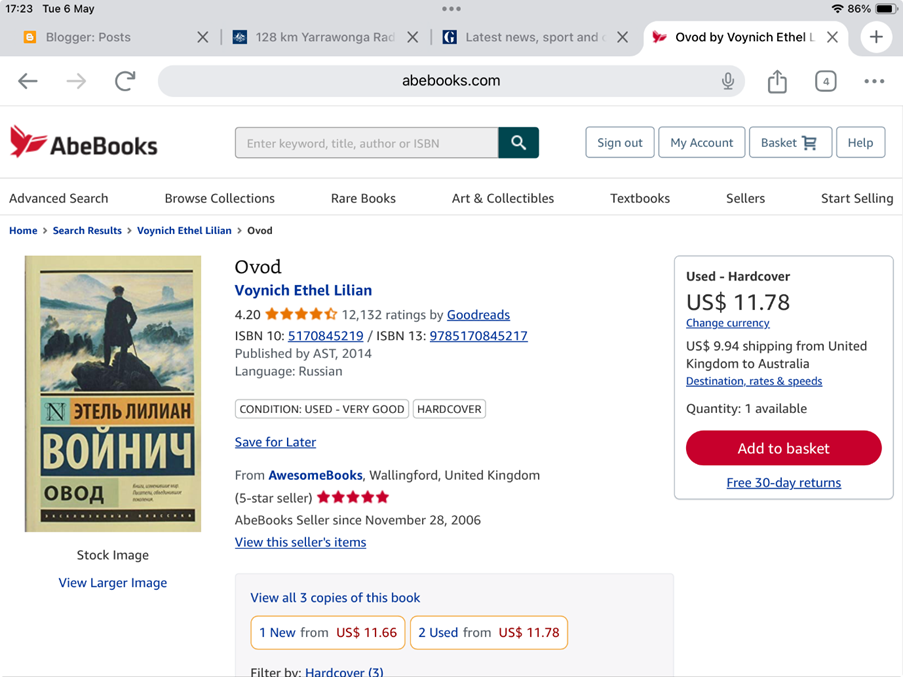
There’s possibly quite a simple explanation for this apparent change in the spelling of the surname – as you can see from this listing for a second hand Russian language edition of the Gadfly (Овод in Russian) Ethel’s name is given as Этель Лилиан Войнич, which would normally be transliterated into English as Etel’ Lilyan Voynich.
Perhaps Wilfred was a little unsure of the English names of the letters and asked Ethel to spell the names out, and she would of course spell the name the transliterated Russian way.
Unsurprisingly, she doesn’t feature in the 1921 census, as Wilfred had moved the antiquarian book business to New York by then and Ethel had followed him to New York.’
She does feature in the passenger lists on ships to and from Europe after Wilfred’s death in 1930, but I havn’t investigated them extensively, but a list of the voyages can be found on Colin Mackinnon’s website.
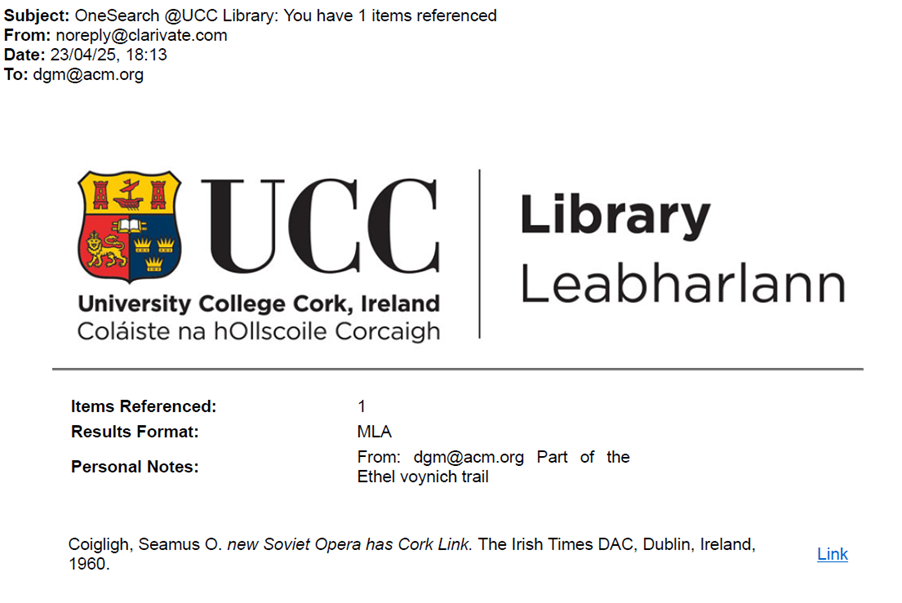
When I was researching the story of Ethel Voynich, I came across the following link
I couldn’t of course access it as I’m not a UCC student or staff member, but fortunately the State Library of Victoria also provides access to the Irish Times archive.
When I found the article in the archive, it turned out to be about a new production of Овод an opera based on the Russian translation on Ethel Voynich’s novel, and didn’t add much to what I already knew.
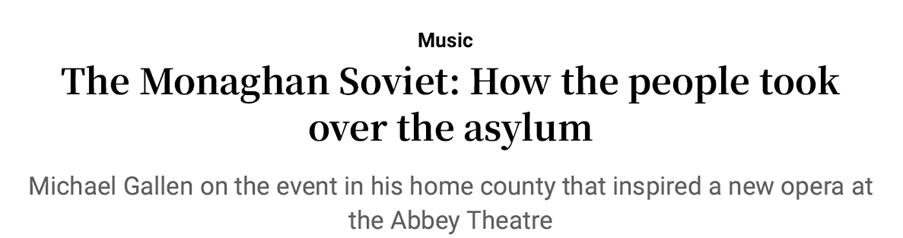
But while I was searching the archive, I came (I was a bit sloppy, I thought ‘soviet opera ireland’ would be a good enough search string) across the following
And that led me down an interesting internet rabbit hole:
In 1919 British rule in much of Ireland had collapsed, and in many places, in the absence of any competent authority, the local trades unions formed councils to run various towns, the most famous being the Limerick Soviet.
These councils were usually called called ‘soviets’ in emulation of the revolutionary events in Russia.
Soviet – совет – in Russian originally simply meant ‘council’ although post revolution it acquired the specific meaning of ‘workers council’.
Bruree Workers Soviet – public domain image
But the Limerick Soviet was by no means the first.
In January 1919 the staff of the Monaghan Lunatic Asylum, in protest at poor working conditions, formed a workers council and occupied the asylum, hoisting the red flag on the roof, and barricading it with the assistance of some of the less disturbed inmates.
A squad of armed police were sent and there was a standoff. Questions were asked in the British House of Commons.
At first the authorities offered better conditions for the male staff numbers and not the women, but the staff stuck together and demanded better conditions for all.
After twelve days the authorities caved in and the workers, both male and female, were granted better working conditions.
The red flag was hauled down, the barricades removed and the workers victory was celebrated with a dance party…
If you’ve been following my blogs you’ll know that I have an interest in both the role of the Okhrana, the tsarist secret police, in penetrating groups of anti tsarist dissident living in London, and also the attempts by the British to destabilise the post revolution Bolshevik government in Russia with the hope of installing a government more likely to continue the war with Germany.
One of these attempts was what is now known as the Lockhart plot.
Lockhart and Reilly’s plot was supposed to swing into action a few days later, and it remains one of the unknowns of history whether Kaplan’s assassination attempt was a misguided attempt by the Left SR faction to move things along or as was said a spontaneous attempt by Kaplan, who saw Lenin’s increasingly authoritarian rule and the banning of the Left SR, as a betrayal of the ideals of the revolution.
As it was Kaplan’s assassination attempt precipitated the Red Terror when people known to oppose the Bolsheviks were rounded up and shot, often with little or no legal process.
Bruce Lockhart had diplomatic immunity and after being held for a few days was released and expelled from Russia.
Reilly had no such immunity but succeeded in escaping and was sentenced to death by the Cheka in absentia. He was later lured back to Russia and executed by the Cheka.
Reilly is an interesting character.
Clearly a sociopath, he had several wives, including some at the same time, as well as a gaggle of mistresses.
While he was probably only ever out for himself, he worked at various times for the Okhrana, Kaiser Wilhelm’s Germany, and British intelligence.
He told so many lies about himself that no one, not even the OGPU, was totally sure as to his origins, but most stories agree that he was born with the surname Rosenblum, somewhere in what is now Ukraine.
He seems to have started out as a courier for a Russian dissident group, smuggling documents in and out of Russia, and was arrested by the Okhrana, after which point he started working for the Okhrana trying to penetrate Russian dissident groups in Berlin and London.
Sometime in the summer of 1895 he met a young Irishwoman who called herself Ethel Voynich, and had an affair with her.
Ethel wasn’t officially Ethel Voynich, or not yet anyway.
She had been born Ethel Lilian Boole, and was one of the daughters of the noted Irish mathematician George Boole, the inventor of Boolean Logic, to the eternal annoyance of computer science undergraduates everywhere.
However, George Boole died when Ethel was quite young, leaving the family in straitened circumstances.
Her mother took Ethel to live in London, where she had a very unhappy time and seems to have turned into some sort of proto-goth or emo, always dressing in black, and being surly with it.
As soon as she was eighteen, when a small legacy became due to her, she took herself off to Berlin to study music, and became involved in the Russian dissident community, learning Russian, working for a time as a governess in St Petersburg, and acting as a courier smuggling forbidden books into Russia.
Ethel also had an ongoing relationship with a Polish Lithuanian dissident, who had escaped to Berlin from a labour camp near Irktusk in Siberia.
Perhaps after her brief affair with Reilly, Ethel started living full time with Wilfrid Voynich and calling herself Mrs Voynich even though they were not legally married.
In 1897 Ethel published a novel, the Gadfly, set in the period when Italy was being unified, describes the life and loves of a revolutionary, and was highly popular at the time.
It was also very popular in the Soviet Union where it was turned into both a film and an opera under its Russian title Овод, and you can still pick up Russian language paperbacks from second hand shops specialising in Russian language publications for a few dollars.
But that name Voynich.
Wilfrid, once he settled down and no longer participated in revolutionary activity, became a respected antiquarian bookseller, and after the first world war, moved his business from London to New York, and yes he is the same Voynich as brought the Voynich manuscript to the world’s attention.
After Wilfrid’s death in 1930, Ethel lived on until 1960 continuing to run the antiquarian book business with the help of Anne Nill, who had worked as a cataloguer for Wilfred.
In Russia she was commonly assumed to have died in the 1930’s, but such was her popularity, when some visiting Bolshoi ballet stars discovered in 1958 that she was still alive, they made a special point of visiting her and bringing her flowers.
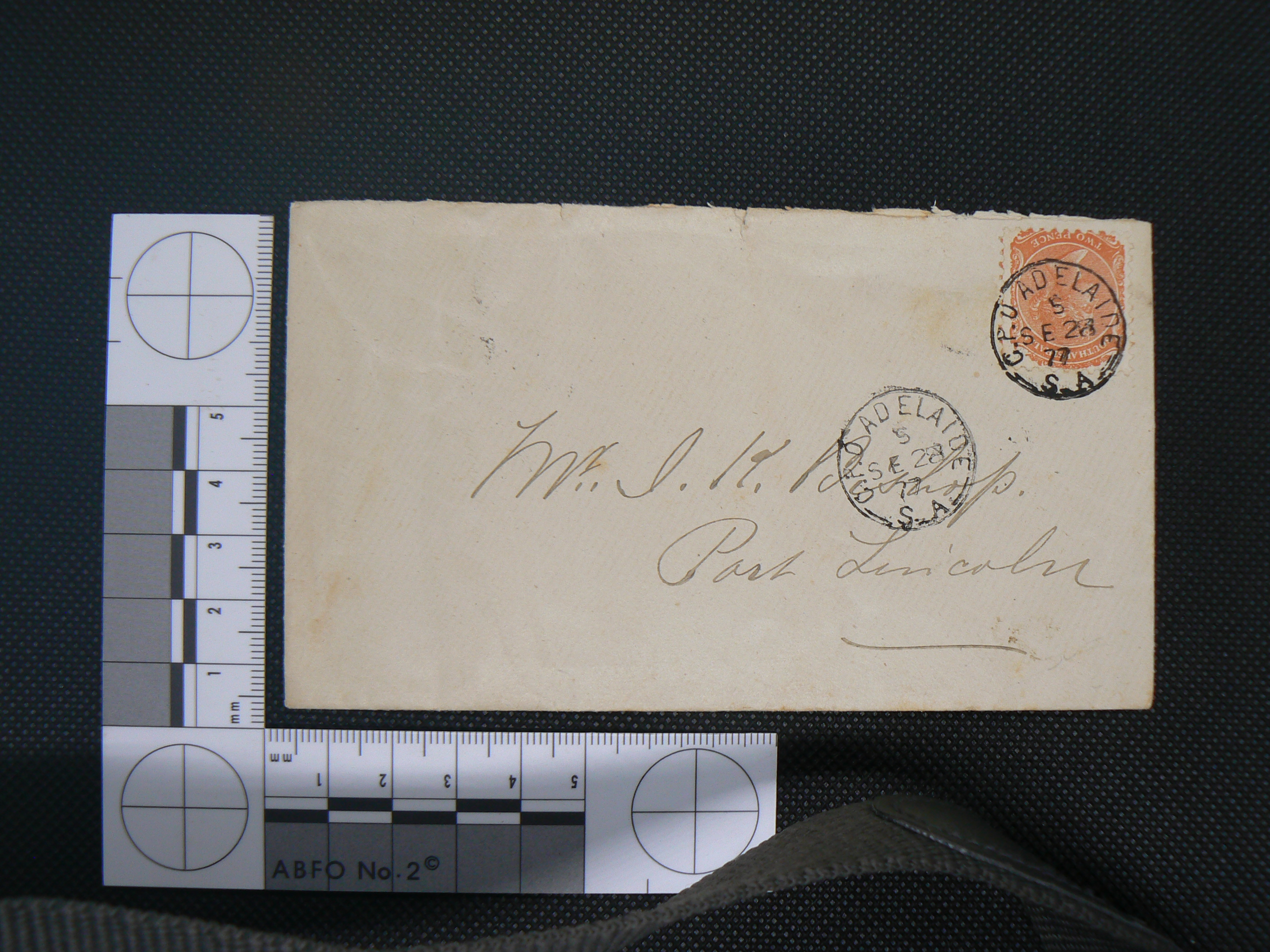
It’s an example of a postal cover – basically an envelope without its contents – sent from Adelaide to Port Lincoln in 1877, and it’s interesting because of the multiple postmarks on it – two on the front and two (unfortunately illegible) on the rear.
At the time, Port Lincoln had no rail connection to the rest of South Australia (in fact it never did – the Eyre peninsula rail network was never connected to the rest of the South Australian network) and was consequently very isolated. Mail from Adelaide would be sent by boat – often a sailing ship – across the Spencer Gulf to Port Lincoln for onward distribution, hence the multiple postmarks – the two on the front show when it was received and sorted for onward dispatch – September 28 1877, and the two on the rear the date it was received in Port Lincoln and then dispatched
Unfortunately the Port Lincoln postmarks are pretty much illegible, but I could convince myself the rightmost reads OC 3 77, suggesting that the letter had reached Port Lincoln four or five days after being posted…
While we were away in South Australia, I took a couple of paperbacks with me to read, rather than an e-reader.
J likes to sit and sketch, and in the bright sun of a South Australian autumn an e-ink screen can be hard on the eyes, and a LED tablet style display too washed out to be any use, while paper, well, it’s pleasant to sit in the shade and read a paper book.
One of the books I took with me was the 1990 Booker prize winner, Possession, by A S Byatt.
It’s a good read, and second hand paperback copies are widely available for a few bucks from your preferred retailer, but one interesting thing that stands out is how it describes a vanished world.
It’s a tale of scholarly research into the lives of two mid Victorian litterati.
Today such work would involve carting laptops to libraries, late night email and video conferences, and possibly a little bit of topic modelling along the way.
There is none of that. No computers, no internet, instead people meet in coffee shops and send and receive letters.
There are no mobile phones, no one using camera apps to sneak a copy of a crucial letter.
None of the stuff we would consider normal.
Other aspects of the research trade are much as they are today with underpaid research assistants, strange proprietary people hoarding their work and unwilling to share in case a competitor should gain an advantage and perhaps end up with extra funding.
In fact the research trade is probably more cut throat today than it was then.
I’m guessing the novel was written in the late 1980s before the internet escaped computer science departments and reflects the author’s own experience of university life of a time just before computers were suddenly everywhere …
We’ve had ourselves a road trip out west, as far west as Port Lincoln in South Australia.
It was really just a little vacation, but we had ourselves a good time and visited some interesting places along the way.
We began by driving down to Apollo Bay, where we celebrated my 69th birthday with a walk along a (small, very small) part of the Great Ocean Walk track at Cape Otway, before driving on to Goolwa in South Australia via an overnight stop in Mount Gambier.
The day we drove to Goolwa was over 40C.
Rather than go direct to Goolwa, we looped down to Robe, and then along the wild, scrubby and desolate coast of the Coorong before reaching Goolwa.
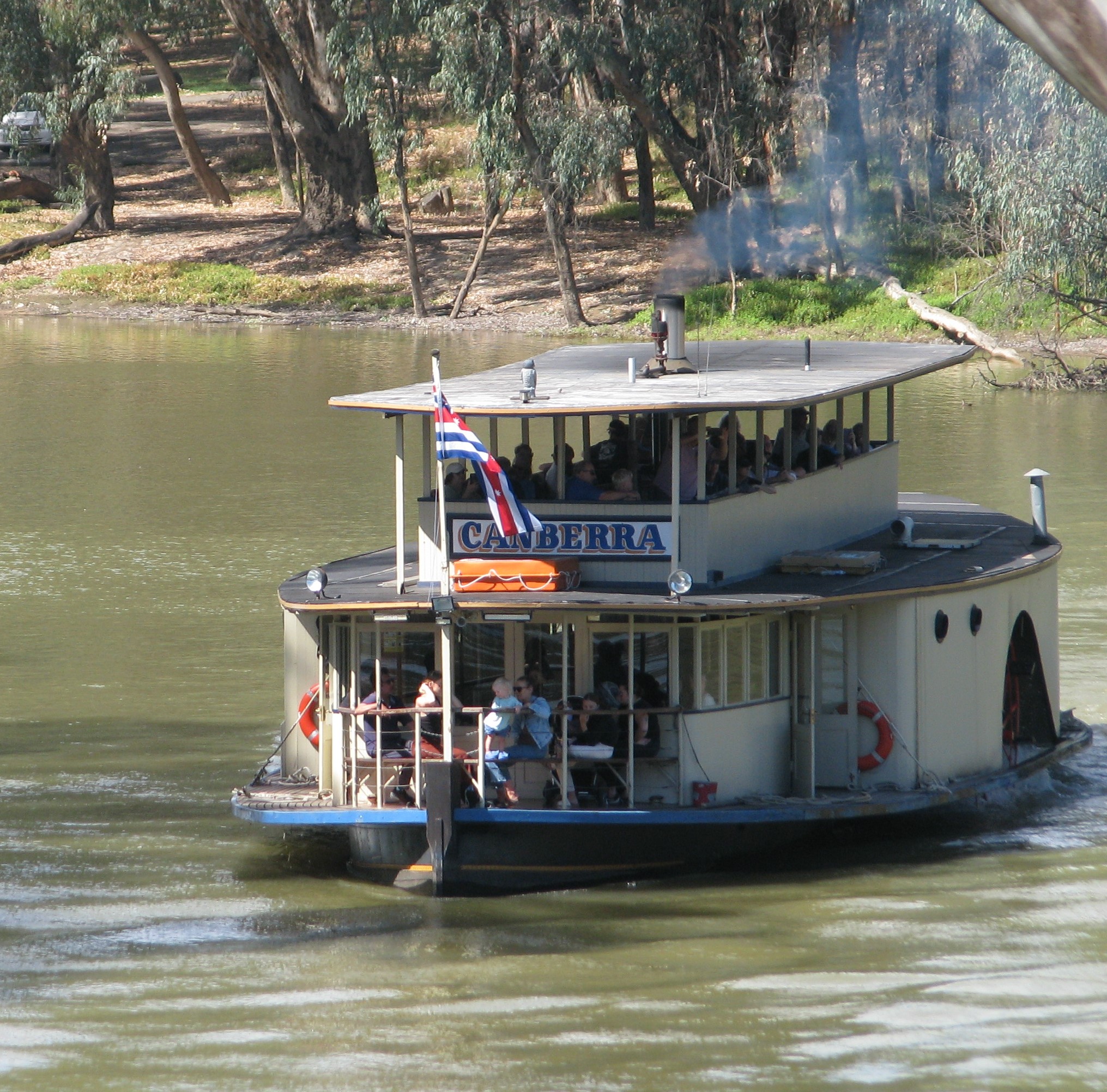
Goolwa used to be a major paddle steamer port for the Murray river trade and a workaday sort of place, though it is rapidly gentrifying, with some nice old buildings and some excellent cafes.
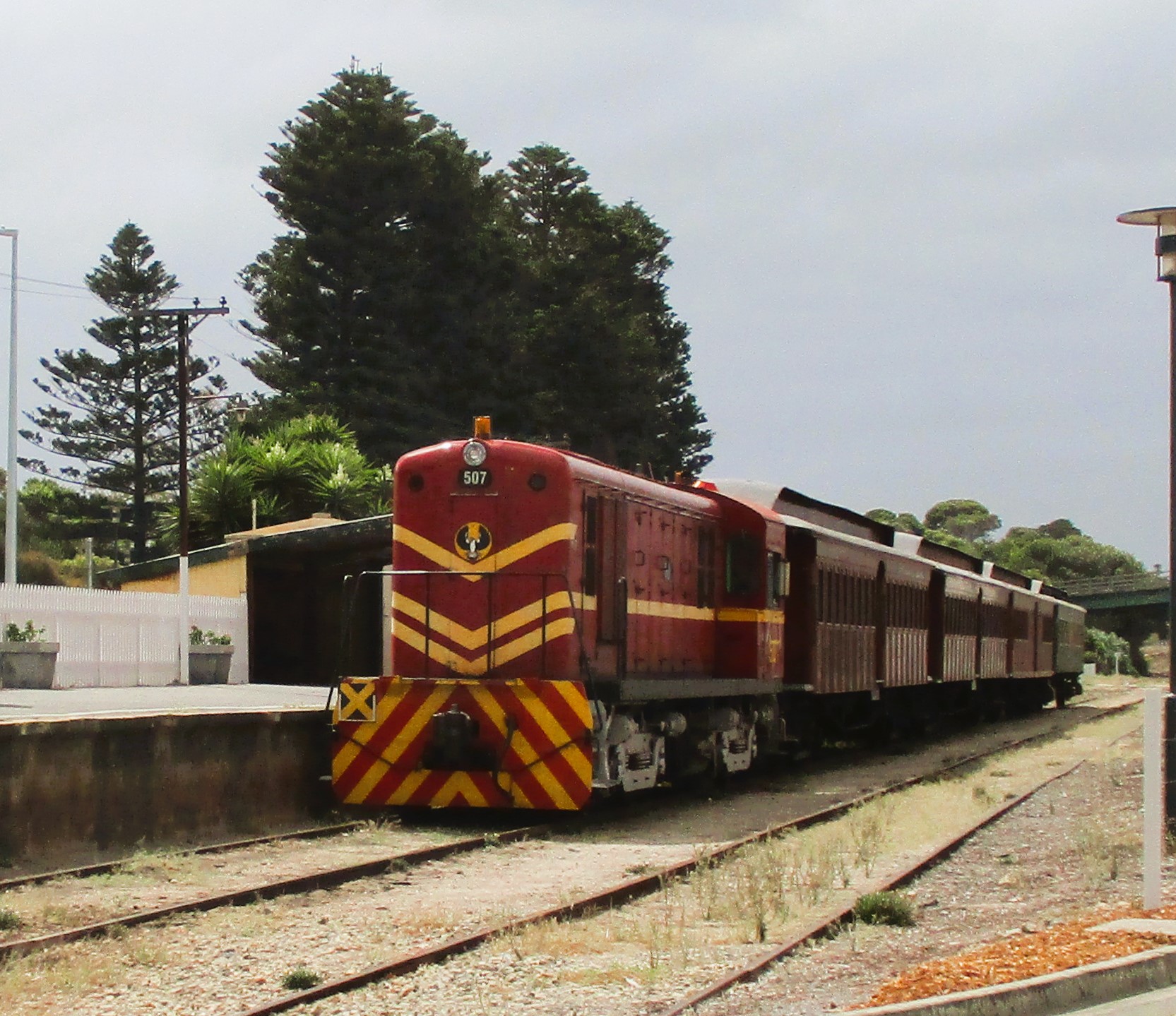
In the nineteenth century people and goods would travel up the Murray on paddle steamers, and grain and wool would come back down the Murray to either Goolwa, or Morgan where they would be transhipped by rail to Adelaide, and while there is no longer a commercial railway service in Goolwa, the old railway line has been preserved as a heritage railway.
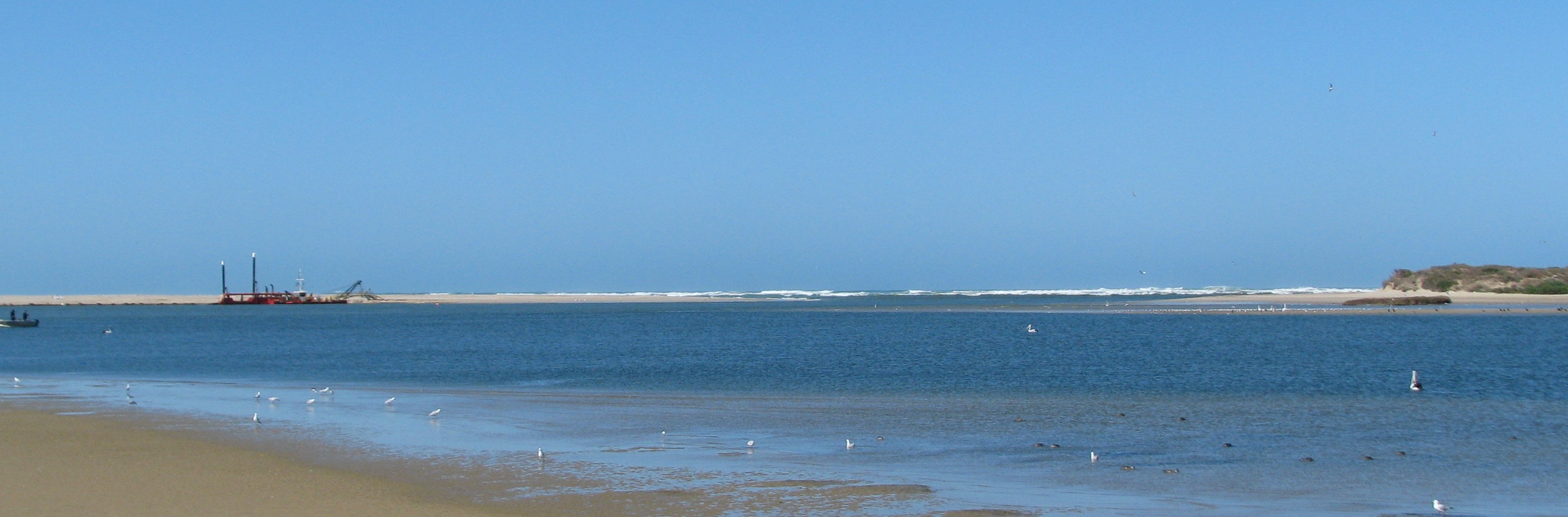
The mouth of the Murray was treacherous with sand bars, and Goolwa never became an ocean port.
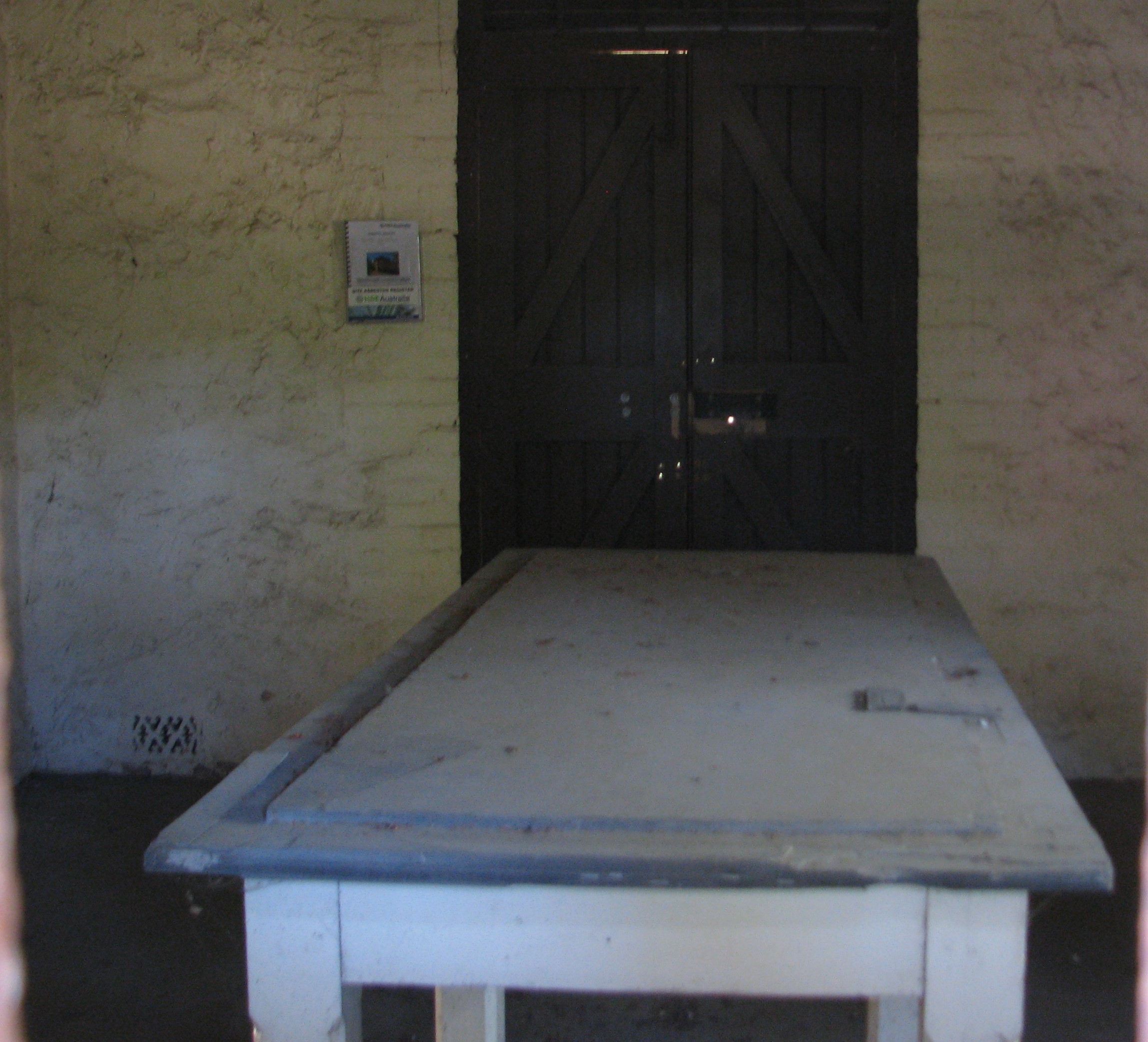
The wharf area is being prettied up but there are still some nice old buildings like the chart room, and also sports a nineteenth century morgue, built in the 1880s to deal with drowning victims, which I was intrigued to see, as an unadorned example of a Victorian morgue.
Unfortunately it’s a bit neglected and access is difficult but I did get a look at the examination table by poking my camera through a hole in the shutters and taking some low light pictures.
From Goolwa, we drove to Glenelg, an iconic beachside suburb of Adelaide, where we stayed in a short term rental apartment.
It had been eighteen years since we last visited Glenelg and it had changed a lot with a new Marina complex and ocean front apartments but the old pier was still there as was the beach.
One of the advantages of Glenelg over other beachside suburbs in Adelaide is that you can get the tram Moseley Square at the jetty into the city centre making it easy to visit the South Australian Museum and the Art galley, which we did to visit the Galloway Hoard exhibition.
Being a sad anorak at heart I was on the lookout for colonial era relics like post boxes and was rewarded with one next to Moseley Square.
Unlike Victoria, where colonial period post boxes are quite common there seemed to be few colonial period boxes left in South Australia.
I was worried that the Moseley Square example was a dummy, but I did spot a rather more neglected example in Kingston Street in Burra, which looked as if it might actually be in use as a post box. Unfortunately I was driving when I spotted it, and is always the way could not stop easily, so no photograph I’m afraid.
After Glenelg we did a mammoth six hundred and more kilometre drive to Port Lincoln at the base of the Eyre peninsula, via Port Augusta and Whyalla.
Driving north out of Adelaide the country became increasingly dry, and about halfway to Port Augusta agriculture more or less disappeared with the grain paddocks giving way to dry semi desert scrub.
Port Augusta was once a port with grain ships sailing to Europe (shades of Eric Newby’s The Last Grain Race), and still has some nice old buildings in the town centre. The old wooden wharf is still there, although fenced off for safety reasons, and gradually being restored as a walking area beside the water.
From Port Augusta on past Whyalla across more scrubby desert and then gradually agriculture began to return, with large paddocks that had been growing grain and then on to Port Lincoln – which is actually where Eric Newby sailed to.
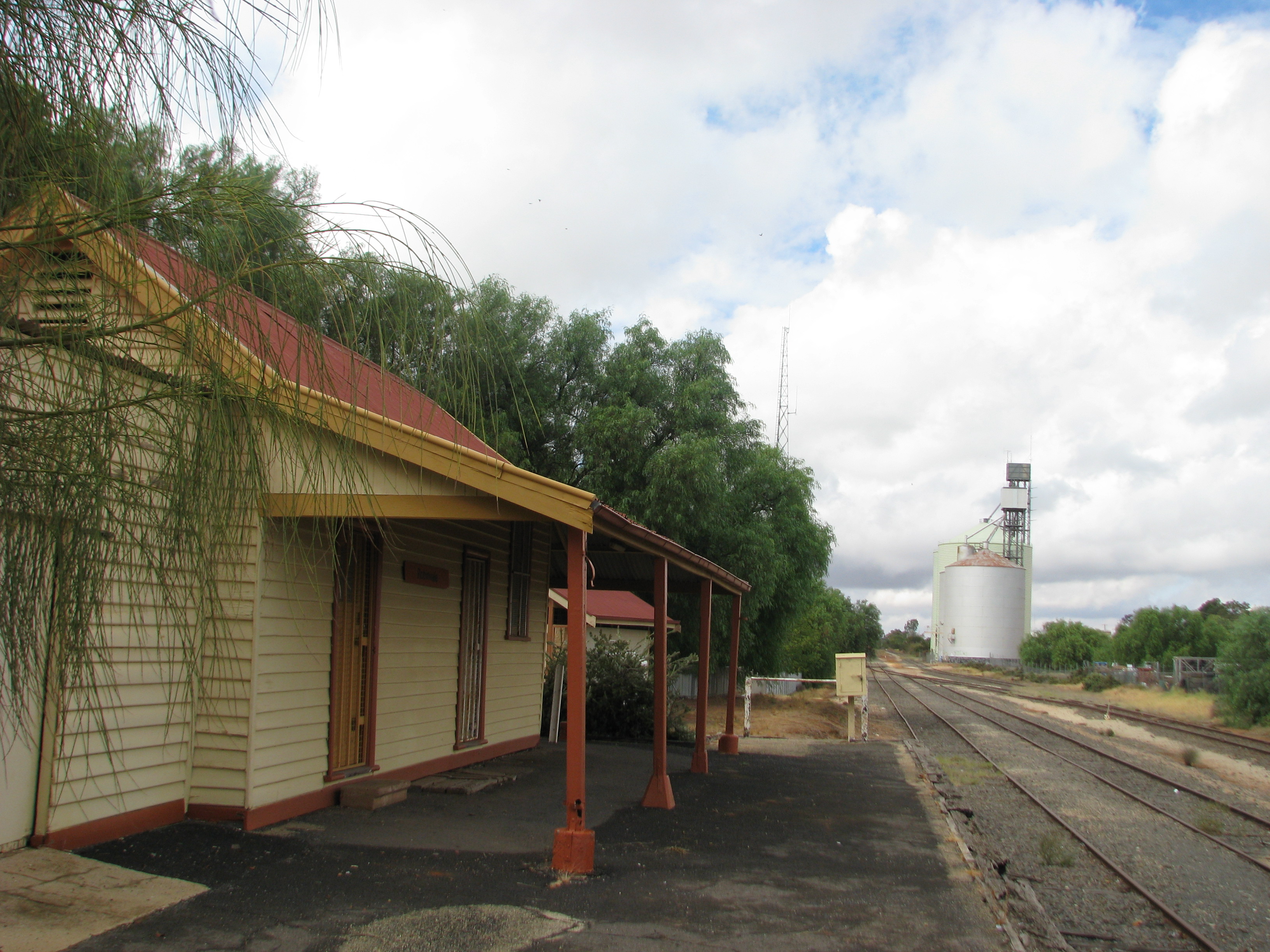
Port Lincoln is still a major grain port and the town is dominated by a huge silo and grain loading facility. Until a few years ago the narrow gauge railway carried the bulk of the grain, but that has now been abandoned in favour of massive grain trucks.
So why Port Lincoln?
Port Lincoln was as far west as we could go without the trip turning into something major as anything further would have taken us on a transcontinental trip across the Nullarbor to Perth. We’d already passed the junction where the highway to Perth split from the highway to Darwin on the western edge of Port Augusta.
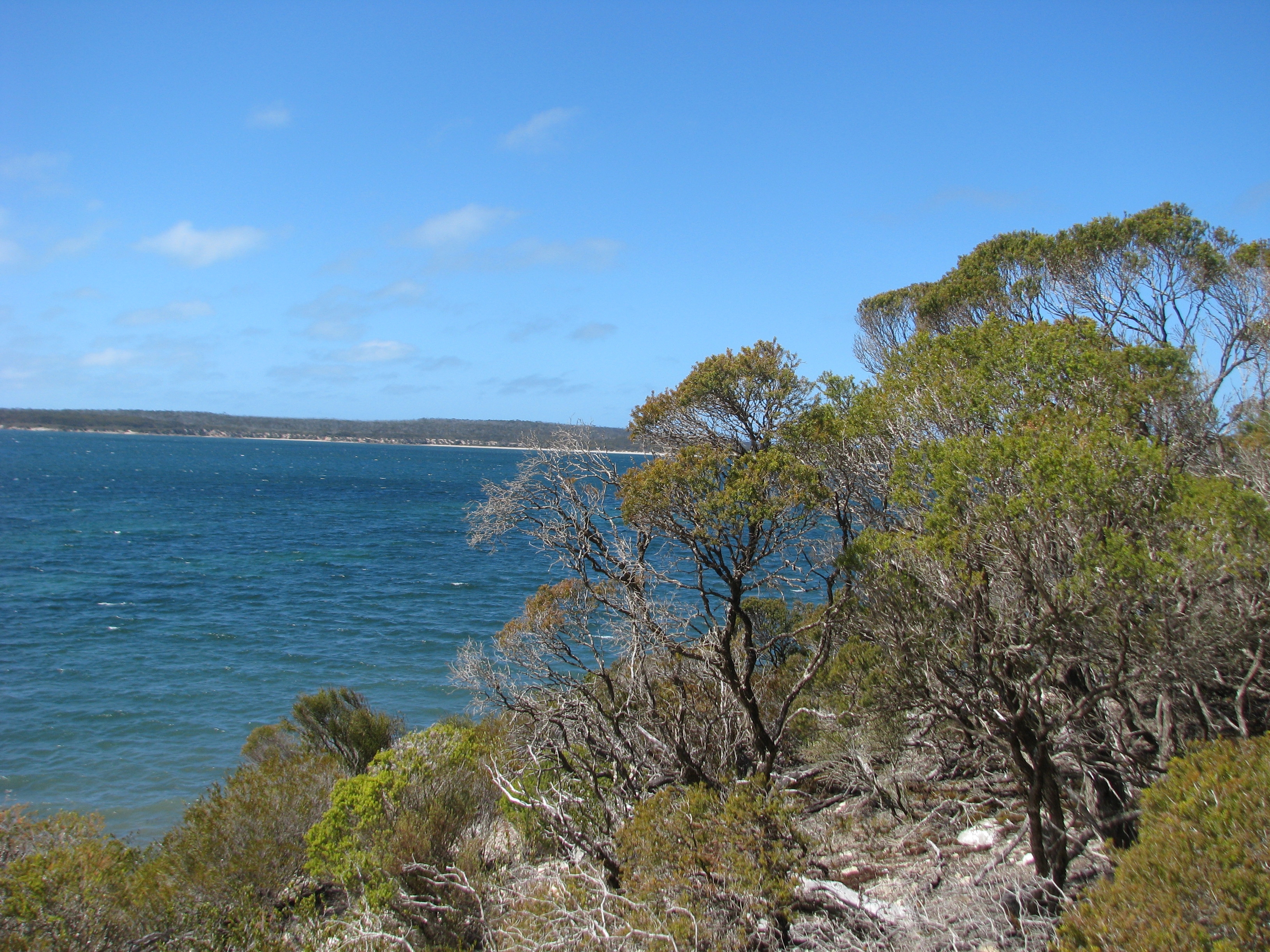
Port Lincoln promised us relaxation and access to both the Lincoln and the Coffin Bay national parks.
While there, we swam at Tumby Bay, walked a little of the Investigator Track in Lincoln national park from Surfleet Bay to Spalding Cove.
Coffin Bay national park was a bit of a letdown as part of the park was closed for European Bee control measures. The township at Coffin Bay itself is in a pretty stunning location but seems to lack safe swimming beaches.
Port Lincoln itself is a working town, but the old wharf area has been prettied up and is now a recreation area with a shark proof swimming enclosure off the old jetty.
And then we were done.
We drove back retracing our route to Port Augusta and from there we drove on to Burra, an old tin mining town on the edge of the wilderness with some quite nice heritage buildings.
From there we drove on to Morgan and then Mildura in Victoria, before crossing into NSW for bit (the road on the NSW side of the Murray is better than the road on the Victorian side) before crossing back into Victoria at Robinvale and then on to Echuca, which was once a major paddle steamer port on the Murray.
After three long days of driving, we had a day in Echuca – which we kind of like despite its slightly cheesy aspects before driving home.
We’d done a tad over 4000km in around three weeks – roughly the same distance as London to Malaga and back, except of course there are no freeways on the route other than a bit out of Adelaide on the way north…
By pure chance, we were in Adelaide at the same time of as the Galloway Hoard exhibition at the South Australian Museum.
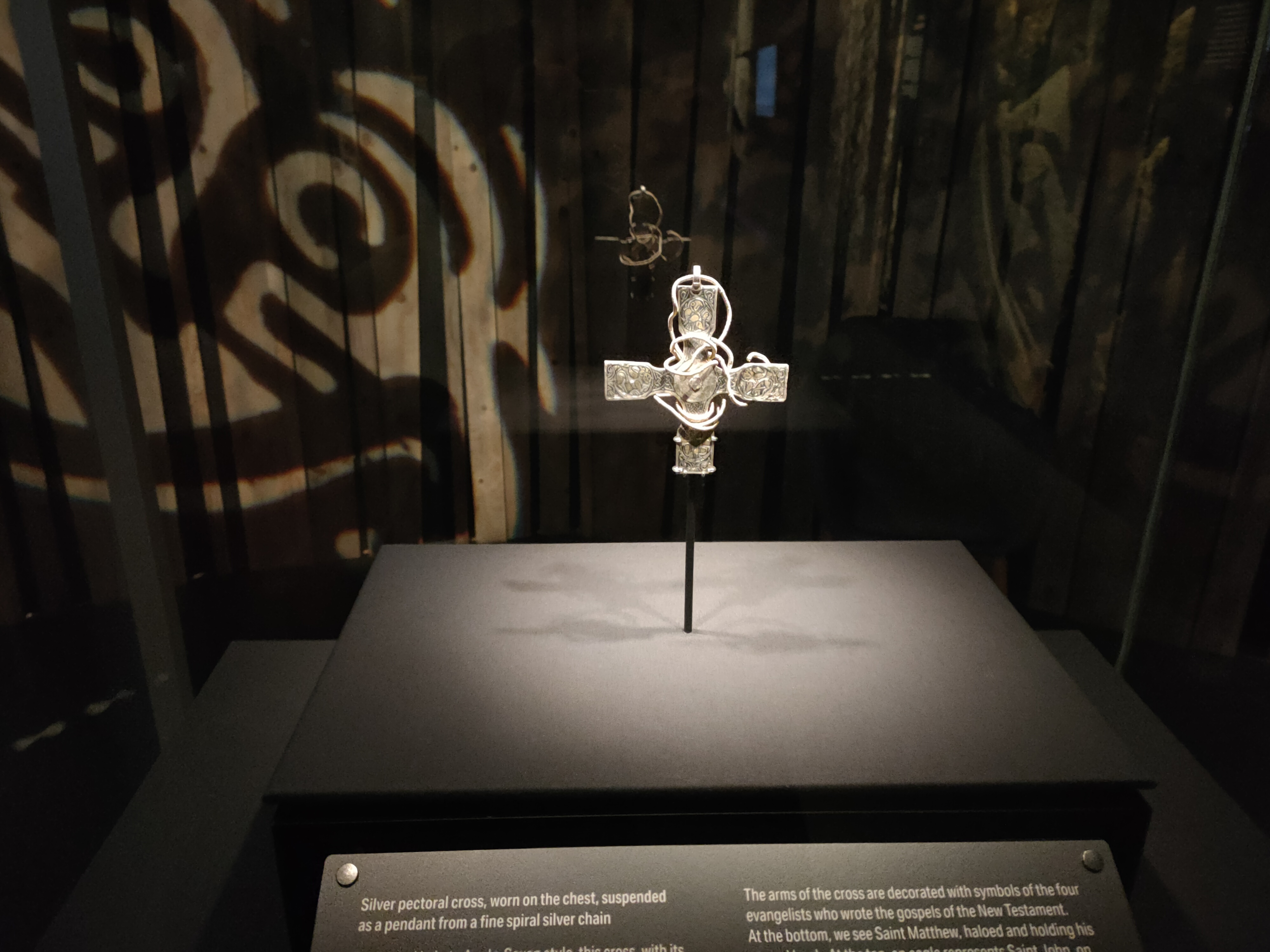
The Galloway Hoard is a collection of hack silver and other pillaged objects that probably came from the early Christian communities in south west Scotland – remember that Whithorn had been the site of an ecclesiastical settlement since the mid 400s CE and has been the site of a major archaeological investigation in the late 1980s.
There is an assumption that the hoard represents objects in some way connected with these communities, and it’s assumed that due to the presence of hacksilver they had been pillaged rather than hidden from pillagers.
The exhibition is quite small but contains the pectoral cross, some disc brooches and some of the hacksilver. Some of the rock crystal artefacts and a vessel that was found wrapped in textile are not original but in fact 3D printed replicas, perhaps because the originals were deemed too fragile to travel from Scotland.
It was the first time I had come across the use of 3D printing in exhibitions this way, and while a valuable technique to provide access to fragile objects, I felt that the mention of 3D printing and where it had been used in the exhibition should have been more prominent.
When we visited on a Friday lunchtime the exhibition was not too busy, apart from a school group, which gave us time to look properly at the items, unlike the scrum at the Dead Egyptians exhibition in Melbourne last year.
There are also some quite good an informative videos on the conservation of the hoard which are well worth sitting and watching.
At a bit over twenty dollars the exhibition is at the cheap end of the ticket costs for travelling exhibitions, my only complain being the use of TicketTek to manage online bookings when there are other providers known for better data security and lower fees.
While we were at the museum we popped next door to see the Renaissance Art exhibition, which was quite interesting and included some sixteenth century paintings I had not seen before, including one of Edward VI, and a rather nice one of the tax collectors office by Pieter Breughel the Younger that almost borders of caricature, but more importantly gives an insight into the business processes of early modern administration.
If you want to see the exhibition, be aware it closes on the 13th of April. The exhibition is free to visit.







 stuff 'n other stuff
