Fairies and socialism

Towards the end of the 1880’s, improvements in lithographic printing meant it became possible to produce books with coloured illustrations relatively cheaply.

And one of the first markets was children’s books – often given the increasing interest in folklore in England at the time, the books were either fairy stories or tales set around the Lancelot and Guinevere theme, or sometimes loosely based retellings of the Greek myths.

One of the principal illustrators, there were others, was the arts and crafts movement artist Walter Crane.

Walter Crane worked with William Morris and others in his arts and crafts group producing faux medieval paintings. When he turned his hand to children’s fairy tales not surprisingly he stayed with the faux medieval theme drawing fairies and princesses with flowing tresses and impractical drapery.

(Incidentally, through his association with Morris he probably met Madeleine Smith, except by then she was known as Lena Wardle and married to George Wardle, Morris’s business manager. Whether Crane knew or cared I don’t know)

William Morris was what we could describe as a gentleman socialist – and while he was not a member, influential in the founding of the Fabian Society (Incidentally Lena Wardle was also involved the the Fabian Society in the early days), and later was instrumental in the founding of the Socialist League.

Morris was the sort of man like my grandfather who was full of the romance of revolution – holding my mother up at the window of their apartment to see workers with red flags and banners marching down the street and telling her that she was seeing the future being made – but who would have been horrified by the bloody insanity of full blown revolution.

Walter Crane was not one of these.

When the Socialist League split split into factions he went with those advocating revolutionary change, and not only produced art work in support of the revolutionary anarchist factions, spoke out in defence of the workers executed following the Haymarket affair at some cost to himself. (It’s important to remember that in the nineteenth century the term anarchist was used as short hand for socialist groups advocating revolution, whether or not they advocated violence.)

He also protested about the Boer war and contributed to various anarchist newspapers,

and produced various illustrations and woodcuts, almost all in the arts and crafts style, in support of political change. In short he seems to have been a true believer.

Nowadays much of his work is out of copyright and has been raided and reused to illustrate articles about the contemporary phenomenon of “fairy porn” – young adult romantic fantasy fiction where fairies and elves have moderately explicit sex – perhaps not the future he would have expected for his work …

Posted in Uncategorized | Tagged , , , | 1 Comment

Anarchists, revolutionaries and female spies

I’ve become intrigued by the 1894 story of the anarchist Polti being arrested through the agency of a female detective to whom he showed some documents, and it’s all a little bit strange.

The early newspaper accounts mention a female detective (unamed) being involved.

So my next question was what was the female detective’s involvement.

Polti, and his accomplice Farnara went to trial in the Old Bailey in April 1894. Farnara pleaded guilty to the charge of seeking to blow up the Stock Exchange and added that he wanted to kill all capitalists, while Polti pleaded not guilty.

Reading the Old Bailey transcript of the trial it’s quite clear that Farnara and Polti were seeking to make a pipe bomb or bombs and most of the transcript deals with them seeking to have the bomb tubes made up and them having both dynamite and sulphuric acid in their posession.

The interesting aspect of the trial is that the judge directed that the documents would not be read into the transcript and that it would feed Polti’s vanity to do so, and there is no mention in the trial proceedings of the female detective, but then the only detective named is the officer who questioned the innocent metal fabricators who were asked to make up the bomb cases.

Farnara was sentenced to twenty years, Polti to ten, after which he appears to disappear from the records, meaning we have no idea where he served his sentence, or if indeed he did serve it

Now, we know that various left wing anti capitalist groups planned attacks at the time both in England and mainland Europe, and that England, which was extremely relaxed at the time about allowing foreigners residence – no passports required and as long as you didn’t commit a criminal offence you could disappear into the large immigrant communities in London.

Trotsky did it, Lenin did it, even Stalin, who lived in Stepney at the time of the 1907 party congress in exile. (I used to wonder, given Stalin’s involvement in robbing banks in Russia for the party, if Stalin had been involved in the jewel heist that led to the Sidney Street siege – but unless he was involved in the early discussions it’s unlikely as he was exiled in Siberia at the time.)

And the result of this laissez faire attitude to foreign ‘politicals’ was that the Special Branch were paranoid about anarchist terrorism, and the possiblity of overseas anarchists forming common cause with Irish Fenians to blow up gatherings of the good and the great.

So did Polti’s documents suggest links between terrorist groups, and did he get a lighter sentence because he surrendered his documents to the police?

We’ll probably never know, but it’s an interesting parallel that of the two women involved in the Sidney Street events, one, Nina Vassileva, received a sentence of only two years, which was commuted after a month or so despite her clear involvement in a murder.

The other woman involved in the Sidney Street events (and the associated Houndsditch murders), Sara Rosa Trassjonski was confined in Colney Hatch asylum and then threatened with deportation, although the order was never carried out due to the poor state of her mental health, which makes me wonder if the use of female secret agents was part of Special Branch playbook in the years before the first world war…

Update 05/02/2025

I’ve done a little more reading on the subject – the Okhrana clearly had agents within the migrant community, and these agents clearly also had informers among the migrant community.

More interestingly there are letters in the British police archives from the Russian Imperial embassy about the conditions attached to ‘off the record’ meetings – no names, no notes and in a public place such as a railway station waiting room – clearly suggesting that there was some information sharing between the Okhrana and Special Branch.

And that leaves me with a little puzzle.

Rosa Trassjonsky was clearly traumatised by the experience and had clearly been investigated by the Okhrana prior to her fleeing to London, and the stresses of the experience led her to descend into insanity. There’s no evidence that she was an Okhrana informer, and I think she was simply a poor broken soul.

Nina Vassileva is a more interesting and enigmatic case.

After her release from prison she continued to live in the East End of London. Unlike many of the emigre revolutionaries she did not attempt to return to Russia after the 1917 revolutions although she did later work for the Soviet trade mission in London.

This was during the 1920s when there were no official diplomatic relations between Britain and the Soviet Union.

There’s some evidence that she was under Special Branch surveillance for most of her life – was she an Okhrana informer and perhaps also worked for Cheka or its successors – after all the Cheka was probably as likely threaten family members still in Russia as the Okhrana to secure her co-operation – or was she something else – perhaps an informer for the British intelligence services.

I guess we’ll never know. She continued to live in a series of bedsits in the East End dying in 1963, and almost certainly any sensitive files relating to her have been shredded …

Posted in Uncategorized | Tagged , , | 2 Comments

Female detectives, spies and assassins…

I’ve been reading Sara Lodge’s book on female police detectives in the nineteenth century, and excellent it is too.

Understandably, most of the material that she covers comes from the British Isles so, out of interest, I searched both Trove and Papers Past for evidence of female detectives in Australia and New Zealand. I was fairly cursory about it, but suffice to say there were enough in the way of court reports to suggest that the police in both Australia and New Zealand were using female detectives at the end of the nineteenth century.

And certainly it’s well known that the police employed women to search female detainees, some of whom may have been officially employed, or in the case of the indecent assault on a country train in Lauriston, a woman known to the police who was trustworthy to care for the victim and report on her injuries.

In the Lauriston case the victim, and supposed perpetrator were taken off the train at the small fishing village of Johnshaven where there was a policeman stationed.

Given it was a November evening, and possibly the last train of the day on a rural branch line, it would have been impossible to fetch help from a larger police station, so putting the victim into the care of a local woman was possibly the best they could do.

Equally at the same time the various Matrimonial Causes acts of the mid to late nineteenth century gave rise to a class of private female detectives who assembled evidence of errant husbands – at the time we are talking of wives suing their husbands for divorce had to provide evidence of behaviour such as desertion, sodomy, incest or beastiality, rather than simple adultery or infidelity.

And both in combnation, led to the development of the female police detective.

But there’s an interesting turn here – were there also female spies or secret agents?

In 1896 an Italian anarchist was arrested in London for plotting to carry out a bombing. (In the 1890’s there was a bit of a panic in Britain about foreigners carrying out bombings and murders for political purposes and always the fear that somehow these socialist and communist agitators might form common cause with Irish Nationalists and engage in a sustained campaign of terrorism. Remember that Alexander II of Russia had been assassinated some years previously and various Russian and Austro Hungarian politicians had been the victims of assassination attempts by people usually labelled as anarchists – the term anarchist being used as a catch all for the alphabet soup of left wing European politics)

Anyway, my Trove search for “female detective” turned up a report of the 1896 arrest in London of the Italian anarchist, Polti, and mentioned a female detective was involved, suggesting that the police, including possibly the Special Branch used female agents, possibly as spies.

One newspaper report does not of course make a story, but then there is the slightly strange tale of the attempted assassination in New York of the Irish nationalist O’Donovan Rossa by Lucille Yseult Dudley a British nurse working and living in the United States.

At the time of the assasination attempt some newspapers alleged that Lucille Yseult Dudley was a British spy.

The British government at the time claimed that Dudley had acted alone and had a history of mental illness and had previously attempted suicide, and certainly, after her return to England she seems to have spent time in Broadmoor, before running a nursing home with her sister.

The question of course is was she simply mad, was she a British agent, or was she manipulated by the British, as may also have been the case with Fanya Kaplan, the woman who shot Lenin in 1918…

Posted in Uncategorized | Tagged , | 1 Comment

A post card to Miss Tripp

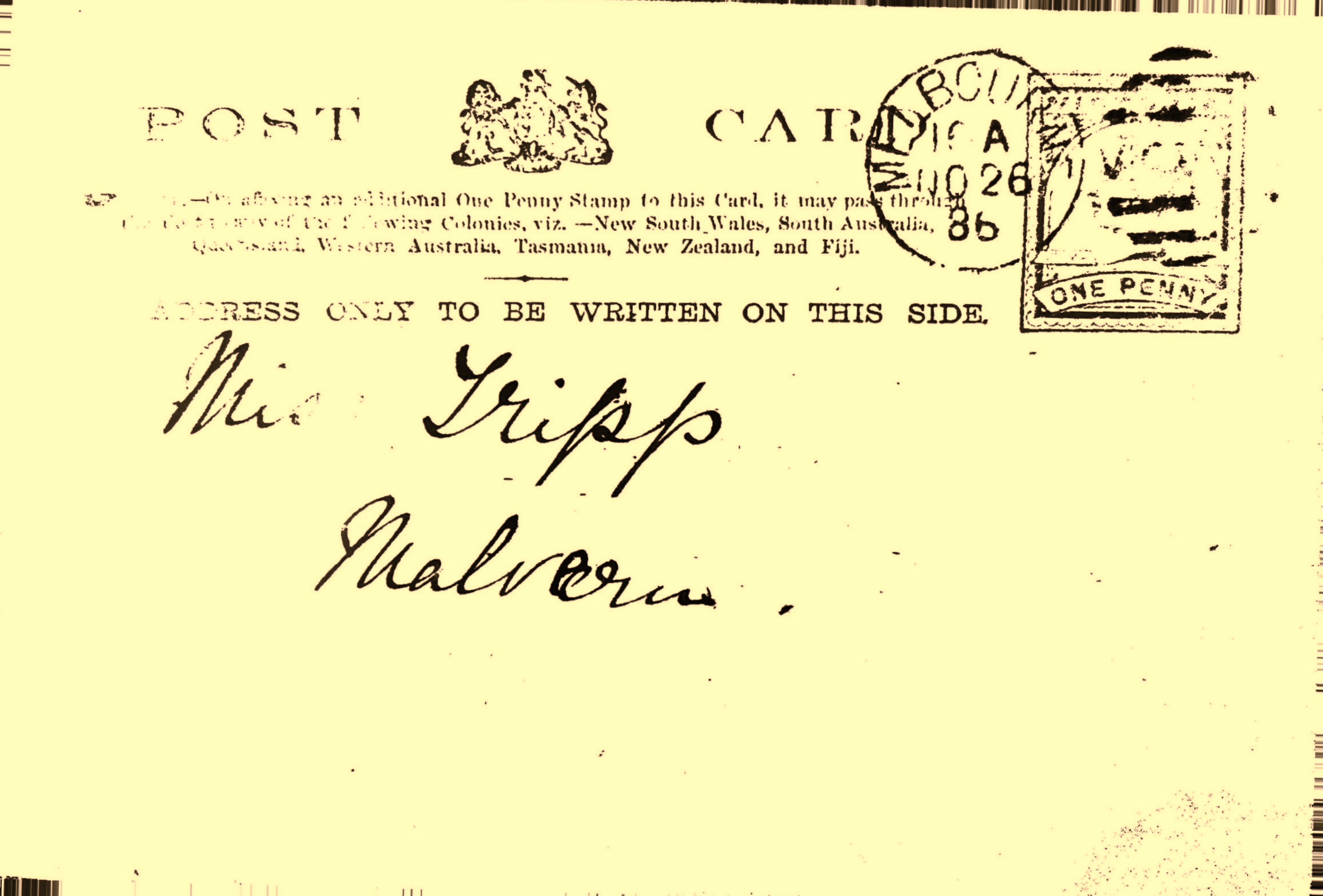
I’m not a serious post card collector, but I’m fascinated by the way people in the late nineteenth century used post cards much in the way we use text messages and emails, and occasionally, when I’ve some spare cash I’ll scan the various auction sites for ones that look potentially interesting and one I’ve come across recently is one from 1886 addressed to a Miss Tripp in Malvern – Malvern is now an upmarket inner city suburb of Melbourne and by 1886 would have been connected to the city by train (1879).

The fact it was addressed simply to Miss Tripp, suggests that she was well enough known for the postie to deliver her mail without much in the way of an address – no house or street name, just the name of the suburb.

The simplest thing seemed to be to search for “Miss Tripp Malvern 1886”.

This didn’t produce a lot but what it did produce was quite interesting – there was a Miss F. Tripp of Prahran (Prahran is the next suburb over from Malvern) who in 1868 was acknowledged by Ferdinand von Mueller for contributing seeds to the Royal Botanic Gardens of Victoria) and a Margaret Oliver Tripp who was the principal of Toorak College in the 1890’s.

Previously Margaret is mentioned in a newspaper report from 1876 about a prowler being apprehended at a girl’s boarding school run by her mother, Elizabeth Tripp, in Malvern Road Prahran.

Delving a little deeper though it all falls apart – there appears to have been an extended family of Tripps living in Prahran at the time, so given the lack of an initial we’re reduced to handwaving, but perhaps the message will give us a clue

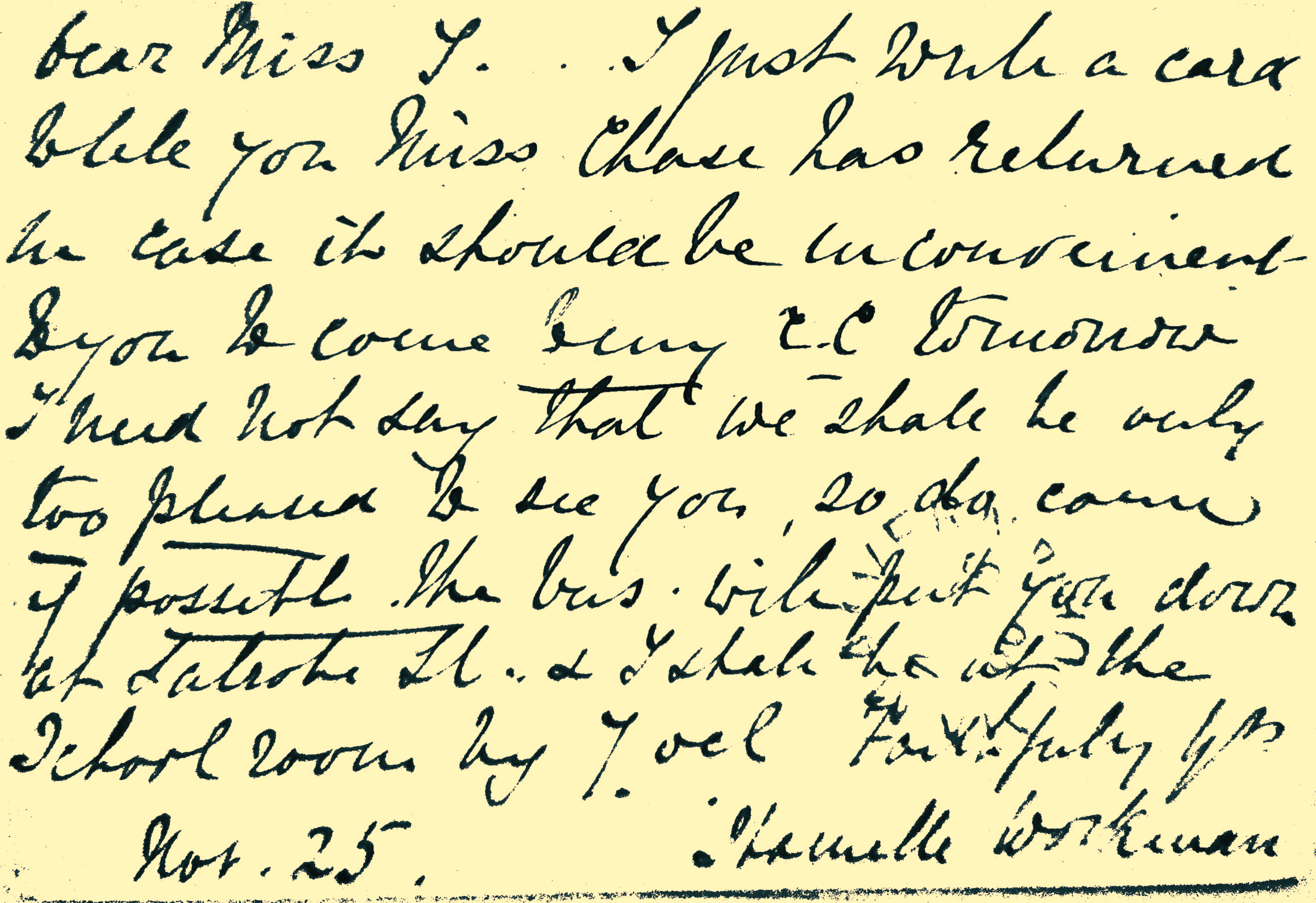
The message starts ‘Dear Miss T‘, which is slightly annoying, because while it suggests the correspondents know each other quite well, still doesn’t give us a first name or initial.

The message is quite simple – a Miss Chance, clearly known to both of them has returned, and they would like to meet up if at all possible, and if she caught the bus it would drop her in Latrobe St where her correspondent would meet her at the school room at 7 O’clock. (There were no trams in Malvern until 1910, so it would have been a bus or train ride to the city)

Exactly where the schoolroom referred to is is a bit of a mystery, but there was a ragged schoola school for street children – at 145 La Trobe St in Melbourne in the 1880’s.

So does the name of her correspondent give us a clue?

Not really. While the surname, Workman, is relatively uncommon, the first name, which looks a little like Isabelle is not totally legible.

So a blank. The mention of a schoolroom suggests that it might be addressed to one of the Toorak college Tripps, or I could be delusional. However, the card does show how people did use postcards for quick and simple messages, and also, just how much tacit knowledge there is in a message between two people who know each other …

Posted in Uncategorized | Tagged , , | 2 Comments

Writing in the nineteenth century

The combination of the penny post and increasing literacy meant that people in the nineteenth century wrote a lot.

We are not talking about the good and the great, but about ordinary people writing ordinary letters commiserating a cousin for the death of a loved one, or a letter to a son or daughter who has moved away, or even a postcard to confirm the safe arrival of a brace of pigeons.

Ordinary letters about ordinary things.

If you search for nineteenth century postal ephemera, letters, envelopes, postcards on antique websites, they will almost always be written in black, probably iron gall, ink, much as official documents of the time were written.

And you might be forgiven for thinking that most people wrote in ink.

But writing in ink in the nineteenth century was a messy business.

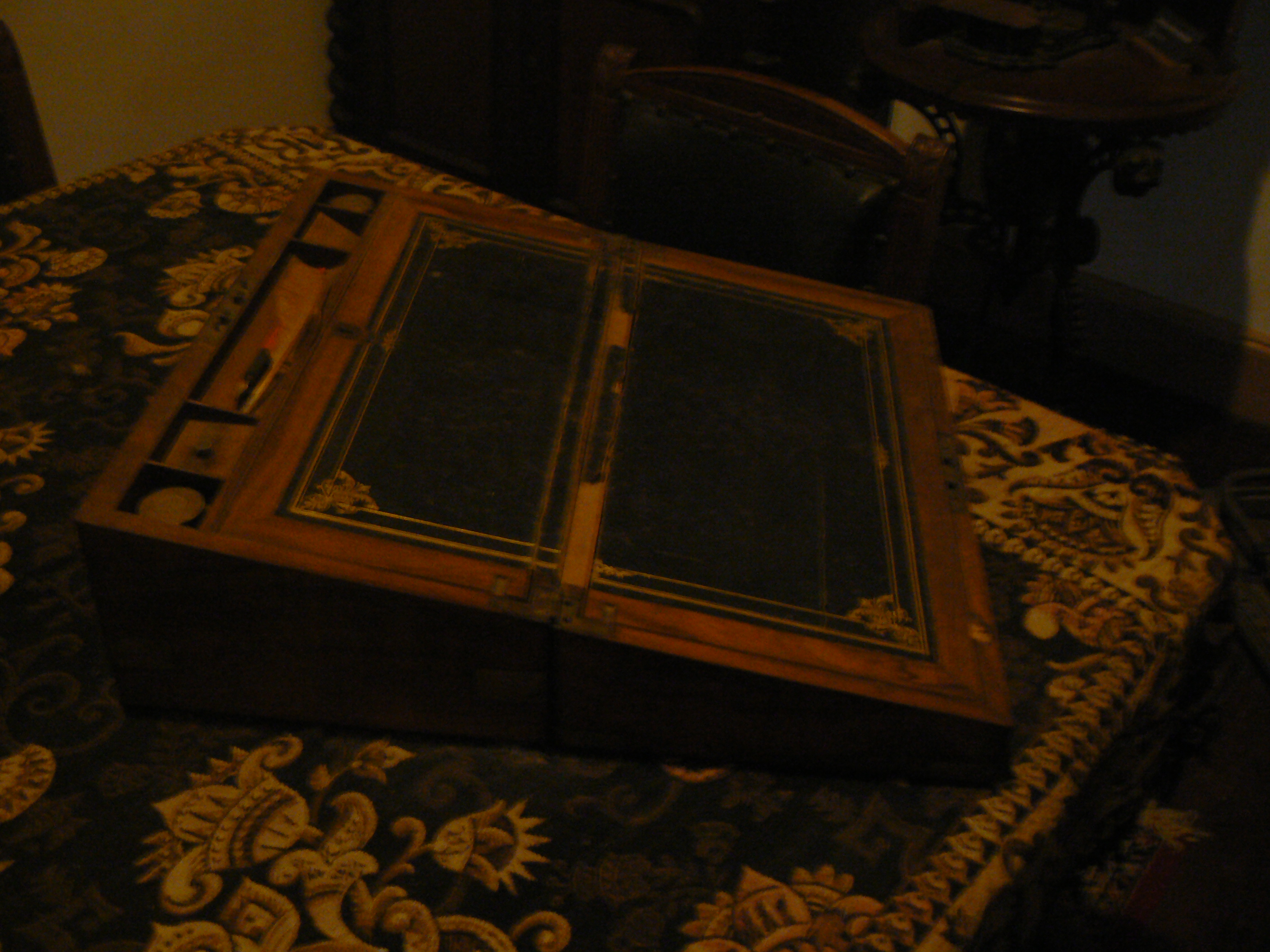
First of all you needed a bottle of ink and a dip pen, and possibly some blotting paper. Rather than writing on a flat surface as we do, if you were sophisticated, you used a either a desk or a writing box with a slope to it, the idea being that if you used a slope it was easier to sit upright and avoid accidentally blotting what you had written on the previous line with your cuff.

(I can remember sixty or so years ago in Scotland my first primary school still had desks with a slope to them and inkwells, even though by then the ball point pen had done away with the dip pen.)

And it’s true that most nineteenth century run of the mill writing that has survived was done in ink.

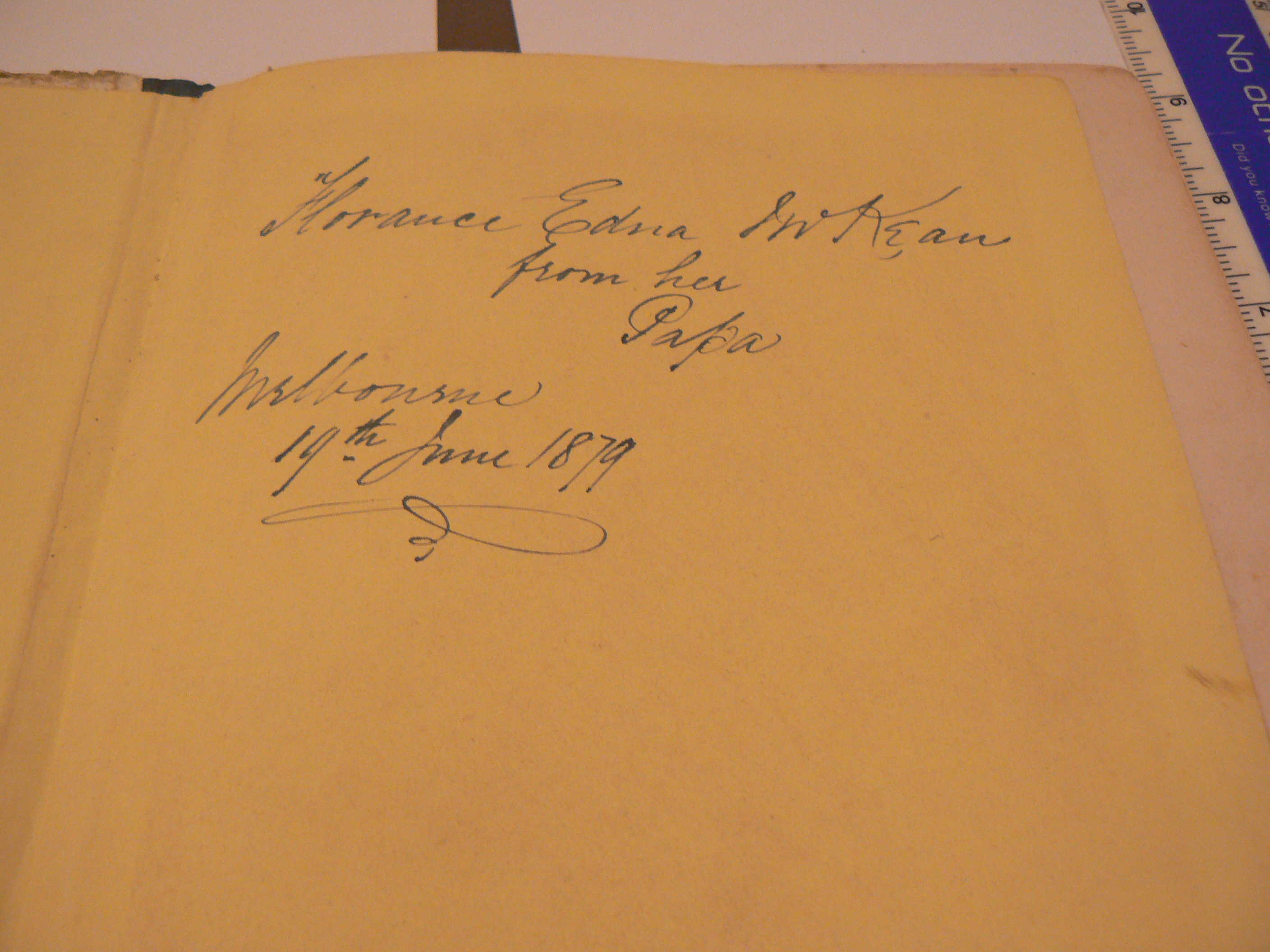
But when, up at the Athenaeum, I was looking at the prayer books and bibles from deconsecrated churches I noticed something – when people wrote their name inside a prayerbook they usually wrote it in ink, just as when down a Lake View some of the books used as props have dedications in them, they are usually written in ink.

But the old prayer books are different. Some do have doodles in ink, but mostly the graffiti, the caricatures, the drawings of genitalia, and even some of the random comments written in the margins are in pencil.

There’s even a shopping list in pencil in the back of one of them, doubtless written during a particularly boring sermon.

Pencil had the benefit of being spontaneous, and ideally suited to writing notes on bits of scrap paper, totting up an invoice, and doodling in a moment of boredom, basically the sort of stuff that doesn’t survive, but instead is used to light the fire when done with.

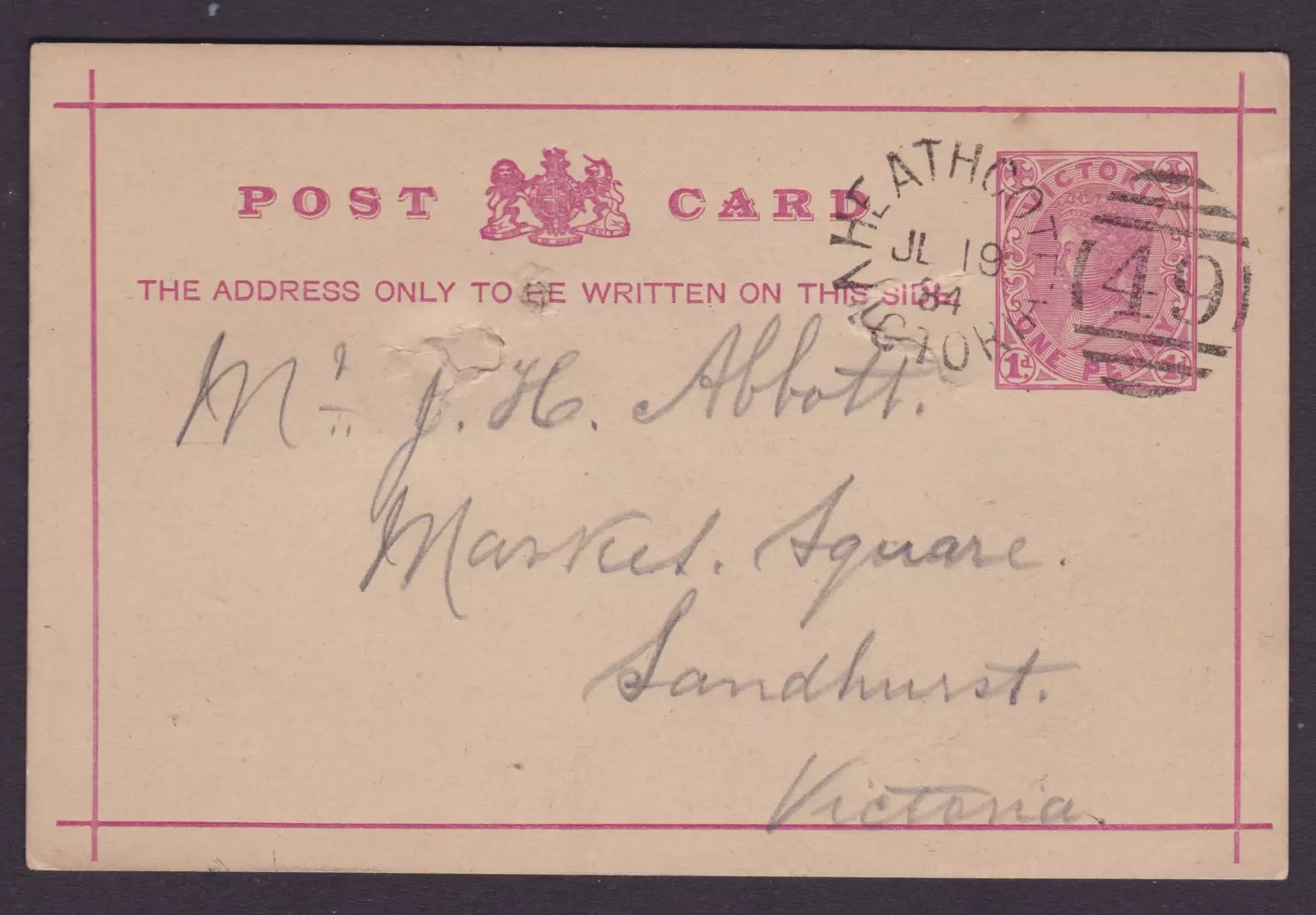
But if you look through collectors trading sites you do occasionally come across postcards written in pencil that have survived – remember that nineteenth century people used postcards much as we use text messages and emails – they might be mundane requests to the local hardware store for a pound of No. 6 nails to be added to the farm’s account, or a scribbled note from a country vicar telling his wife that he has had to stay an extra day in Melbourne, but he will be home to take Evensong on Friday.

And we know people used pencils, as quite a few luxury propelling pencils from the Victorian era have survived and are now collectors items.

And people wouldn’t have made and sold luxury propelling pencils unless there was a market for them among the middle classes.

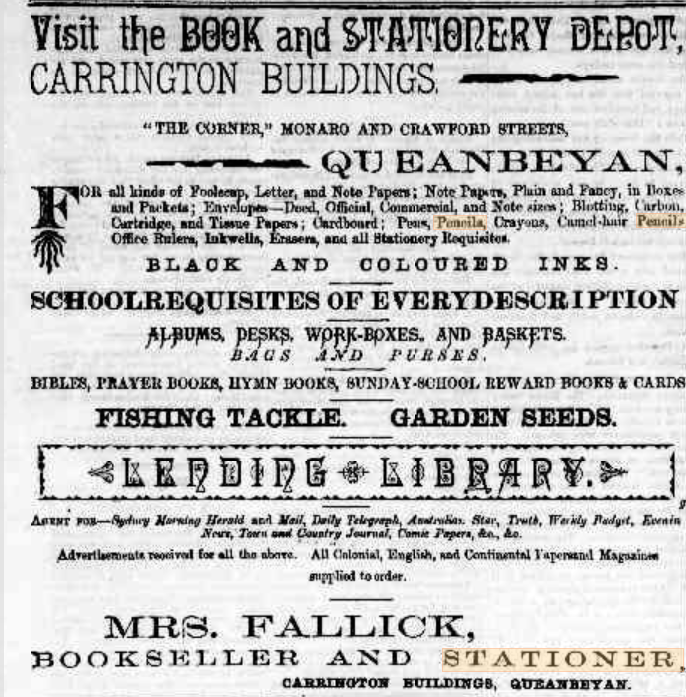
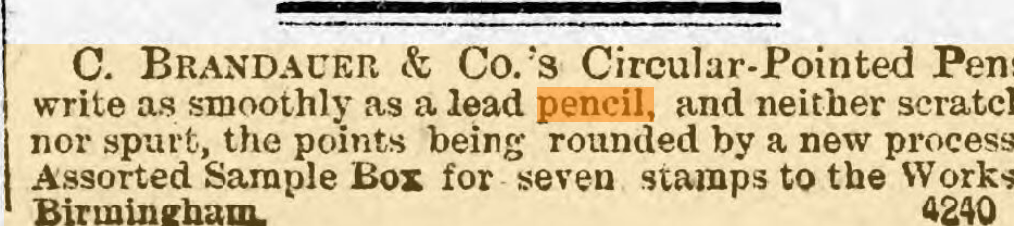
What we don’t have are ordinary wood and graphite pencils, because on the whole they were used and when they were no more than an unusable stub, thrown away, but stationers’ adverts from the time routinely list them.

So, while nineteenth century people did write in ink, they didn’t only write in ink, often they also wrote in pencil …

Posted in Uncategorized | Tagged , , , , | Leave a comment

Technology and me in 2024 …

For a long time now, I’ve been doing an annual review of my personal use of technology, so following on from last year’s review here’s the review for 2024.

In a sense, not much has changed.

I have finally bought myself a new laptop as an everyday Windows 11 machine, something I’ve been resisting while my old Lenovo Windows 10 laptop was still working well, but I suspect that with Windows 10 dropping off support in 2025 we’ll see a gradual move with newer versions of some applications requiring Windows 11.

As a replacement I bought a fairly standard i7 based Lenovo IdeaPad, powerful enough for most purposes, be it writing, spreadsheet work, or research via the web.

As always the promised seamless migration was anything but, but after an hour or two of swearing, I think I’ve got most things working the way I want. I’ve not really used it for anything serious yet, but the screen is noticeably crisper and the keyboard nice to type on so it looks like it’s going to be a positive experience.

That does leave me the dilemma as to what to do with my old Windows 10 laptop.

The refurbished ThinkPad I bought a couple of years ago for documentation work continues to give excellent service, and I did also buy myself an additional refurbished HP laptop to take travelling earlier this year, the rationale being that if either one died on me in the course of the year I’d have a standby replacement.

It’s a tribute to the build quality of both machines that, in the case of the ThinkPad, it’s survived being trundled down to Chiltern and up to the Athenaeum in the back of my rattly old Subaru on a weekly basis, and the HP survived a ferry trip to Tasmania and a trip to FNQ at the end of the dry season.

For the moment, I think what I will probably do is move my old laptop onto my second desk in place of the old ThinkPad Yoga I bought back in 2019, which while it still works is a little slow in use.

My pandemic era Huawei tablet is stuck on an old version of Android, and gradually it’s starting to suffer from bitrot with newer versions of some applications not working and recently it began to periodically complain that its internal storage is full.

Given that one of the main uses I have for it is reading my email and the online news at breakfast time, I gave it a factory reset and am now running with a minimal set of applications to see how that goes – I had been using my Chromebook Duet in tablet mode as a replacement, so that I know that I can do everything I want via a web browser, but I find the Duet is a little heavy for prolonged use in tablet mode I reckoned that it was probably worth giving the Huawei a post-reset go to see if that prolongs its useful life.

The Dogfood tablet, while undoubtedly slow, and generally useless for anything other than an e-reader continues to soldier on with Lithium to read epub format books.

Howver, I’m quietly enamoured of the run out Lenovo M8 I bought myself as a sort of birthday present earlier this year which has proved to have amazingly good battery life, and with an 8” screen is perfectly usable for web searches and wikipedia.

On the Linux front, I must admit that I’m not using the distraction free writing machine as much as I thought, in part because I finally bit the bullet and upgraded my previous travel computer, a Lenovo IdeaPad 1, to Linux earlier this year – a bit of a white knuckle ride – but once upgraded, it proved an excellent note taking device for meetings, or rather it did until I upgraded the version Ubuntu, and found that for some reason it was less stable and ended up reverting to the previous version.

It certainly seems quite a bit better behaved since reverting, so I think I’ll leave it on the previous version of Ubuntu for the moment.

At the same time I started playing with Lubuntu on an old Dell laptop I’d originally bought second hand for J at the start of the pandemic as an emergency replacement when her old machine died and new machines were almost unobtainable.

The machine is nice to use, with a good keyboard, but I’m not sure about Lubuntu per se, it feels a little unfinished, but all the main applications work well and I’m basically trying to use it as an alternative to my daily machine, in part because it’s blessedly free for now of applications which have been infected with AI.

While I think that AI has a range of great applications in automated image analysis and handwriting recognition, I am less convinced about it when it tries to act as your helpful assistant, and rapidly becomes extremely annoying, for example I do not need a pdf reader to offer to create a summary of my power bill or bank statement, or indeed create a useless summary of a nineteenth century newspaper article.

Besides computers, the revived Lumix camera has proved useful when documenting larger artefacts at Lake View, as has my $25 Temu lightbox.

I did start playing with retro photography, and I did find it a valuable exercise to improve my own image taking, but I’ve also come to recognise that I probably won’t do anything particularly serious with film and film cameras.

However besides improving my own photographic skills it has helped me learn and relearn about classic film photography, and its history, which has also helped me assess some of the historic images I’ve been working with as part of my various projects.

And of course we’ve acquired an internet connected cat feeder, which strangely enough the cats took in their stride, and even when we’re home and feeding them traditionally, will check out just in case it’s come to life – however, as a human still has to reload it with cat nuts every so often we’re not yet dispensable.

And finally, a word about social media.

I abandoned the socials over eighteen months ago, and have no urge to go back. I do use mastodon, and post what I think are interesting links, but basically I lurk and use it as a source of train porn – essentially it reminds me that there is a world out there where people say things that I find interesting.

I obviously still blog, and still use an RSS reader to read a number of newsfeeds and blogs I’m interested in, but that’s more or less the sum total of my online involvement, and I’ve found that to be enough …

Posted in Uncategorized | Tagged , , | 1 Comment

A nineteenth century hockey playing cult

While researching something else entirely I came across the story of the Agapemone, a nineteenth century quasi christian cult in England.

I came across the cult due to the misuse of the laws governing lunacy in England in the mid Victorian period – essentially, after marriage a womans’s property became her husband’s, at which point due to rather lax criteria to establish insanity, the husband could get his wife commited to a lunatic asylum, and then spend her money on whatever he liked, for example his mistress.

In this Victorian cult men were encouraged to marry wealthy women and then pass the money to the religious community, possibly in an age of religiosity with the consent of their wives.

In one case, the Nottidge case, there was an attempt made by family members to have a cult member, Louisa Nottidge, declared insane and hence unable to enter into marriage as her judgement was impaired, and of course allow her brothers to reclaim her money and act as trustees.

Concern about wealth and the control of a married woman’s property were of great concern to Victorians and it has been suggested that the Nottidge case partly inspired Wilkie Collins’s The Woman in White.

Within the cult, marriages were supposed to be purely spiritual, but clearly weren’t, as a number of children were born to cult members.

As with any cult, there were lurid tales, such as new brides for the cult leader being chosen from women sitting on chairs on a giant ‘lazy susan’ rotating table and ritual public copulation on a billiard table pressed into duty as an altar (the Victorians seem to have had a thing about billiard tables, it was an urban myth of the late nineteenth century that Palmerston, who had something of a reputation as a philanderer, had died from apoplexy after attempting to have sex with a housemaid on a billiard table – the rather more prosaic truth is that he died of pneumonia after catching a severe chill.)

Cults often seem to involve a lot of sexual shenanigans, which always enourages lurid and exagerated stories about going on inside the cult, but strangely cult members seem to have lived together quite happily, and strangely, played large anarchic games of hockey together at a time when the game was little known.

agapomone hockey

Agapomenites playing hockey (Punch 1850)

Cults are peculiar things and are often dependent on the cult leader’s personality to continue, and often break apart after the leader dies.

In this case the Agapemone cult survived the death of its founder and persisted until 1956, when the last member died.

The cult had been relatively wealthy, and this allowed them to build a substantial communal house in Somerset – and after the cult dissolved the house went through various owners and at one time housed the production studios for the BBC children’s animated programmes Trumpington and Camberwick Green.

And there is a sort of Australian connection to this story as well.

Due to the notoriety of the Agapemone cult in England in the light of the Nottidge case, the Fisherite cult which had grown up around Nunawading, which like the English agapomenites, subscribed to a set of millenarian beliefs, and may have practised polygamy, was described as a ‘colonial Agapomone’ when its leader was sued in court by a man named Rintel for abducting and corrupting a woman who had run away from her husband to join the cult.

fisherite sect

members of the Fisherite sect c 1890 (Victorian Collections)

In fact there was no connection between the two cult groups, and the parallels drawn in the court case was an attempt to make the Fisherite cult seem more extreme than it was and present a moral danger to the colony of Victoria

Posted in Uncategorized | Leave a comment

Sewing machines and bicycles

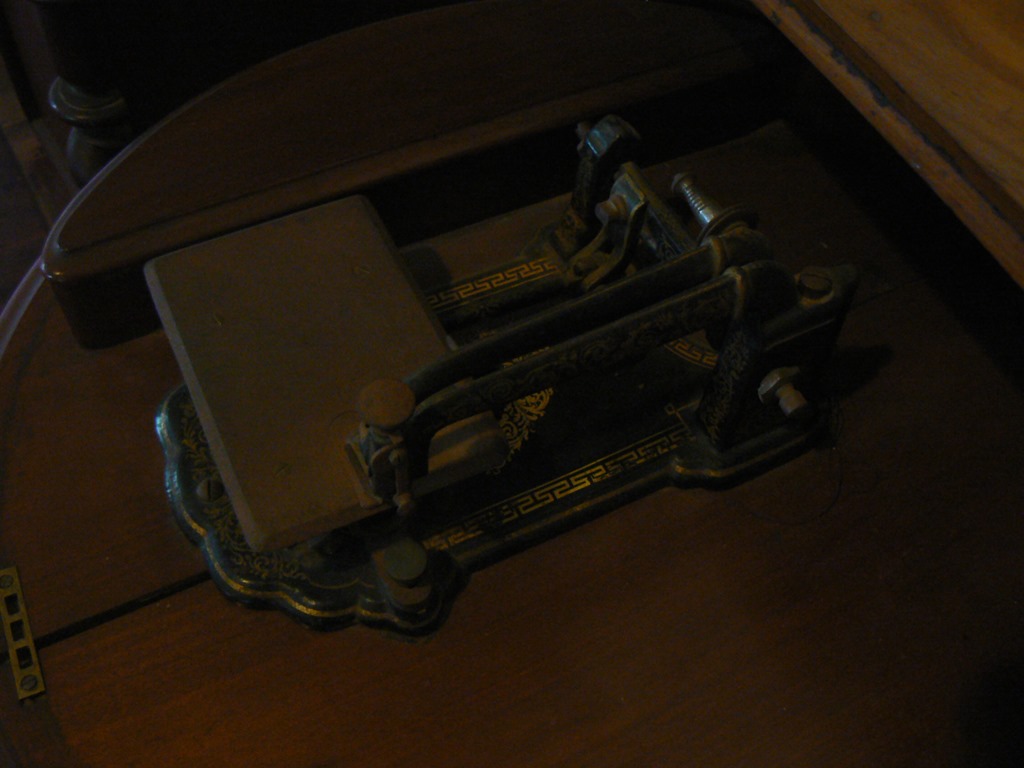
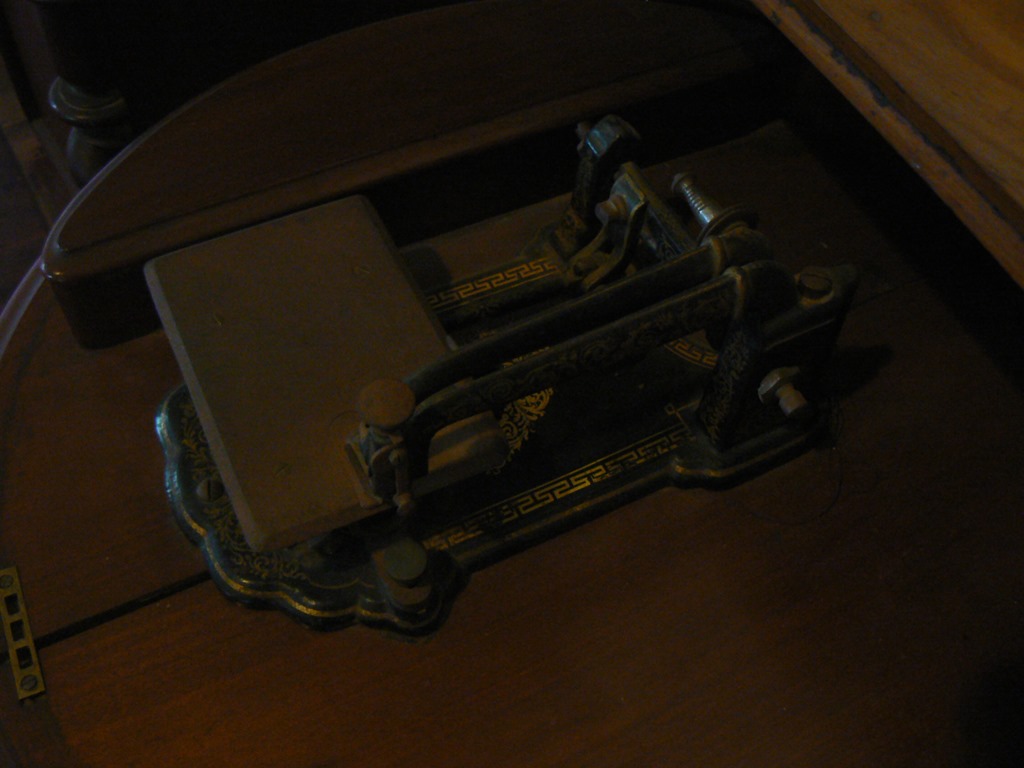
Down at Lake View yesterday, one of the items I documented was an 1867 Britannia sewing machine made in Colchester in England

P1040689

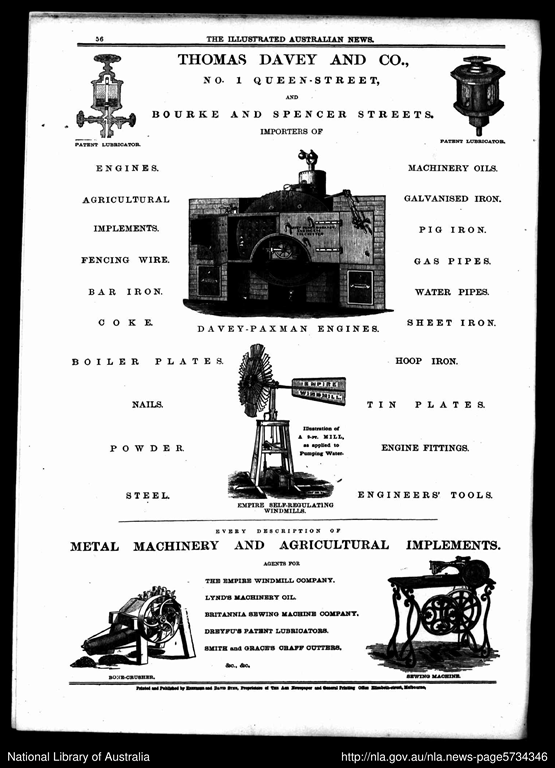
Britannia machines were extensively advertised at the time

britannia sewing machine

and at a cost of GBP 9 – which works out at around $1700 in today’s money – represented a substantial investment.

Yet people bought them, because prior to then all clothes had to be hand made, either at home or by a professional tailor or seamstress.

And a good seamstress was a well paid job for a woman, and she would likely never be wanting for work.

A sewing machine simplified the making of clothes at home, and at the same time made the mass production of clothes possible, and cheaper. (It has also got to be admitted that also opened up the drudgery of mass production – piece work – literally sewing pieces of fabric together to make a shirt or a dress.)

nla.news-page5734346

And of course in rural Australia sewing machines meant that people could make and repair their own clothes rather than having to trek to a larger town or city.

Sewing machines were the first mass produced bits of complex hardware – it is telling that Britannia, and some other sewing machine manufacturers also began to produce safety bicycles, and in the case of Remington, typewriters.

And just as the sewing machine freed women from the drudgery of sewing at home, the bicycle allowed women greater freedom to travel to and from work, while typewriters allowed women to have a ‘respectable’ profession …

Posted in Uncategorized | Leave a comment

A short door post box in Echuca

In Victoria, there are still quite a few  nineteenth century post boxes around. There’s two common types a cylindrical model with a metal crown on on top and a square design which sometimes has a separate slot for posting newspapers.

There’s one in Port Fairy that is still in use, they’re quite common in older suburbs in Melbourne and we even have a couple of decommissioned ones in Beechworth.

The Port Fairy example is obviously an early model as it is the short door type where the postie had to bend down to get the mail out, while the Beechworth examples are the more common and more ergonomic long door type.

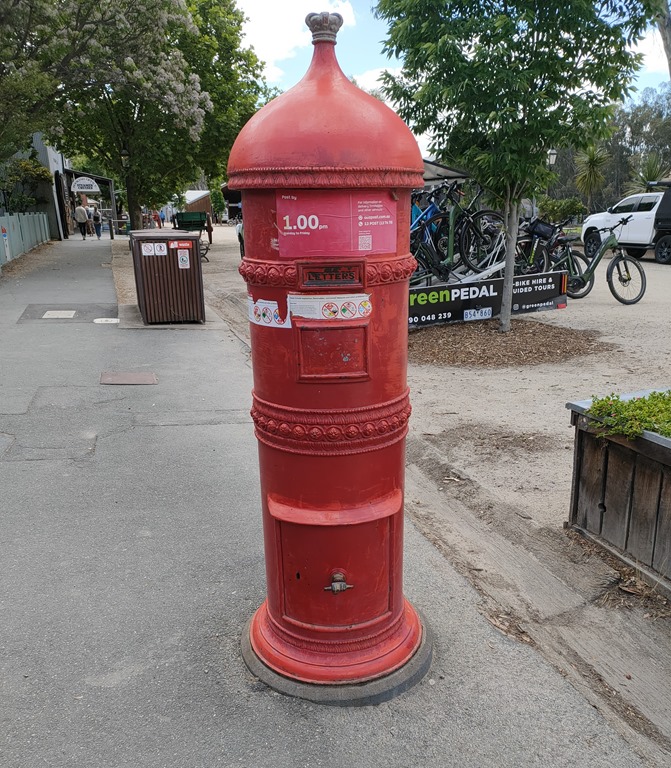
Well, when we were stopping off in Echuca on our mad dash to Lake Tyrell, I spotted another nineteenth century short door type mail box near the Star Hotel on the steamship wharf at Echuca

IMG20241024131239

which was still in use, and has had a bit of titivation with the crown being done in gold paint, but unlike the Port Fairy example, Australia Post haven’t picked out the rim in gold.

As post boxes are heavy lumps of cast iron, I’m going to guess that the box is still in its original location.

This example was made by Dangerfield and Son Ironfounders

IMG20241024131252

who were advertising in the Age in the late 1870s – which is about the right date for post boxes of this design

Screenshot 2024-10-27 112238

(Dangerfield and Son advert in the Age 27/07/1878 via Trove)

Posted in Uncategorized | Leave a comment

A trip to Lake Tyrell

IMG_0928

J had come across some pictures of Lake Tyrell, a salt lake out in Mallee in the west of the state, and thought the landscapes might make a suitable subject for a painting or two.

At the same time I’d been thinking we should take some trips out west to look for some nineteenth century architecture and so on.

So, in a moment of idiocy we decided on a dash to Swan Hill (first reached by paddle steamer from the mouth of the Murray in 1852) and then loop home via Lake Tyrrell.

We totally underestimated the time it would take to do this on the less than wonderful back roads, but, on the other hand we had a good time.

We first drove to Echuca for lunch.

Echuca was another nineteenth century paddle steamer port on the Murray allowing the transport of wheat, wool and passengers to the coast. As I’ve written elsewhere, we tend to neglect the history of paddle steamers in favour of that of the railways in the nineteenth century, but until the railways were laid, paddle steamers were an important means of transport, needing very little in the way of infrastructure, and being shallow draft, could navigate many shallow water courses.

In Victoria and South Australia paddle steamers provided a means of transporting wheat and wool from the interior to the coastal ports for export before the railways arrived.

It’s also why in Victoria we have railway lines snaking across the state to former paddle steamer ports like Swan Hill and Echuca – harvests would be taken by paddle steamer down the Murray to the railhead and then taken by train to Melbourne or Geelong, but had few, if any direct links between these towns.

Anyway, Echuca, when we last visited was a little bit cheesy with paddle steamer trips and a pretend stagecoach giving rides along the river wharf.

While, you can still have a trip on a paddle steamer, the town is now a bit less cheesy with some quite nice restaurants.

On our way out we ate at a vegetarian restaurant near the wharf, and damned good it was to.

From Echuca we drove on to Swan Hill, first reached by paddle steamer, the Lady Augusta, in 1852.

A pleasant town, but not a lot of nineteenth century architecture, but to be fair, we didn’t really have time to explore it fully.

Dinner was at Java Spice, a truly wonderful South East Asian restaurant in a tropical style garden, and blending Indonesian, Thai, Malay and other influences. The restaurant is a little bit outside of the town centre, opposite the big Bunnings hardware store but definitely worth the trip.

The next day it was on to Lake Tyrell, which is a few kilometre north of Sea Lake on the main Bendigo Mildura road.

Huge skies and a strange other worldly aspect with purply pink water and crystallising salt, almost like being on a science fiction film set.

Then down to Wycheproof where the railway line runs down the middle of the street

Main_street_of_Wycheproof

(wikimedia – public domain)

While there’s no longer a passenger service, grain trains still occasionally rumble down the main street.

We stopped for lunch at the rather good bakery before heading cross country via Boort – where we missed the local community museum by being too early –  and Mitiamo and back to Echuca where we had an an ice cream by the wharf.

From there we retraced our route out via Yarrawonga and Rutherglen where we stopped to pick up some fresh fruit and veg, as well as a pizza base and a bottle of wine before heading home.

It was fun, but a totally mad trip, really too far to drive sensibly in a couple of days, and we really didn’t give ourselves time to look around properly, but it did give us a taster of the Murray Valley’s potential as a destination for a longer trip, perhaps staying in some self catering accommodation for a few days to let J do some plein air landscape painting …

Posted in Uncategorized | 2 Comments