Dating railway ephemera

As you might know, as well as my gig at the Athenaeum, I’m back with the National Trust, this time cataloguing the contents of Lake View House.

Like a lot of historic properties, it has been ‘dressed’ ie artefacts from the period have been added to the display to give an impression of how the house would have looked when it was lived in in the late 1800s.

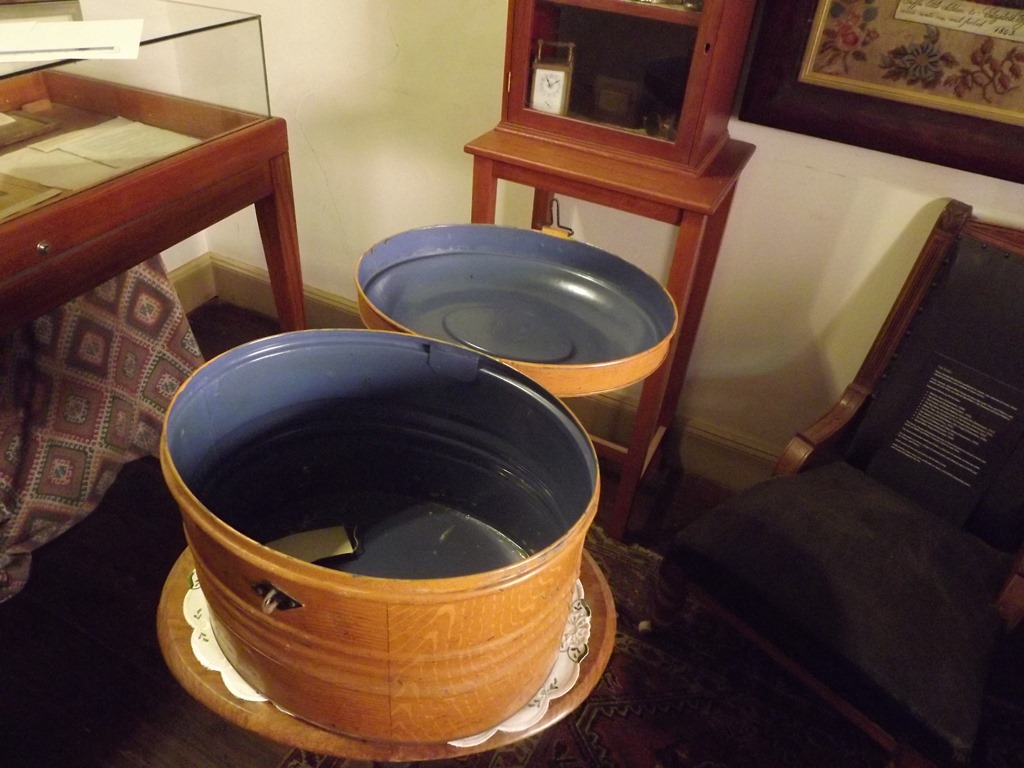
One of the items I catalogued yesterday was a rather attractive metal container with a hasp closure for a padlock.

DSCF0773

On the outside it’s painted to look as if it was made of wood, and the inside was painted a rather attractive blue colour.

Obviously the item was designed for transporting something safely, what I was not sure at first, but probably a hat box to safely transport one of these over the top late Victorian or Edwardian ladies hats.

Certainly a trawl of the web brings up a number of similar items categorised as late Victorian tin hat boxes on antiques trading sites. Admittedly mostly sites from the UK where antiques are more of a thing than Australia, but at the end of the Victorian era it was still the case that most consumer goods were imported from the UK than manufactured locally, so we can safely say it was a hat box.

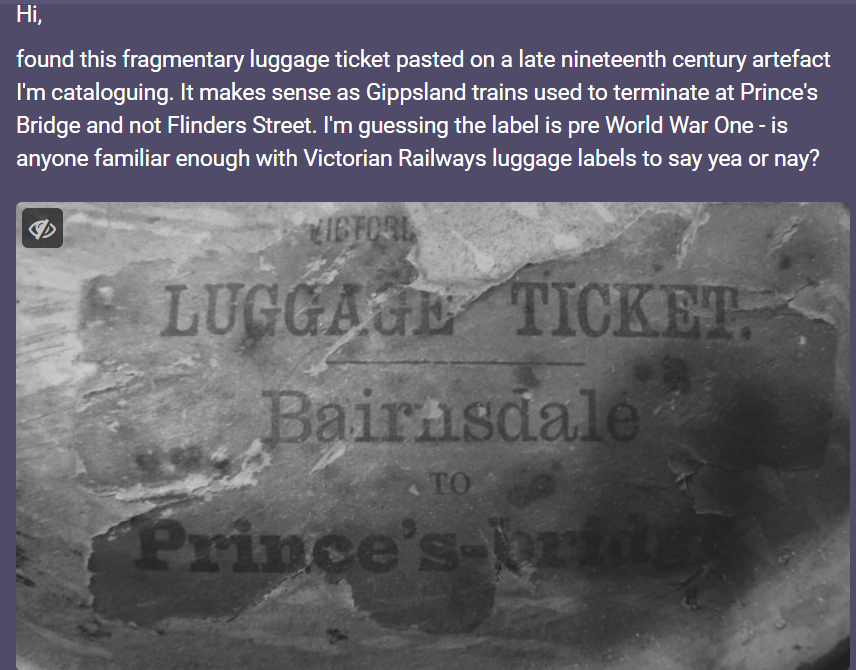
On the lid is pasted a fragmentary Victorian Railways luggage ticket – basically the equivalent of an airline checked baggage tag – from Bairnsdale to Prince’s Bridge station.

Prince’s Bridge station, was a  now closed railway station in Melbourne, adjacent to, but separate from Flinders Street station.

Crucially, it was where trains on the Gippsland line used to terminate (trains on the Gippsland line now terminate at Southern Cross, as do all other V/line country services).

So, we can say that someone, and we don’t know when, checked the box on a train from Bairnsdale to Melbourne.

As to when, well my first thought was that one of the train nerds on Mastodon might know when that particular design of luggage ticket was used

Screenshot 2024-06-19 141721

Nothing doing. Well I guess that luggage tickets are a bit too esoteric, so I turned to online auction sites where collectors buy and sell old railway tickets.

Again nothing.

So this morning I played with some editing software to sharpen the image and see if there was a ghost of some ink or pencil addition to the label

luggage ticket edited

Basically nothing.

Now the train line didn’t reach Bairnsdale to 1888, which means that the label cannot be any earlier than then.

But how late could it be?

Stylistically, no later than the 1920s, the give away being the destination station name Prince’s-bridge.

If you look at late nineteenth century and early twentieth century  newspapers you will see that sometimes street names are given with a hyphen – so Lonsdale-street instead of the more modern Lonsdale Street. Not everyone followed this convention at the time, but enough people did for the use of a hyphen in a street name to be a widely recognised usage.

And obviously Victorian Railways did in regards to Prince’s Bridge station which is given as Prince’s-bridge.

So it’s a reasonable guess that the label was printed sometime after 1888 and before 1920, by which time you might expect that the design might have become a little more modern.

Except, no. When I was working on the contents of Dow’s pharmacy, I came to realise that some of the letterpress labels that you might think on grounds of typeface and design to belong to the late Victorian period were being  used as late as the 1940’s – obviously the wholesalers had had batches of the labels printed in the 1890s, and kept using them until they ran out, where they printed some more using a more modern typeface.

And so it may be with the luggage tickets. Victorian railways probably printed a batch when the line opened in 1888, but probably didn’t reprint them until stocks ran low, so it’s possible that they might have been using stocks of an older design later than 1920.

How much later is an open question, but given that big hats went out of fashion with World War One, we can probably say the label was stuck on the box sometime in the late Victorian or Edwardian era.

That is unless eccentric Aunt Mildred was still  wearing a hat dating from the time of Edward VII in the 1930s …

Posted in Uncategorized | Leave a comment

The Illustrated Police News

I’ve just finished Linda Stratman’s 2019 compilation of excerpts from the Illustrated police News.

The Illustrated Police News, the ‘police’ in the name refers to crime, the Victorians referred to news of criminal activities as ‘police news’ in much the same way as the French refer to a crime novel as a ‘roman policier.

The Illustrated Police News was the pre-eminent tabloid of its day, and its woodblock illustrations are beloved by documentary makers where no photographs exist, as for example in the Mordaunt case where the Prince of Wales, later Edward VII, was accused of having sex with Lady Harriet Mordaunt. The accusation came to light in a very messy divorce case where basically her husband tried to divorce her on the grounds of promiscuity.

mordaunt-confession_270985213-s

(While the men got off with little or no reputational damage, ‘boys will be boys’, poor Harriet Mordaunt spent the rest of her life in a lunatic asylum, which seems a trifle harsh.)

There were of course no photographs of the Prince of Wales appearing as a witness at the trial or indeed of him canoodling with Lady Mordaunt, but the Illustrated Police News provided woodcuts of the supposed events, which have ever after been used in TV documentaries about royal shenanigans.

Like today’s tabloids, the IPN could never resist a good story, whether it be about murder, especially somewhere shocking, as in a railway compartment, violent housebreaking, or the sexual peccadillos of the upper classes.

As can be imagined, it went to town with such violet events as the Jack the Ripper murders in London. However it wasn’t all blood and gore, it also reported on the social conditions of the times, and events such as pregnant housemaids being turned out to starve, after having had sex, willingly or unwillingly, with the householder, or indeed his teenage sons.

Its prime was in the high Victorian era, later on after various changes of ownership it became increasingly xenophobic and jingoistic, perhaps reflecting the prejudices of its readership. At the same time increasing production costs led to a decrease in the quality of the illustrations.

However, the IPN, as the prime nineteenth century tabloid, and the first to be widely circulated among the newly literate poor has an important role in the history of England in the latter half of the nineteenth century

Posted in Uncategorized | Leave a comment

Vicars…

Vicars, especially nineteenth century ones.

Often derided, I’m a quiet fan of Victorian vicars, and their  watercolourist daughters.

In remoter nineteenth century communities in colonial Australia the Church of England vicar, and it was most definitely the Church of England then, was the only man of education, with sufficient leisure to pursue his interests.

The latter half of the nineteenth century was a time of great interest in natural history

Punch-lampooning-Woods-readers-Source-Common-Objects-at-the-Sea-SideGenerally-Found_W640

and it was also common practice for educated men to keep a journal.

Now not every journal keeping vicar was as engaging a writer as Francis Kilvert, but buried in among the tedious records of parish goings on there are gems about the plants and animals found there, and even sometimes about the presence of indigenous people in the area, often the only record we have, as the local settlers wanted all to often to drive the local indigenous people off their land.

And these vicars, often had daughters who were closeted at home, there being no people of sufficient ‘quality’ for them to mix with, who became quite proficient watercolourists and self taught botanists, there being little else for them to do.

So, next time you see a comic vicar in an English comedy show, remember that while often preposterous and pompous, they did have their uses …


Posted in Uncategorized | Leave a comment

Trams

While I was researching something else entirely, I had this light bulb moment about trams, and why they were a product of the late Victorian and Edwardian eras.

1280px-EL088_027_(20664469198) cropped

A tram in Launceston Tasmania on a sunny Edwardian afternoon

A lot of large nineteenth century cities had cobbled streets in the city centre, and these relatively smooth streets allowed the operation of horse buses.

nypl.digitalcollections.510d47e0-fca0-a3d9-e040-e00a18064a99.001.w

Crinolines and horse buses

Horse buses were cramped and could not carry more than a few people at a time.

However quite a few streets were simply gravelled, and some had a surface that was not much better than that of a dirt road today and basically horse buses didn’t cope well with rough surfaces and potholes.

So, in quite a few places they had horse trams – the lightweight track ensured a smooth ride and the horses could pull a heavier load.

245058414.jpg.gallery

Horse tram in Darlington England

Horses of course needed to be looked after, fed, and rested, which meant that even horse trams could not carry that many people, and were not particularly cheap.

And then, on the back of demand for the new electric lighting, cities began to acquire power plants. Sometimes these were privately owned an operated, and sometimes they were publicly owned by the local authority.

Suddenly there was a source of readily available motive power that didn’t need to be fed and watered, so it seemed like a no brainer to convert the horse tram systems to electric operation – in some cases as in Dundee in Scotland where the city owned the Carolina Port power plant they took over the tram system and expanded it, in other places the tram system remained in private hands, and there are instances such as Falkirk again in Scotland, where the tram system was actually built by the local power company.

All of this happened unevenly – there were places, like Stirling, yet again in Scotland where the horse tram system was never electrified, and the horses were eventually replaced by petrol engines.

stirling petrol tram

Look Ma! No wires! Petrol powered tram in Stirling

And that’s a key observation – by the 1890s overhead transmission lines and electric power was a mature technology. Internal combustion engines were not reliable enough or powerful enough to power public transport until roughly 1910, when motor buses began to appear.

But again they needed a relatively smooth surface, so it was not until after the first world war when increasing car use led to city streets being sealed with bitumen that they really became a viable option.

Queen Victoria Street Tram Terminus

Approaching Queen Victoria Street in York

At the same time trams were beginning to be a problem.

Most tram systems dated back to just before 1900 – a few were later –  but it’s true to say that by 1920 a lot of the systems were in need of maintenance, especially as maintenance had been skipped during the first world war, leading to a backlog of track repairs and worn out trams well past their use by date.

york tram museum st

Trams, cars, and buses in Museum Street York some time in the 1920s

Buses were cheaper to operate, and didn’t run on tracks down the middle of the road – what seemed a great idea in 1890, running the tramline down the middle of the street to avoid bicycles and horse drawn delivery carts didn’t seem such a good idea in in the 1920’s with the increasing use of motor vehicles, especially when dealing with narrow European city streets.

And so tram systems began gradually to be closed down and replaced by buses.

Sometimes the ghosts of long vanished tram systems can still be seen – for years there were still tram tracks running down the middle of High Street in Dundee, and as late as the early 2000s there were still sections of track poking through the bitumen on Great Western Road in Glasgow, forty years after the last tram rattled down towards the city centre …

Posted in Uncategorized | Leave a comment

So how widespread was the seven colonies idea?

‘Seven Colonies’ was a phrase used in nineteenth century Australia and New Zealand to refer to the six Australian colonies and New Zealand in the run up to federation, which formed a little squabbling group of British polities a long way from any other British colony.

I wanted to try and gain some sort of handle on how popular the phrase was.

If you search Trove for occurrences of the phrase in newspaper articles you get over four and a half million hits suggesting that the phrase was reasonably popular.

Using QueryPic to make sense of the data you end up with the following chart

chart

where the phrase becomes increasingly popular in the run up to federation, and then rapidly drops out of use especially as it became clear after 1907 that New Zealand was unlikely to ever federate with Australia.

The New Zealand data gets drowned out by Australia, but graphing the data from New Zealand separately one ends up with much the same curve

chart (1)

showing that by 1910, the phrase had more or less dropped out of use in New Zealand as well.

So what other evidence do we have?

Postcards for one.

Prior to the early 1890’s the header strap on prepaid penny postcards issued by the colonial post office in Victoria looked like this

vic card 2 1880 header

While after the early 1890’s they looked like this

vic card header

quite explicitly saying that they were valid for use not only within Victoria but also for mail to the other Australian colonies plus New Zealand.

I havn’t been able to find images for postcards from WA, Queensland or NSW, so I can’t say if they also included a similar strap line, but South Australia and Tasmania did not

sa postcard header

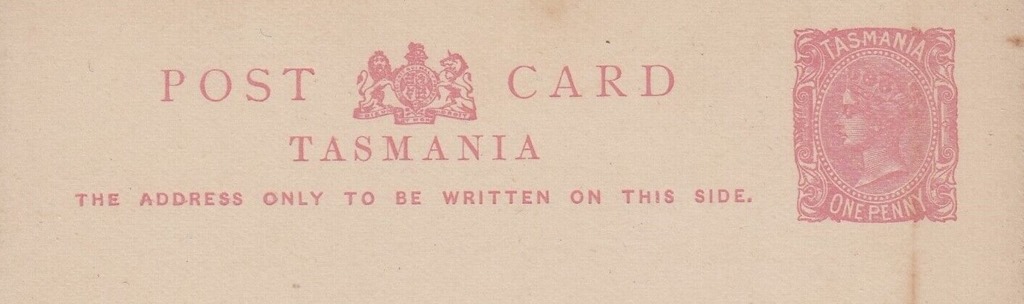
tas card header

but as smaller colonies with smaller volumes of mail it’s possible they simply didn’t bother reprinting the card blanks. After all everyone knew the validity of penny postcards, didn’t they?

Interestingly, New Zealand also made the validity of their penny postcards explicit

nz postcard header

However, this story is slightly complicated by the advent of the Imperial Penny Post – a movement from 1898 onwards to introduce a flat rate of one penny (or the equivalent in local currency such as Canadian dollars and Indian rupees) to send a letter or postcard anywhere in the British Empire.

Australia never adopted the Imperial Penny Post, but New Zealand did from 01 January 1901, much to the chagrin of the Argus.

Even though the Imperial penny post as such ended in 1918, its ghost hung around to the early 1960’s when it was still cheaper to send a letter or postcard from England to a Commonwealth country than a neighbouring European country such as France …

Posted in Uncategorized | Leave a comment

Steamships and Federation

I was reading about the history of the gold rush in Otago in the 1860s, and the author consistently referred to the seven colonies – basically the six colonies of colonial Australia plus New Zealand.

And certainly in the 1860s the seven colonies formed a little British community trading and squabbling among themselves with little industry to speak of – most manufactured items were imported. For example Australia didn’t get round to making making its own glass medicine bottles until the early 1870s, and glass beer bottles were also usually imported from England until around the same time.

Incidentally, even though glass bottle manufacturing started in the 1870s, the import trade continued – when the Fiji went down in 1891, part of her cargo was glass medicine bottles imported from Germany.

Now, in 1889, when Henry Parkes gave the Tenterfield oration, he urged the seven colonies to form a federation, and indeed right until the 1920s there was an assumption that New Zealand would some day join Australia – its why Canberra Avenue in Canberra was originally going to be named Wellington Avenue and why it passes the suburb of Manuka. Its also why there’s still a reference to New Zealand joining in the Australian Constitution.

Well, New Zealand never did, and became a successful nation in its own right, rather than ending up as a second Tasmania.

Today, the idea of New Zealand joining Australia seems a bit odd, but in Parkes’ time it kind of made sense, and part of reason is to do with railways, or rather the lack of them.

When Parkes gave the oration in Tenterfield, Tenterfield was on now abandoned main line to Brisbane – there was no coastal railway line, and most of the coastal communities of New SouthWales were reached by sea from Sydney – it’s why small places like Tathra on the south coast still sport impressive steamship wharves.

Melbourne and Sydney had been linked by rail only a few years before as had Melbourne and Adelaide. There was no direct Sydney Adelaide line via Broken Hill until the 1920s, and in Queensland the Far North line to Cairns was not completed until around the same time.

There was no railway line across the desert to WA and the line from Adelaide to Darwin was stalled at Alice Springs, and remained so until the early 21st century.

Travel between the big cities of Australia – which all lie on the coast more or less was by ship. Cargo mostly moved the same way, in part due to the break of gauge between the different colonies’ railway systems – bulk items sent by ship from Melbourne to Sydney say did not need to be transhipped on the border at Albury.

And in such a world of sea based transport it probably seemed eminently sensible to consider New Zealand as an extension of Australia – the journey from Sydney to Auckland or Wellington was no longer than that to Hobart, or indeed from Brisbane to Cairns.

Now of course, we are oriented to land transport and we see the difficulties of a sea based world, but in the nineteenth century a sea based journey was sometimes the only choice and considerably more comfortable than a slow, jolting, steam train.

Posted in Uncategorized | Leave a comment

Pornography and war

In 1953 L P Hartley wrote The past is a foreign country, they do things differently there, something doubly so when dealing with two quite different and alien cultures – Tsarist Russia and Meiji Japan.

Winston Churchill, always one for a good line, described Russia as a riddle, wrapped in a mystery, inside an enigma, when talking about the Nazi Soviet pact of 1939. No one really understood the decision making processes that went on in Stalin’s Soviet Union.

The same can be said of Tsarist Russia, which was equally an autocracy, and where a ruling court of favourites made decisions without scrutiny.

Nineteenth century novels, such as those of Tolstoy and Chekhov might give us the illusion of understanding Tsarist Russia, but actually we don’t.

Doubly so for Meiji Japan. A ruling court, a set of governing cliques of aristocrats and military men (the two were basically synonymous) and a constitution modelled on that of Prussia with a rubber stamp parliament.

Also, as few westerners spoke or read Japanese what went on in Japan was utterly unknown in the west – in fact I’ve seen it suggested that the Japanese military had no real need of ciphers and codes as no one much outside of Japan could read Japanese.

Not actually true, the Japanese did in fact use codes to encrypt their diplomatic correspondence.

Now, I was looking for some images to illustrate a post about the Russo Japanese war at the start of the twentieth century.

I personally consider the Russo Japanese war an important event as

1) it marked Japan’s rise as a significant military power

2) it was the first time in recent history that a non western army defeated a European army

3) disillusion with Russia’s military failures in the East led to the 1905 insurrections throughout Russia

Japanese artists produced a number of woodblock prints depicting the war. They also produced a number of shunga. Shunga is a style of Japanese erotic art printed on woodblock and typically depicting two people copulating.

I’m not prudish about sexual matters, but because some people might find some of the images disturbing I’ve put together a little Google Docs file that describes the images and includes links to the wikimedia commons images. If you don’t want to look at the images, don’t click on the links.

The first image shows a Japanese officer copulating with a woman of European origin. There’s no way to tell from the image whether the sex is consensual or not. However, when I found a second image showing a Japanese soldier penetrating a Russian soldier I began to wonder if the first image had also been drawn to express Japanese dominance over Russia.

But then, I found another two equally explicit images of Japanese officers having sex with Japanese nurses, I began to question my initial reaction.

While the second image, that of a Japanese soldier buggering a Russian soldier, is clearly supposed to express dominance, I’m not sure about the first image, it could be consensual or non consensual, and given the other images I simply don’t know if it was normal in Meiji Japan to express dominance via sexual acts, it could simply be a bit of exotic erotica.

I’m also aware that I have some of my own baggage here. Some of my family were imprisoned by the Japanese when they occupied Singapore. The men and women were separated, and one of my aunts who survived the war was never right in the head afterwards. Bad, traumatising things had obviously happened to her, but what I don’t know.

And because of this, I don’t know how to process the image. Equally, I’m sure that had Russian soldiers captured Japanese nurses, they would have treated them brutally…

Posted in Uncategorized | Leave a comment

Tasmania

Tasmania.

For reasons too complicated to explain in an opening paragraph, we were going to Tasmania for a few days.

I knew nothing about Tasmania – I had never been there and my ideas, such as they were, had been formed from a mixture of gardening and wildlife shows, a grim historical drama, and a couple of crime shows suggesting that Tasmania was the psychopath capital of the world and that you were likely to be dragged off at random into the forest to be murdered and disembowelled, and that your remains would never be found having been crunched into unrecognisable fragments by a horde of Tassie devils.

Nevertheless we went.

Driving off the overnight ferry in the early morning gloom to be confronted with a sign touting the Devonport Axe man Museum, I began to wonder if perhaps we might have made a mistake coming to Tasmania – maybe it really was full of axe murderers.

We’d hoped to find somewhere open for coffee and breakfast, but no, everywhere was closed so we drove on towards Launceston.

I remembered that I had made (and forgotten) a thermos of coffee for the journey before leaving home the day before, so we pulled off the Midland Highway at Westbury – a nice, very English looking place with a church on the green and normal people walking their equally normal dogs – not a psychopath to be seen, but who knows – we’ve all seen Miss Marple dramas and what goes on behind closed doors in quaint English villages.

We were in search of a toilet, and despairing of finding an open cafe, decided to stop to see if the coffee was still warm.

It was, surprisingly so, so we sat in the early morning chill on the green and drank our coffee, and munched on a couple of muesli bars. It might not have been the greatest breakfast in the world, but after having been woken at quarter to five to disembark from the overnight ferry, it did the job of making us feel human and that Tasmania might not be so bad after all…

So why were we in Tasmania?

A holiday. J had booked for a ten day artists workshop in Tasmania, but rather than fly there and back alone, we decided that we would have a few days in Tasmania before J’s workshop and that I would take the car back alone, along with J’s outdoor gear and anything else she didn’t need for the workshop, meaning that hopefully her luggage would come in blow Qantas’s 23kg weight limit.

So, off we went on the ferry travelling overnight. The whole overnight experience was not wonderfully comfortable, even though we’d booked a cabin.

When we were boarding we noticed that some travellers were taking their own pillows. At first we thought that an eccentricity, but the we discovered the provided pillows to be thin, as were the doonas. We ended up folding the single thin pillow provided over on itself to get something more comfortable – and I normally sleep with a single thin pillow.

Lesson learned – if we do it again pack an air pillow each.

So, after a less than restful night – being woken at 0445 didn’t add to the experience we drove on to Launceston where we were going to spend a couple of days.

We were of course far too early to check in to our hotel so we drove to George Town for brunch. No where was doing brunch so we settled for some chicken salad rolls and take away coffee and sat beside the statue of Matthew Flinders and his cat, and were promptly subjected to an attempted mugging by a local feline, who was prepared to fight off the seagulls if we dropped any chicken.

matthew flinders and cat george town

After our brunch of sorts we drove out to the lighthouse, and then back to Launceston to check in to our hotel and collapse for a bit after our early start.

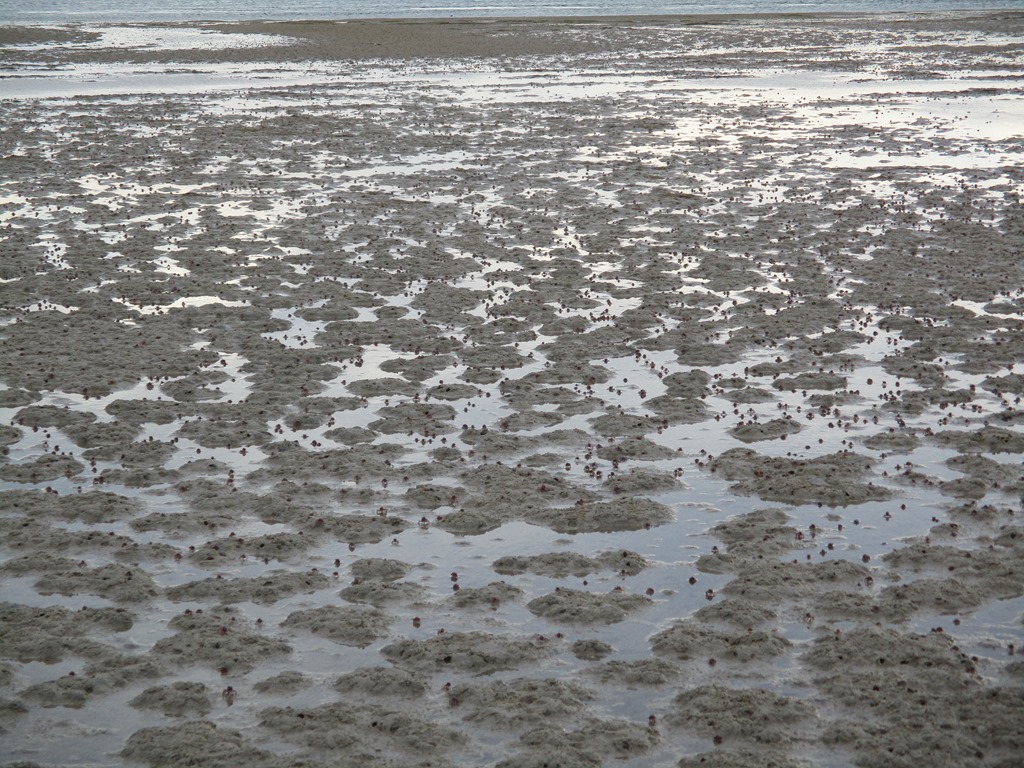
The next day we explored Launceston and visited QVMAG – actually just the art gallery in the old building. The next day was simply hot, so we just walked round the waterfront and back through the town – and then we were off to Coles Bay for the weekend – it was the Labour Day weekend so the area was busy but we’d managed to book a quiet AirBnB a little bit out of town on an arm of the sea, and we birdwatched, walked on the mudflats and relaxed and read books one afternoon when it rained gently.
IMG_0827

While it was still shorts weather it was noticeably cooler than Launceston – the weather was breaking us in gently for our next stop, Hobart, which was actually cold with a wind that came out of the Antarctic – that said we had a good time, visiting the Tasmanian museum and strolling around Salamanca and the waterfront. Our day in Hobart happened to be my 68th birthday, so we treated ourselves to a decent meal out.

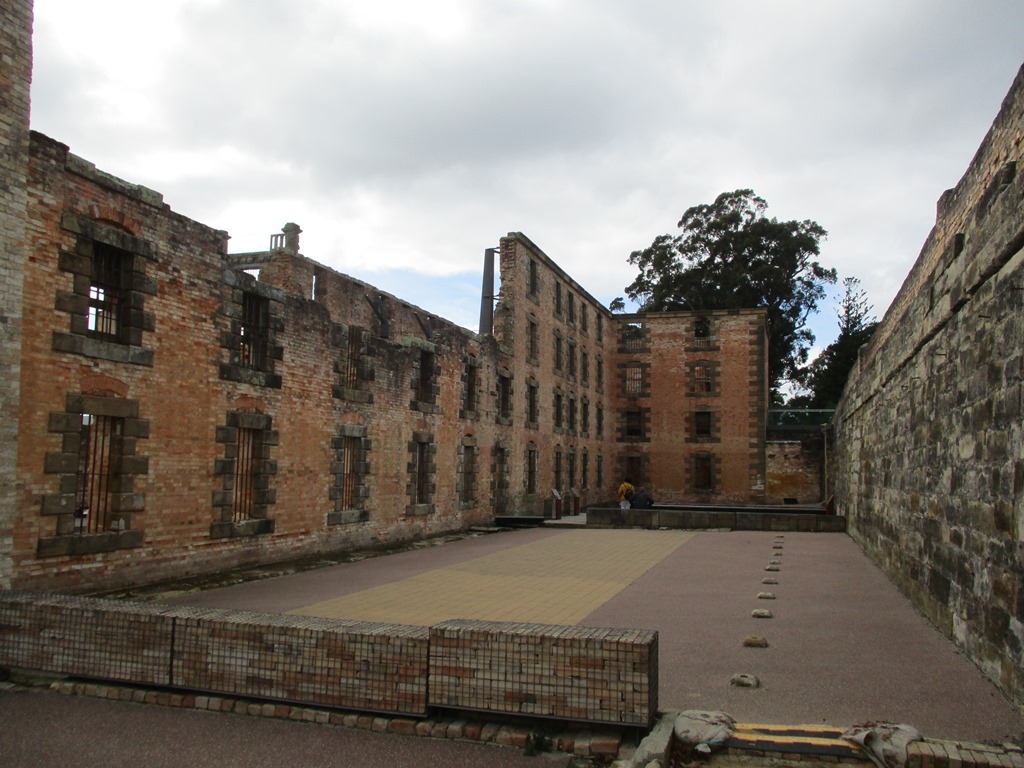
Our final stop was Port Arthur, where again we had an AirBnB overlooking the water – loved the location but the weather was still chilly, and one night it had the impertinence to rain quite heavily, however the rain cleared in the morning, in fact our last day, when we had planned to visit the historic site.
IMG_0852

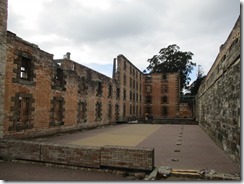
I was disappointed in the site. A little too Disneyfied for my taste with boat trips round the bay, and having seen Norfolk Island, I thought it a bit less interesting.

To be fair, it’s not totally the site’s fault. Abandoned in the 1860’s, apart from the Lunatic Asylum, the site was sold off in bits and pieces.

The main penitentiary was mostly destroyed in bushfires at the end of the nineteenth century, as were some of the other buildings that had fallen out of use. The staff and officers’ houses, which by then were privately owned mostly survived, but as they were people’s private residences they were inevitably chopped about a bit with a room added there, or a wall taken out to make a larger parlour.

The heritage people have been gradually buying back the properties and restoring them where possible, but they don’t quite have the feel of Quality Row at Kingston on Norfolk Island.

It’s not possible normally to visit the prison graveyard – the Isle of the Dead – although you can see it from the boat trip round the bay. Unlike Norfolk Island there’s no family history centre on site to help people researching any of their ancestors who might have ended up in Port Arthur.

Equally I came away feeling that they could have made more of the remains and the museum presentation could be better – for example what NSW have done with Trial Bay provides more historical information plus an engaging visitor experience.

That said, it’s worth visiting if you get the opportunity.

And then we were done.

A long drive to Winnaleah to drop J off, followed by another two and half hours to the ferry terminal.

Rather than another overnight sailing, I’d decided on a daylight crossing, which meant I needed to be at the ferry port by something like six thirty in the morning.

So, while it would have been nice to stay with J at the workshop for a night, it would have meant setting off at around three in the morning, I settled for a night in a motel and a microwave curry.

Driving towards Devonport as the sun was going down I was startled by something with three very bright lights coming towards me on the wrong side of the road – at first I though it must be some massive potato digging machine or the like, but in fact the railway line parallels the road in places and in fact it was a Tasrail freight train – well they only have freight trains in Tasmania – heading south.

The daytime crossing was tedious, in the way a long flight is tedious. I’d hoped we might see a whale or two, but no, all we saw was the ferry’s sister ship heading in the opposite direction. Mostly I contented myself with rereading Shōgun – an ideal book for a long journey and looking out the window.

The ferry was late in to Geelong, but it didn’t matter, I’d already decided not to drive back after such an early start, and had booked into a motel for the night.

The next day I was up before dawn to get clear of Geelong before peak hour started in earnest, and I had a slightly surreal experience.

I was sitting on the toilet and idly gazing out the window as one does, when a V/line commuter train went past about 50m away. The motel toilet window had one way film on it so it’s not as if anyone would have been able to see anything but it was odd to be sitting on the loo watching a train go by.

Then a long drive home, stopping to buy supplies at Wangaratta. The heat wave had begun to break but Wang felt steamy and humid, the way Bangkok or Singapore does after rain. I managed to beat the rain home and unload the car before it started.

The garden had suffered in the heat, but no irreparable damage…

Posted in Uncategorized | Leave a comment

James Clavell’s Shōgun

In 1975 James Clavell published a best selling novel Shōgun, loosely based on the story of William Adams, an English Tudor period pilot major who was shipwrecked off the coast of Japan in the early 1600s and rose to prominence in the court of one of the Japanese warlords of the time.

Clavell had been a British Army officer in Malaya, and was captured by the Japanese in Java during the second world war and was interned in Changi PoW camp in Singapore.

(It’s one of the oddities of history that he might have crossed paths with my uncle Jimmy, who was interned first by the Japanese in Changi before being transferred to Sime Road camp. As both are now dead – my uncle probably dying of mistreatment in Sime Road, we will never know).

Clavell paints the Japan of the period as a strange and very alien place and almost completely unknown to the west. In fact this isn’t quite true, at this period the door was ajar with small numbers of merchants visiting Japan, as well as the occasional missionary.

At the same time a small number of Japanese visitied the west including Cosmas and Christopher (we don’t know their Japanese names), who were captured by the English privateer Thomas Cavendish while travelling on a Spanish Galleon, eventually ended up in Elizabethan England.

Adams, who despite being English, was employed by the Dutch VoC at the time, might well have encountered Japanese mercenaries prior to being shipwrecked, so he may have had more of an acquaintance with Japanese culture than Clavell’s fictional protagonist.

The Dutch, the Spanish and the Portuguese all employed Japanese mercenaries at various times in their wars both among themselves and against indigenous rulers in what is now Indonesia, Timor and the Phillipines.

Clavell’s story, and it’s a good story, chronicles the rise to power by Clavell’s protagonist, John Blackthorne. As a story it has perhaps more drama than Adams’ and makes more of Blackthorne’s value as a westerner with skills that the Japanese did not possess at the time.

As a story, it’s very much out of the ‘first encounter’ trope of science fiction where a group of explorers encounter a strange, sophisticated and utterly confusing and alien culture – and the Japan of the period fits the description perfectly – sophisticated, alien, and most definitely not western.

I read the book in 1977 or 78 and remember being fascinated by its portrayal of an utterly different culture, in which people have the same urges and desires as every other human being, but at the same time behave differently due to cultural differences and different attitudes.

In fact I was so fascinated by the book that I tried to teach myself some Japanese from a BBC correspondance course.

A complete failure – apart from a few useful words and phrases uch as arigato and moshi moshi, I learned nothing, certainly not enough to string together a sentence, perhaps with a Japanese teacher I might have learned more.

Shōgun was such a success as a novel that NBC in America commissioned a TV dramatisation in the early eighties, which was both well made and reasonably true to the book. At a time when TV was still very much a shared event, myself and friends would gather together in each other’s share houses for a pot luck supper and watch it on a Sunday evening.

Until a few days ago I hadn’t thought about the book for years. My paperback edition had long since disappeared to a second hand shop somewhere, probably as a result as one or other of my moves, and then I saw in the New York Times that there was a remake of the original TV series.

The pictures in the NY Times article suggest that the remake is visually stunning. Unfortunately it’s probably going to end up on Disney plus in Australia, which probably means I won’t be able to see it, or at least not until it’s several years old and ends up on one of the public networks.

However, I did download a copy of the book to my Kindle to see if it was still as good as I remembered it, if nothing else I’ve got my next few week’s evening reading sorted…

Posted in Uncategorized | Tagged , , , , | 1 Comment

Other people’s history

History is a strange and slippery thing, full of truths, half-truths, and strange inexplicable seeming events.

And so it is when you watch other people’s tv.

Sometimes it turns out what you think you know isn’t quite true.

For example, we’ve recently been watching a Czech TV drama on Prime – The Prague mysteries.

We started watching it simply because we have this strange addiction to foreign language cop shows, but this one is something more.

A costume drama, set in the early years of an independent Czechoslovakia after the dissolution of the Austro Hungarian empire it’s simply a series of detective mysteries linked by some running threads – sort of a Czech version of Vera but set in the early 1920’s.

People still have photographs of Franz-Joseph and Karl in their houses even if these days they keep them out of sight at the back of a cabinet.

And there are references to the first world war – not Britain’s war or even Germany’s but to Austria Hungary’s war – the bitter war of attrition fought in the Alps against Italy, the horrors of the eastern front, returning PoWs from Russia who have somehow survived the chaos of the revolution and subsequent civil war to return home convinced Bolsheviks.

There’s an episode where a character based loosely on Nikola Tesla, but infinitely less successful, shoots his boss with a Montenegrin Gasser – no, I didn’t know either, but it’s a revolver based on a nineteenth century design for the Austro Hungarian cavalry, that found favour in Montenegro, which at that time was a wild place, riven by vendettas, that had emerged out of the wreck of the Ottoman and Venetian empires.

But of course, what this reminds us is that there are multiple understandings of history.

In Australia, one of our founding myths is based around the ANZACs and Gallipoli, even though many more Australians died on the Western Front – and some, like J’s grandfather, had the misfortune to be wounded at Gallipoli and then be redeployed to France after they recovered.

Which is why J had an Australian grandfather, but an English grandmother, and indirectly why her mother, even though she had lived in Australia as a little girl, went to school in England – and of course before 1949 it didn’t really matter – there were no Australian citizens, only British subjects living in Australia.

But, if you’re Czech, it’s the disaster of the war in the east and the winter war, and the collapse of the Austro-Hungarian empire and the emergence of the new successor states, all trying to forge a separate identity.

And actually, these stories are not really separate – in Beechworth, outside of the RSL we have a Krupp 75mm gun that was manufactured in Essen in 1904 for the Romanian army, but which was captured by the Light Horse in what was then Palestine …

Posted in Uncategorized | Tagged , , , , | Leave a comment