A nice example of a preserved colonial era pillar box in Glenelg. The box is outside the library, not far from where the tram line ends in Moseley Square.
There is no obvious iron founders mark on the box so I can’t tell if it is a locally made copy of an English design, or if it was shipped all the way from the UK …
We were in South Australia for a few days and found ourselves in Goolwa, which is nowadays a pleasant seaside town full of beach side cafes and old stone buildings, but historically was a working port at the mouth of the Murray and was where the Lady Augusta set off from to reach Swan Hill in the early 1850s.
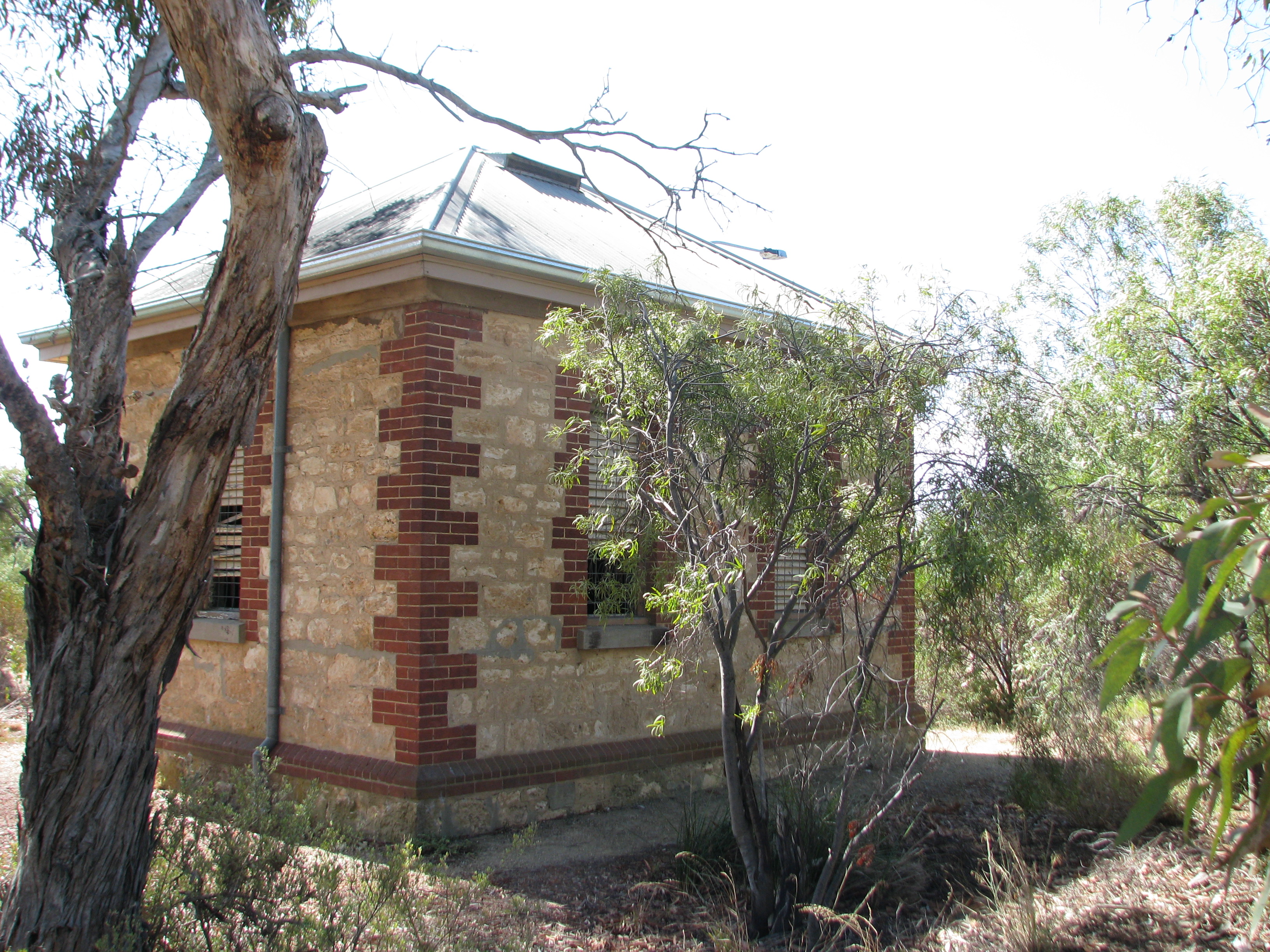
Today, there is not much left of the industrial port, there’s a heritage railway, a tourist paddle steamer and bits of crane in the wharf area, but I did remember that Goolwa still had an old morgue dating from the 1880s, that had been built to deal with the increasing number of dead bodies fished out of the Murray, whether sailors or drunken tourists during the summer season.
I knew that the council had been looking for someone to turn it into something, Dracula’s Cocktail Bar perhaps, but I went looking for it to photograph it before it was too late.
I found it in scrub at the edge of the historic precinct looking distinctly neglected and forgotten. While the door was heavily bolted and there were two layers of steel mesh over the windows, but the shutters, as you can see from the photograph above were broken.
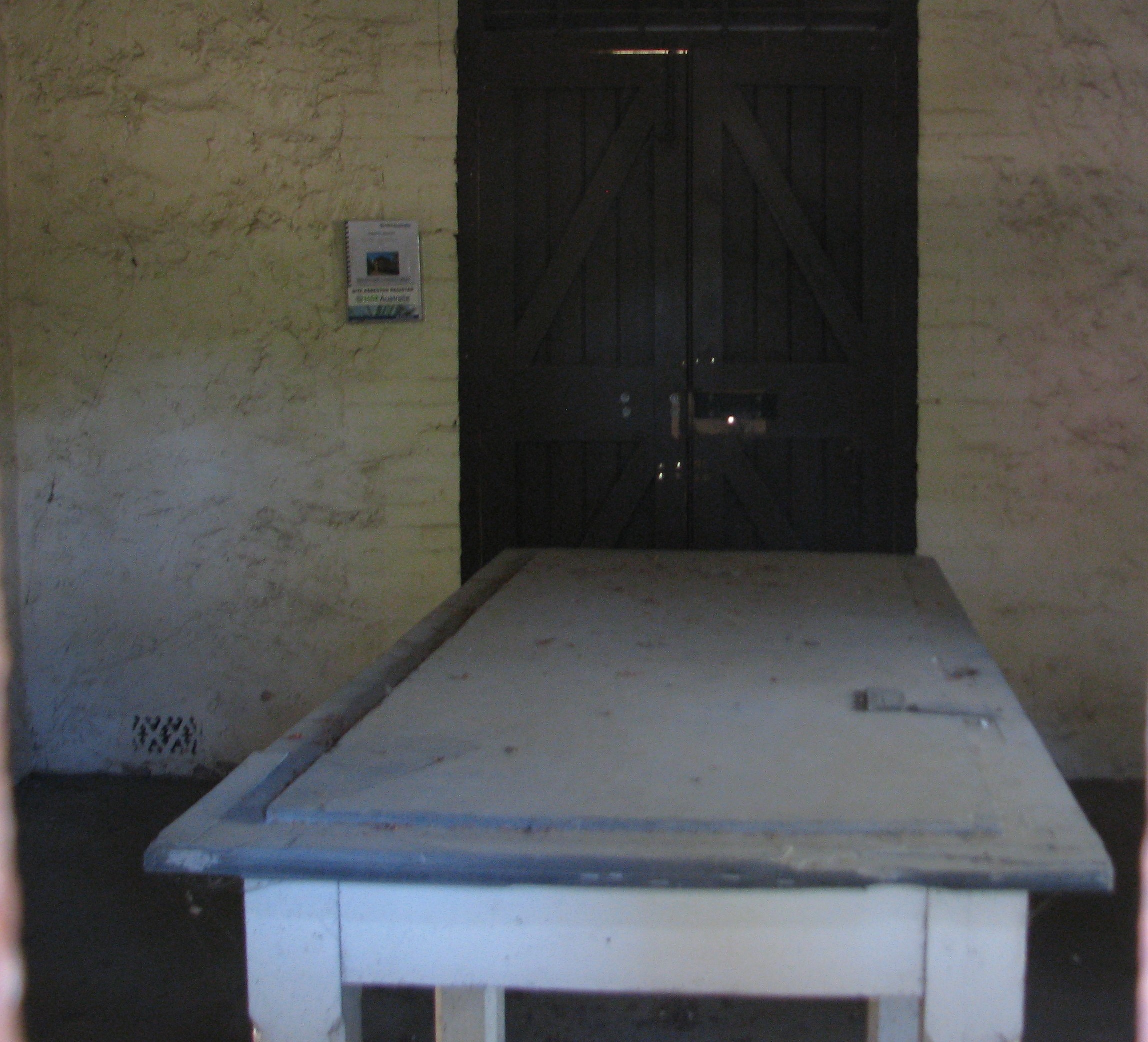
I stuck my camera lens through the mesh and was rewarded with a picture of the old slate topped autopsy table
There doesn’t appear to be much else left inside the building.
It seems kind of sad that a bit of history is abandoned and neglected like this, but I must admit I struggle to find a sympathetic use for a one room morgue and nineteenth century dissection table …
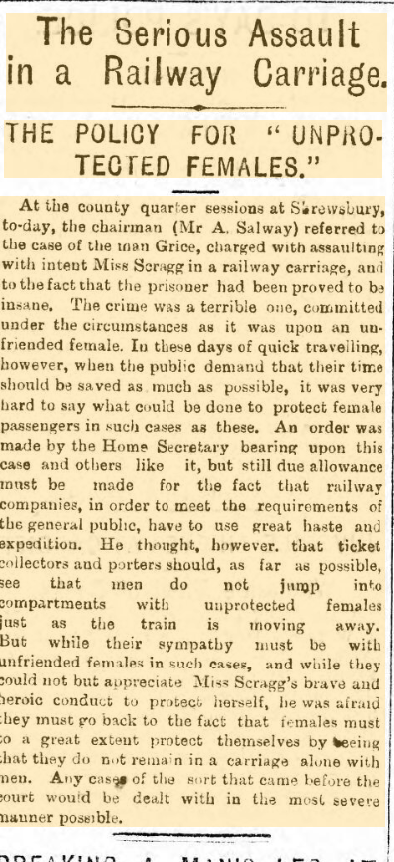
I finally ran to ground a newspaper transcript of her deposition, which I won’t reproduce as it is fairly graphic describing the violence wreaked on Katherine and Grice’s attempts to pull up her dress.
Given that Grice was captured with his flies still undone, there can be little doubt as to his intentions.
However there are two interesting aspects to the deposition.
Like Fanny Elizabeth Bull, the railway company concerned (in this case the London and North Western Railway) provided a solicitor to support Katherine, suggesting that the railway companies often saw it as their duty to assist in a prosecution.
Secondly, there was a Ladies Only compartment on the train but Katherine was not sitting in it – she had been sitting in an ordinary third class compartment with other passengers, who unfortunately had all got off at a prior station leaving Katherine alone.
This did invite some comments along the lines of ‘she were asking for it, warn’t she’, and comments from the chair of the grand jury about women having to take responsibility for their own safety, but these didn’t go anywhere given the brutality of the attack and the fact that she had been sitting in a compartment with other passengers prior to Grice boarding the train – he could just as easily have leapt into a Ladies Only compartment occupied by a single woman.
Without access to the court transcripts, I can’t prove this but there seems to have been a recognition that providing Ladies Only compartments was not a panacea …
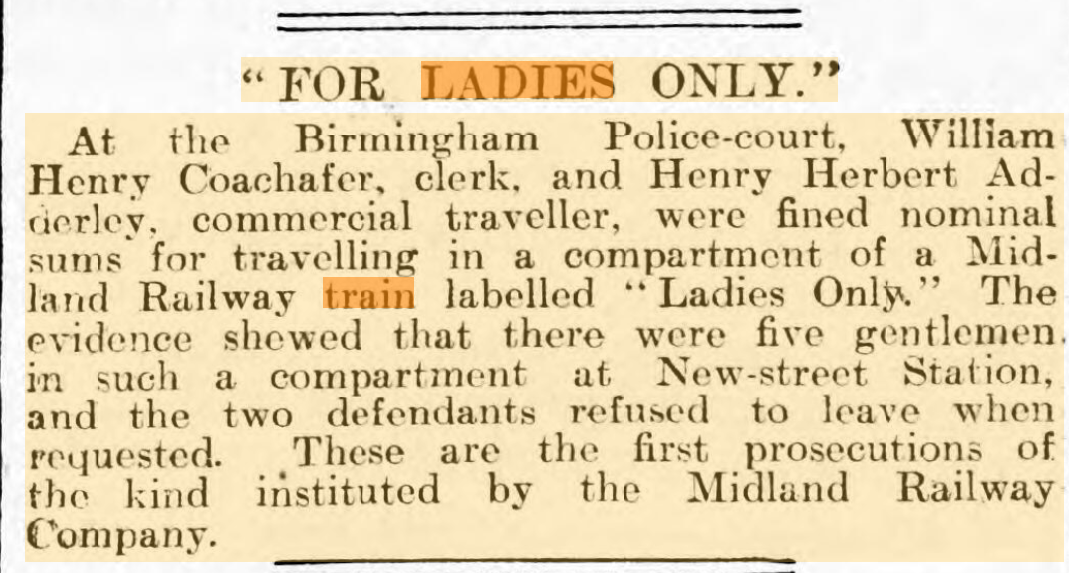
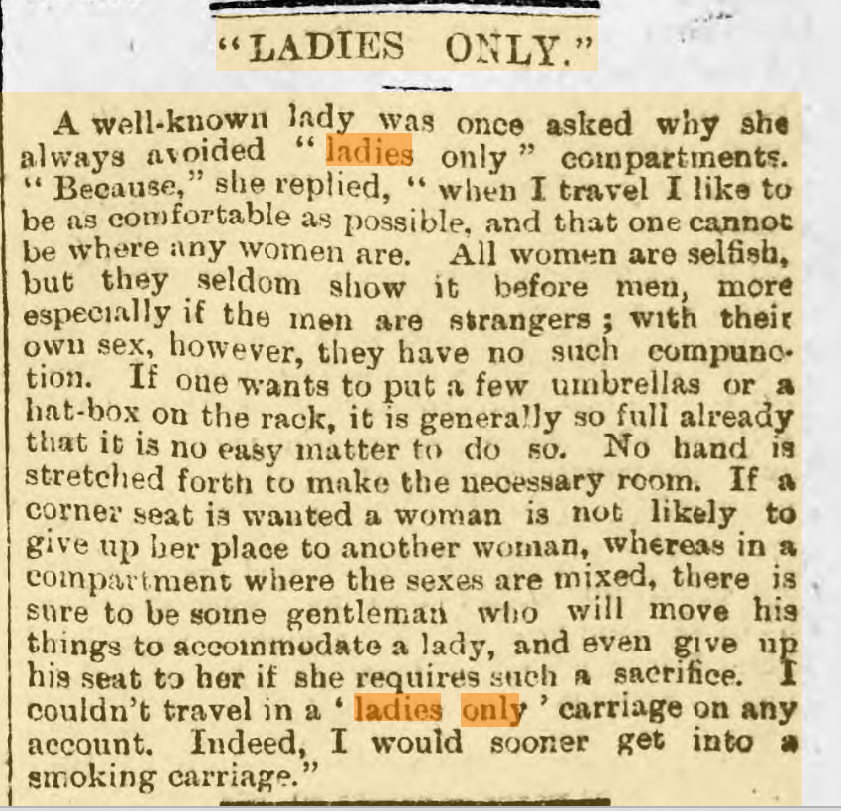
While most railway companies trialled ‘Ladies only’ compartments it wasn’t a great success.
Women tended not to use them – after all an isolated woman in a ladies only compartment was still at risk of attack from a predatory man who jumped into the compartment at the last moment.
The railway companies were not keen to provide them – more men than women travelled, especially on commuter services – meaning providing dedicated women’s compartments reduced the seat availability on the train.
At busy times, quite often men would simply just use the ladies only compartment, giving the railway staff an extra problem to deal with
There were also women who refused to use them at a time when women’s clothing could be voluminous, and when women routinely carried extra paraphernalia such as parasols as they found the ladies only compartments too crowded
I suspect the above article may have been planted by one of the railway companies to discourage the adoption of ladies only compartments but it does show how they were perceived as inconvenient and annoying.
And regular travelers were annoyed by them.
The correspondence columns of the London Times in the 1870s and 80s contain seemingly continual complaints (by men) of them being unable to find an empty seat while there were unused ‘Ladies Only’ compartment. (Unfortunately, they are still copyright, I won’t reproduce any examples, but if you are particularly interested I’ve provided some citations via a link)
It’s worth noting that when, in the early 1890’s, cycling became common women were often shouted at when riding alone leading to the rise of female only cycling clubs. The whole problem was really the result of Victorian Britain being both a highly asymmetric society as well as highly patriarchal, believing women should be closeted at home while men got on with ‘important things’…
Eadweard Muybridge was undoubtedly a most peculiar man, but his huge collection of photographs of naked people doing quite simple things has proved an invaluable resource for studies of human locomotion.
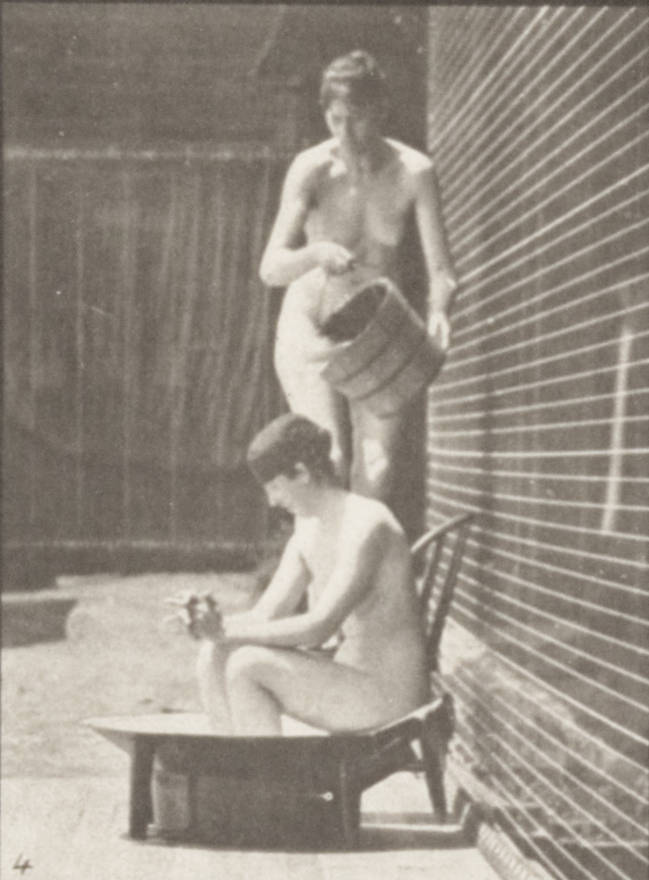
His images also help give us an idea of how nineteenth century people did some quite ordinary tasks such as washing themselves.
Muybridge doesn’t have (as far as I can find) an image of someone using a hip bath but he does have this photograph of a naked woman helping another wash while using a bath not that different from the classic hip bath
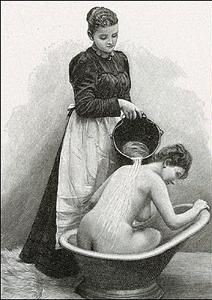
which gives a general idea of how one might use a hip bath. I’ve also found a wood cut of a woman being helped to bathe by her maid
which is not dissimilar from Muybridge’s photograph, and reminding us that having a bath was not a totally private experience – there would have had to be servants to heat the water and sluice one down.
Bathing with a ewer and basin would have been a bit more private, as seen in this animated gif based on a Muybridge set of images of a nude woman washing her face
but even so someone would have had to heat the water in the ewer first showing how dependent the nineteenth century middle classes were on their servants.
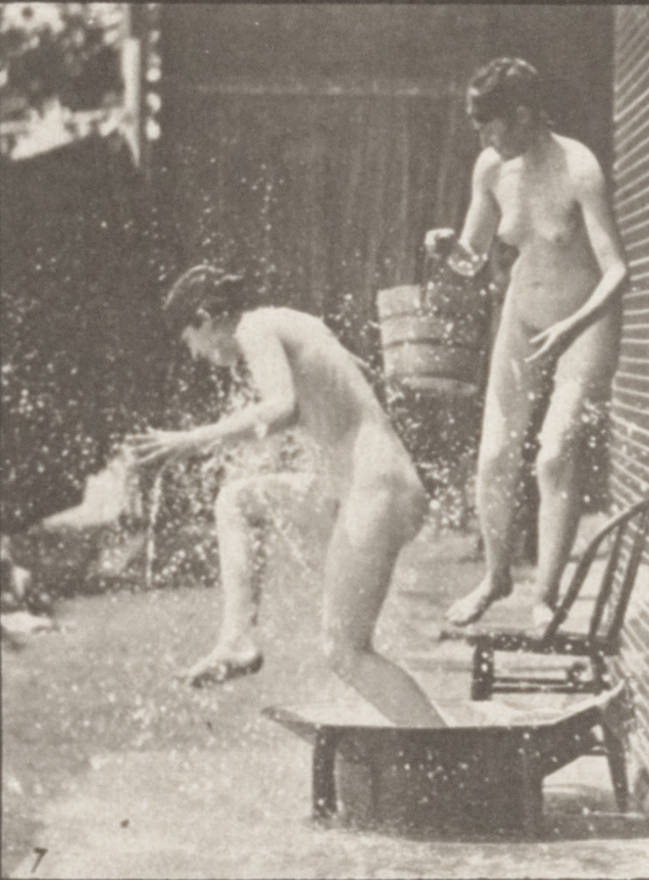
(incidentally Muybridge’s models seem to have had fun doing the bath sequence – there’s a photograph of one woman pouring presumably cold water over the other closely followed by a woman jumping from the bath…)
While delving into the Okhrana’s presence in London I came across a few snippets about Lenin, and his time in London.
Lenin did not really like London. Too grey, too polluted and and the continual damp of an English winter gave him a series of colds.
But there was one thing he liked about London – fish and chips – apparently he and his wife would regularly pick up fish and chips from a chip shop on Gray’s Inn Road, when out for a Sunday afternoon walk.
And perhaps that’s not really so strange.
Ivan Beshoff (at the time the usual English transliteration of ов was off, while today we would use ov), was a veteran of the Battleship Potemkin mutiny during the abortive 1905 revolution, knew Lenin in London, and later went on to found a fish and chip restaurant in Dublin.
And who knows, it could have been meeting Lenin in London that gave him the idea …
Only 16, she had had some sort of argument with her parents and was no longer living at home.
In May 1892 she boarded a train in Bradford, and somewhere near Leeds station she threw herself out of the train sustaining non fatal injuries, but nevertheless sufficient to require a night in hospital.
She initially claimed that she had been attacked by a tall dark man and had been thrown out of the train. She later admitted that this was a lie and she had deliberately thrown herself from the train.
In the 1890s, attempting suicide was still a crime and my guess is that Amy’s first instinct was to lie and claim she was attacked.
After all the punishment for attempted suicide could be a fine, or a period in prison. Amy, while she was employed as a dressmaker probably would not have been able to pay a fine, and certainly would have wanted to avoid prison.
It’s a sad case, but what it shows is that the idea that women travelling alone on trains were at the risk of attack, and even though the reporting of incidents was on the whole sensible and restrained, the commonness of such occurrences can only have produced a heightened sense of fear.
The other strange thing about this case is the hast sentence or two – clearly the excuse of trying to avoid an attacker was a common excuse when young women attempted, and failed, suicide, which again reinforces the idea that attacks on women travelling alone were distressingly common.
This is reinforced by the case of Fanny Elizabeth Bull, who despite her nervousness in court was encouraged by the railway company’s solicitors to take her case to a higher court to make an example of her attacker, something not only in her interests, but in the interest of every woman travelling to work (remember this was a time when increasing numbers of women travelled to work) and cycnically, in the interests of the railway company to promote train travel as safe for women commuting alone…
Not all assault cases ended in favour of the victim.
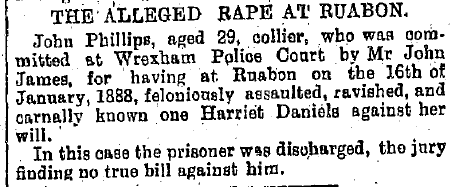
In 1888 a young woman named Harriet Daniels claimed that she had been assaulted by a coal miner, one John Phillips in a first class railway compartment in a train near Ruabon in Wales, close to the border with England
It seems to have been a violent assault leaving Harriet dazed at the very least.
Unfortunately no there are no reports of the proceedings as the press were excluded from the hearing
I’m not sure why the press were excluded, perhaps because of the graphic nature of the victim’s deposition. The case did go forward to the assize court, but it did not end well for Harriet
Why and how, I simply don’t know, and not having access to the court records I can’t take it further.
While I was at it I tried using the free search facility at UK census online to find Harriet, or at least give me some clues as to where to look. This wasn’t a great success. There’s no Harriet Daniels listed in the 1891 census returns for the pre 1974 counties of Denbeighshire, Merionethshire, Montgomeryshire or Flintshire, or the adjacent English counties of Cheshire or Shropshire.
In the 1881 census, there is a Harriet Daniels listed as living in Merioneth
who is listed as being a 21 year old servant. None of the press reports give enough detail to confirm that this is the same Harriet Daniels, and as domestic servants sometimes moved about checking the census records on Ancestry probably wouldn’t help much.
I’m guessing that after her failed case she left the area for somewhere, such as Liverpool, Birmingham or Manchester where no one would know her and she could start anew.
Searching more widely there is a Harriet Daniels of roughly the right age listed in the Staffordshire return for the 1891 census
which I’m guessing is the same Harriet Daniels. Since the name ‘Harriet Daniels’ seems to be relatively uncommon, searching the census records would probably confirm if the Merioneth and Staffordshire Harriets were one and the same, but I have no way other than wild supposition to show if she was the same Harriet Daniels as that involved in the failed court case (and just to add to the fun, there’s a Harriett Daniels in the 1881 census for Staffordshire who doesn’t appear in the 1891 census raising the possibility of a typo …)
The most prominent case that I’ve come across is that of Kate Dickinson, who was assaulted by Colonel Valentine Baker, which is unusual in that she went to court and prosecuted him for assault.
Most women preferred to keep quiet due to the risk of having their reputations dragged through the courts and snide insinuations made by lawyers about what today we would call their sex lives.
And in an assymentric society such as Victorian Britain, rich powerful men who could afford lawyers would always would always win in a case brought by a woman of lower social status.
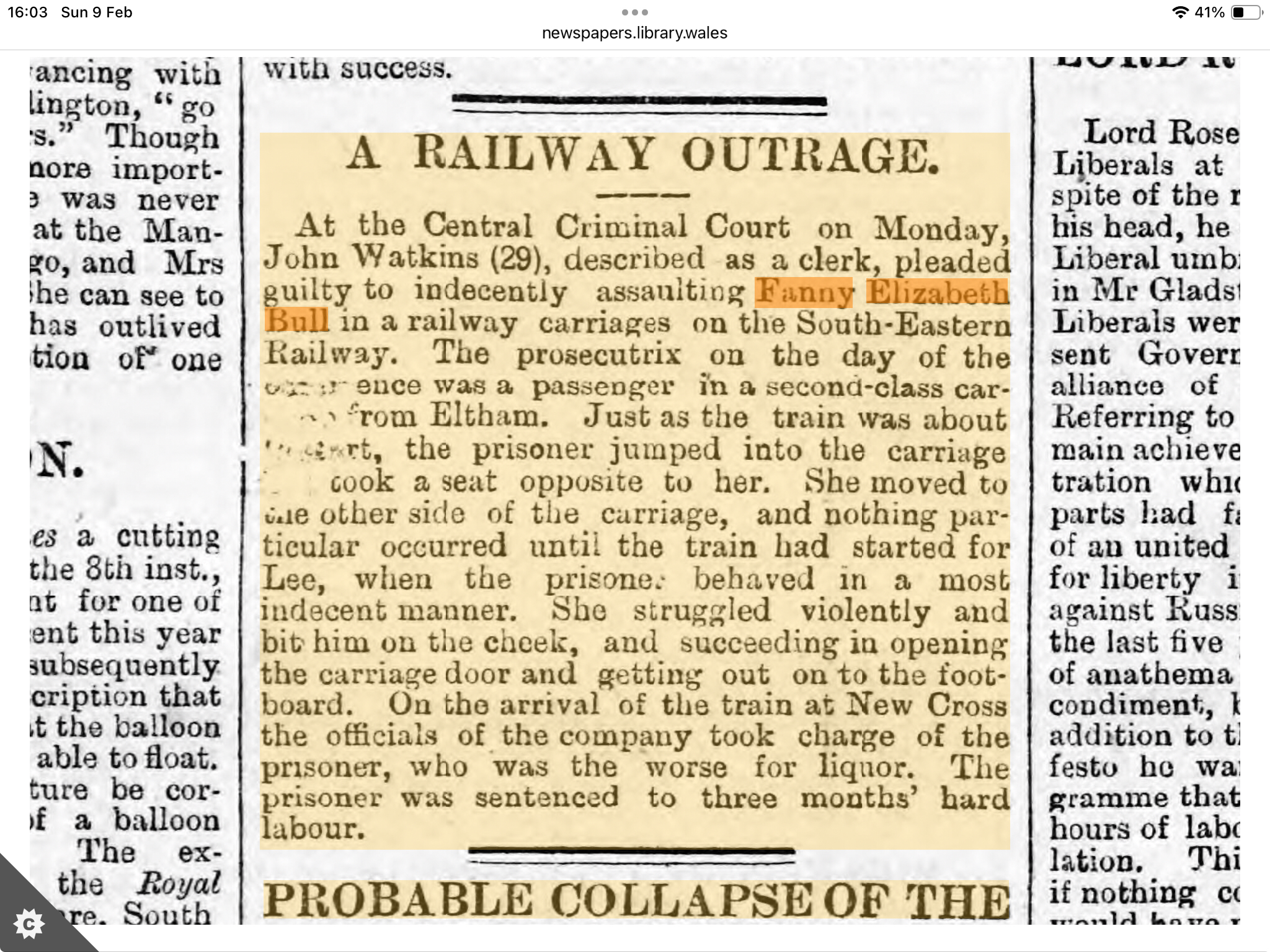
However, I’ve just come across the case of Fanny Elizabeth Bull, a young governess, who was subject to an attempted rape in 1885 on a local train in London.
Fanny fought back, bit her assailant on the cheek, and as in other cases opened the door on the moving train and at some risk to herself, stepped out on the running board to attract attention.
There are two interesting things about the case – Fanny is decribed as a governess, which while she might be badly paid was seen as a respectable occupation for a young woman – it is notable that some newspaper reports are headlined ‘Assault on a Lady’, a governess having higher social standing than a clerk.
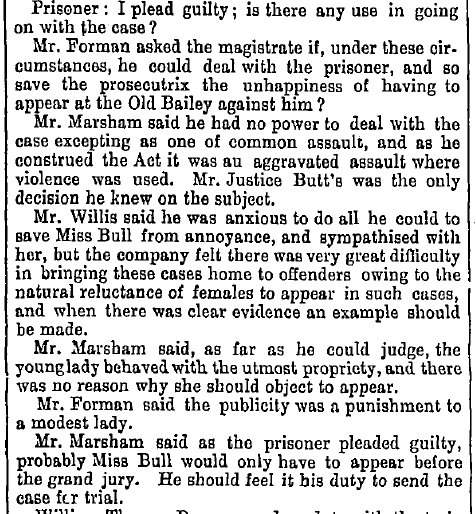
The other interesting thing is that in the longer accounts of the court case, such as in this one from the Sunday Times, we see an attempt at the initial hearing to persuade Miss Bull to take the case further, despite her fears of damage to her reputation should she appear in the Central Criminal cour in London
which neatly demonstrates the reluctance of young women to risk damage to their reputations and perhaps marriage prospects, by appearing in court in a sexual assault cases, with the consequence that such cases were not prosecuted with the full rigour of the law.
It also shows that, as in the case of the Lauriston assault, the judges and lawyers were well aware of the problem and tried where possible to work round the problem and reassure the victim that she had done nothing to damage her reputation…
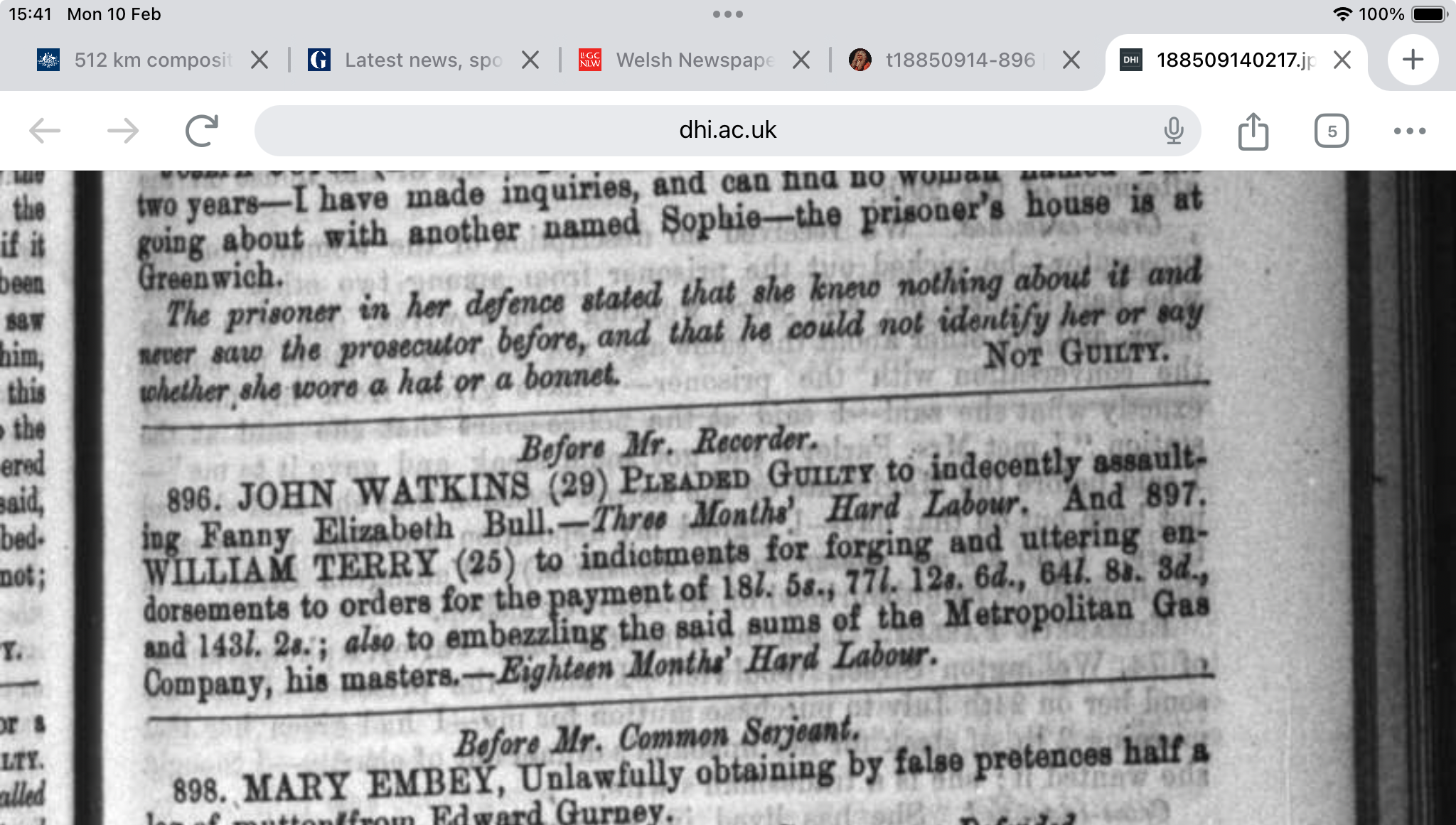
In this case, the lawyers were obviously successful in persuading her to go to trial in a higher court and Miss Bull’s assailant was tried in September 1885 at the Central Criminal Court (aka the Old Bailey) where he was sentenced to three months hard labour
When I was researching hip baths I had great difficulty in finding suitable images – basically it seems that no nineteenth century cartoonist, artist or photographer produced an image of a hip bath in use which has ended up in the public domain.
I couldn’t even find a nineteenth century soft porn image, so I ended up settling for the above image from the Wellcome collection. I’m assuming it is public domain – given that you can buy prints, towels and t-shirts online with the image I reckon it’s a fair bet.
The Wellcome collection doesn’t give a provenance – the description given is
A man smoking and reading the paper fully clothed in a hip-bath; self-help hydrotherapy in hot weather. Wood engraving.
which is almost certainly incorrect. I’ll explain why in a moment.
Both Microsoft and Google’s visual search tools bring you back to the Wellcome collection, via the beach towels etc, but don’t turn up a source.
I did try searching the Punch archive, which is where most of the more common nineteenth century cartoons come from, but no luck.
There were other magazines similar to Punch, including ones published in Melbourne and Adelaide, but so far I’ve been unable to find a source for the cartoon.
So, why do I think the Wellcome Collection description is wrong?
Well, for starters, the man has taken his hip bath outdoors into his garden – you can see the garden fence behind him, and he has a watering can beside him.
Secondly, he’s not fully clothed – while he has his slippers on he is by no means fully dressed and is wearing some tight fitting leggings, possibly cotton long johns, and has a sheet wrapped round him, which would wick up the cool water from his bath, and keep him cool.
We know that in the nineteenth century people would often put a sheet in a hip bath and wrap the damp warm sheet around them while sitting in the bath, there’s no reason at all why someone shouldn’t have decided to use a cool damp sheet to keep them cool, much in the way that in the days before air conditioning, people would cool down during the summer heat by sitting in a cool or tepid bath – a former colleague once told me that he would often do his research reading in a cold bath on hot afternoons in Adelaide.
Can we guess when it dates from?
The description of the image says it’s from a wood block. Until lithography came along in the mid 1880’s, most illustrations in newspapers and magazines were engraved on wood blocks made to fit the column width of the publication, so I think we can be confident in saying the image dates from some time before 1890.
I’d guess, and it is only a guess, that the man’s hairstyle dates the image to the 1860’s, but I could easily be out by five years either way …









 stuff 'n other stuff