
Last Friday at the Athenaeum (Friday’s my cataloguing day) one of the items I catalogued was this
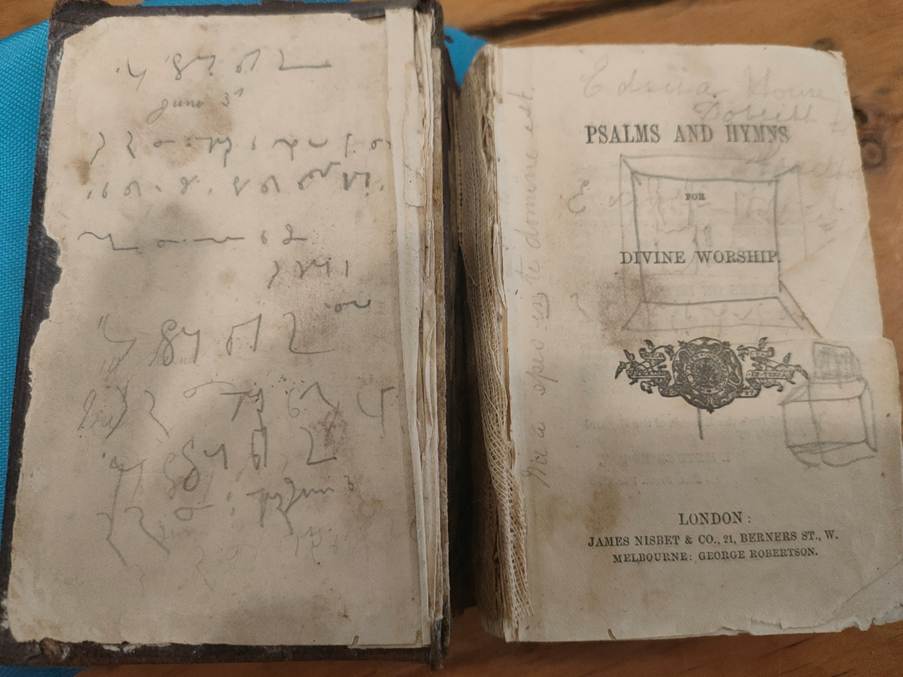
a copy of ‘Psalms and Hymns’ published by James Nesbit and Co.
James Nesbit never seem to have put publication dates on the religious material they published, but as this is an Australian edition printed and published by arrangement with George Robertson in Melbourne, we can tentatively date it to the last quarter of the nineteenth century.
The book has obviously had a hard life, the spine is detaching and it has been scribbled on in pencil. Devotional items such as this are quite common and their real value is in the names (and sometimes the date) that the owner wrote on them, as it shows that they were in the area.
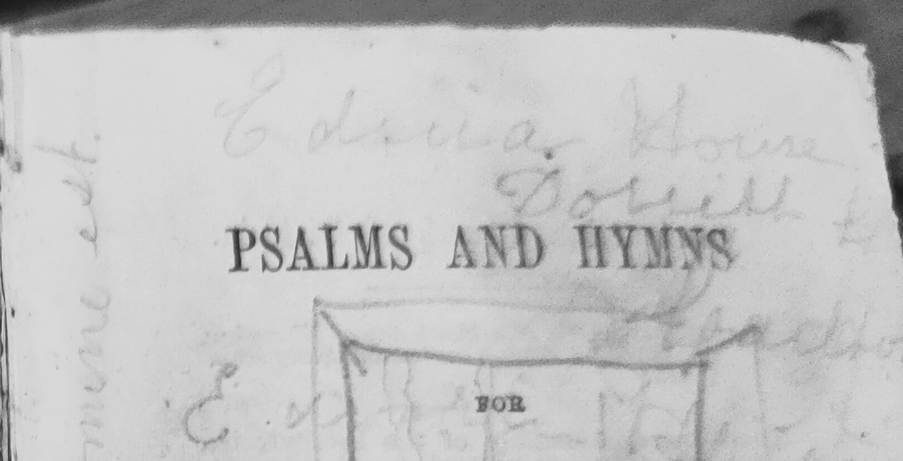
In this case Edina House, which is potentially interesting.
Edina House is a large Victoria mansion in Sydney, built in the nineteenth century by Ebenezer Vickery who made a fortune manufacturing boots for goldminers and others.
Vickery donated the house to the Methodist curch in 1919 and it became an obstetrics hospital, so the first question is, was the hymn book property of Edina House, or was it owned by a person called Edina House. Edina isn’t a very common first name in English for women, so we could quite plausibly argue for the name of the hospital than for a person.
There’s no way of telling, but as the book is graffitied by different hands it’s not impossible it originally belonged to the hospital chapel.
The left hand page, the fly leaf, is also a puzzle. It has an inscription in short hand, in fact it has the same inscription, first written in a confident hand and then repeated in a less confident hand
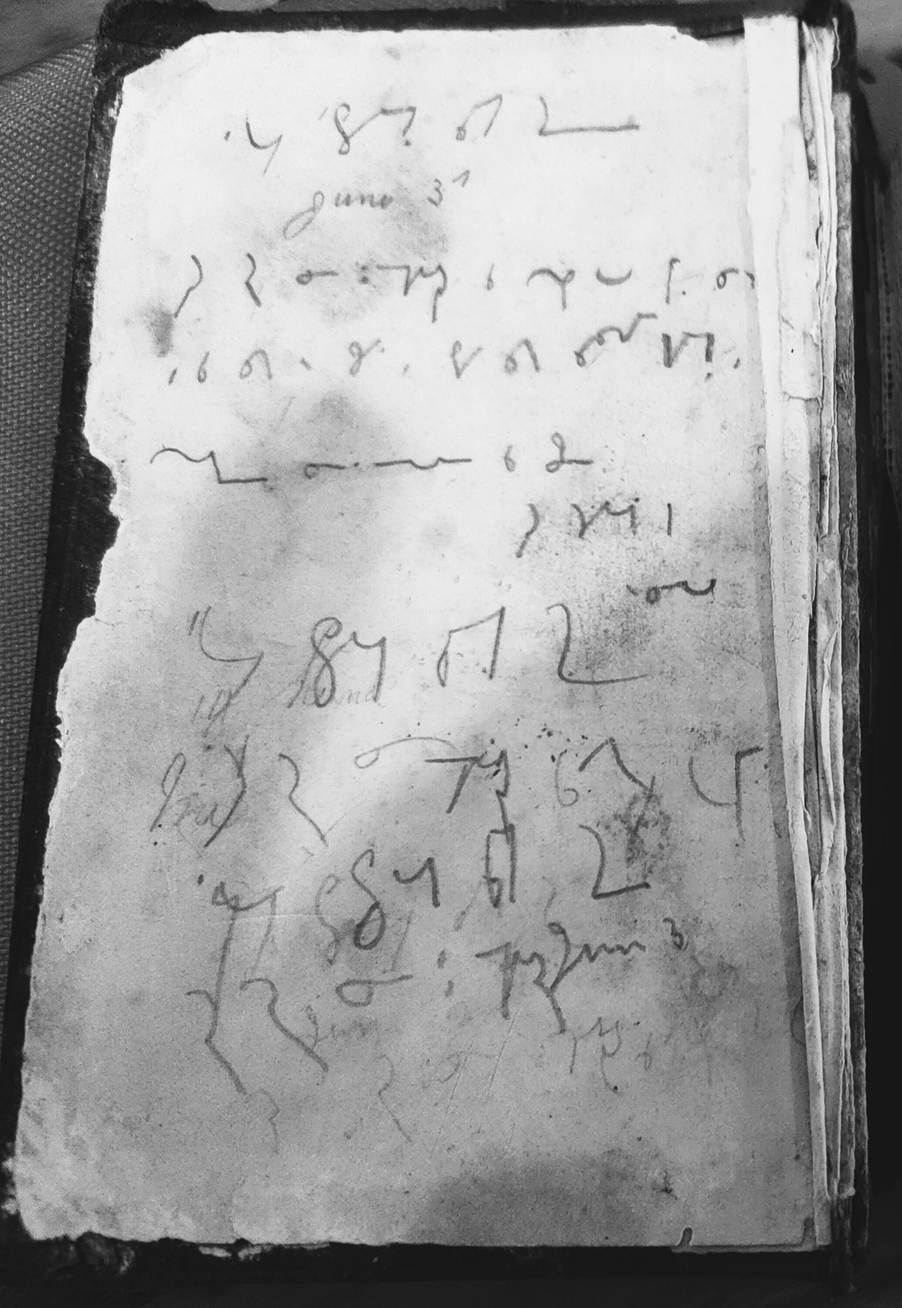
Shorthand is of course a dead skill, but in the late nineteenth century and early twentieth century it was a valuable skill to take notes at speed, used by secretaries, journalists, and for transcripts of parliamentary debates and court sessions.
However, it didn’t look quite right – just looking at the image and comparing it to Pitman and Gregg shorthand (the two most common shorthand systems in Australia in the early twentieth century) it simply looked different.
In fact, of the various examples of shorthand systems I could find online it looked more like Yiddish shorthand than anything else.
I did post a query to Mastodon to see if anyone recognised it, something which attracted quite a bit of attention, but despite a general consensus it was shorthand, no one could identify it definitively.
One respondent did suggest that it might be Teeline, a system popular with journalists. Unfortunately, Teeline only came on the scene in the late sixties, which was possibly a bit too late.
I was talking to J about the problem, and she immediately said that it looked like Dacomb, a system that she had learned in school.
Dacomb was an alternative shorthand system developed by Beatrice and Clara Dacomb in Melbourne in the 1930s. Dacomb, a phonetic based system like both Gregg and Pitman became very popular in Australia, but is little known outside of Australia.
All the graffiti in the hymnbook is in pencil.
This is quite significant.
Before the advent of cheap ball point pens in the nineteen fifties, a lot of the impromptu writing one sees is in pencil.
Writing in ink was hard. With a dip pen it was a laborious business. When fountain pens came on the scene at the end of the nineteenth century, things became easier, although the early models were cumbersome to refill and tended to leak spoiling clothing and bags, meaning that pencils were still used for most run of the mill writing.
Search any listing of nineteenth century postcards for sale on ebay, especially non pictorial ones, you’ll come across examples written in pencil, usually with fairly mundane messages, confirming the size of a cabinet, or ordering a bucket of nails for use on the farm.
Pencil was the go to tool for spontaneous writing, be it scribbled notes, graffiti in books or simple messages.
So, given that the shorthand is written using the Dacomb system and is written in pencil we can probably argue for a date in the 1940s or there abouts, which if nothing else shows the longevity of hymn books.
And I did ask J if she could read the message, but she said no, she’d forgotten it all once she went to Art School …


