
In the late nineteenth and early twentieth century Irish intellectuals tried to forge an Irish cultural identity distinct from being British by adopting Irish names, the use of the Irish language, and the use of the Gaelic alphabet, as distinct from the normal English/Latin alphabet.
Based on the typefaces used in the first printed Gaelic books in Scotland, it harked back to the Celtic uncial script used in early manuscripts.
Other than in the names of restaurants and pubs, it is little seen now, but was once common in Ireland on street signs and fingerposts, as well as being used in the pre-decimal currency as in the Percy Metcalfe designed half penny
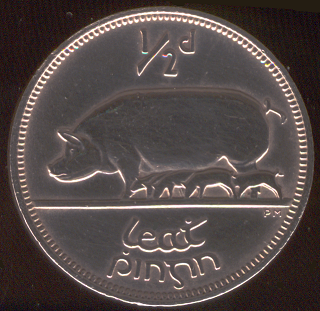
where it is used to give the value in Gaelic.
While I was looking for something else entirely (actually the use of ancient Greek to obfuscate the messages on postcards) I came across this item
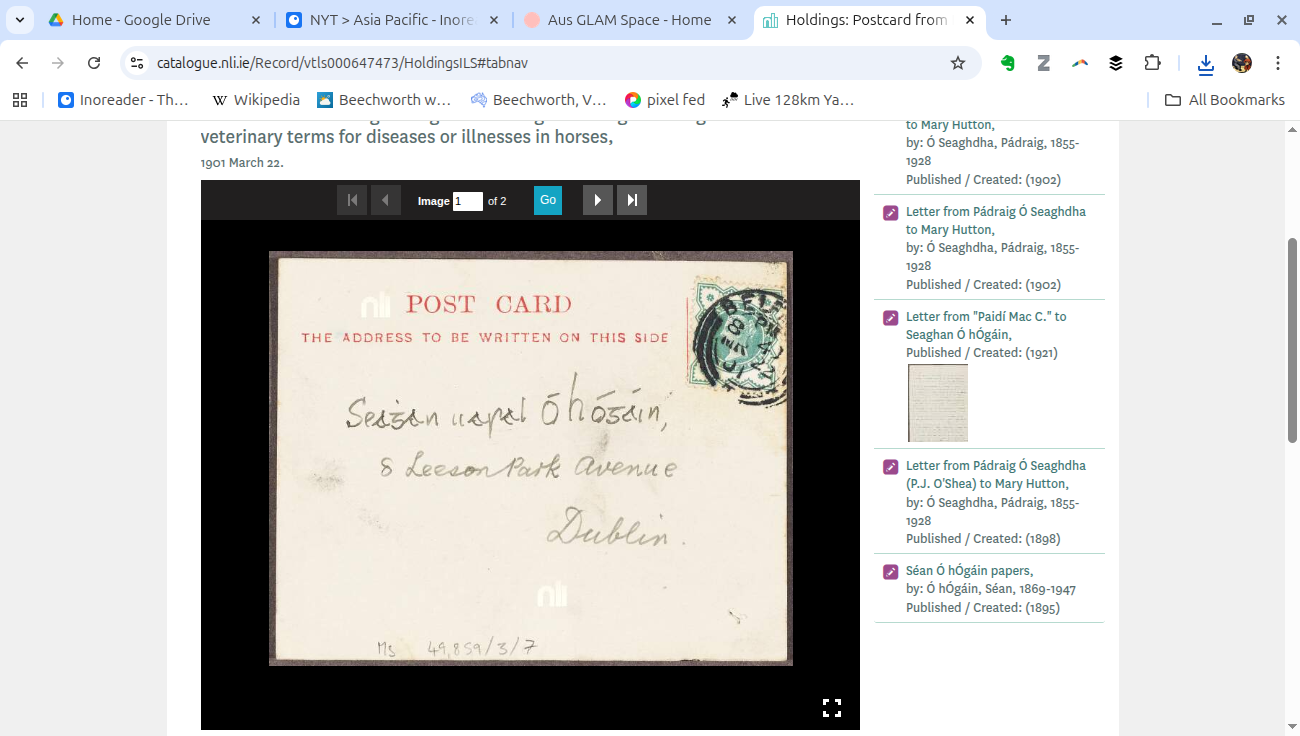
from the National Library of Ireland.
It’s a postcard from 1901 between two well known Irish intellectuals of the time (the author is Padraig O’Seaghdha, a noted writer and Irish langauge campaigner) listing terms in Gaelic for various diseases horses were prone to – you will need to click on the link to see the reverse of the postcard on the NLI’s site, but the Irish language term is given in Gaelic script, and the definition in English. (There’s also some introductory text written using Gaelic script that prefaces the definitions).
However, what struck me was the way that the address combined both scripts, the name of the addressee given in Irish script, and the rest in normal English handwriting of the time, as the writer of the card perhaps did not expect the post office staff to be able to read Gaelic script…


