Paperclips

It was only a throwaway comment, but one thing that tickled my fancy about the presentation on the MAMA archaeological dig was the comment that paperclips were not used before the 1890’s.

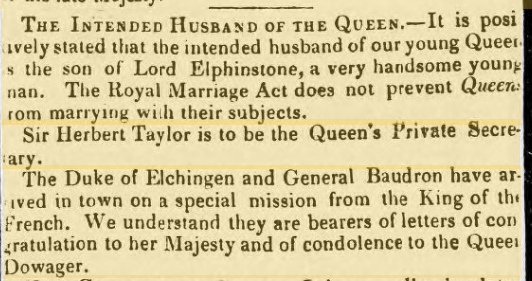
Actually they were. While the machinery was for making what we now think of as the classic paperclip was patented in 1899, paperclips were around well before then, as can be seen in this stationer’s advert from the Quenbeyan Age of 1880

Screenshot 2018-08-20 16.39.04

and there are others from the late 1870’s. If you do a search for “paper clip” in Trove you get the following result:chart

The peak in the 1850’s are possibly an artifact caused by a sudden burst of adverts in a West Australian paper, the peak around 1880 probably represents paper clips becoming common and a normal stationery item. Certainly the date coincides with the group of late 1870s patents in the US for paper clips.

This of course didn’t mean that people stopped using pins entirely – even when I started work you would still occasionally get documents pinned together, and banks in France used to pin banknotes to payment slips well into the 1980’s.

Still it’s interesting to realise that something you think of as pretty mundane was once new and innovative …

Posted in Historical, Uncategorized, Victorian | Leave a comment

MAMA – what lies beneath

Despite it being a pretty horrible sleety hail spattered day I had to go into Albury, so I decided to take in the presentation on the results of the archaeological dig that preceded the building of MAMA, the Albury art gallery in 2014-5.

Albury city library have now put some of the finds on display. It was billed as what had been found under QE II square, but it was really what had been found under the MAMA site.

Albury was first gazetted as a town in 1839, and grew slowly through the 1840’s. with two pubs by 1847. It was an important crossing point on the Murray,  and after the 1851 separation of New South Wales and Victoria was also the main border crossing between the now separate colonies.

After 1883, the New South Wales standard gauge rail network met the Victorian broad gauge system at Albury, and passengers travelling between Sydney and Melbourne would change trains at Albury, and goods would be transhipped between the two systems.

Albury was also where the Victorian and NSW telegraph systems connected – it’s important to emphasise that this is particularly important, as in the 1870’s the telegraph provided quick, near instantaneous communication between both the big cities on the east coast and overseas, in a continent bedevilled by large distances and poor overland communications. Even the railways didn’t help much due to slow speeds and long distances – for example, even as late as 2014, when we took the train from Brisbane to Cairns the journey still took over 30 hours.

MAMA is built around the old Municipal offices that date from 1907, but the site had previously been the site of the Albury telegraph office dating from 1868 and the old NSW Crown Lands office dating from 1878 where people both bought government land and registered claims to land.

In 1924 the Crown Lands Office, known as Burrows House, was sold to the NSW state savings bank. Prior to that the Telegraph office had moved elsewhere in 1886, and the old building had been used by Albury as municipal offices prior to their building a ‘proper’ town hall on the site.

It might have been suspected that given these changes there might not have been a lot left, but no, under the Burrows house site was a decent layer of administrative debris, pen nibs, pins – used to pin documents together before the adoption of paperclips in the 1890’s and inkwells, as well as thing such as discarded cigarette papers that must have fallen between the floorboards.

The telegraph office was equally interesting. Prior to the dig, it had not been known that the manager lived on site with his family, leading to a decent deposit of domestic rubbish, such as pottery, patent medicine bottles, child’s toys and the like.

The complete excavation report is available from Albury Library Museum, who also hold images of the artefacts, and the artefacts themselves, as well as the complete excavation dataset, which is available on request. The project was carried out by Archlink, a Melbourne based archaeological consultancy.

What is interesting is not only the range of the finds but the complexity of the site with the changes of purpose of the buildings reflected in the deposition layers

Posted in albury, Historical, Uncategorized, Victorian | 1 Comment

We have a nineteenth century ceiling

When you own a wooden house, as we do, you rapidly realise that you don’t own a static dwelling, but a building that’s been subject to almost continual change – walls moved, indoor plumbing installed, external walls reboarded, extensions and the rest.

So much so, that we’re not exactly sure just how old it is. We say that the original miner’s cottage dates from the 1880’s but we’re not really sure. There’s an enormous lump of freestone masonry that may have been the base of the original hearth, that looks older than the 1880s, and when we found smoke stained bricks from the old chimney under the driveway they were characteristic soft fired handmade bricks, and probably from the nineteenth century.

What we do know is that the rather fine 1860’s front door and acid etched rose glass are not original to the house – our builder told us that he’d helped install them in a previous renovation and that they’d come from another house.

So to this week’s discovery …

The shower in the 1950’s main bathroom had started leaking, and as we’d always planned on a renovation, we decided to rip everything out and replace it with modern fixtures and fittings, rather than try and have it repaired.

So yesterday, the guys pulled all the old plasterboard sheeting and tiles off the walls, and pulled down the old and cracked 1950’s ceiling

IMG_0106IMG_0107

and there we had it – the painted boards of the original nineteenth century ceiling. They’ve been so badly chopped about they can’t really be repaired, but it’s nice to know they’re still there …

Posted in Beechworth, Historical | 2 Comments

Patent medicines and nineteenth century globalisation

beethams

I spent a good part of yesterday documenting some nineteenth century patent medicine and cosmetic bottles. Many of the brands are totally unknown today, such as Beetham’s glycerine and cucumber, yet were well known in their time.

A fairly simple search of various online newspaper archives brings up myriad examples of advertising, and a search of various federated sites such as Collections Victoria and ehive in New Zealand brings up quite a few bottles, not to mention ebay and the other trading sites used by bottle collectors.

I’ve already written about Hayman’s Balsam of Horehound, but as you dig deeper, it was not the only example of a vanished product. Beetham’s glycerin and cucumber was made in Cheltenham, Kay Brothers Linseed compound was made in Stockport. And there are doubtless others that I havn’t come across yet.

And mixed in with the imported products are a range of locally made equivalents, such as Baxter’s Lung Preserver from Christchurch in NZ, Woods Great Peppermint Cure, and also from Christchurch Bonnington’s Irish Moss cough syrup.

So we can certainly say there was active patent medicine industry in New Zealand and the Australian colonies, with products being imported and sold within the various Australian and New Zealand colonies.

Equally products were imported from the UK, and advertised locally, often reusing the same advertising material as used domestically in the UK, sometimes amended to say things such as ‘available from all good chemists throughout Australia, New Zealand and the Cape colony’.

So why did the British manufacturers compete against local manufacturers?

I suspect that the answer is in part steamships – the development of shipping in the last three decades of the nineteenth century brought down the cost and difficulty of shipping goods from the UK, making it economic to compete with local brands.

Also, there was constant stream of migration from the UK and Ireland to Australia New Zealand and the Cape Colony, and these new migrants probably sought out products they knew and trusted.

We see something similar today where larger Woolworths and Coles supermarkets have a shelf or two of UK products such as Jaffa cakes, Penguins and (English) marmite.

In the nineteenth century, when few people could afford (or indeed trusted) doctors patent medicines, many of which were based on traditional herbal cures, perhaps with a dash of laudunum, or a generous alcohol base, had a major role in allowing people to manage run of the mill coughs, colds, chest infections and digestive problems.

And in an age when many things were unregulated, brand recognition was important, especially when your health, or the health of your children was involved. And I suspect that this helped sustain the trade in imported medicines – people stuck to brands they trusted and recognised …

Posted in Dow's project, Historical, Uncategorized, Victorian | 3 Comments

And where was Sebastapol?

One of the things which I found when researching the Catherine Morton story was that a lot of places had changed their names, and some places which existed didn’t exist anymore.

About what you’d expect. Sometimes it’s obvious where they were, Silver Creek is now a caravan park, and Stanley used to be Nine Mile, because it was guess what? nine miles from Beechworth.

Reids Creek, Reedy Creek and Woolshed creek are all the same creek, which was noted for alluvial gold. Along Reids creek were one the townships of Napoleon, Sebastopol and El Dorado. Well El Dorado is still there, but other names, such as Sebastapol and Napoleon are a bit more problematical, as these settlements simply don’t exist any more, but are easy to find, thanks to Ned Kelly.

Sebastapol was a large straggling settlement of pubs miners huts along the banks of Reid’s creek down from Woolshed falls. It’s famous in Ned Kelly lore for the ‘Charge of Sebastapol’ when a squad of troopers charged down the main street in pursuit of a member of the Kelly gang, making such a racket as to destroy any element of surprise.

The result of this connection with the Kelly gang is that while the town is gone, the Woolshed – El Dorado road is lined with markers showing the location of various places important to the Kelly story, which is useful as the town, and the accompanying settlements of Woolshed and Napoleon have gone to bush.

Mostly the original buildings would have been simple slab huts with shingle roofs and little in the way of tin or brick would have been used, with the exception perhaps of the bakers for their ovens.

The consequence is that even though there were over 20 pubs in town there is little or nothing left. The site of the Woolshed school is marked, as well as the sites of Sebastopol and Napoleon, the latter with some irrigation works still visible from the Chinese market gardens.

The bridge and pub at kangaroo crossing are also gone, with the crossing now a simple concrete ford on a dirt road, easy enough to cross when the river is low, but possibly not so easy after rain.

Everything else is gone to eucalypt scrub …
source: https://nedkellytouringroute.com.au/destinations/eldorado-woolshed-valley/

Posted in Beechworth, Historical | Leave a comment

Catherine Morton and the scandalous affair at Beechworth

In a previous post, I recounted the story of the attempted rape of Catherine Morton. It’s an interesting story and I felt that I should document my sources

I found the story online at in the Tasmanian Daily News of 24 Feb 1858

https://trove.nla.gov.au/newspaper/article/199792557

A shorter version of the article originally appeared in The Age of 18 Feb 1858. Both articles were based on an article from the Ovens Constitution, a Beechworth newspaper, which was taken over by the Federal Standard in Chiltern in 1859.

Unfortunately the archives of the Ovens Constitution do not appear to be available.

The case went to trial pretty quickly, and both The Age and the Ballarat Star reported the outcome almost identically

mard sentencing The Age 20 Feb 1858

with Mard being sentenced to five years forced labour on the colony’s roads.

One detail that might seem strange to us is that Mard was able to cross examine Catherine Morton. This is because trial for rape and assault were heard as if they were civil cases and the perpetrator was able to cross examine the victim.

Many women found the whole procedure terrifying, and did not want to confront the perpetrator. However Catherine Morton, like Rebecca Dickinson half a world away and twenty years later, seems to have been made of sterner stuff.

As was common in such cases, Mard seems to have tried to blacken Catherine’s name by claiming that he had previously been intimate with her – clearly the jury, who probably had some knowledge of both individuals knew the story to be rubbish and dismissed it.

A note on other sources:

In my original post I mention using the Ovens directory to trace individuals and their businesses.

The Ovens directory for 1857 can be viewed online and downloaded from the State Library of New South Wales via http://digital.sl.nsw.gov.au/delivery/DeliveryManagerServlet?embedded=true&toolbar=false&dps_pid=IE4294807.

There is also an html transcription of the directory online at http://members.optushome.com.au/lenorefrost/ovensdir.html

Posted in Beechworth, Historical | 1 Comment

Mr Rochlitz continued ….

Back at the end of 2016 I blogged about Mr Rochlitz, who was involved in the laying out of the Botanic gardens in Beechworth in 1861.

At the time I assumed that he had become involved through his scientific background a daguerreotypist, which involved some knowledge of chemistry, and also because he was the first person that we know of to plant vines in the Beechworth area.

However it’s a little more complex than that. I was researching the attempted abduction and rape of Catherine Morton by Michael Meard in February 1858.

Catherine Morton lived with her father and at least one brother in a tent in the gold diggings. One night in February 1858 it was alleged that Michael Meard, who lived in a tent about 200 yards away, cut the wall of the Morton’s tent, attempted to anaethesise Catherine with chloroform and presumably intended to then carry her off and have his way with her.

His plan didn’t work. Catherine woke up and screamed, and her father and brother seized Meard and called for the police – in itself surprising, one tends to assume that the miners would have set about him with spades and picks, but no, the police were called.

The investigation was quite scientific, as well as the usual depositions on oath they took Catherine to Mr JH Mathews, a druggist who had a shop next to the Bank of New South Wales in Ford Street and got her to smell the contents of three bottles, and thence confirm that chloroform was involved. (The Bank of New South Wales building is still there as a Beechworth Honey shop, and it’s within twenty metres of the old courthouse on the police reserve so that makes perfect sense.)

It then emerged that Meard had previously bought some chloroform from Mr Witt, who had a chemist’s shop in Ford Street. Remember that this is 1858 and the sale of chemicals, medicines and poisons is still more or less unregulated in Victoria.

I’ve traced Mr Mathews through the 1857 directory, which incidentally also lists Mr Rochlitz as a Daguerreotype artist in Ford Street, but not Mr Witt, so I started searching advertising material from the local paper, the Ovens and Murray Advertiser on Trove.

Mr Mathews again popped up as a druggist, but no sign of Mr Witt, which is strange. I’m working from a copy of the story in the Tasmanian Daily News of 25 February 1858, so my guess is that Mr Witt’s name has got garbled – my next task is to find a different account of the pre trial hearing.

But, in the course of this I came across an advert for Mr Rochlitz’s daguerrotype business, and next it an advert for a nursery business, run by no other than J A Rochlitz, supplying fruit trees. Further searches showed him also running a wholesale vegetable business – suggesting that as well as the daguerreotype business he also had a thriving market garden and nursery business, and this, rather than his scientific training was what led to his invovement with the laying out of the Botanic Gardens.

Incidentally he wasn’t the only person working two jobs, Mr Ingram, the bookseller in Camp street also had a nursery business on the side.

My guess, and it is only a guess, is that Mr Rochlitz ran his daguerreotyp business as a means to generate cash flow while he got his nursery and market gardening business up and running …

Posted in Beechworth, Historical | 3 Comments

Bottles, pills and potions

Currently on the project I’m documenting a whole pile of medicines form the 1950’s and 60’s – mostly but not exclusively medications in tubes and creams, something that simply doesn’t exist in the pre-war items.

Now it’s all a bit hand wavy, as the old boy seems never to have thrown anything out – we even have empty bottle of Johnnie Walker from the 1950’s – we can date it securely due to the label style and lack of a royal warrant sticker, but obviously he must have thrown out stuff that was useless.

However, on the basis of what I’ve documented so far I think we can make the following generalisations:

Pre world war 1:

  • Medications mostly made up from materia medica and mostly plant based.
  • Some patent medicines such as cough cures

Between the wars:

  • The gradual appearance of packaged medicines, mostly in pill form
  • The appearance of homeopathic medications for retail sale
  • The appearance of early vitamin like supplements such as liver pills and Pink pills for pale people

After world war 2:

  • Vitamins and multivitamins for retail sale
  • Most perscription medicines packaged, if only in big ‘trade’ size bottles
  • Ointments and creams usually in metal tubes
  • Medicines with antibiotic contents

And of course an increasing consolidation of the pharmaceutical industry. Old Mr Dow of course locked the door for the last time in 1968, so later developements, such as medicines in bubble packs, or the disappearance of film in the early part of this century don’t show up.

What is interesting is that our modern fixation with vitamin pills goes back a long way – certainly to the mid 1950’s …

[update 08 August 2018]

Having spent the last two or three days documenting a whole pile of suppository based medications, most of which date from the 1950’s, we perhaps tend to forget that suppositories predated pills and gelatine capsules as a way of ingesting medication ….

Posted in Dow's project | 1 Comment

Digitised newspapers and happenstance

A few days ago J showed me a photograph of beechworth from the early 1990’s that one of her Art Society friends had come across.

Nothing unusual, but the photograph was from the New York Times, which did seem a touch exotic –However a quick search of the Times archive revealed it was an article from the NYT travel section, which kind of explained the mystery.

Now I hadn’t expected there two be too much coverage of Beechworth in the NYT, so my search had been pretty simple – type in Beechworth, and there it was. But interestingly there was also an article from December 1853 which turned out to be a precis of an article from the Argus in August, reporting on a major Chartist inspired meeting of gold diggers protesting about conditions and licence charges, just as had happened at Castlemaine, and culminated in the Eurkea stockade in Ballarat.

By all accounts the meeting in Beechworth was peaceful and relatively civilised, drawing miners from the diggings all around, but the message was clear. The miners were unhappy and wanted better conditions and basically something in return for the money they were paying the government.

And the Chartists? – well the British government in the first half of the nineteenth century had a habit of exiling political agitators to Australia, out of harms way, and many once released, found employment in the goldfields.

So inspired by this, I tried a little experiment. Using the NLA’s digitised newspaper collection, I searched for Beechworth but restricted the search to articles between 01 January 1850 – 31 December 1859 – a period that covered the discovery of gold in 1853, but well before Ned Kelly or Harry Power were on the scene.

And it was a little goldmine. Not only the Chartist meeting, and expected incidents such as fights between Anglo and Chinese miners but little things that revealed a lot – such as a case of attempted rape in in 1858 where the perpetrator cut the wall of the woman’s tent and attempted to chloroform her.

Interesting as it shows

  • people were still living in tents as late as 1858, 5 years after the discovery of gold
  • there were women in the goldfields, in this case a miner’s daughter who cooked and cleaned for him
  • there were people who not only had access to chloroform, but also how to use it

and remember 1858 was also a year the congregationalist church was founded, and three years before the Botanic Gardens were laid out.

Another story from the early 1850’s was single column inch reporting that the mail from Sydney (which would have come by stagecoach) was delayed by heavy snow, and how it was expected that the interior was similarily affected – meaning that really no one had any real idea of what was happening out further west.

Often when I talk to visitors at the documentation project I’m working on I make the point that in the 1850’s and 1860’s Beechworth (and Chiltern) really were on the edge of the world with nothing much beyond but a few sheep farmers and the indigenous communities in the Murray Valley – and here was proof that what I was saying was not just a flamboyant turn of phrase.

My little search was really just a taster. What I found was interesting, and perhaps the sort of material that one could use to build a little microhistory of the early days …

Posted in Uncategorized | Leave a comment

Robert Burns Clow again

A couple of weeks ago I blogged about the fun I had unravelling the garbled story I had heard in Kuching about the death of Robin Burns Clow.

Firstly, I’ll own up to making one mistake, the Anti Piracy expedition commanded be Henry Keppel and James Brooke was in 1846, not 1848 – Labuan formally became a free port in 1848, but the Dido expedition took place two years earlier and as can be seen from the annexation stone, Labuan became a British possession in 1846

500px-labuan-memorialstone-from-1846-12-24

photo © Davis Hunter

However while I was out by two years, probably due to being unable to read my illegible notes, it doesn’t make a serious difference to the story.

Since writing the post, I’ve also come across a book The Burns Boys by Alistair Renwick, who similarly became intrigued by the story while living in Kuching.

Renwick had the advantage over me of being able to access the archives of the Straits Times newspapers and various other archival sources in both Singapore and Sarawak, and hence research the whole story more deeply.

Broadly, his story is the same as as that which I had been able to piece together by searching nineteenth century newspapers in Trove and Welsh Newspapers Online.

However, the real mystery in the story come when he tried to check out Robert Burns ancestry.

Strangely enough Burns doesn’t appear in any of the census records in Glasgow, where he claimed to be living  before he left for Singapore, suggesting that he was possibly of the wave of migration from the north of Ireland to Scotland in the 1830’s and 40’s.

(Ireland didn’t have a comprehensive Births, Marriages and Deaths registry until 1864, meaning that the only way to research people’s births, marriages, and deaths before then is to plough through the individual parish registers.

As a complicating factor most of the Irish census records before 1926 were either pulped during the first world war or were lost in a fire in the Public Record Office in 1922.

As in all things, gradually more records are coming online, see both Irish Genealogy and the UK National archives advice note on searching Scottish and Irish records for the current state of play.)

Renwick also investigated his brother, who was a dodgy physician with a penchant for amputation in the Oregon territory. Certainly his brother’s qualifications do not appear to check out suggesting that, rather than a qualified physician, he was at best a surgeon’s assistant, with a bit of general medical knowledge.

Importantly a number of the people Burn’s brother dealt with described him as Irish or Scotch-Irish, which is interesting, given that there were many Scots migrants in the area, and they could probably be relied on to know the difference.

So, the Robert Burns who died on the Dolphin was almost certainly not the grandson of Robert Burns.

Newspaper reports of his death describe him as the grandson of the poet, but it’s possible that Robert, like his brother, also reinvented himself and claimed a relationship with the national bard to get on in colonial mercantile society in Singapore, which was dominated at the time by Scots and Scottish owned enterprises…


Posted in Uncategorized | Leave a comment