Thomas Perry and Son Bilston

20180328_142258

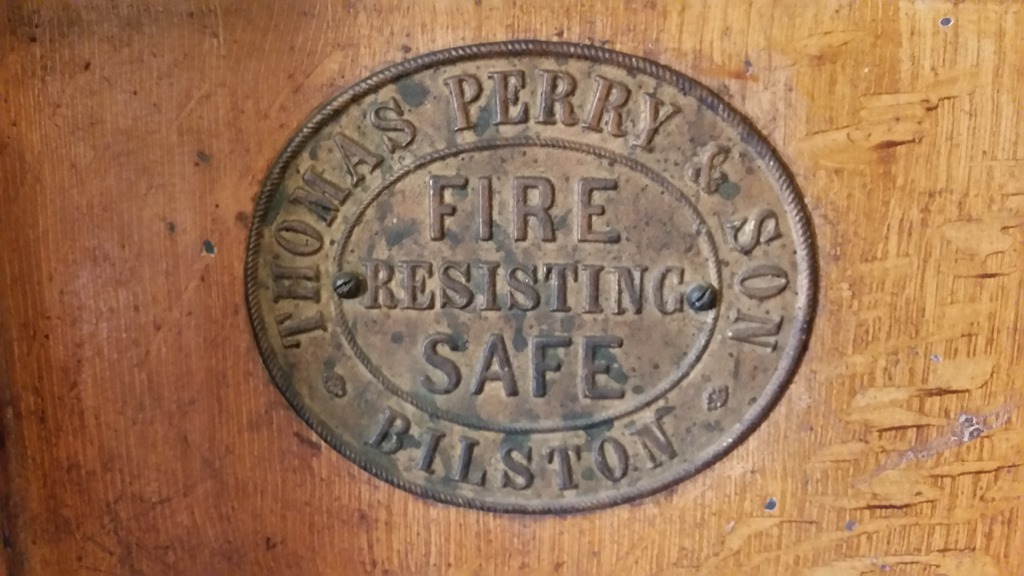
In the dispensary of Dow’s pharmacy there’s a rather impressive safe made by Thomas Perry and Son of Bilston near Wolverhampton in England.

The safe is pretty substantial, and painted with a rather nice wood grain effectDows Back room 181

We can guess that the safe was made some time before 1900 as Thomas Perry and Son became Thomas Perry and Son Ltd in the last years of the nineteenth century.

In their time Thomas Perry were quite famous, supplying safes to the Titanic, so I thought that they might have left a long tail of documentation allowing us to date the safe a little more accurately.

No such luck. Despite the help and advice of archivists at the Black Country Living history museum, Wolverhampton City Archives and Sandwell Archives, there’s nothing available online that would pin down the date with any accuracy.

I did however come away seriously impressed with the work done on Thomas Perry by a local history society in the area, and the quality of the Black Country Archives website.

This doesn’t however help with the question as to why a country pharmacist would have such an impressive safe.

Gold was discovered in Chiltern in 1859, and in the early wild post goldrush years the area was alive with bushrangers, all heavily armed with guns obtained from America in the wake of the American civil war (One of O’Farrell’s guns used in the 1868 assasination attempt on Prince Alfred was obtained this way).

Equally, gold rush boom towns were awash with banks, so it would not have been difficult for the pharmacist to bank the bulk of his takings daily, and compared with the richer pickings to be had they were probably comparitively modest.

But of course the town chemist would have had the skills and equipment to assay and accurately weigh gold. And if he did it would make sense to have a substantial safe, both to hold gold and the ready cash to pay for it.

Can I prove it? Not at all. But it makes an entertaining story and may even be true …

Posted in Uncategorized | 1 Comment

Of gardening, history, and digitisation

Recently, now the hot weather is over, I’ve been doing some work in the garden, planting and laying out garden beds, and in the process using the UK Royal Horticultural Society plant data sheets to help plan my planting.

Not that I’m worried about my Siberian dogwoods – they’re tough plants, and the pomegranate I’ve on order from a nursery should do well too – there’s one growing in the garden of an old miner’s cottage in High Street that’s been left unpruned and looks to be a hundred years old, and still producing fruit.

The obvious question is, why use the RHS website. We live in Australia after all and while the climate here in North East Victoria might be European in style it’s more like parts of central France and northern Spain than England.

And the answer, is that there is simply no equivalent Australian resource. Which is kind of strange given that the colonial governments in the nineteenth century pored resources into economic botany to find what would grow, and you have cases such as the former Botanic gardens at Beechworth where people got plants from elsewhere to see what would grow, and what would not.

So the answer would seem to be to find nineteenth century gardening guides.

In this I was inspired by the example of WT Marshall’s A School Flora from 1910, which a girlfriend recommended to me some forty years ago when I was struggling with the identification of plants in the field. Marshall’s guide wins over many more modern guides for its simplicity, clear black and white diagrams  and lack of confusing photographs.

I imagined that a nineteenth century gardening guide would be similar, and consequently as the ideal candidates for digitisation:

  • they’re out of copyright
  • they’re black and white
  • they’re easy to reprint via a print on demand service as a consequence

and of course if you use a print on demand service it doesn’t matter if only a few copies are printed.

However, there is another resource. Partly inspired by family stories of my grandfather growing fresh vegetables during world war one and also by Kath Bode’s work on lost novels I realised that newspapers could well form a source of information about nineteenth century gardening practices.

Once the goldrushes had settled down people began to put down roots, and the former gold settlements grew into proper towns. People would have grown fresh fruit and vegetables both through economic necessity, and through the need to get fresh fruit and vegetables – remember that until the mid 1870’s there was no railway line, and goods would have to be transported slowly and expensively overland.

So I decided to do a rough and ready search. Obviously I could have used a number of different search terms, but to keep things simple I chose a single term ‘gardening’.

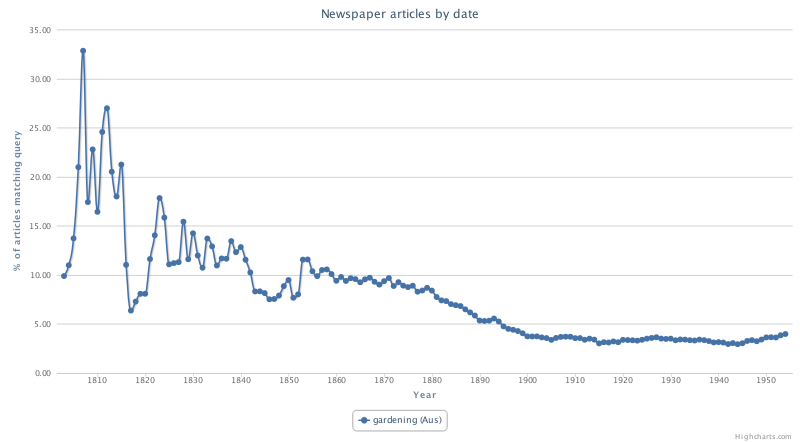
I first of all used QueryPic to check that there were articles citing the term:

chart

which there were, in spades, too many to deal sensibly with so I further restricted the search to publications from Victoria and article with the term gardening in the title, and restricted the date range from 01 January 1865 to 31 December 1899.

That produced over three thousand articles from 362 different publications.

Randomly selecting a few produced articles such as this from the Mount Alexander Mail of February 1876:
mount alexander mail 19 Feb 1876

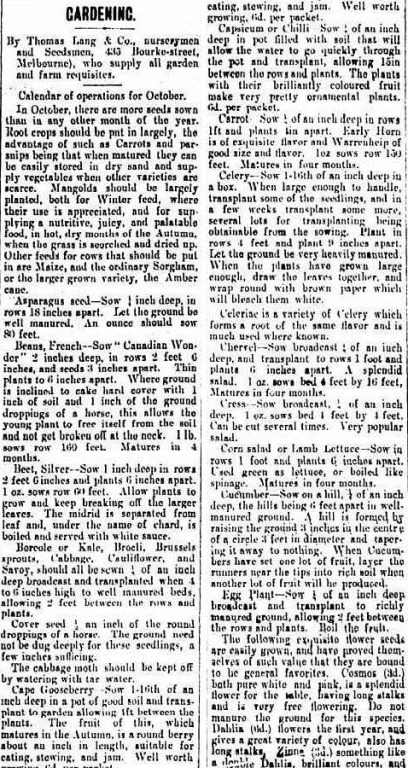
And a sequence of articles in the Box Hill reporter from the 1890’s sponsored by Thomas Lang, a major seedsman and nursery business in Ballarat. This is an example of their writing

thomas lang garden notes

A little more research also revealed that their catalogue for 1868 has been digitised and is available online from the State Library of Victoria.

It actually makes quite interesting reading. There’s an emphasis on fruit trees – economically important, and on trees and hedging plants. Scattered through the sixty odd pages of the catalogue is information on what grows, and what perhaps sometimes needs a little help. And the range is much more expansive than your usual out of town early twenty first century garden centre.

In short it tells you something of life in the early days of the colony …

Posted in Uncategorized | 1 Comment

Stephens Endorsing Ink

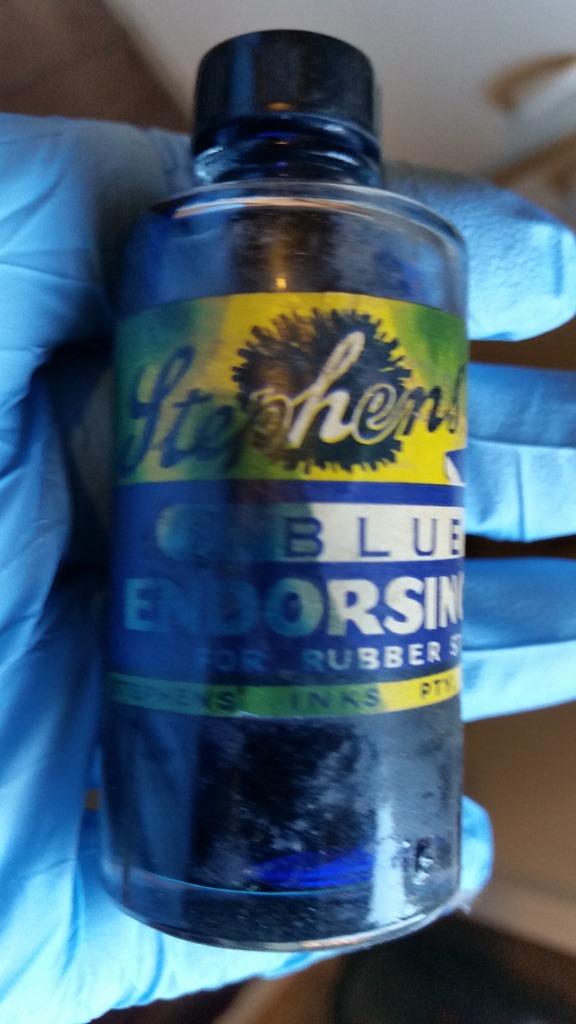
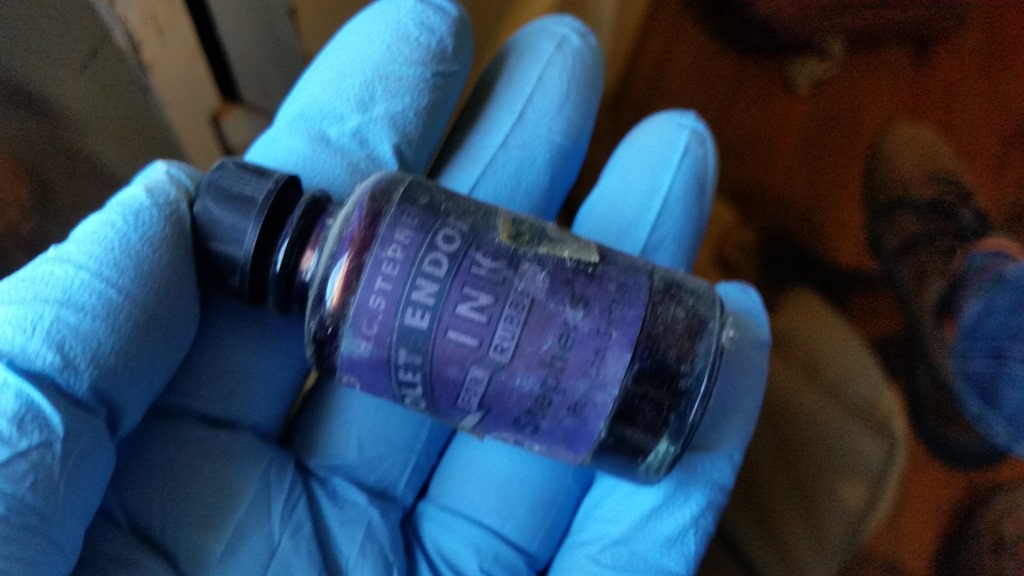
This morning, while working on the project, I came across a bottle of Stephens blue endorsing ink.

20180404_095139

Actually, I found a second bottle of violet endorsing ink later in the day, but by then I’d solved the mystery of what endorsing ink was and what it was used for.

Google and wikipedia gave me the clues. Endorsing ink was a particularly indelible ink that once used was difficult to remove from a document, and was resistant to fading and the effects of mould and mildew. As the bottle was next to some classic nineteenth century steel nib dip pens – one a rather nice bone handled one, and crucially the patient ledger that recorded scripts dispensed and so on, its use was clear – to provide a permanent record of what was done.

This particular bottle dates from sometime after 1930 – exactly when is not clear, but it lists the manufacturer as HC Stephens pty ltd, and Stephens set up an Australian manufacturing subsiduary in 1930 in response to import duties on ink. Stylistically the label could be from any time from the thirties to the fifties.

The second bottle looks older stylistically, and crucially does not say where it is made, so I would guess the twenties rather then the thirties but the label is damaged so one can’t be totally sure.

20180404_122528

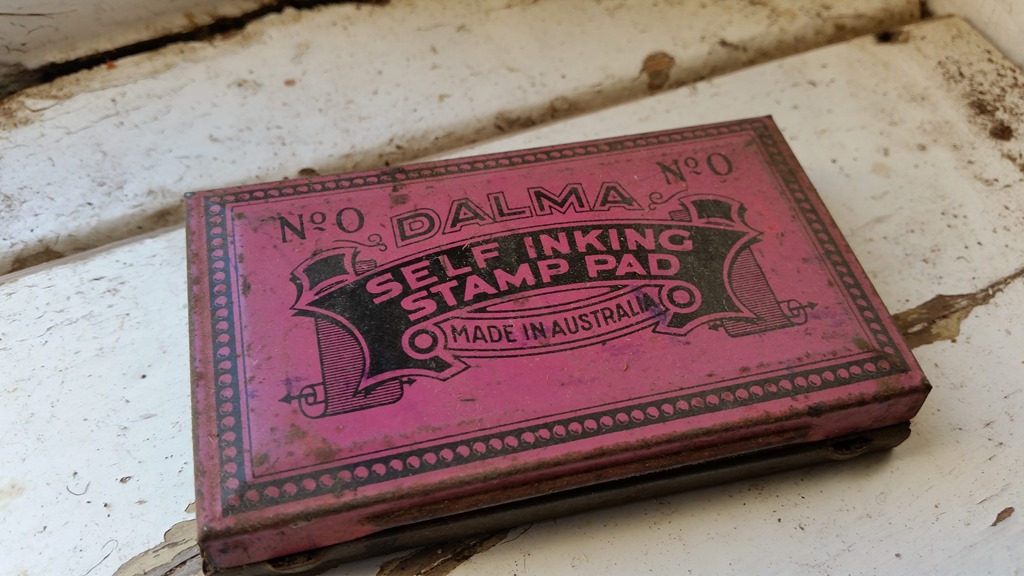
However, it does say it’s for rubber stamps, and given that there are a couple of inking pads, including this rather nice art deco Dalma one next to it,

20180404_151500

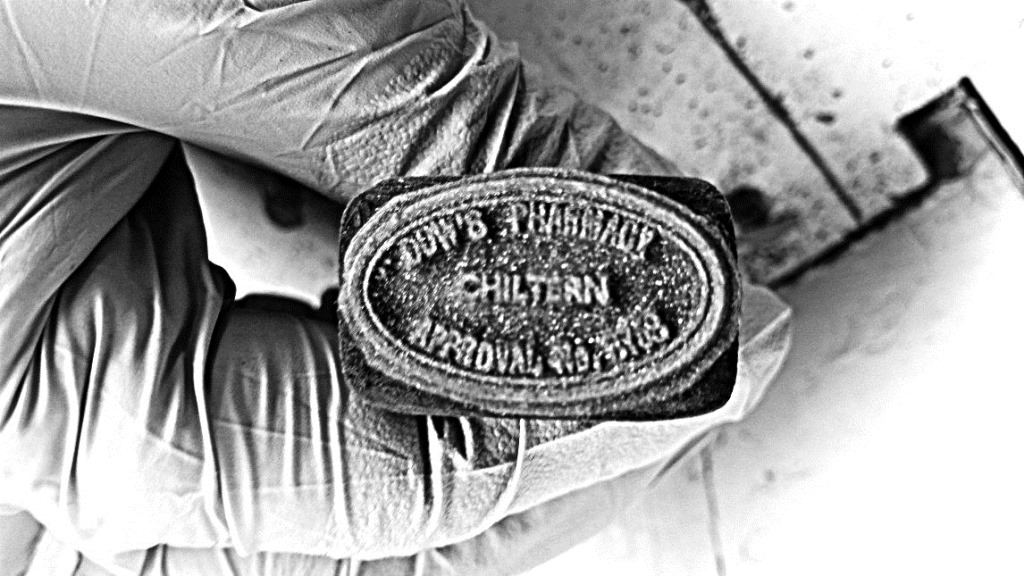
and some rather cracked stamps we can say that the purple ink was possibly used for official purposes stamping invoices etc

imageedit_5_5187924116

Now this would just be a curiosity, except for HC Stephens history.

Prior to the 1850’s, clerks usually made up their own ink from powder. Stephens were innovators in that they were among the first manufacturers making up premade ink in bottles, ensuring a consistent product with repeatable performance. And their ink was not just ink. A lot of their inks were designed to be permanent, as in the days when everything was handwritten, record keeping involved writing out clear and legible records of what had been done.

Stephens’ ink was of such quality for it’s resistance to fading and the effects of mildew and mould, that in the nineteenth century the British India office – essentially the colonial administration in India, mandated the use of Stephens ink for record keeping. Not for nothing was good old HC (Henry Charles) Stephens known as Inky Stephens. He also did pretty well out of the business, enabling him to build a rather swish family home in Finchley in London.

In its time Stephens was a household name, now it’s all but forgotten. Why?

In part due to the rise of digitisation, online records management and allied technologies such as the photocopier did away with the need for rubber stamps and high quality ink. After all when there was only one copy of a single document, you cared about its permanancy. When you can copy or print as many as you like and the master document is kept online, you tend to treat paper copies as disposable ephemeral things.

And while it is simply just another example of the past being another country where things are done differently it’s still interesting to learn that in the nineteenth century the bureaucrats of the India Office were worrying about the permanancy of their written records…

Posted in Uncategorized | Leave a comment

Old fiction, old newspapers

Recently I’ve been reading a Lucy Sussex novel built around the attempt to identify the story around the anonymous author of a newspaper serial published in a local paper in goldrush Australia.

Coincident with this, Katherine Bode launched a rediscovered novel, and incidentally publicised her work on ‘lost’ novels of nineteenth century Australia.

This isn’t something new, we’ve always known that in the nineteenth century many short stories and serialised novels were published in newspapers, and that many ‘serious’ authors were published in this way.

And we know that half a world away, in the north east of Scotland, vernacular tales of regional life were frequently published in local newsapers, which as well as giving authors such as Lewis Grassic Gibbon a start in the writing business, also helped preserve north east Scots dialect against a tide of well meaning Englishryness and received pronounciation through the education system.

So it’s not really surprising that we find a lost novels stories and other Australiana in the nineteenth century newspapers of colonial Australia.

Books were expensive, and in the main printed overseas. Doubtless the squatocracy could afford them but the miners in the camps and battlers out on sheep stations almost certainly couldn’t, not that it mattered as most would hardly have seen a bookshop from one year to the next.

But they could afford a weekly newspaper. And as well as news, the newspaper offered entertainment, and a diversion from life’s labours.

So it’s not surprising that these stories existed. Like all writing, some was doubtless better than most, and some was doubtless turgid and completely uninteresting, except that as well as the pleasure or not in rereading it, it tells us how people felt about life stuck on a goldfield or a sheep station somewhere that probably felt like the edge of the known universe.

Just as the Brontes reflected the social concerns of the poor would be middle class, and Wilkie Collins based his complicated and convoluted plots around inheritance and property law, these novels reflected the concerns of their audience, and tell us, by implication how their lives were.

Of course, the information was always there, hiding in plain sight in the old newspaper archives. But, until recently these archives were really only used extensively by historians, family history hobbyists and genealogists. Not for any bad reason, simply that these were the only people motivated enough to trawl through long, and sometimes incomplete archives in dusty vaults in inconvenient places.

What has made it infinitely easier to find and trace these  ‘lost’ novels if the wholesale digitisation of Australian newspapers via the NLA’s Trove, which has made the process of reading and searching the nineteenth century corpus one that can be done by anyone from anywhere …

Posted in Uncategorized | 3 Comments

Charlotte Bronte and Patience Kershaw

The moors round Halifax and Bradford are for ever associated with the Brontes.

But there’s also another history there, as for example in the Chartist inspired near insurrection of 1842 sometimes referred to as the Pull Plug riots, which saw soldiers fire on protesting strikers in Preston and Halifax and perhaps in other places.

The moors were not wild places but where coal was find close to surface, the site of small scale mining, and it was at one of these mines that Samuel Scrivener, investigating the employment of women and children in the mines encountered Patience Kershaw, a 17 year old hurrier, who routinely dragged wagons full of coal out of the mine for the miners who employed her.

And of course the Brontes, living in Haworth, could not have been unaware of both the 1842 insurrection or of conditions in the mines, even if Charlotte and Emily Bronte were both living in Brussels in 1842. They would doubtless have been kept informed of events by letters from home and from newspapers sent from home.

The miners for the most part lived among the community, besides the silk weavers (like J’s family who gradually made the transition from self employed weavers to mill worker), the wool combers and weavers, and the farm workers, rather than isolated mining villages, so the miners, the hurriers and the rest must have been a familiar sight going to and from the pit

In fact Charlotte, the most politically astute of the sisters, appears to have visited the village of Wilsden on the moors researching for a projected novel based on the Chartist events and certainly her 1849 novel Shirley, set against a background of Luddite machine breakings in the early 1800s could well have been inspired by the pull plug riots.

Charlotte Bronte most probably never encountered Patience Kershaw in person. But her father, a parson, must have officiated at their weddings and funerals, and Charlotte must have known who they were, and at least an inkling of the conditions that they lived in …

Posted in Uncategorized | 1 Comment

Miss Dickinson …

I tried to find out what happened to Kate Dickinson after Valentine Baker’s trial for rape and assault, but I’ve drawn a near total blank.

Secretly I wanted her to become a campaigner for women’s rights or alternatively one of these indomitable Victorian lady botanists who strode the jungles of south east Asia, armed only with a botanical press.

But no. Only in my dreams.

The only reference I’ve found is in Richard Hall’s 1980 biography of Samuel and Flora Baker, in which he states that Miss Dickinson withdrew from public life after the trial, never married, and devoted the rest of her life to painting watercolours, and that she died in 1915.

Irritatingly, he doesn’t give a source for this information, but given the accuracy of much of the rest of his research, I’m prepared to assume it’s accurate …

Posted in Uncategorized | Leave a comment

Victorian short door mailbox still in use

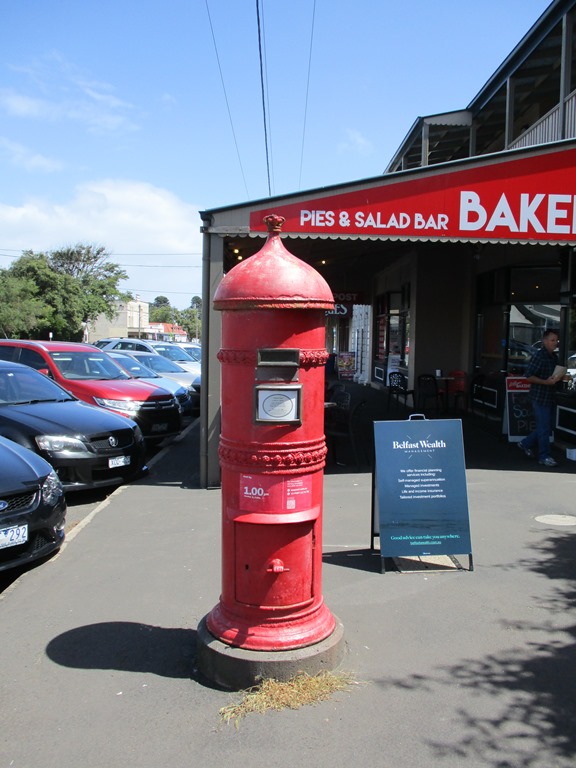
We were in Port Fairy a few days ago and parked outside of the Ederle restaurant, and there it was, an 1870’s short door receiving pillar still in use by Australia Post

short door 1870 mailbox port fairy

The design is slightly more ornamental than the later long door type with a wreath of roses around the middle of the pillar and again round the mail slot.

Interestingly it doesn’t say “Receiving Pillar” on the body of the mailbox – I’m guessing that’s a later feature, but at the moment it’s only a guess ..

Posted in Uncategorized | 2 Comments

Wreck Beach

We’ve just had a few days away at Apollo Bay, originally with the intention of doing some walking, swimming and sketching.

Of course, with unerring talent, we neatly managed to coincide with a howling storm that blew up out of the Southern Ocean, which curtailed these activities somewhat.

wreck  beach 1

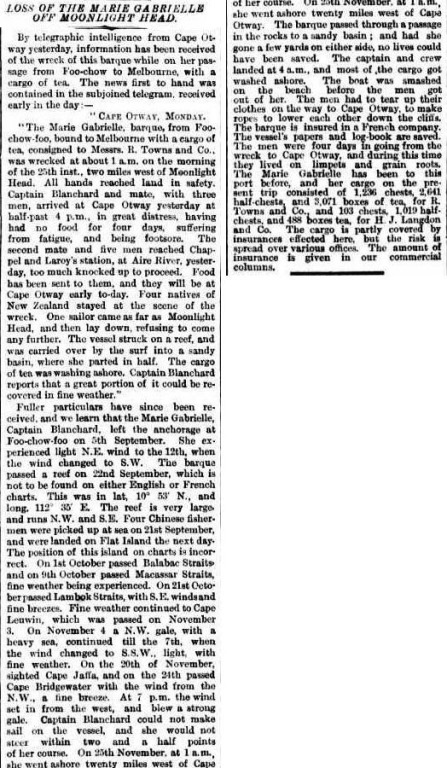
However we did manage a walk on Moonlight Head and down to wreck beach. On a good day, at low tide, you can walk out on to a rock platform and see the remains of the Marie Gabrielle (lost November 1869) and the Fiji (lost September 1891). In the picture above you can just see some of the wreckage including the anchor of the Marie Gabrielle behind the raging sea.

When we visited it was only safe to walk to within about 100m of the wreck site but it certainly showed just how treacherous these seas could be.

Both ships were a total loss.

In the case of the Marie Gabrielle it seemed at firts that everyone survived despite being trapped on a wild rough coast in what was then very isolated and remote country

marie gabriell the argus 18691130(The Argus 30 November 1869 via trove.nla.gov.au)

with the crew eating limpets until they were found and brought to Cape Otway light station.

However, if you expand the search into 1870, the following year, the tale turns grimmer with allegations  that the crew were deserted by their captain. There also seems to be some suggestion from later news reports that some human remains were found in the area a few months later. There is some suggestion that the remains were of Maori or South Sea Islander origin and it may be that they were travelling alongside the European origin crew, either with or without the captain’s knowledge

The Fiji’s wreck was a rather less fortunate affair with several men being lost

fiji wreck the age 18910908fiji wreck inquiry evening news sydney

(reports from the Age 8 September 1891 and the Evening News in Sydney both via trove.nla.gov.au)

and charges of incompetence being laid against the captain.

Posted in Uncategorized | 2 Comments

Sophia Duleep Singh–the empire strikes back

This week saw the hundredth anniversary of women getting the vote in the UK (and Ireland which in 1918 was not yet a separate polity). It was at best a partial victory in that the vote was restricted to women over 30 who met a property qualification, but it was a victory of sorts.

I’ve been retweeting a series of articles from the University of St Andrews that give a taste of just how acrimonious the struggle was and how women were forced into direct action to make their point.

Another interesting aspect of the struggle is that a number of the key players were not born in the UK. I’ve already mentioned the wonderful Muriel Matters who among other coups de theatre, hired a dirigible with the intent of disrupting the opening of Parliament by dropping pro women’s suffrage leaflets over the procession.

Muriel Matters, was of course from Adelaide, where women got the vote in 1894. There’s no actual date for women’s suffrage in Australia, with the some of the colonies granting women the vote before Federation, and others after despite the Commonwealth giving women the right to vote in federal elections in 1902. Victoria was the laggard, not granting women the right to vote in state elections until 1908.

But I digress, I’d like to introduce you to Sophia Duleep Singh, daughter of the last Maharajah of the Sikh Empire, who after being deposed by the British, was kept in a gilded cage, at first in Perthshire, and later in Norfolk, and forever forbidden to return to India. (I’ve mentioned Duleep Singh before in connection with Sam Baker and a hunting trip in the wilds of Ottoman Europe where Sam ‘acquired’ the woman later to be his wife from an Ottoman slave market. According to Richard Hall’s account of Sam and Flora’s Nile expedition, Duleep Singh had acquired himself a mistress in Vienna and might have been less interested in hunting than he might otherwise have been.)

Strangely, Queen Victoria was fond of Duleep Singh and his exiled family and was Sophia’s godmother, as well as granting her a grace and favour apartment in Hampton Court.

Sophia was allowed to travel to India after her father’s death, and was radicalised by the experience, meeting many anti-British Indian revolutionaries. On her return she joined the Women’s Social and Political Union, selling their newspaper outside of Hampton Court much to the annoyance of George V.

Sophia was more radical than that, supporting the use of bombs to bring about women’s suffrage. During the first world war she worked in a hospital caring for Indian soldiers wounded on the western front, and camapigning always for better treatment for Indian soldiers.

After the war she continued to campaign for women’s suffrage both in Britain and in India, and was true radical all her life …

Posted in Uncategorized | Leave a comment

A Chinese coin in Chiltern

I’m still working away on the Dow’s Pharmacy documentation project, but to be honest the last few weeks have not been that interesting, basically enumerating and classifying the stock of empty unused medicine bottles that had been left behind.

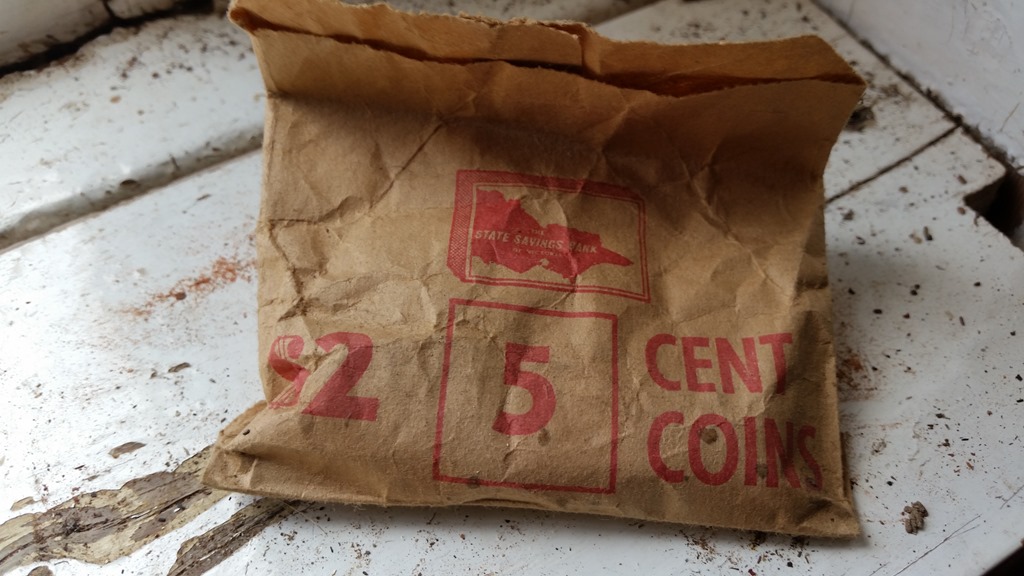
However yesterday I found a little brown paper envelope from the State Savings Bank in among the bottles

20180208_140126

Now we know that decimalisation happened in 1966 and the Pharmacy closed for good in 1968, so the fact that the bag is printed $2 – 5 cent coins, puts it at some date between 1966 and 68.

I opened it, hoping we might have a mixture of 5c coins and some old 6d coins, but no it contained a mixture of screws and grommets,

20180208_140210

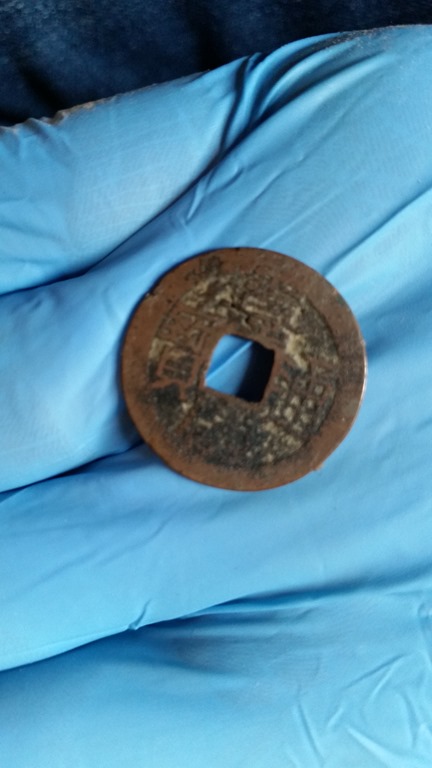
and a single Chinese 1 cash coin

20180208_140718

which is rather corroded and worn. Unlike the imitation ones sold as lucky charms today it’s got a design on both sides, and looks genuinely old and worn.

Not being an expert on Chinese coins that’s about as far as I can go, as to what it is, but why would it be in a pharmacy in rural Victoria?

Well, Chiltern was a gold rush town and like Beechworth and the other gold towns round about had a community of Chinese miners in the mid to late nineteenth century. My guess, and it is only a guess, is that one of these miners dropped a coin, and old Mr Dow found it about a hundred years later, didn’t know what to do with it and put it in a bag of bolts, perhaps even thinking it might stand service as a washer ….

Posted in Uncategorized | 1 Comment