Sri Lanka trip – part 1

Indirectly, it was Peter Kurvita’s fault.

For those of you who don’t know, Peter Kuruvita is a TV chef who presented a cooking show about Sri Lanka on SBS. We’d been stunned by the beauty of the place and put Sri Lanka on our bucket list.

Sri Lanka had been on our radar before. Long ago when we lived in England J had got taking to someone on a train who lived tere and extolled its beauty and culture, and we’d thought about it then, but did nothing.

This time we were casting about for somewhere to go for some serious decompression. I’d just finished a set of interlinked projects that had consumed three years of my life. We’d previously thought about Myanmar and riding the Trans Siberian as options.

Unfortunately we didn’t have enough time to do the Trans Siberian justice, and the time we had was slap bang in the middle of the monsoon.

Sri Lanka effectively has two monsoons, one on the west side which is comes the same time as in India and Thailand, and one on the east side which doesn’t. This meant that we could escape the worst of the monsoon by a bit of careful planning.

Getting there

We flew to Colombo via Singapore, leaving a chilly Canberra to catch a mid afternoon flight to Singapore, and a tight connection to an onward flight to Colombo arriving on a wet sticky monsoonal night.

There is no public transport worth a damn from the airport so we hired a minicab to take us to our hotel. Along the way the driver asked us what we were doing, how long we were there, and when we said we were going to Galle the day after next, promptly offered to drive us there for what turned out to be a competitive price.

The hotel was an old colonial house with a modern extension in keeping with the colonial architecture, built round a fishpond and with a wonderful roofed open air dining room where one could sit and watch the rain patter down, and for a day that is exactly what we did.

With its tiled floors, colonnades, atrium and fishpond the Wallawwa irresistibly reminded me of illustrations of a high end Roman villa.

Galle

Colombo itself is not an attractive city. Busy, noisy, crowded, frenetic traffic, and to be honest, not that much to see. As we had another flight at an ungodly hour back to Singapore at the end of our trip, we’d decided to have a night in Colombo the day before our flight back, so we went straight on to Galle.

Originally we’d had plans to get the train from Colombo to Galle, but that was logistic nightmare involving a cab right into the centre of Colombo to the main railway station, and the ever present possibility of the trains being full, Sri Lankan railways not having an online booking service, so we copped out and had Mr Aruna drive us to Galle for a pretty reasonable Rs8000/- plus Rs400 for the freeway toll (there’s around a 120 Sri Lankan Rupees to the dollar, to make life simple we decided to pretend that a dollar was a hundred Rupees meaning we’d get a pleasant surprise once the bills came in).

The freeway is planned to go all the way to the airport on the north side of the city, and while they are visibly building it, it’s around a year away from completion meaning a two hour drive through to Colombo.

Our driver opted for the most direct route, which took us almost but not quite into the old colonial city centre, passing the Oval, Colombo’s test cricket ground, the government area including the new Parliament building and the memorial to the Civil War, and then out onto the freeway, which amazingly had almost no traffic on it.

Galle is in two parts – Galle fort, the old, rather nice and quietly arty town with old colonial buildings inside the walls of the old Dutch fort, and Galle town which is the modern chaotic scruffy town where the real people live. We’d opted to stay in the Fort at the Fort Printers hotel which was a restoration of a nineteenth century printworks in the heart of the old town.

Galle has been a port for at least two thousand years. The locals will proudly tell you how the Greeks and Romans came here, and how in the nineteenth century, before they built a big harbour at Colombo, ships on their way to Australia and New Zealand used to stop there. While the Fort is really a tourist area now, there is still a large Muslim community in the fort as a legacy of Arab and Somali spice traders in the middle ages.

The fort was a foundation of the Dutch East India company and at least one of the gates has the British crest on one side and the VoC logo on the other.

On the day we drove there the weather was fine, although when we walked up to the walls of the old fort to see the sunset it was starting to blow a bit. However when we went to dinner at a rooftop restaurant where you can sit and look out over the rooftops while listening to the call to prayer from the next door mosque (out of respect the restaurant pretended not to sell beer, but actually did, the waiters asking if you would like ‘something nice’ to drink) it seemed to have settled down to a warm wet gently rainy evening.

We were wrong. What had seemed to be a gentle monsoon evening turned into a major storm overnight with windows banging and rain hammering on the windows and the roof of the hotel.

The power went off some time after midnight and we awoke to the sound of hammering and people outside in the street sweeping up broken roofing tile. The power was still off, which turned out to be more of a problem than you would suppose – it also meant that the hotel’s water pressurisation pump was off meaning that all the taps produced was a thin reluctant dribble, and the toilet took a generation or two to fill.

After a cat’s lick we emerged to find that rain had come in through the roof of the corridor outside, but the kitchen had risen to the occasion and was producing omlettes, toast and black coffee on a couple of gas bottles.

After breakfast the power was still off and we set off for a walk round the town and then off over to the new town where there was electricity to find a working cash machine, which we did, securely guarded by a couple of soldiers armed with what looked like world war two vintage rifles. Various advertising hoardings trees and light poles were down and the soldiers were there to keep order and guard the banks and government buildings.

They weren’t very threatening, in fact one of them guarding Laksala the state tourist store helpfully went and got us a tuk tuk when we emerged into a monsoonal squall.

When we got back to the hotel the power was still off but the hotel had arranged with another hotel who had a backup generator to let us have a shower and get cleaned up. By the time we were done the power was back on and the taps were running.

That evening, by virtue of the fact we were staying in the Galle Fort Hotel, we were invited to an exhibition opening and book launch by a local English expat photographer, (Juliet Coombe). We liked her work but less sure about the glitterati daarling sort of people who appeared out of the woodwork in their designer clothes- we didn’t know there were people like this in Sri Lanka!

Anthropologically it was quite amazing, as all these wealthy expatriates, some of whom looked as if they belonged in the nineteen fifties, and others as if they had just appeared from Chelsea or Kensington. Even though we had our respectable travel clothes on we still felt distinctly underdressed, although we met a number of interesting, and other equally underdressed people who somehow had ended up at the event, including a lady who had just completed a five day bike ride to Jaffna in the north, and an interesting Sri Lankan family from Sydney who were trying to get an aid project to help disabled children in orphanages up and running.

Mirissa

Mirissa was a very relaxed stay in a guest house where we were treated like family, chilled, swam, and discovered the pleasure of fresh cinnamon tea made with cinnamon leaves from the garden, freshly plucked, torn and added to hot water – just as a herbal infusion, not as a spiced tea as we’re used to at home.

On the way to Mirissa from Galle we stopped at a small privately run turtle sanctuary where some people, who seemed genuine, were doing their best to help protect the turtles. Very much a backyard operation, but one that could make a difference.

Mirissa turns out to be known as a prime turtle egg laying site and the people at the sanctuary said that they often had to buy eggs back from fishermen who still went and dug them up.

The next day, when we went swimming in to ocean we were rewarded with the site of a turtle about ten meters off shore – whether it was just there doing turtle things or planning to haul up that night we’ll never know, but never the less it gave us a distinct buzz.

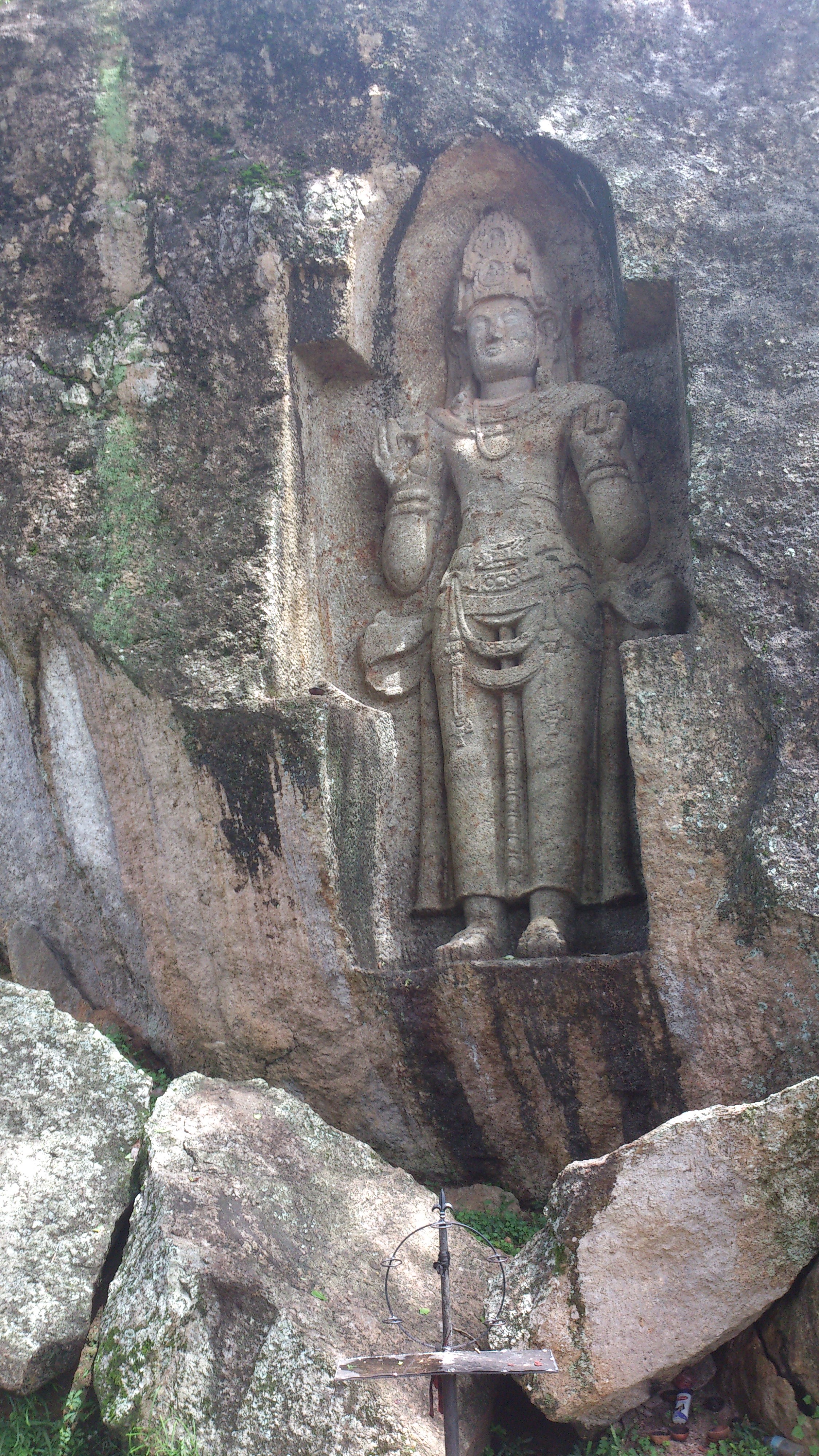
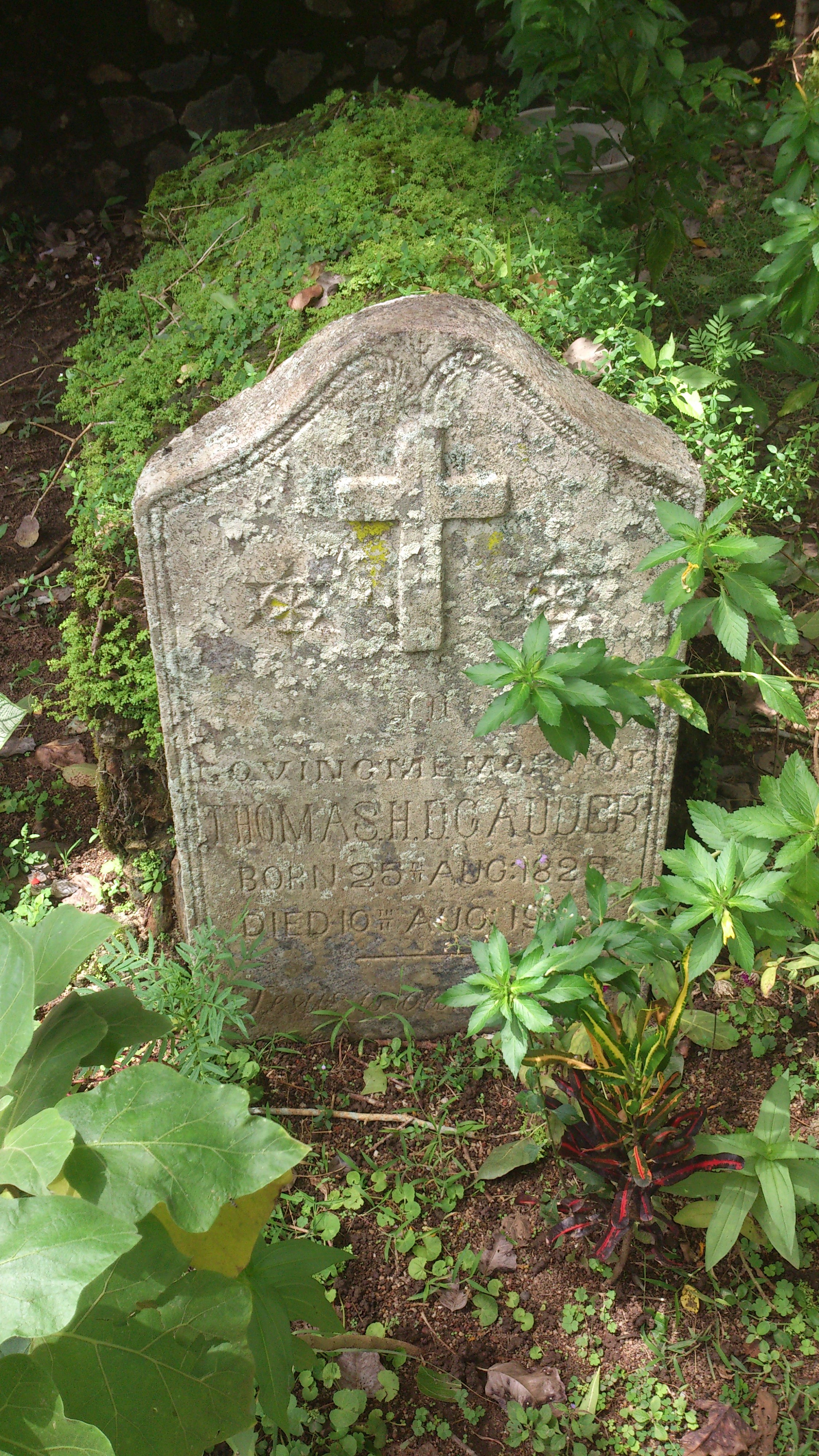
The other cool thing about the journey to Mirissa was that our driver pulled off the main road, bumped over a rail crossing, drove down a side road to another rail crossing, and there was a rock carving of Buddha, and for some reason, a colonial era grave.

The site was being looked after by an old lady who brushed the paths clean and cleaned up any rubbish left behind from pilgrims’ offerings.
078 076

A quietly magical little place that will have to remain a mystery, as I was too entranced by the magic of the place to write down where it was …

Posted in Uncategorized | Tagged | 1 Comment

Poson Poya, Dansalas, and biking in Sri Lanka

We were in Sri Lanka, in Habarana, over Poson Poya.

Poyas are Buddist full moon day festivals and Poson Poya is a big event celebrating the introduction of Buddism into Sri Lanka, and is especially celebrated in the Ancient Cities triangle of which Habarana is right bang in the centre.

One fun feature of Poson Poya was the Dansalas, organised by the local temples, where you see guys standing at the side of the road furiously waving yellow flags and giving out free snacks as a way of sharing and celebrating.

We started out being a bit diffident about this as it felt a bit like intruding on someone’s New Year party, but people were so happy and generous we ended up with bags of hot spiced chickpeas, strange fritter like things and more.

By chance, at the end of Poya we had to get from Habarana to Colombo to catch our flight back to Australia (actually, because it went at two in the morning and the onward flight from Singapore to Australia went mid evening we treated ourselves to a couple of nights in Singapore).

We hired a car and driver (no one with any sanity would drive themselves in Sri Lanka, especially in Colombo – there are rules, but they’re not the ones in the highway code – think Greece or Thailand and cube the experience) to take us to our hotel in Colombo.

Until we hit the Colombo traffic we had a fairly quick run due to it being Poya, but on the way we kept on passing these guys who were clearly part of a group cycling event riding to Colombo.

Some of them had helmets, all of them had bike shorts acquired somehow (some clearly well washed and faded as a consequence) and Heinz variety roadbikes all rebuilt out of parts sourced from wherever. Nothing wrong with that, I’ve done it myself, but the thing that was really striking was that instead of skinny road tyres they were using chunkier touring bike tyres, despite road surfaces being (generally) pretty good.

The whole thing was kind of intriguing as we’d only seen half a dozen locals riding for fun in our three weeks, no foreigners riding, although we did meet someone in Galle who’d ridden to Jaffna the week before with a group of friends.

Apart from peasants riding ancient sit up and beg bicycles to their plots, Sri Lanka seemed to be bike free, despite the roads being fine for cycling once you are out of Colombo and probably no worse than Morocco in terms of traffic and mad pedestrians, dogs and goats.

However the guys riding the rebuilds were having a pretty good time riding along and stopping at Dansalas to refuel. Made me feel envious.

The other thing that was kind of intriguing is that in seems to imply a cycling scene in Sri Lanka, despite the complete lack of evidence of bike shops and the like, which makes me wonder just how practicable a few days bike riding would be as part of another trip?

Posted in Uncategorized | Tagged | 1 Comment

Light and data in Sri Lanka

I’ve just come back from an enjoyable three weeks in Sri Lanka. If you’ve been following this blog you will know that we’ve previously been planning to go to Myanmar and ride the Trans-Siberian.

Projects and life got in the way of both ideas – Myanmar in the monsoon didn’t sound like a good idea and we couldn’t find a big enough window for both of us to do the Trans Siberian justice. So Sri Lanka it was.

Before we went we found conflicting information on the five great topics of of twenty first century travel:

  • can I recharge my computer/iPad/kindle easily?
  • can I get wireless internet ?
  • will my smartphone work ?
  • will my debit card let me get money out of an ATM
  • what do I do about mouthwash/tampons/panadol etc

So after all the misinformation I thought I’d write up what we found on the ground in June 2013. Bear in mind that Sri Lanka is rapidly playing catch up after thirty years of civil conflict and things are changing quickly and some of this information may be out of date by the time you read this.

Electricity

Sri Lanka is in the 230V/50Hz club. Outside of Colombo, and especially in rural areas, the power supply can drop out, flicker and fluctuate a bit so a surge protector is probably an idea.

There is a taxonomy for power sockets – essentially Sri Lanka uses a mixture of type D as in India and type G as in the UK. You may occasionally happen across a type M, but if you do there will almost always be a type D or type G available.

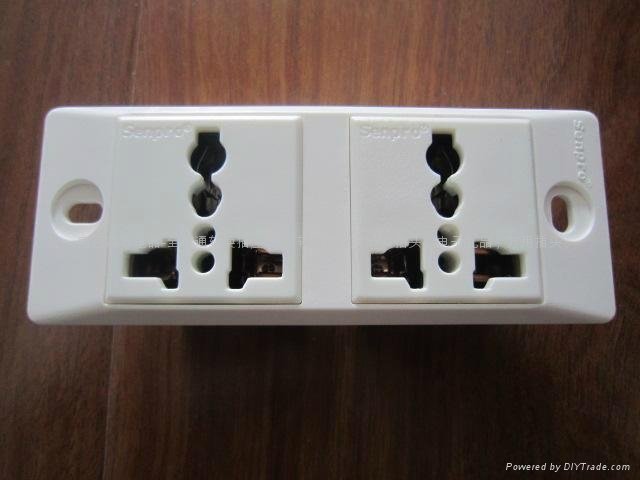
Most guest houses seem to have a mixture of D and G. More upscale hotels sometimes also have the new inverted T universal wall sockets [picture].

If you’re from Australia you may find that Australian power plugs are sometimes a bit of a loose fit in these – the solution is to plug your Australian plug into the type G adapter you brought with you and plug that into the socket.

If you lose one of your adapters along the way, you can get what Sri Lankans call a multiplug , essentially a local design of universal adapter for two and three pin plugs, from any electrical goods or mobile phone store. Australian plugs normally plug straight into them, and some of them include surge protector circuitry. Note that you often need to buy separate ones for both type D and G sockets.

I normally pack an Australian powerboard with a surge protector built in – that way we can charge several devices at once rather than hauling multiple sets of adapters around with us.

Internet

Just about everywhere you are likely to stay will offer wireless internet for free. I agonised before we went about whether to take a tablet or computer with an ethernet socket with us. A tablet, possibly with a keyboard, would have been fine, and much less bulk than a computer. However when we had a stopover in Singapore on the way back we hit problem common to a lot of hotels of only providing wireless in the lobby, while the internet in the rooms was most definitely wired (and expensive).

Internet speeds are reasonable – never fast, but never excruciatingly slow either.

Smartphones

Smartphones are common, and you can of course use them with the hotel or guest house internet to surf the web. You will find when travelling about that you need to call drivers to arrange long trips and also tuktuk men to come and pick you up from restaurants to take you back to your hotel. To minimise charges its a good idea to buy a local SIM for use in your phone. There are various deals on offer from the various network providers but I found this deal from Dialog worked well and you could pick up the SIM in the airport. I went for the Rs1300/- deal and by pure fluke that lasted me all the time until ten minutes before check in without having to buy a recharge.

Obviously your phone needs to be unlocked to do this. Unlocking policies vary by country and service provider, and if you have to pay an unlocking fee it might be cheaper to buy a basic pay as you go mobile phone from Dialog.

If you do have an unlocked phone and buy a Sri Lankan SIM it does mean that calls to your home mobile number don’t go anywhere. One trick is, if you have a Skype subscription, ie you pay for the extended services, divert your mobile to your Skype dial in number before you leave home – that way calls will get routed to your Skype voicemail and you can pick them up and deal with them using Skype on your laptop or tablet at a time you find convenient.

Money

ATMs are common and I had no trouble using my normal Visa debit card to get money out of a cash machine. Just as I would at home, I used my bank’s smartphone app to check for unauthorised withdrawals and kept my wits about me for skimmers and scam artists.

If you are unhappy using your own bank card, you might consider using one of these prepaid debit travel cards, like this one offered by my bank. Depending on what you pay for overseas withdrawals it can work out cheaper to use one of these rather than your own card.

I managed to source some Rupee notes from my bank before I left, but this turned out to be unecessary and expensive – there are several ATMs and foreign exchange counters at the airport.

Sri Lanka is however a largely cash based society with only a few more expensive hotels accepting credit cards, even though various Sri Lankan banks are furiously promoting their use – plan on having to carry a wad of Rupees about with you. Also keep some ATM withdrawal slips – when you change your left over Rupees back to hard currency at the airport, the foreign exchange people will want to see some evidence that the money you are changing back is the result of a legitimate transaction.

Note that Colombo airport has multiple security checks and you need to change your money before going through the security check to get into check in. Shops in the departure lounge after check in and passport control tend to deal in US dollars (and often other hard currency if you ask) rather than rupees.

It’s my impression that Visa is bit more common than Mastercard. Both companies have websites listing their ATMs worldwide. As the ATM network in Sri Lanka is expanding rapidly they can be a bit out of date but it might be worth checking if you are going somewhere in the northern part of the island where a lot of the infrastructure is still being rebuilt.

Stuff

Cargill’s supermarkets are the traveller’s friend. They are to be found in all main towns, and while they’re more like a mini market (think IGA or Spar) than a supermarket, they often have a pharmacy counter and stock most of what you need. Most of the products on offer are local rather than international brands, and reflect local preferences, especially as regards feminine hygene products.

Cargill’s often have a nice clean staff toilet that they will let you use if you ask nicely and buy something such as biscuits fruit and bottled water from the shop.

Posted in Uncategorized | Tagged | Leave a comment

dm Yunupingu

 Yunupingu, the former frontman of Yothu Yindi, has died.

I met him once, at a conference in Darwin about plans to create a project to record and digitize Aboriginal culture. The Aboriginal peoples of Australia may have had a culture that was sparse in terms of material artefacts but, as a group of preliterate cultures they were rich in stories and music recounting their history and beliefs.

 Yunupingu was an impassioned and articulate speaker on behalf of his culture and heritage and the need to capture and preserve it, should it be lost due to indfference or the seductions of ipods and easily downloadable rap music. At the same time he was heavily invested in the idea of providing access to digital technologies to the youth of his community so that they could make and record their own music, rather than simply consume what they could download.

Over a drink after the conference he told me of his interest in the pre European contact links between his people, the Yolngu, and Makassar traders from Sulawesi, something which opened my eyes to the complexity of these trading links, and that is something for which I will always remain thankful to him.

 Yunupingu was a passionate advocate for his people and for all the indigenous peoples of Australia. He will be sadly missed.

Posted in Uncategorized | Leave a comment

Well that’s three years of my life then ….

Suddenly, in the weird way that projects finish, the project I’ve spent three years on is done.

Actually it’s not done, the final reports need to be formally accepted, and the final invoices issued, but it’s over. No more documentation, timelines, unit tests or anything like that. Just that sudden realisation that everything is signed off and all the acceptance tests are complete, and it’s no longer dominating your life.

A strange, flat feeling. I remember one project I did there was a big launch with speeches and nibbles, and I should have been happy, but I wasn’t – sure I was glad it was over, but it was tinged with the realisation that it wasn’t mine anymore – it had been handed over to production.

About another project I wrote

End-dot

posted Wed, 24 Aug 2005 16:06:50 -0700

… and suddenly it all works. 

The asset management system passes all tests, we have a configured system. Now all we need to do is to learn to (a) use it and (b) customise it. 

projects are always wierd like this – suddenly they’re just done

Very true, and it’s something that they don’t teach you about on project management courses …


Posted in Uncategorized | Leave a comment

Buying books

A long time ago, I did a simple analysis of the cost of buying books in Canberra versus buying them online – either as secondhand or new.

Since then I’ve moved over almost exclusively to the Kindle for my recreational reading, but I still buy some more ‘serious’ books in traditional format, in the main because they are either not available electronically, or are cheaper bought through someone like Abebooks, or as new books from BookDepository.

As my regular reader is aware one of my interests is the Russian Revolution and the Allied intervention, and I recently bought a second hand copy of Anzacs in Arkhangel. I bought it second hand because I’m a cheapskate at heart.

I bought it from a second hand retailer in the UK via Abebooks – when I ordered I naively assumed that it was a UK edition, but what do you know, when it arrived it was the Australian edition.

Now we know things like clothes and electronics are cheaper overseas, but how come it is significantly cheaper for a second hand bookshop in the UK to sell and post a 500g book to me ?


Posted in Uncategorized | Leave a comment

Romans, poo and toilets

A few weeks ago we had the Roman toilet paper meme and the use, or not, of pessoi.

That seemed to have died down until a recent post by Caroline Lawrence set it going again.

Well I’m not an expert on Roman bottoms, but I’d say we know enough from Viking cesspits in York and some work on the Anglo-Saxons that people have used leaves, moss and grass, and there’s circumstantial evidence of Roman soldiers at Kintore and Bearsden using spahgnum moss.

Anyone who has ever taken an extended multiday bushwalk in remote country will recognise these as viable alternatives to toilet paper. Dockleaves are especially useful as they are large and cool to the touch.

I suspect that, just as in the remoter parts of Turkey today, most toilets came with a water bucket or jug and one cleaned oneself by using one’s hand, but this does lead to the problem of how to dry a damp bottom.

One could think of a scenario where one washed the are and then dried it with the grass or moss – this would also explain the cloth fragments found in roman cesspits – they were for drying not wiping and hence represent a more economical use of the material.

I was sufficiently interested to do a little googling for the evidence and came across this 2009 discussion on roman latrines. The proceedings don’t appear to be online but I did find a conference report (in German). Unfortunately Google Translate misrecognises the text as being in Dutch, and promptly falls over when one tries automatic translate, so I’ve put an English version up on Google Docs, as it’s the source for the suggestion around the use of sphagnum moss.

However the other interesting thing about this whole thread is the way it has raised the problem of cultural awareness. Other cultures do things differently. Some cultures of course use human waste to fertilise the fields and use well scoured buckets. Any plant material used in the cleaning process would just disappear into the manure pile.

There are tribal peoples in the far north of Thailand and Myanmar who keep pigs under their houses and whose toilet arrangements involve crapping into the pig shed, the pigs doing their bit for recycling.

The point about these arrangements is that any evedence of cleaning practices probably not show up on any archaeological record as it would be masked by the presence of pig poo and any other surplus waste fed to the pigs or other material in the manure pile.

We’re only able to speculate about what the Romans did because of what they left behind …

Posted in Uncategorized | Leave a comment

Structuring your day as a key to productivity

Withdrawing from social media is a meme of our times about which I’ve written a couple or three times.

The fact is that while I’m far from anti-social, I do relish moments of disconnection. These gaps pour destresser where on can think. And that, I think, is the need to take a break from social media.

However email, twitter and the rest are part of the world today. It is utterly impractical to go back to writing postcards and memos requesting or advising information as people did until well into the nineties. While we might fantasise about a nineteen seventies workstyle it is only a fantasy. The trick is to take the good aspects of the past and apply them to the present, and the trick to doing that is to make yourself some rules about how you run your day.

You need rules as rules give you a structure. You don’t need to obsess about them, and a bit of flexibility is always a good thing.

Some people say to prioritise. That’s not a bd idea but it means you have to make decisions about items. Having rules makes it easy to make the default decisions. Flexibility allows you to break them when necessary. Without rules, you end up like a rat in a skinner box reacting to flashing lights, you need to have a structure. Essentially, without one  you lose control of your existence.

The lack of control is what makes so many people stressed by the modern workplace by imposing and internalising an always on culture. Instant reaction is never good – you need some thought in the process.

So, let’s look at when I worked in a traditional eighties computer centre managing things:

in the old days, before the internet, one had a structure at work that was something like this

  • check nothing had broken overnight
  • deal with paper mail
  • meetings, work, whatever you had scheduled yourself
  • deal with afternoon mail and write memos in response to others
  • do some more work
  • check things and go home

That structure was imposed on you by the fact the mail came twice a day and no one could see your calendar unless you xeroxed you diary and stuck it on your office door. You still had to account for what you did, and you did get interrupted by phone calls, but most people wrote notes or else asked for a meeting.

You were basically in control of your own schedule, in large part because no one expected an instant response.

So here’s my suggestions for managing media:

  • make a daily schedule
  • diary skype and conference calls in you diary. If you can set your status to offline outside of those times do so
  • don’t be afraid to let phone calls go to voicemail – but make sure you call back
  • set aside a defined time to manage your email, check twitter and your rss feeds

and most importantly

  • respond promptly to emails and always call people back if they call you

That way people know that you will respond and set their expectations accordingly. Failing to respond makes you look disorganised or rude.

The other advantage of doing this is that it makes it easier to plan your day and your workload. If you know you take an hour to deal with email and rss feeds that means you have six hours left in the day for work – six as even if you work eight hours a day you need to give yourself some headroom for overshoot. Knowing this means you can give reasonable estimates of how long it will take you to do things and again make you seem more dependable – but remember, if you say two days to do a report it had better be two days.

And because your reliable in your estimations more and more you’ll get control back, simply because you’re reliable.

So the keys are structure and discipline – build a structure that works for you and stick to it – and that way you set others’ expectations.

Posted in Uncategorized | Leave a comment

Dialup memories

April 30 marked the twentieth anniversary of CERN making the world wide web and its protocols public domain.

What’s often forgotten now is that the web was only one of the protocols around, there were alternatives, such as gopher, that were versy good at sharing text based pages. At the place I worked at the time, we’d developed our own text based information server that ran on a MicroVax under VMS. We did port it to Unix, discovered that the rest of the world had beaten us to it, and had moved to using gopher to deliver information pages.

And like the web, gopher was a network of sites – I remember the thrill of connecting to a server in South Africa, and seeing the weather in Pretoria.

I also remember building a slackware linux webserver that ran on an old pc under my desk as part of an exercise to convince management that implementing a web server needn’t be a very expensive exercise – at the time they were in the mindset of things requiring expensive bespoke hardware from SGI DEC or Sun and equally expensive licenses.

This wan’t the first time I’d encountered the internet, working in a University, I’d encountered it in it’s early text only days. In fact one of my now totally useless skills was being able to write incredibly complex commands to get files transferred through various gateways from various proprietary networks to our Vax system which used the now defunct coloured books set of network protocols (plus a bit of DECNet). Initially the internet was just like dealing with another network. It was just something that the Americans and our computer science department used.

In a sens the first half of my career was backgrounded by the developing internet – so much so that the first WoW memory I have is not seeing or using the web for the first time but the first time I had a modem at home.

At the end of the eighties modems were expensive exotic things, but various manufacturers started producing fax modems to allow you to send faxes direct from your computer – at the time as no one had email or text messaging it was the quickest way to send a message – faster than the post, especially for international messages.

These fax modems came with the ability to also allow you to run a terminal session to a remote host – no encapuslated TCP/IP, just straight characters sent over the wire in a good old serial connection.

I was living in the UK at the time and official government telecommunications authority approved modems were, expensive and clunky. However I’d heard about these sexy modems from a company in California called Global Village that made matchbox size ones for a Mac.

I faxed the company for details and then faxed an order with my credit card details – again something very unusual at the time – overseas purchases being a rare and special thing – and a few days later a fedex package arrived with my modem.

I plugged it in to my Mac at home and the phone line and sent a test fax to work that seemed to work – all the whistling seemed about right, so I then tried the terminal software. I had an immediate problem that I didn’t have anyone to connect to but Global Village had provided a list of test numbers you could dial and I remember dialing a server in Boulder, Colarado that typed out the time and then disconnected and he absolute wow of seeing a machine echo back the time in Boulder.

Later we got a dial up server at work and I would frequently type up notes with a text editor on my mac and then cut and paste them into a remote editor session, save them on the vax and email them on – remarkably similar to the process I go through with notes in markdown format created on my tablet today.

I also got myself a compuserve account – no dial up internet then and had the fun – not quite the word – of hand typing commands into the local X400 gateway via a terminal session to connect to compuserve, which was another obscure and now thankfully dead art.

Later, like everyone else I had dialup internet at home and the joy of listening to the modems negotiate or not – but by then the internet had happened and had its 15 minutes of fame, and nothing has quite had the wow of that first terminal session.

Posted in Uncategorized | Tagged , , , , , , , , , | Leave a comment

Calorie restriction and the San diet

I have a paunch. Not a big one, but a definite paunch. To add to it my blood pressure and cholesterol are a little higher than they should be for a man of my age. In fact that’s part of the motivation for my exercise regime.

Unfortunately, while I feel fitter and have lost a kilo or two, I still have a paunch, and this annoys me. I feel I ought to be able to get my weight and cholesterol down by exercise but it’s not happening.

And then I watched Michael Mosley’s program about weight reduction yesterday. Essentially he chronicles current research into calorie restriction and describes his own adoption of a 5:2 strategy (five days eating normally and two days or a restricted intake of around 700 calories (slightly under 3000kJ).

Normally I’m extremely cynical about these kind of diets, but I also used to be an evolutionary biologist and psychophysiologist. (A long time ago, and I’m not up to speed but it does mean I can understand and assess arguments and know the basic physiology discussed).

Now there are these people who live on nuts and fruits and eat less than 1900 calories a day, and it does appear that such a diet does deliver benefits in some cases in terms of longevity and elevated levels of bad things in the bloodstream. This is not terribly surprising, as it’s probably not that different from the sort of diet our primate ancestors ate, and is still eaten by chimps and baboons.

Baboons, of course are monkeys, but as they live in savannah and veldt, rather than jungle, they may be a better model of our early ancestors behaviour than our direct cousins, the chimpanzees and gorillas, who are forest dwellers.

Baboons spend a lot of time eating, or more accurately foraging. Getting enough to eat is hard work for a baboon which is why they do hunt and kill small mammals, and in the process take the first steps towards co-operative hunting and enhanced communication.

We could say that baboons, because of their primarily plant based diet, are in near permanent calorie restriction.

One of the claims for calorie restriction is that the body repairing itself more and another is that it improves neural/sensory performance. Both make evolutionary sense, it being better in energetic terms to fix than make anew, and that in times of hunger your sense need to be more alert to the opportunity. Wether it’s true or not is a different question.

We also know that a plant based diet is good for cholesterol reduction so a move to that sort of diet makes sense, but, as I know from the years I was a reasonably strict vegetarian, you have to eat a lot of veggies and it can make life difficult if you are out in the world.

Interestingly we know now that just eating a bit less and exercising more can bring substantial benefits. After the Soviet Union collapsed Cuba lost it’s access to cheap oil, and a means of raising currency for food imports. The government rationed basic foods, encouraged people to grow their own vegetables, and if people needed to get anywhere they had to walk or ride a bike as there was little or no fuel for buses or trains. There was little or no private transport in Cuba, so the loss of public transport meant cycling on cheap imported Chinese bikes, or walking.

Cuba also has an excellent health system so they could record the effects of the period of austerity. We can treat this as a large scale experiment in calorie restriction and the adoption of a more plant based diet. It’s also a plug for increased physical activity.

So let’s ratchet froward from baboons to humans and to hunter gatherers and in particular the San of South Africa and Botswana. There were a few anthropological studies done on the San before they became heavily exposed to the joys of western society.

One outcome of the studies was that the San, or more accurately San women and children, spent a lot of time foraging for plant based foods, while the men seemed to basically do a bit of hunting, plus the San equivalent of sitting around and bullshitting. The understanding of the physiology of calorie restriction was not well understood at the time, but it was generally agreed that meat must provide a range of important additions to the diet not easily obtainable from a diet of nuts and roots.

As meat tends to come in antelope sized lumps, the San will tend to have a number of days where they have enough to eat followed by some days when things don’t work out, something that is mimicked by the 5:2 diet – 5 days when you speared the antelope and two days when things just didn’t work. There’s nothing special about the 5:2 ratio, it just fits into a seven day week. A 10:3 ratio would probably work just as well.

So what we have is a set of three components for weight reduction

  • increased plant based diet – we eat a lot of plant fods already but this probably means more wholegrains and less bread and pasta
  • increased exercise – happening already
  • periodic calorie restriction – meaning we eat less

The interesting thing about periodic calorie reduction is that people seem not to eat to excess on full days to compensate – and as someone who is careful about what I eat I don’t see a problem.

So, always the scientist I’m going to experiment on myself. I’m not going to be as strict as the regime Michael Mosely has developed but two days a week I’m going to skip dinner and have a smaller bag lunch, while eating the same size breakfast, which should roughly halve my calorie intake on those days. I’m also going to record my weight and girth and see what happens.

This is not a real scientific experiment but more of a ‘what-if’. We’ll see what happens

Posted in Uncategorized | 2 Comments