
George Gurdjieff was a remarkable man.
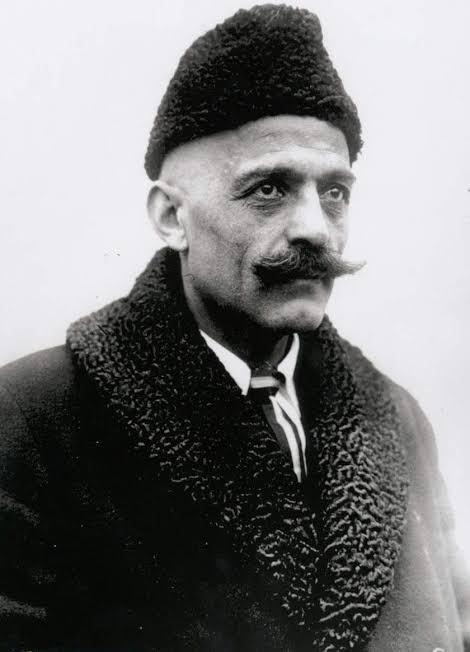
To some he was a mystic and a seeker after truth, to some a charlatan, and perhaps he was something in between.
Growing up in Kars, which after the 1877 war between Tsarist Russia and the Ottoman empire, was a city of Imperial Russia, he was exposed to a polyethnic society of Yazidis, Pontic Greeks, Armenians, Ottoman Turks, Kurds and of course, Russians.
Gurdjieff, who was a Pontic Greek by origin grew up speaking multiple languages, including Russian, Georgian and formal Ottoman period Turkish.
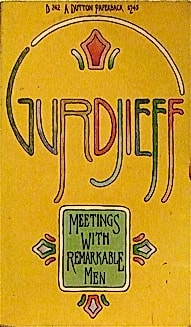
In the 1970s, he was perhaps best known for his not quite autobiography, Meetings with remarkable men, in which he details his wanderings through the newly conquered lands of Central Asia, which prior to the 1870s had been a mix of independent khanates and emirates, but were now Russian governates, over which the Great Game played out.
Whether Gurdjieff himself was simply a wandering mystic or if he was a minor player in the Great Game is unknown, but later he set himself up as mystic and teacher first in Moscow and then St Petersburg. Prior to his arrival in Moscow in 1912 he seems to have left little in the way of a paper trail – something that given the chaos of Russian history during the early part of the twentieth century is not that unusual – some records survived, some were burnt, and some were simply lost.
However despite its authoritarian nature, tsarist Russia had a great tolerance for wandering mystics, holy men, and practioners of esoteric arts, and Gurdjieff seems to have prospered attracting a small group of followers.
After the revolution, Gurdjieff abandoned Petrograd moved to Georgia which for a short time after the Revolution was an independent state,
In Georgia he again set up a spiritual community and produced plays and ballets in Tbilisi, before fleeing the Soviet takeover of Georgia in 1920, first to Turkey and then to Paris.
But this is the interesting bit – Gurdjieff’s stay in Tbilisi was not his first, the few records we have of his early life show he studied at the Orthodox seminary in Tbilisi at the same time as one Josef Dzugashvili, later Stalin.
There’s no evidence that they knew each other or were friends, but the seminary was a small community and, Stalin, who was more of an intellectual than he is often given credit for, might have been interested in talking with Gurdjieff and discussing ideas.
It’s strange to think that possibly, just possibly the mystic to be and the future dictator shared a glass of tea and a cigarette and talked of myths and legends…


