
I recently tooted a link to an article decrying the disappearance of the cheap mass market paperback book
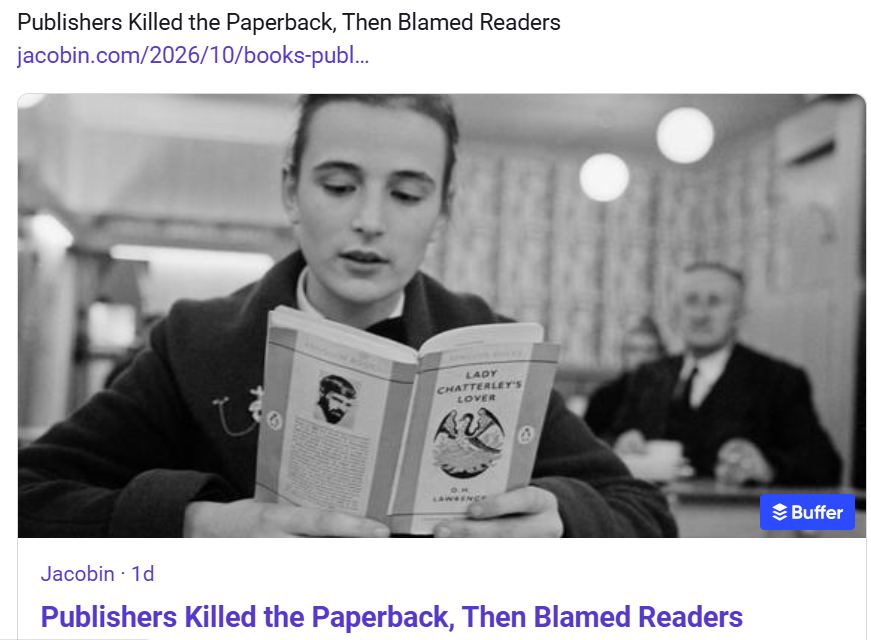
And it’s true, the small paperback that would fit into a coat pocket has almost disappeared, to be replaced with the larger trade paperback format, and yes, they are quite expensive.
It’s not that long ago that you could go into any decent sized bookshop and there would be shelves and shelves of cheap paperbacks, and your local newsagent would have a shelf or so of action and romance novels somewhere next to the school stationery display.
But no longer.
Outside of the city decent bookshops are hard to find, and while Kmart and BigW still carry a selection of bodice rippers, it’s a very limited range.
To some extent, ebooks have taken the place of the mass market paperback, Amazon has built a retail empire on the back of the Kindle.
But not everything is available on the Kindle, and not everything has been digitised.
Sure, you can get a lot of out of copyright novels for free through Gutenberg, but getting them onto a kindle or a generic ereader needs access to a computer and a little bit of technical skill.
More importantly, with all ebooks, you kind of need to know in advance what you want to buy. There’s no happenstance, no picking up a book at random, and thinking ‘I would like to read that’, but then with the disappearance of bookshops happenstance is disappearing as well – limited selection and consequently fairly constrained browsing.
And, while there are still second hand bookshops, they too are disappearing.
The more specialist second hand bookshops, like those that concentrate on science fiction and fantasy seem to hang on, but the more generic ones seem to struggle, and the cost of property rents and other overheads mean that they are not as cheap as they once were, such that the big online overseas book barns with their low prices and cheap postage can end up cheaper than your local second hand shop.
And with them, what disappears is happenstance, and happenstance stokes curiosity.
As I’ve said before, when I was a poor student, what is now fifty years ago, I used to play the second hand bookshop game.
At the end of the week I would look at what money I had left, and if possible put three or four dollars aside – a dollar was actually worth something then – and that would be my recreational reading budget.
I’d tour round various second hand bookshops – they were more common then, cramped cold dusty places piled with books, and see what I could find.
And while my tastes have never been particularly literary, the game introduced me to nineteenth century sensation novelists, golden age mystery novels, nineteen fifties classic science fiction, Victorian travel diaries, and the rest.
The game would be impossible now. Fewer bookshops, fewer cheap second hand bookshops, and of course there’s the curse of Amazon’s ‘if you liked this, you might like this algorithm’.
With the disappearance of the mass market paperback publishers save money. Shorter print runs, higher prices and less warehousing.
But with the disappearance of the cheap paperback we’ve lost the joy of browsing and the surprise that comes with happenstance when you find a battered book you like that opens the door to a new author or a new genre…


