
Not a punk band, but an interesting little observation.
Ever since I discovered Agatha Christie as a writer, I’ve been reading quite a few Golden Age crime novels, including Dorothy L Sayers (she always insisted on the L), Agatha Christie, and Anthony Berkeley, not to mention a few others that I’ve come across while cataloguing the Athenaeum’s historic book collection, for example Hulbert Footner and R.A Freeman – perhaps best known for the Penrose Mystery.
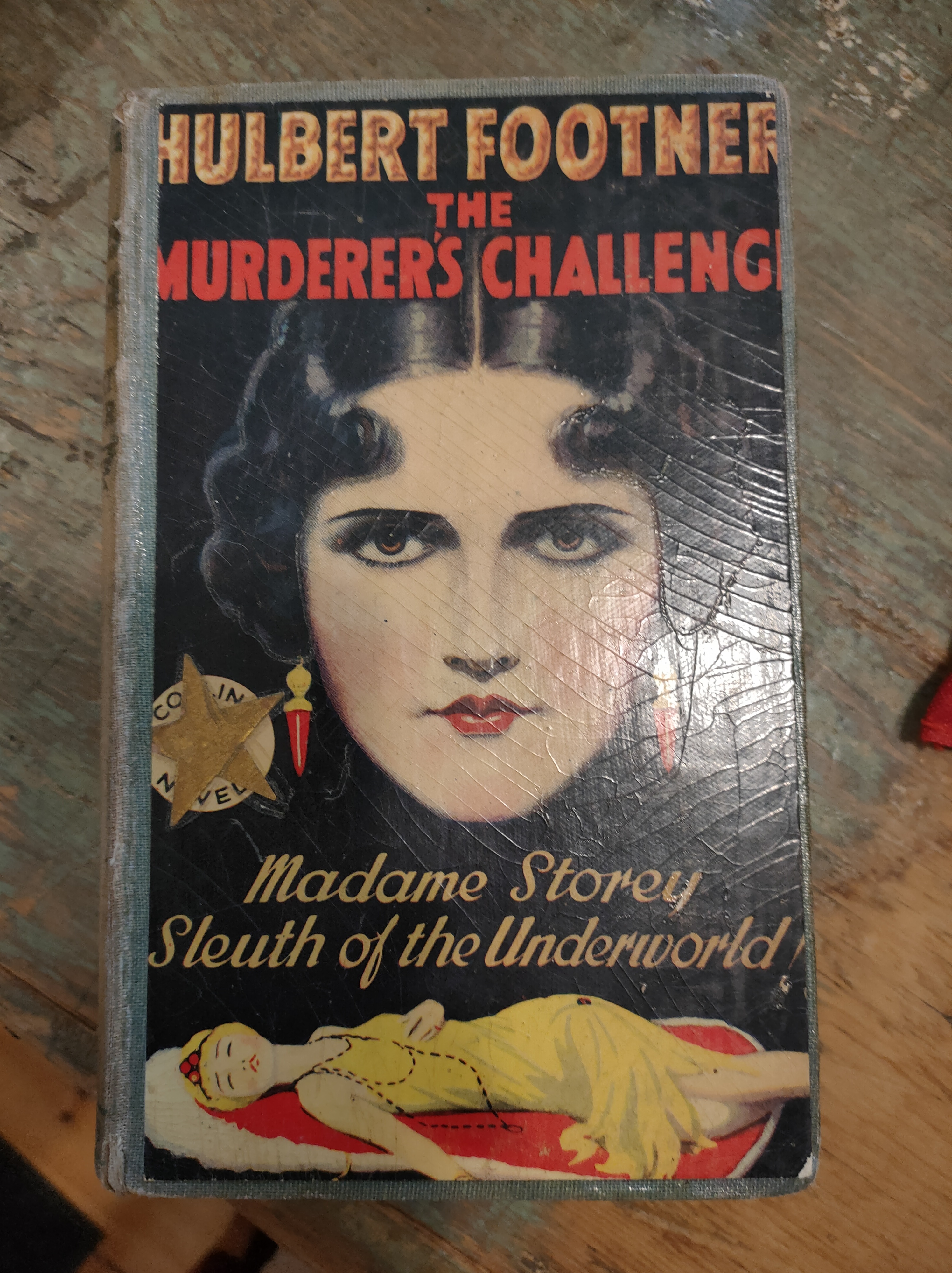
There’s a few others in my reading pile – an Ngaio Marsh paperback and a couple of other novels by Agatha Christie dealing with Iraq and archaeology.
At the moment I’m reading Dorothy L Sayers’ The Nine Tailors.
I’m less than a quarter into it, but it’s entertaining in a very English way, bell ringers, high church Anglicanism, and of course the unconscious snobbery of 1920s and 30s England. It’s the sort of book that amuses you or wants you on the barricades outraged at the embodiment of class and hierarchy,
Dorothy L’s father was a high church rector in East Anglia where the story is set and one can’t help but feel she’s put a lot of her knowledge of the area into the story and that some of the characters might be drawn from life.
But there’s one bit that jumped out at me.
During a churchy bit discussing the stained glass in the church building, one of the characters, Mrs Venables, the vicar’s wife, says that they were terribly worried about the zeppelin raids during the war, meaning world war one.
Now while we know from writers such as Ursula Bloom there was a lot of concern about zeppelin raids in east Anglia, and indeed Yarmouth and King’s Lynn were bombed during the war as well as other places.
But Dorothy L wasn’t living in East Anglia at the time of the raids, she had left home, graduated and was making her own way in the world by then.
But where was she making it?
She was teaching modern languages at Hull High School for Girls at the time of the zeppelin raids on Hull, which damaged the Minster, so I’m guessing that she put her own experience of zeppelin raids into the story rather than reusing something she had heard second hand from one of her father’s parishioners.
For the story itself, it’s irrelevant where she got the bit about the zeppelins from, but it’s interesting to see how she put her own experiences into the story…


