My very short career as a re-enactor

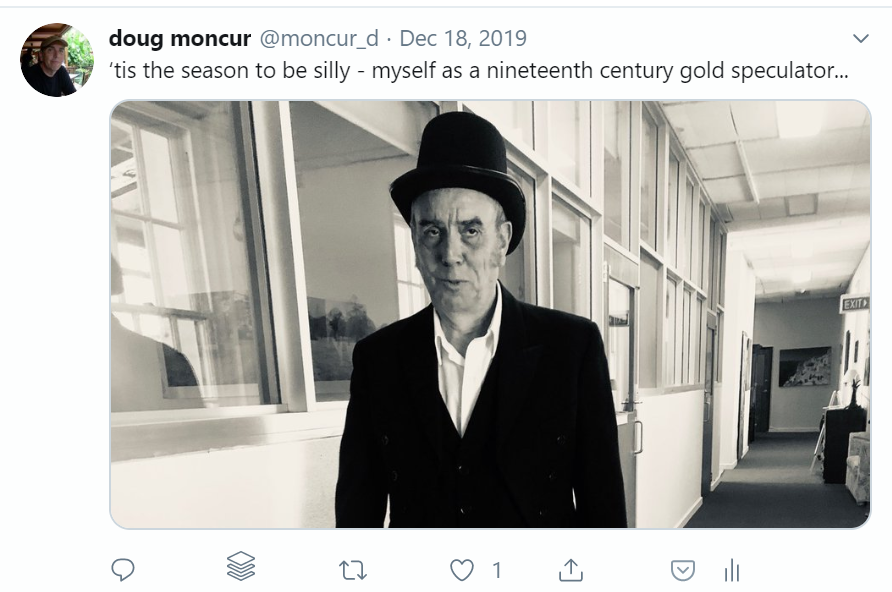
A week or so before Christmas I posted the following tweet:


Annotation 2020-01-10 144707

of me looking vaguely Dickensian.

At the time it probably looked like a bit of festive fun – which it was.

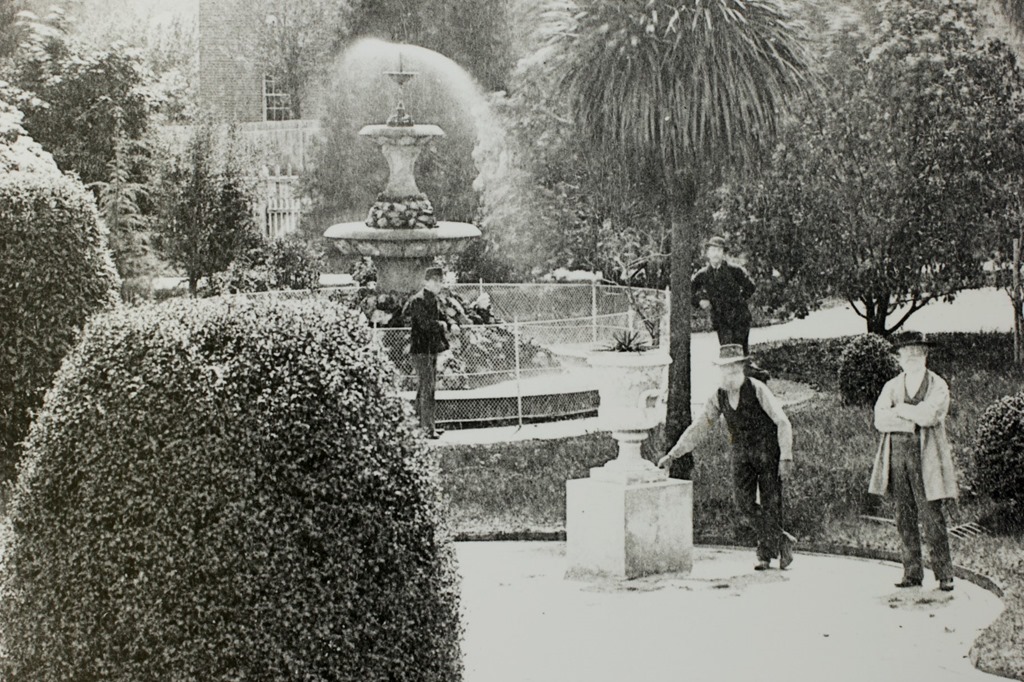
Recently they have restored the Victorian Fountains in Town Hall Gardens, and one of our friends who is a stringer for the local paper, the Ovens and Murray Advertiser, had the idea of recreating this photograph of the fountain from the 1880’s to coincide with the official event commemorating its restoration:

beechworth fountain original

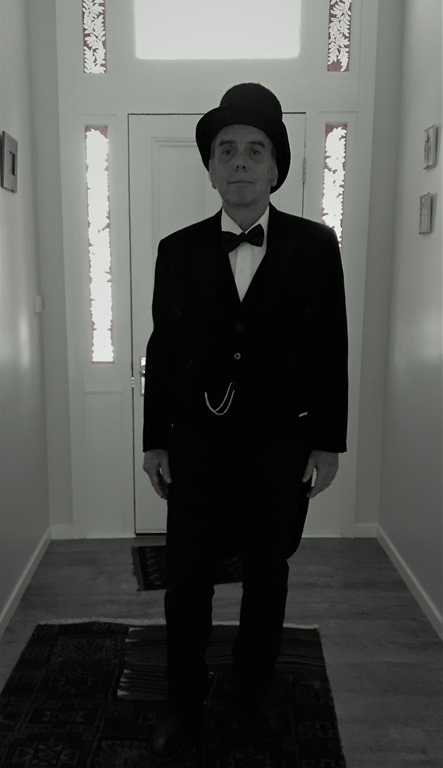
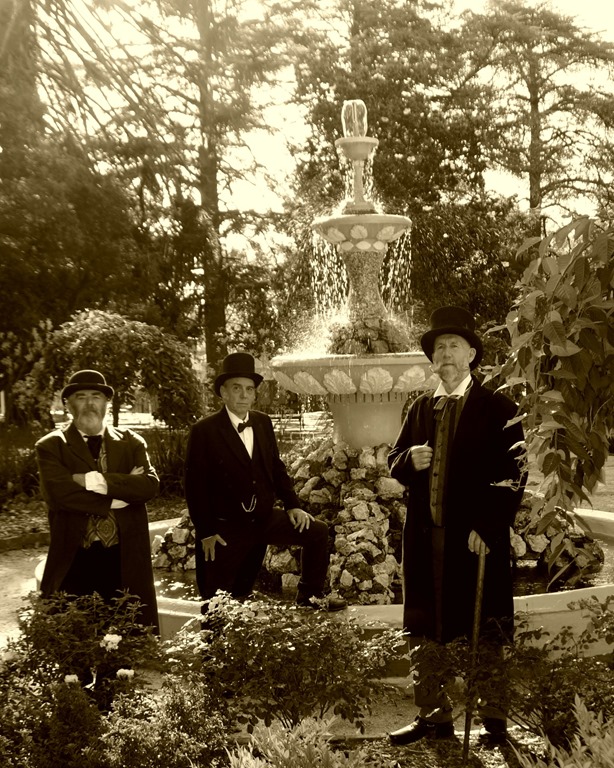
Well it didn’t happen. The day was over 40C and the photoshoot was postponed, but the day before New Year’s Eve, we all dressed up to have our picture taken as Victorian gentelmen.

another reenactment picture b w

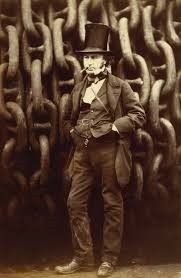
My inspiration was the famous photograph of I.K. Brunel standing in baggy pants and muddy boots at the launch of the Great Eastern:

ikbrunel

but for some reason this time  I looked more like the Cat in the Hat than a nineteenth century speculator, but hey the show must go on.

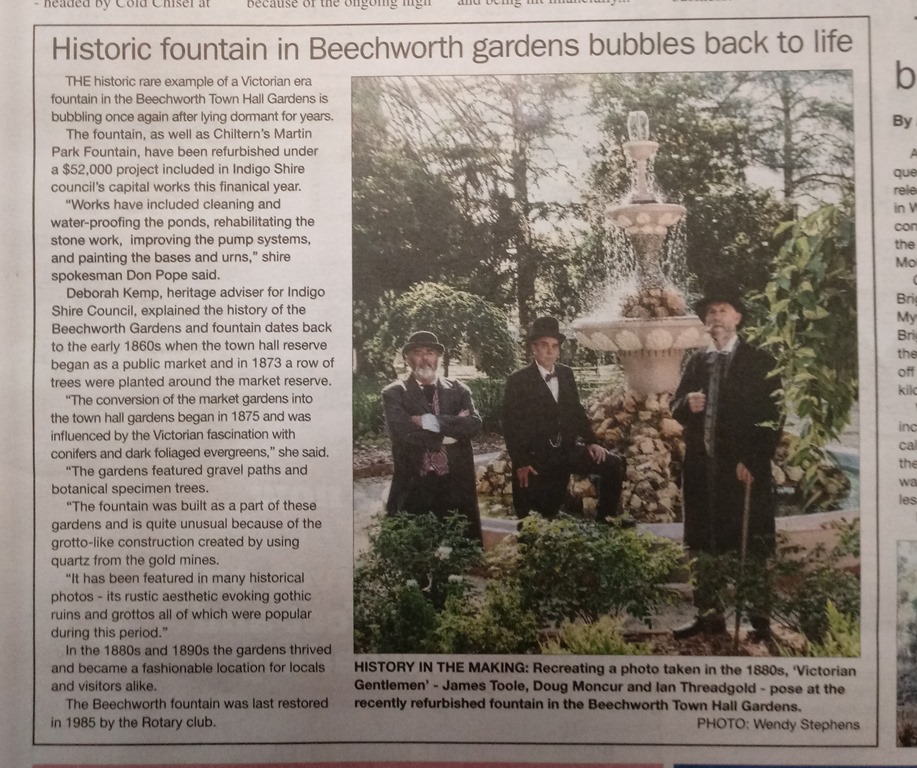
fountain article

As it was, the article only came out in this week’s edition, but I think it works, even though we look rather more like local worthies than the council grounds staff who featured in the original picture.

Just for fun, I used pixlr to antique the photograph, and I think we look pretty good

fountain restoration sepia

even though the image doesn’t have quite the softness of some early glass plate photographs …


Posted in Uncategorized | Leave a comment

Goosefoot and ground elder

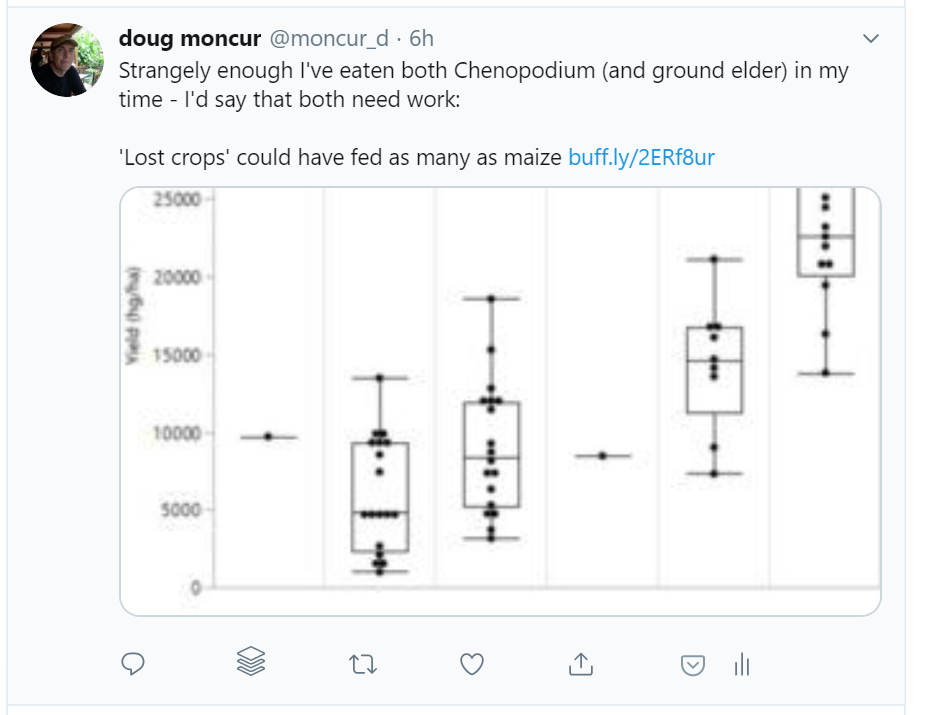
Earlier today I posted the following tweet:

Annotation 2019-12-26 154232

in response to an article on Phys.org that suggested that goosefoot could form an important food source.

Well, if you’ve had amaranth in an Indian meal, or eaten quinoa, you’ve eaten Chenopodium. Goosefoot is not these, but a wild form that used to be foraged by early farmers in Europe.

We know they ate it because we’ve found the seed in their cess pits, mixed in storge pits and even preserved in the stomachs of bog bodies.

It’s not really on the menu these days, but about thirty years ago in a moment of archeobotanical experimentation a former girlfriend cooked some up much as you would use amaranth.

Let’s simply say it was uncompromisingly strong flavoured. You would eat it if you have to, but I wouldn’t cross the street for it. Spinach is definitely nicer.

On the subject of spinach, the same girlfriend also experimented on me by using ground elder in place of spinach.

Certainly it was nicer than goosefoot, but still pretty tough and chewy compared to the spinach you either grow at home or buy from the supermarket.

And I think that tells us something – there are a lot of foods out there which are good and nutritious, but need special handling, perhaps because like goosefoot and warrigal greens, they are high in oxalates, or other toxins, or like groundelder, simply havn’t been bred to be the most palatable, which means picking an processing them takes work.

Much much easier to get a bag of prewashed spinach from the supermarket …

Posted in Uncategorized | Leave a comment

Seventeenth century robustness

Every year, I send out a Season’s Greetings tweet, usually enlivened by an amusing image I have shamelessly ripped off from somewhere.

Nothing quite like the rural pursuits of a restoration Christmas  ___

This year it came from some seventeenth century ballad sheet purely because the last two lines of the first verse read

And to our Christmas feast their comes,
Young men and Maid to shake their bums


(I’ve removed the long s’s of the original for readability).

Now this is actually quite interesting.

Years of BBC classic series have conditioned us to think of sixteenth and seventeenth century dance as mannered and rather formal, with people stepping through the dance in an overly dignified way, yet one thing we do know about seventeenth century dance is that music like that in Playford’s Dancing Master can be played with considerable verve and brio.

They may have been the same dances as the slow and stately ones but I’m immediately reminded of the contrast between the rather twee Ladies’ Country Dance Society and the mayhem of of a bush dance in a barn in Wales that I once went to that featured all the old country dance favourites but performed at double speed.

I’ll let you guess which was (a) more fun and (b) may well have involved bumshaking.

And of course one also has to mention that indispensable fashion accessory, the bumroll.

Now again most fashion history tends to focus on what the upper classes wore, for the simple reason that that is what we have most evidence for.

However, people being people, I’m sure that seventeenth century maids were as likely to dress up as their twenty first century sisters, except that rather than a push up bra they chose a bumroll, possibly a more modest affair than those worn by high society, but still enough of a roll to accentuate the movement of the hips, and that, coupled with energetic dancing, would almost certainly resulted in a decent amount of bum shaking …


(the ballad the passage comes from is the Shropshire Wakes or Hay for Christmas – if you want to see the original ballad sheets there’s a couple online at the Bodleian, and if you prefer the text in a more modern and readable font there’s quite a nice online transcription that gives a bit of background)


Posted in Uncategorized | Leave a comment

Masque and Commedia dell’Arte

Well it was Christmas Day Chez Moncur.

We had feasted, talked, skyped those we should skype, phoned others and by mid evening we were heading for that Christmas day slump provoked by a combination of turkey, ham, champagne and mince pies.

We thought we might watch a movie, but ended up up watching a BBC Scotland documentary on Prince Henry Frederick Stuart instead.

In the middle of the program, there’s a discussion of the the Masque of Oberon by Thomas Dekker.

Thomas Dekker, was of course mates with Ben Jonson, and may have written some scenes for Shakespeare, however the thing that struck me about the Masque of Oberon was that it sounded a little like some of the passages from Ae Satyre of the Thrie Estatis, and a lot like some Commedia dell’Arte works of the period.

It also bought to mind my post of a couple of years ago about Mary Queen of Scots and Darnley’s death. In it I suggested that really the shenanigans at Hollyrood was really a burlesque performance influenced by Commedia dell’Arte and other robust Scottish theatrical traditions, and so perhaps, just perhaps in the Masque of Oberon, we see this Scots tradition inserting itself into English Jacobean theatre.

This area seems to be under researched – research into Shakespeare and his contemporaries dominate English research into theatre history.

The only authoritative source I could find for the history of Scottish early modern theatre was Robb Lawson’s 1917 Story of the Scots Stage (fortunately digitised and readily available online) which looks as if it will repay reading.

As always there may be other more recent work, but if there is, it’s locked away behind a paywall …


Posted in Uncategorized | Leave a comment

Langurs and early iron age trade in the Arabian sea

Earlier today, I tweeted a link to a New Scientist report that a monkey in a Minoan wall painting from Thera had been identified as possibly a Grey langur from the Indus valley, a couple of thousand kilometres from Thera in the Mediterranean.

The Indus valley civilization was of course roughly contemporary with not only Minoan Crete but also the rise of Babylon as a great power, which traded widely with other cities over the fertile crescent, including Ugarit on the Mediterranean coast among others.

Ugarit is important, as we have found Mycenean pottery there, which provides definitive evidence of links to bronze age Greece and by implication Minoan Crete.

We also have found Minoan style wall paintings in bronze age buildings in what is now Israel and Palestine, suggesting that Minoan fresco painters may also have been peripatetic.

Importantly, archaeological work in the UAE and Oman is revealing that the Gulf littoral was occupied by thriving bronze age settlement where people mined for copper.

Copper, being an ingredient of bronze, would of course been traded on, both up and down the Gulf.

The result of this is that we can posit a trading network linking the Indus Valley and the Mediterranean in bronze age times.

So, bronze age Greece would have had access to resources from India, in much the same way as lapis lazuli reached Egypt from Afghanistan.

So, while it’s possible that someone from Minoan Crete did visit the Indus valley and see langurs, it’s equally possible that they only got as far as Ugarit or perhaps Babylon and saw captive langurs.

John Masefield in his poem Cargoes may have been more right than he realised, even if the reality was probably some battered coastal dhow making its way up the Gulf from port to port rather than a stately quinquereme –

Quinquireme of Nineveh from distant Ophir,
Rowing home to haven in sunny Palestine,
With a cargo of ivory,
And apes and peacocks,
Sandalwood, cedarwood, and sweet white wine.
Posted in Uncategorized | 1 Comment

The Lofty Viol

Saturday night, and what to do?

Well last night J and I went to a concert – the Lofty Viol of English early music in the old town hall, just 5 minutes walk from our house.

And it was a treat – an impromptu assemblage of Australian viola de gamba players playing works by the usual suspects ( Blow, Hingeston, Gibbons, Ward etc) in a small and intimate setting – done in the round with an audience of only around 50, without any amplification or modern aids – letting you hear the music as it would originally been heard.

While the room wasn’t wood panelled there was just enough wood in the room to give the feel of the natural reverb that would have come a similar performance in a room with the traditional Jacobean wood panelling, such as the meeting room in Heslington Hall at the University of York where we used to meet to discuss the cost of printer cartridges and quite possibly Cromwell and Thomas Fairfax reputedly met to discuss strategy for the battle of Marston Moor.

(Incidentally one thing I learned last night was that Oliver Cromwell had retained the services of John Hingeston, one of Charles I’s court musicians, as his de facto Master of Music)

Anyway, in a small room – and remember none of this music would have been originally played in anything larger than the great hall of a Tudor or Jacobean stately home – the unamplified music came into its own with the natural reverb of the furnishings adding depth to the music.

For me it was a real treat to hear musicians of that quality in such an intimate setting. I have always had a love for music of that period despite having little in depth knowledge – I remember once driving back from some meeting and being astounded by a performance of some zarzuelas by Antonio de Literes, so much so that I ended up emailing the radio station concerned to track down the cd it came from.

Incidentally I never bought the cd and have always regretted never doing so – perhaps I will – it’s on Google Play, but strangely not on iTunes …

[and of course the actual answer is a streaming music service such as Spotify …]


Posted in Uncategorized | Leave a comment

Evidence for an early Christian site in Bahrain

A long time ago, I became fascinated with the story of Sighelm the ealdorman and whether he ever made it to India.

This minor obsession broadened into a wider fascination with early travel and a possible pilgrim route via the Gulf, allowing pilgrims from India to sail to the Gulf and then travel overland to Jerusalem.

And of course the same route would allow merchants to travel to Constantinople and Damascus.

Now there comes news of the identification of an early (pre-Islamic) Christian site in Bahrain, which helps reinforce my argument that there (a) was a reasonably sized Christian community in the Gulf and (b) provided a route for pilgrims from India to travel to the middle east.

These pilgrims of course would have taken ship, which implies an alternative trade route via the Gulf to the monsoonal route via the horn of Africa to south India and Sri Lanka.

These days, we tend to forget the importance of the trade across the Arabian sea, but it’s worth remembering that one of the first major military actions by the East India Company was the capture of a Portuguese fort on the Straits of Hormuz in 1622, thus opening the Gulf to trade with England …

Posted in Uncategorized | Leave a comment

Doing Family History in Victoria

I’ve written elsewhere about doing family history online, but that was using publicly available resources in Scotland.

This weekend the time came to see what could be done in Victoria.

A couple of years ago we took advantage of ANZAC day long weekend freebie to research J’s Australian grandfather, but there was always a mystery about her grandmother’s death.

After they married they moved to Australia, and while things looked to be on the up at first, by 1925 the marriage was in trouble, and J’s grandfather had ‘taken up with another woman’

The family legend was that at the start of summer 1925 – ie December in Australia, J’s grandmother had knocked on the door of a house in South Yarra to ask for a glass of water and then collapsed and died, and couldn’t be identified for days as her handbag had been stolen.

Well not quite true. A quick search of Trove for newspaper reports showed that indeed while she had collapsed and died, she had been identified within a day or so of her death, and there was no mention of foul play.

People in those days didn’t routinely have means of identification like driving licences and bank cards, so it’s perfectly understandable that it could take a little bit of time to identify the body, especially as J’s grandmother lived in Fitzroy.

The Argus helpfully reported that a post mortem had been held, but the results were not yet known. A few clicks and $24.30 later we had a copy of her death certificate, which gave the cause of death as Cardiac Syncope and Inanition . It also reported that a post mortem had been undertaken, and the name of the examining doctor, and that no inquest had been held.

That was a bit of blow.

Cardiac Syncope was often used in the nineteen twenties to describe sudden heart failure, but Inanition usually meant starvation – which seemed a little unlikely given that photographs we have taken the previous summer show a healthy young woman of normal weight who swam and pushed her children in a wheelbarrow.

The family legend was that she had a weak heart due to rheumatic fever as a child and that she always felt the cold, perhaps as a consequence, but photographs taken on a summer’s day in 1924/5 show no evidence of this.

As no inquest had been held, the postmortem records are long gone, and there is no way to assess whether or not she was seriously underweight. Perhaps the stress of her situation caused her to become what we would now describe as anorexic, or perhaps she simply died of a broken heart.

We’ll never know.

Our final bit of research was to use ‘Findagrave’ to find her burial plot location. It’s in the old cemetery in Carlton. Next time we’re in Melbourne we’ll take the tram out to Carlton and leave her some flowers …

Posted in Uncategorized | Leave a comment

Ever wondered how effective wooden spears were?

When I look at collections of indigenous wood spears, like the ones on display at MAMA in Albury, I often wonder how effective they were, especially the hardened native wood precontact items.

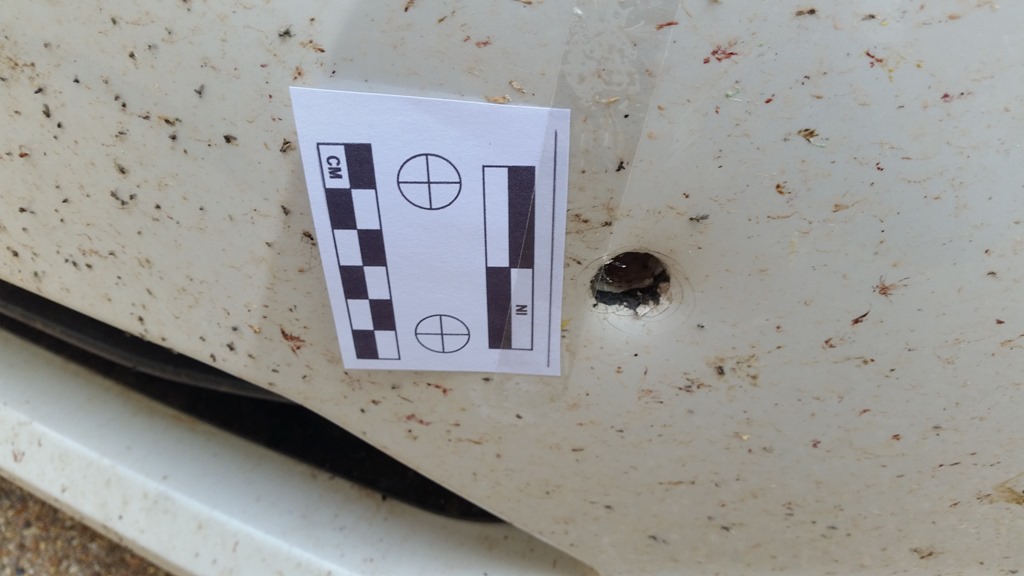
20191123_160209

The answer: Very, frighteningly so.

What you see above is a hole about the size of a 5 cent coin in the front of our Subaru. Like many modern cars it has a metal fender covered with an aerodynamic plastic fairing. The fairing has a little bit of high density material behind it to absorb minor parking knocks – making it a little like a bike helmet in terms of industrial design, except the shock absorbing layer is thinner.

Now I havn’t been set on by men with spears, but last Thursday, the severe bushfire warning day, we had to go to Melbourne for an appointment.

Driving conditions were truly horrible with smoke, heat, dust and to add to the fun,  bits of tree debris being blown about in 100km winds. The train wasn’t an option as they’d understandably cancelled all the country train services due to the risk of the heat buckling the tracks,  and replaced them with buses with no real guarantee of arrival time.

Rather than go directly into the city we looped round to the east by turning off the freeway at Seymour, thinking conditions might be a little better. They weren’t – just as much flying debris, including somewhere just short of Yea,  a bit of eucalypt branch which managed to impale itself in the front fairing, cleverly missing any of the protective metal bits of the fender behind the fairing.

Fortunately it doesn’t seem to have damaged anything else and it’s a reasonably easy job for the body shop to replace the fairing. I’ve no idea yet as to costs – the fairing’s around two hundred bucks for either a third party one, or one from a dismantler.

However, what it does show is the penetrative power of a hardwood spear, certainly enough to severely maim, if not actually kill …

Posted in Uncategorized | Leave a comment

Bicycle advertising

Undoubtedly, the heyday of the bicycle was between about 1890 and sometime around the end of the nineteen twenties when cars began to we widely adopted as the preferred mode of personal transport.

This period of time coincides (at least within the anglophone world) with women’s struggle to not only gain the right to vote, but also for women to increasingly have equal societal rights to men.

And part of that emancipation was to allow women to go where they please and the bicycle was an important component, allowing women to travel independently if they wished.

This afternoon I’ve been looking at old bicycle adverts on Pinterest, and it struck me that a lot of them featured women, either riding together or independently.

Eyeballing pinterest is of course not in the least scientific, but could this be evidence of bicycle manufacturers realising that women, including liberated women,  formed a large part of their target market, and responding appropriately?

Posted in Uncategorized | Leave a comment