Pottery and prosperity

Around a week ago, some people were getting quite excited about finds of high status Roman pottery from Carlisle, and how it suggested that it was more than a rude frontier settlement on the edge of empire – one commentator went so far as to claim that proved that Carlisle was not just ‘hairy barbarians selling cows’.

Myself I’m not so sure. Analogy is a dangerous game but one possible analogue is the mid nineteenth century gold towns of Victoria.

These towns were established quickly, were often formalisations of existing miner’s camps and were usually nicely and regularly laid out by colonial surveyors.

Among the first things built (after pubs) were usually some imposing and quite massive bank buildings, plus a post office and a court house. And of course the banks in particular were staffed by bank officials who expected the conveniences of mid Victorian life even if they were surrounded by gold miners and kangaroos.

So these people would have lived in nice houses, had nice crockery and probably drank imported wine from nice glasses, all of which would probably turn up in the archaeological record were we to look.

The people who lived in these nice houses would have been very much a minority. Most of the population would have been gold miners, often of Irish or Chinese descent. The Chinese are particularly interesting as a proportion of them came via California where they had been pushed out due to an increasing hardening of US attitudes to Chinese migration. The consequence is that in some of the camp areas or around the mines US and Mexican silver coins from the 1850’s sometimes turn up – either lost or hidden by their owners.

The Irish and other miners of European origin in the main only left whisky bottles and bits of discarded equipment behind them. The point is that the majority of the community was materially poor and only had their mining equipment and the clothes they stood up in. If we didn’t know about the Chinese we might even think that the coin stashes were associated with the high status houses and hypothesize about a shortage of Sterling currency in 1850’s Victoria, and people hiding their portable wealth.

So, the presence of nice pottery does not imply that everyone was prosperous, it implies that some people might have been and that might be because they had high status occupations and expectations – bank officials in colonial Victoria, imperial functionaries in colonial Carlisle …

Posted in Uncategorized | Leave a comment

Tom Roberts at the NGA

New Year’s Eve and what to do?

We had our prawns, a bottle of champagne in the fridge, and our evening planned, but we had a dead space in the afternoon.

So rather than mooch and read we went to the Tom Roberts exhibition at the NGA.

Tom Roberts was a seminal nineteenth century Australian artist who knew everybody, mentored Streeton and others of the Heidelberg school. Nowadays he’s mostly known for his portrait of Parkes and his quite remarkable beard and the massive painting of the Duke of York opening the first Parliament of the newly minted Commonwealth in 1901.

But there’s more to the man that that – portraits of great and the good, landscapes, and perhaps most interesting impressionist (with a small i admittedly) paintings done on cigar box lids for the Melbourne 9 by 5 exhibition – Australia’s own analogue of the Vienna Secession movement.

Added up you get a complete picture of the man and his work – society portraits painted to pay the rent, consequently very conventional as the sitter go what the sitter wanted, his own more innovative experiments, including some quasi impressionist oil sketches for the opening of Parliament painting – Roberts was clearly using what he’d learned in his impressionist moments to try out combinations of colour to get the light and the atmosphere right.

Previous summer exhibitions at the NGA have involved collections from overseas. This one is different, but no less interesting – the NGA curators have not only borrowed paintings from the big state art galleries such as the AGNSW and NGV, but have also scoured the smaller regional galleries to track down less well known examples of Roberts’ work and melded them to tell a story of Roberts and his work. Outwardly a respectable society painter, and a safe pair of hands for major works, but behind closed doors a raffish innovative painter not afraid to try new things.

[and if you’re there over lunch, skip the gallery restaurant and try the Vietnamese street food cafe outside – pork banh mih, grilled chicken skewers and excellent coffee]

Posted in Uncategorized | Leave a comment

Diaries

Like everyone used to in the dark pre-internet ages I used to have a diary for appointments. Full of scribbles and crossings out but a bound hardback diary.

It also served as a record of what I’d done over the year, expenses claimed, notes for petty cash, but basically it was an appointment book.

Sometime in the mid nineties it became a Filofax, which made the notekeeping easier, and then sometime around the millennium I bought myself a Palm Pilot (I’m lying – it was a Handspring Visor, a palm pilot clone bought from an online computer disposals store) and I never looked back.

Everything online, synced with outlook, meeting reminders, offline email composition, note taking. I was in heaven. It was a truly wonderful device.

And I kind of stopped using paper diaries. I’d keep a day book, but that kind of degraded into an unstructured heap of scribbles.

But this year I tried something different. I bought myself one of these planner diaries – with a week on the left and a blank page for notes on the right. And I would keep notes about discussions, outages and problems in it as well as writing major appointments in it – I still used my smartphone and google calendar to run my life.

And each week the last thing I did on Friday was scan that week’s double page and save it to Evernote.

And it’s been invaluable.

Am I away three weeks tomorrow – easy. What day did a system have it’s SSL certificate updated? When in June did I go to Sydney? All easy.

And because I name all my notes about things yymmdd_name.ext it makes it easy to find the correct document in either evernote or dropbox by using the diary as an index.

So, fifteen years after I stopped using a paper diary, I’ve started again …

Posted in Uncategorized | 1 Comment

The Beechworth gun …

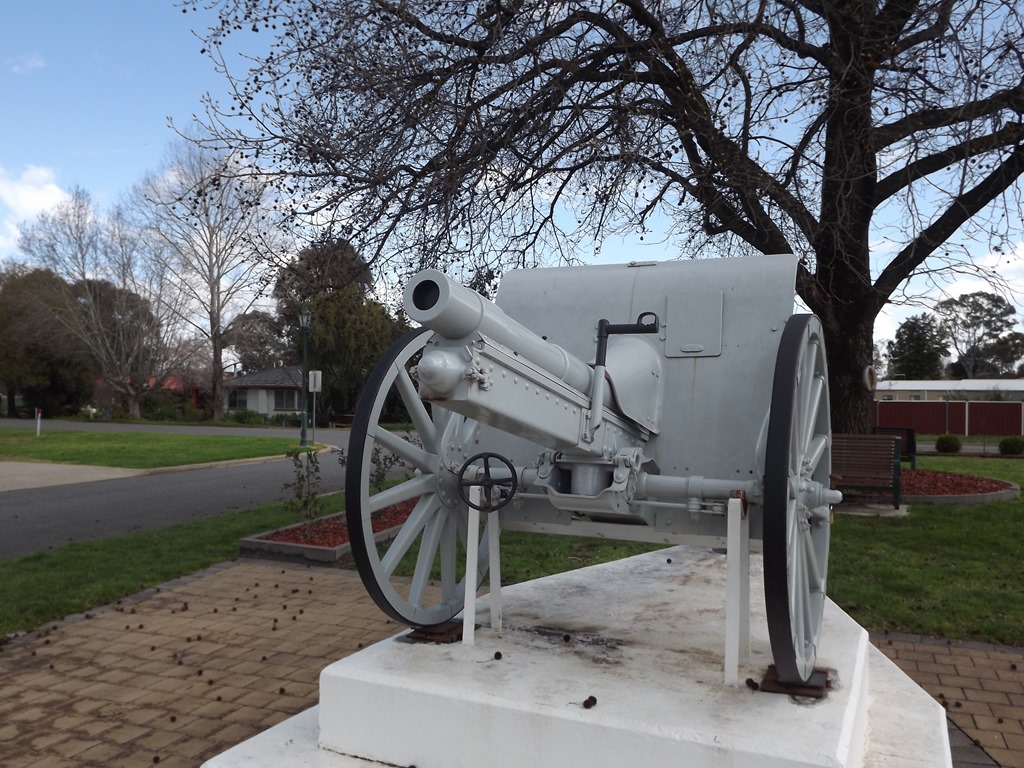
About a year ago I posted about the unusual provenance of the the Beechworth gun.

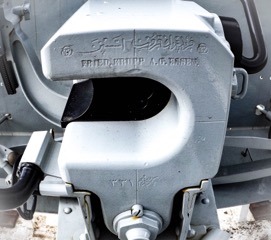
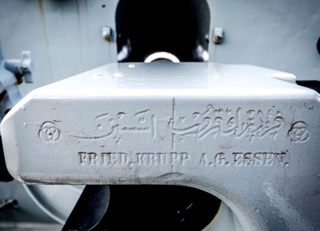
At the time I didn’t think to take a picture of the crest, but I was in Beechworth last weekend, and this time I did:

20151114_121118a

in the ideal world I’d have used something a little better than my phone to get a higher resolution image but after playing with pixlr the Carol I crest is quite clear making the provenance of the gun totally unambiguous.

Probably the best thing would have been to take a rubbing of the crest and the manufacturer’s plate but grave rubbing media are unavailable here in Australia, so a photo it is …

Posted in Uncategorized | 1 Comment

The Nizam of Hyderabad’s mummy …

Yesterday, I tweeted a link to an article from the Hindu, a major Indian newspaper, about conservation work to be undertaken on an Egyptian mummy in the Hyderabad museum.

This of course begs the question of quite how an Egyptian mummy ended up in Hyderabad. The truth is quite prosaic – one of the late nineteenth century Nizams was an avid collector of curios and artefacts, took a fancy to the mummy and bought it for the reputed sum of a thousand pounds.

As Egypt was on the way between England and India, and this was the height of the Raj, I’m guessing it was bought by the Nizam during a stopover in Egypt.

While possibly the most exotic example of the dispersal of Egyptian artefacts by the activities of gentlemen collectors, it’s by no means the only one, nor is it a purely Anglosphere one – for example the remarkable collection in Zagreb is really down to the activities of a nineteenth century AustroHungarian aristocrat, Baron Franz Koller, even though the famous mummy with wrappings in the Etruscan language came as the result of a minor AustroHungarian public servant who took a tour to Egypt, bought a mummy, and brought it back to display in his Vienna apartment.

After his death, the mummy passed to his brother, a priest in Slavonia (now part of Croatia) who gave it to the Zagreb museum.

The Nizam was neither the first nor the last to do such a thing, but it does beg the question as to what other Egyptian artefacts have ended up in unlikely places as a result of the Suez canal sea route between Britain and India.

The Egyptian craze of the early nineteenth century led to a vast number of mummies and artefacts being acquired from Egypt and in time, like the mummies in Perth and Belfast ending up in museums with, at times, uncertain documentation.

Using modern technology to study these remains can help expand our knowledge of ancient Egypt (or in some cases not) but because so many artefacts were acquired in the nineteenth century before people cared overmuch about documentation and provenance, there’s a great risk of knowledge being lost because these items have ended up in small local museums where there are either not the resources or the interest in investigating them fully.

Posted in Uncategorized | 1 Comment

Bad Hair (cut) Day …

I went to get my hair cut yesterday.

I normally go to a moderately upscale place that has staff who have mustered the art of cutting my slightly unruly hair short enough to look neat but not so short that I look like an elderly member of the mafia.

When I got there, half the staff were clustered round the reception desk staring at computer screens. It was clear that something was wrong, very wrong.

Their booking management system had crashed.

This had a whole range of implications. Not only did they not know who was booked to come in, the individual stylists who are mostly subcontractors rather than employees, didn’t know what work they had, or who they were having as customers.

But they covered it beautifully.

They asked me for my name, offered me a coffee, found me a stylist – rather than one of the two people who regularly cut my hair it was someone else – they’d resorted to a round robin system rather than trying to reinvent the booking schedule.

Ok, there was a bit more sitting about waiting than normal, and a bit of complete confusion at the start of the job, with someone mistaking me for another client, but they found me a gofer to shampoo my hair, and someone to cut it, the boss came round to apologise for the chaos and make sure I was happy, and I ended up with a good haircut.

And for those of us who just go and get our hair cut there was an insight into the backend of the business. Emma, the girl cutting my hair, broke off in the middle for a fast conversation with a colleague:

“No, it’s in my book, 10,12, 8”
“10 ?”
“yep, just be sure to drag it through”

Obviously, someone else was colouring one of Emma’s regular’s hair and needed to check the details to get the same effect.

The reason why I was so struck by this experience was the way they handled what must have been a really bad day:

⇒ Keep cheerful
⇒ Tell the customers you’ve had a problem and that you’ve got a workaround
⇒ Involve them in the problem, and check they’re happy
⇒ Give the customers decent service

Sure, it probably cost them a few extra complimentary coffees, but they probably didn’t lose any customers as result of their little problem.

Posted in Uncategorized | Leave a comment

Tesla …

Last weekend was a public holiday in Canberra, officially Family and Community day but informally Fish and Chip day.

We could have been like everyone else and dashed frenetically to the coast, only to find that the water was still too cold to swim, but decided instead on a weekend of gardening and sensible things.

But Sunday was a nice day, and after some serious planting we took some time out to drive to Goulburn for lunch with a bit of landscape photography on the way. We only chose Goulburn because it has a nice reliable cafe by the park (and because in NSW it was just a normal weekend …).

Anyway we parked in out usual place next to the visitor’s centre – and there it was, a Tesla charging station

20150927_135314

not in itself remarkable, but along with the wind farm t-shirts for sale in the visitor centre, a sign that change is coming …

Posted in Uncategorized | Leave a comment

Living as a Victorian …

There’s a minor spat going on over at Slate about the validity (or otherwise) of a couple in Washington state in the US who have chosen to live a late nineteenth century life eschewing modern conveniences like electricity and all the gamut of technology that comes with it.

These people are essentially re-enactors, fully immersed re-enactors but re-enactors nevertheless. There are of course contradictions in what they are doing.

Their books are advertised on the web, and I’m sure that if one of them became ill they would not eschew the benefits of modern medicine or medical technology.

Most crucially they can stop whenever they want.

Unlike one of my great uncles who lived on a remote sheep farm well into the nineteen seventies without electricity, telephone or television.

Apart from a battery radio, a battered tractor and an equally battered truck he lived what was essentially a nineteenth century existence doing a nineteenth century job. Yet he had no doubt about the conveniences of modern life, at the first opportunity he acquired an LPG fridge, stove and heating to keep food fresh and to escape the tyrrany of keeping the range stocked with wood. Lack of a suitable alternative meant he stuck with oil lights until petrol generators became cheap enough to buy and run.

He had no doubt of the conveniences of modern life, and as soon as he could adopt them, he did.

At a fundamental level, attempting to live a nineteenth century is a conceit. That is not to say that re-enactment does not teach us things, like how much effort went into the business of life, how difficult it was to keep things clean, the joy or otherwise of dealing with a wood range on a permanent basis (we supplement our very twentyfirst century ducted heating with a wood stove in winter, and I can tell you that lighting it and keeping it supplied steals an hour from my winter evenings).

Reenactment of course has its limits. The penny post is no more. The railway network has shrunk and one’s life is no longer governed by the arrival of the mail or papers on the train.

Reenactment might teach you how some nineteenth century things work, and might well in some cases aid research, but one cannot recreate the structures of nineteenth century life.

It is telling that the re-enactors have chosen to live a pretend Victorian comfortable middle class existence rather than that of nineteenth century farmworkers which was infinitely less comfortable.

To wish to escape the pressures of the modern world is natural enough. To try to live a simpler less material existence is entirely laudable, but let’s not pretend you are reliving life in a different era.

Posted in Uncategorized | Leave a comment

What’s a courgette ?

There’s a long green versatile vegetable that the English call a courgette and almost everyone else calls a zucchini. If you do search for the two terms using google’s ngram viwer you can see that no one talked about them much until the sixties:


Screen Shot 2015-09-04 at 15.29.39

and that courgette is very much a British thing:

Screen Shot 2015-09-04 at 15.29.00

In Australia we mostly say zucchini, probably as a result of the large number of Italian migrants from the fifties onwards. Unfortunately there’s no convenient dataset that goes all the way to the naughties but using querypic to look at the Trove digitized newspaper data from the early nineteenth century to the fifties we seem always to a have preferred zucchini to courgette:

Screen Shot 2015-09-04 at 15.33.45

and while it’s not at all significant because of the small sample the Kiwi’s, (until the late forties at least) tended to follow English usage

Screen Shot 2015-09-04 at 15.38.06

Posted in Uncategorized | Leave a comment

Montrose, and Lola Montez …

History can be deadly dull. Names, places, dates, events.

What of course makes history interesting is the ‘story’ aspect of it, the interplay between people and events, and also how people got on with everyday life. And of course, there are these occasional wild exotic characters that really you couldn’t invent with any degree of credibility. Characters who seem completely theatrical, such as Jane Ellenborough and Lola Montez, women who both had affairs with Ludwig of Bavaria, and who by force of circumstances took to living on the wild side, and embraced it with gusto.

In the case of Lola Montez, sometime mistress of Ludwig of Bavaria, sometime an exotic dancer who caused near riot in Castlemaine with her ‘spider dance’, she seems to have been destined to live fast and die young.

Her mother was from impoverished Irish gentry stock, who like so many genteel women of that time escaped the life of genteel poverty chronicled by both Jane Austen and the Bronte sisters by marrying an East India company officer and moving to India.

In due time, little Lola was born, except of course she wasn’t Lola then, she was Eliza Roseanna Gilbert. And then as often happened, her father died. The British in India died young, usually of drink or disease, rarely due to fighting. The cantonments of British India were surrounded by graveyards.

Her mother remarried in due course and Lola’s stepfather thought she should be sent to school in Britain, choosing a school in Montrose in Angus where she would be close to his family.

School was not a success. Lola lasted eight or so months in dourly Calvinist Montrose, where she caused outrage by running naked down the high street, for what reason no one knows. She was moved on to other schools, acquired the conventional accomplishments of a mid Victorian young lady, and in due course a husband, another Indian army officer, who promptly ran off with a fellow officer’s wife, leaving Lola on her own and without an income.

She tried being an actress, but was apparently terrible. She tried being a dancer but was not much better, and somewhere along the way hit on her true talent. I would say to be a courtesan but that would be unfair, her real talent was as a businesswomen to turn the money she acquired from her exotic activities into a successful and notorious saloon in California’s gold country. From there she toured as an exotic dancer including to Victoria’s gold country, which says something about nineteenth century communications and how fame and notoriety was spread by the press.

She was a larger than life character, someone who in the course of her career went from abandoned wife to a dalliance with Liszt to someone who negotiated with Metternich’s emissaries during the 1848 insurrections when her lover Ludwig was indisposed to a California bar and brothel owner.

If it was fiction it would seem unbelievable, but as fact …

Posted in Uncategorized | 1 Comment