
Now and again, people ask me about old coins and such like they’ve found digging in their gardens. Mostly they’re low value coins, pennies and half pennies.
Covered in dirt, and perhaps a little corroded, they can seem difficult to identify at first, but it’s easier than you think.
Pennies are around the size of a modern 20c coin, though a bit thinner, halfpennies are a little bigger than a 10c coin and farthings (1/4d – quarter of a penny) a bit smaller.
In the 1880s, a penny had perhaps the approximate purchasing power of a dollar today, but that’s not the same as its actual value – a housemaid might make £15 a year, plus her bed and board (call it $3000 in today’s money), while a skilled agricultural worker such as a ploughman might make three or four times that, and also be provided with a house and a patch of land to grow potatoes and vegetables to feed his family as well as keeping a few chickens, and perhaps shooting the occasional kangaroo or wallaby for the pot.
People were poor, but when assessing value, it’s important to remember that they probably didn’t pay tax and in the country might well live rent free. A solidly middle class person such as a bank clerk might be paid between £100-150 a year but would pay rent.
In the nineteenth century Australia used British coins, only starting to issue its own in 1910. If you’re old like me you might remember the pre-decimal pennies with a kangaroo on the back and either George VI or Elizabeth II on the front. If you find one they’re usually in good condition and instantly recognisable.
The first Australian pennies looked quite different
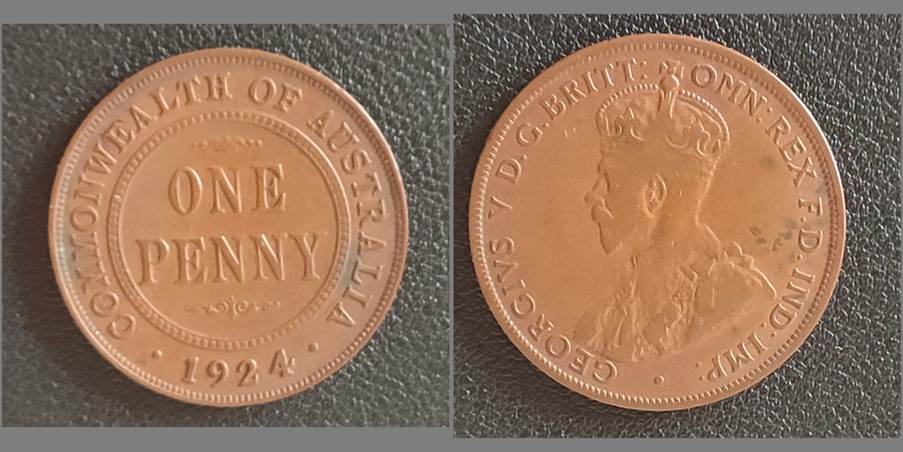
With an image of George V wearing a crown on one side and a very plain design on the other. Half pennies looked the same, except of course they said ‘half penny’ rather than ‘one penny’.
British pennies looked different to Australian pennies, George V did not wear a crown and they had an image of Brittania on the rear
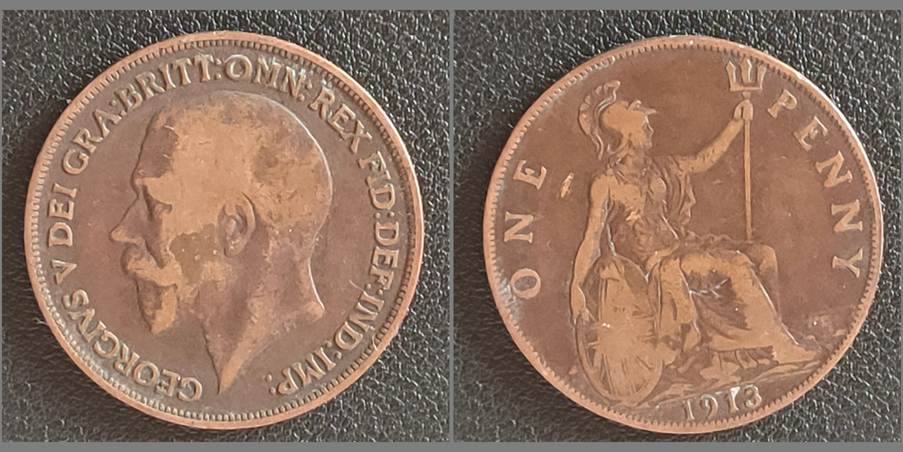
Until 1931, the British and Australian pounds were worth the same and British coins circulated alongside Australian coins, especially as New Zealand didn’t mint its own coins until 1933 and continued happily using British coins.
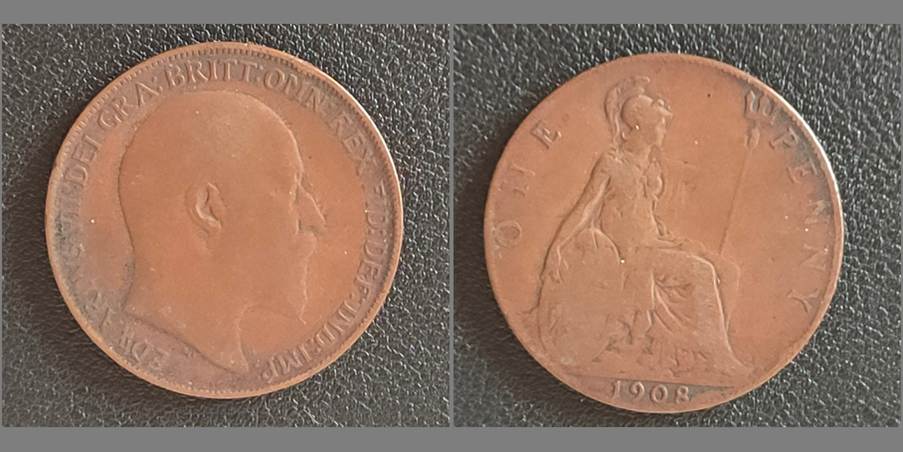
George V was preceded by Edward VII.
While the coins look similar, especially when worn, with a bearded bald guy on one side and Britannia on the other side, they are easy enough to tell apart, Edward faces right, George faces left.
Victoria is slightly more complicated.
Before 1860, pennies were bigger and heavier than the later ones and were made of copper, not bronze, and wore badly
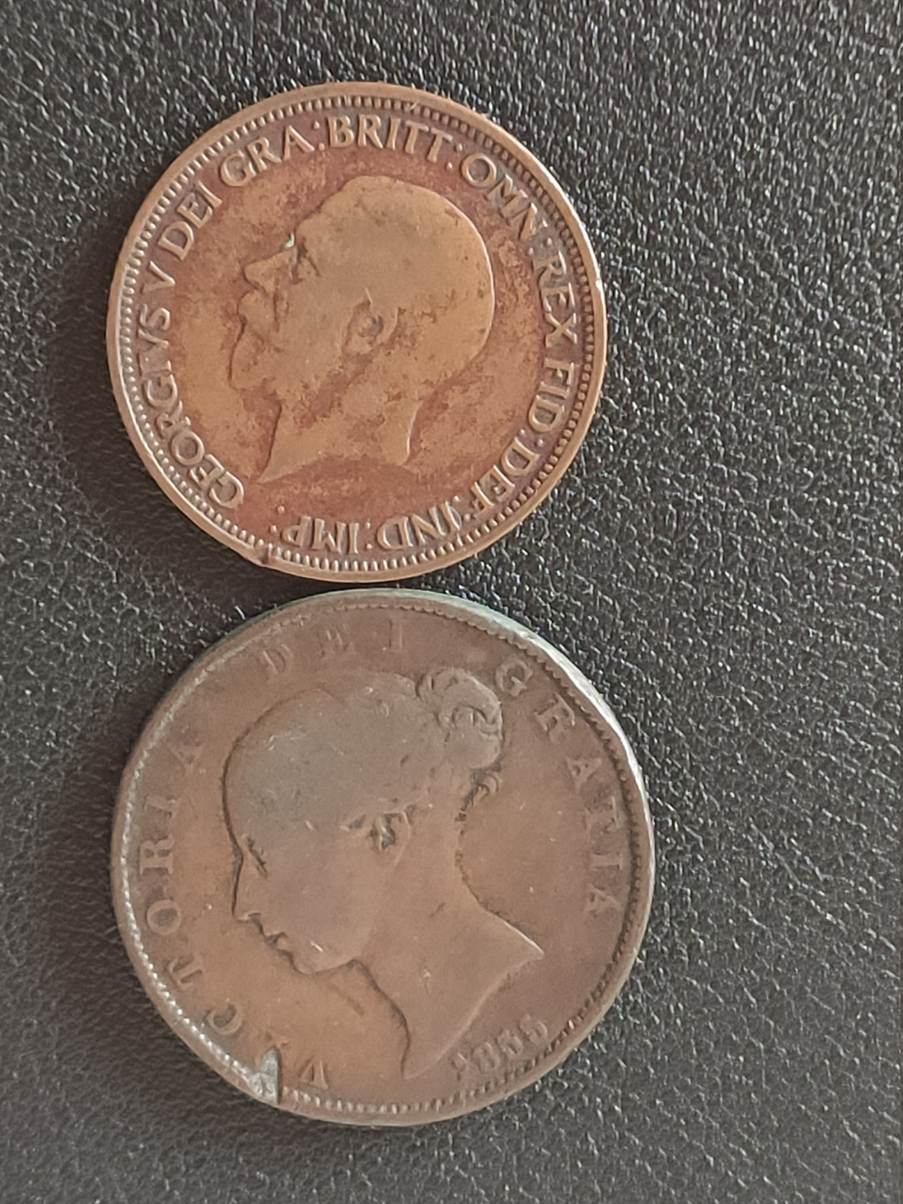
The design was a little bit different as well, with a simpler inscription and the date underneath the queen’s head
The rear was different as well
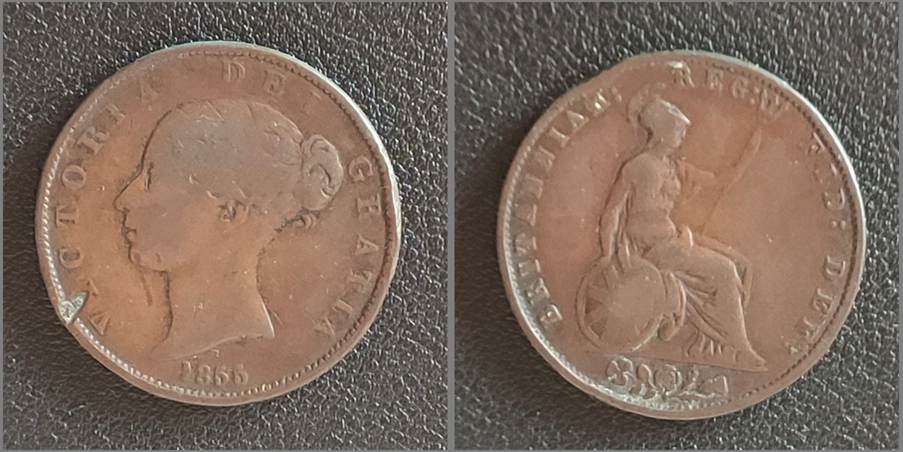
With an inscription round the image of Britannia and the three weeds (The Irish Shamrock, the English Rose, and the Scottish thistle) under Britannia.
Pre 1860 coins were withdrawn and melted down, meaning that the post 1860 design coins are bit more likely to turn up, simply because there were more of them and were in circulation longer
The post 1860 coins are a little different, with a slightly older portrait of Queen Victoria and the date moves to the back of the coin, and there is a longer inscription on the front of the coin
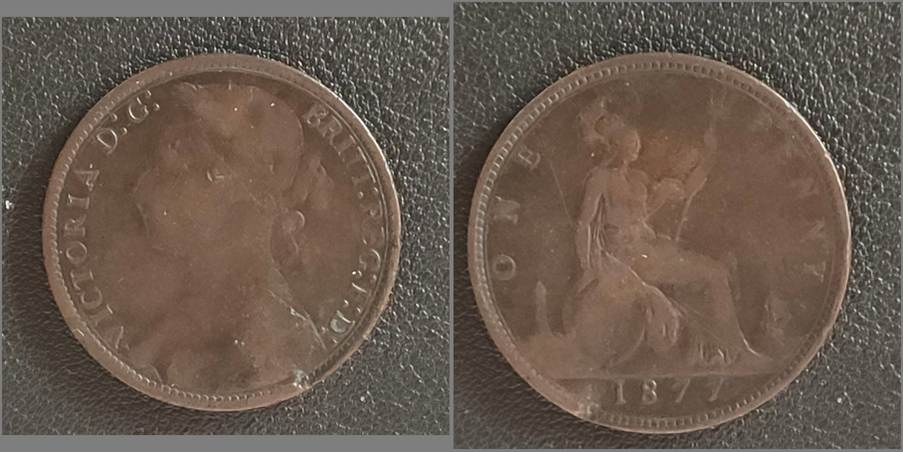
They kept on producing this design until the 1890’s, and some can be very worn
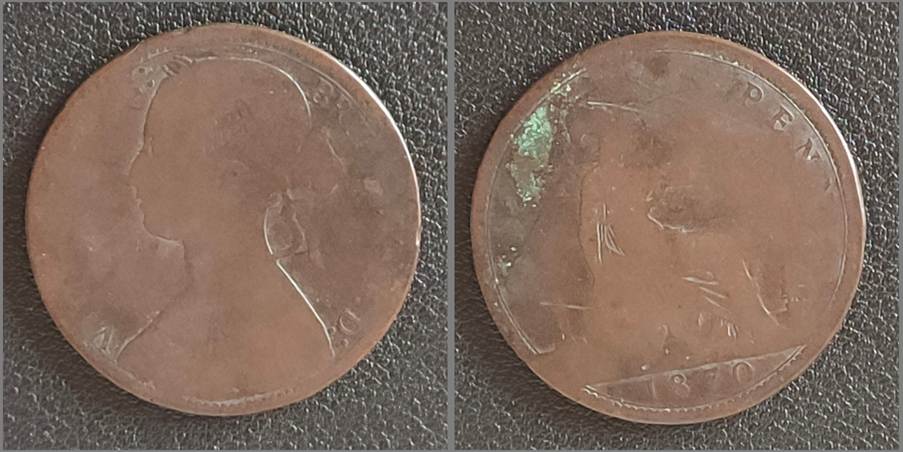
But the easiest way to tell them apart from any pre-1860 pennies is that Queen Victoria has a little rat-tail and on the rear you can usually see a date rather than the three weeds under Britannia.
This relatively unworn 1886 half penny shows the design rather more clearly, showing that her apparent rat tail is in fact a ribbon from the wreath on her head
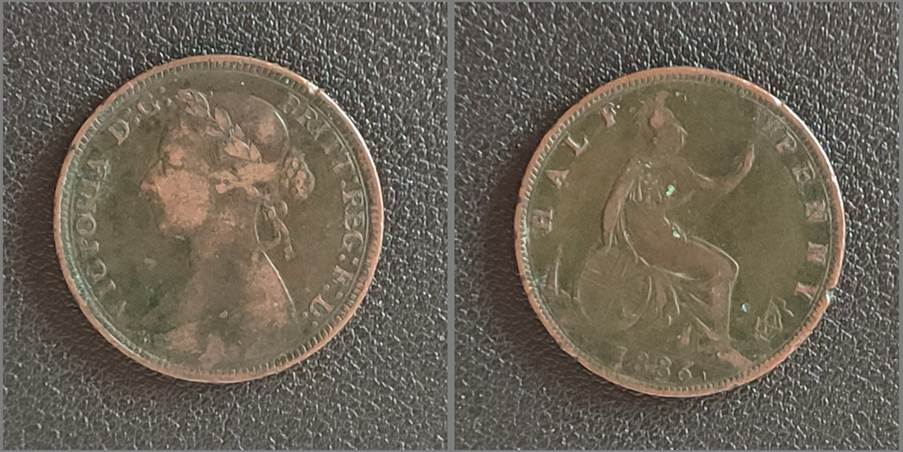
But, as we all do, Queen Victoria aged, and in 1894 the design changed to show an older, veiled Queen Victoria
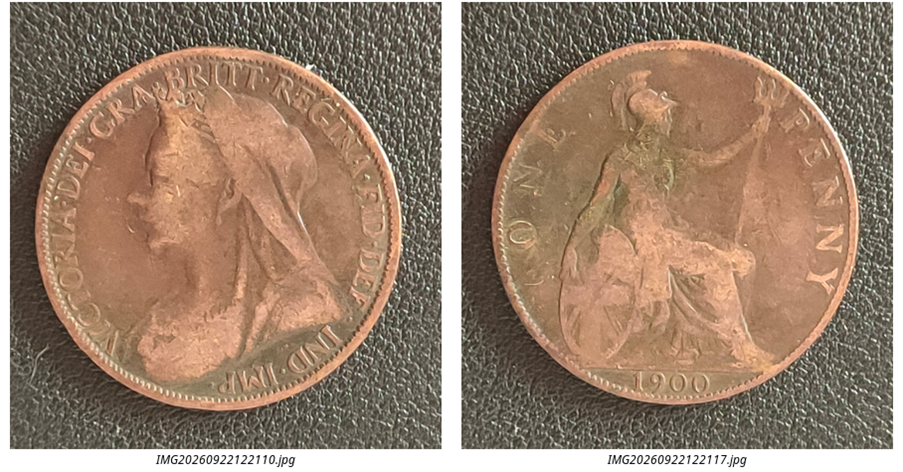
Coins from earlier monarchs are rare. In the time of George III, George IV and William IV, Australia at most consisted of the settled area around Sydney and of course Tasmania. Other than a few squatter settlements around Port Fairy, there was no Victoria, Queensland consisted of the Moreton Bay penal settlement and a few free squatters, and Adelaide and Perth simply did not exist.
It was the discovery of gold in the early 1850s that triggered the expansion of the population and hence the area of European settlement…


Pingback: More quarter annas … | stuff 'n other stuff