Self heating soup

I’ve been down an internet rabbit hole with this one.

I was reading Peter Hopkirk’s ‘Trespassers on the Roof of the World’, which summarises the adventures and misadventures of late nineteenth and early twentieth century travellers to Tibet, which for much of that time was closed to outsiders, when I came across a reference to ‘self- heating soup’.

The reference was in an account of Sir George Littledale’s expedition in 1895, and I was astounded that they had self heating soup in 1895.

So first of all I checked Google Books to check we didn’t have a transcription error

self heating soup

which was a little bit problematical as the search didn’t bring up the Littledale’s own account of the journey.

However I tracked down a searchable full text version of the Littledale’s own account of the journey and there it was

silver littledale

Silver’s self boiling soups, which are also described as self heating elsewhere in the text.

This is quite interesting as self heating cans were not supposed to have been invented until 1897 by the Russian engineer Yevgeny Fedorov, yet the Littledale’s had some self heating soup in 1895.

Unfortunately I could not trace any information about Silver’s self-heating soups, and how they worked.

I’m guessing that, like contemporary self heating cans you broke a seal allowing two chemicals to mix and generate an exothermic reaction, a bit like these disposable single use handwarmers you see for sale in ski shops.

The interesting thing is that they seem to have dropped out use.

I couldn’t find any record of any of the early twentieth century Antarctic explorers using them, but apparently Hiram Bingham used them during his expeditions in Peru around 1910.

bingham

Strangely, searching Trove, I did find an article in the Cobram Courier of 25 March 1915 on self heating cans, where they were described as a ‘new Yankee invention’, even though they had been around for almost twenty years.

Self heating soups had their heyday during world war two, when the allies issued their soldiers with cans of self heating soup. These cans worked slightly differently from current self heating cans with a compartment filled with a mixture of iron oxide and aluminium in the middle of the can, and a magnesium fuse.

Inert until the fuse was lit, the iron oxide mixture reacted to give an exothermic reaction to heat the soup.

I couldn’t find an example of a self heating soup can, but the Scott Polar Research Institute’s museum does contain two self heating cans of cocoa that work on the same principle

self heating cocoa


Posted in Uncategorized | Leave a comment

Yeddonba

Every time I drove down to Chiltern to work on the documentation of Dow’s pharmacy, I would pass a dirt road signposted to Yeddonba with a stylised hand on the road sign, and I always wondered what it led to.

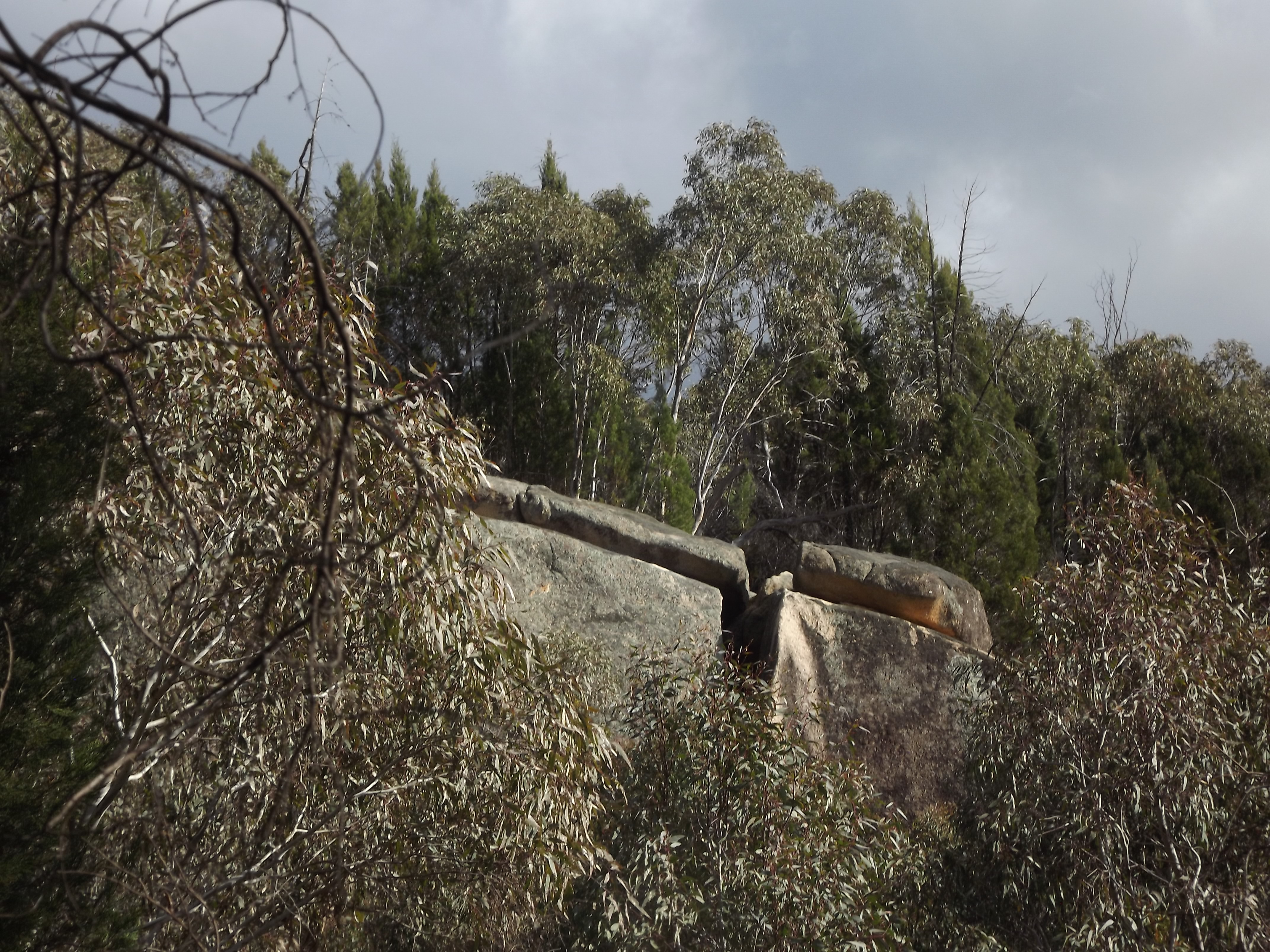
In fact Yeddonba is an aboriginal cultural site with some fairly stunning rock art.

The site is well signposted and about two and a half kilometres down a dirt road. I managed it easily in my old Subaru, so any car with decent ground clearance should be able to manage it when the road’s dry.

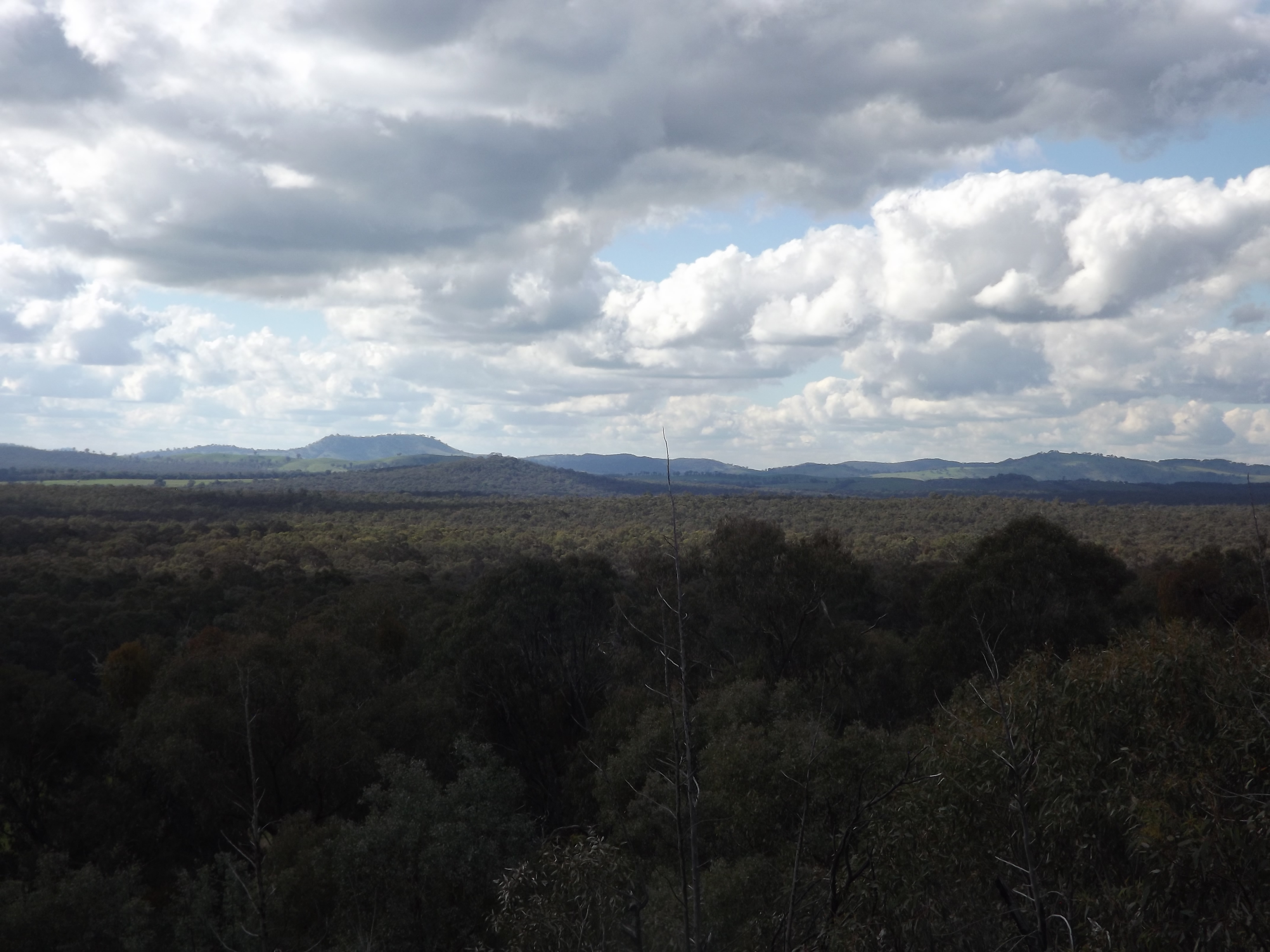
Unfortunately you can’t actually see the rock art at the moment as the wooden access walkway is closed due to weather damage, but it’s possible to bypass the walkway and with a bit of a scramble rejoin the circular walk to be rewarded with some fairly stunning views over towards the ranges

Makes a decent walk, and takes around an hour. Strange I never visited until now …

Posted in Uncategorized | Leave a comment

Owbridge’s lung tonic

Almost the last item I catalogued at Dow’s was a cardboard box containing a bottle of Owbridge’s Lung Tonic with the contents still intact.

DSCN8963

Lung tonics were common in the nineteenth and early twentieth century – in the days before antibiotics lung infections would hang on, especially in a damp cold winter, not helped by the smoke from coal fires and unregulated industrial air pollution.

Lung tonics were basically formulations to help you cough up phlegm and clear your chest, and occasionally contained something to relax you.

There were various formulations and products around, of which the most well known today is Fisherman’s Friend.

Originally a liquid tonic, Fisherman’s Friend was later thickened to make the lozenges we know today.

Fisherman’s Friends originated in Fleetwood in the North West of England, which was a major deep sea fishing port, and as an immediate hit with fishermen, who would have worked in cold wet conditions on the early steam trawlers. (I also suspect that to a man they smoked coarse pipe tobacco like bogie roll, which wouldn’t exactly have helped their respiratory health.)

Owbridge’s lung tonic was manufactured in Hull on the east coast of England. Like many nineteenth century patent medicines the bottles used were custom made and embossed with the name of the manufacturer, making them easy to identify, and usually made from a heavy glass which added to their longevity.

Hull, like Fleetwood, was a deep sea fishing port and had also been a whaling port, and like Fisherman’s Friend, Owbridge’s was popular among deep sea fishermen and whalers.

Owbridge’s disappeared in the 1960’s, and the factory has now become an apartment block, known as Owbridge Court, in Hull.

What I found particularly striking was the range of locations that Owbridge’s bottles had turned up in – Australia, New Zealand, Scotland, The USA and Canada as well as Jamaica.

Looking online, most of the bottles on sale on Ebay and Etsy are the heavy embossed pattern and seem to date from the late 1800’s and early 1900’s as opposed to the more standard screw top glass bottles used later.

I’ve already argued that the distribution of nineteenth century patent medicine bottles can be used to track increasing globalisation in the nineteenth century, the widespread distribution of Owbridge’s Lung Tonic bottles helps reinforce the point.

Posted in Uncategorized | Leave a comment

Cast marks on nineteenth and early twentieth century bottles in Australia

Nineteenth and early twentieth century Australia were perpetually short of medicine bottles. Even though Felton and Grimwade, who were originally a specialist medicine bottle importer, started bottle manufacturing in the early 1870’s, Australia was always short of bottles.

This is why quite a few early pharmaceutical bottles were embossed with something like

‘This bottle remains the property R J Higgs, Pharmaceutical Supplier’

And others would have paper labels saying that a deposit was payable if they were not returned after use.

It’s also why there was a steady trade in used bottles, or recycling as we would now call it, and indeed why during world war one and two organisations such as the boy scouts were encouraged to collect old medicine bottles for re-use.

What I didn’t realise, until recently, was that the trade in imported patent medicine bottles continued well after bottle manufacturing began in Australia.

For example, when the Fiji went down in 1891, off what is now known as Wreck Beach, as well as pianos and child’s toys, parts of its cargo included glass bottles made in Germany and destined for use by Bosisto’s.

Now when I’ve been documenting glass bottles at Dow’s I havn’t recorded any of the manufacturer’s marks on the base.

Early bottles didn’t have them, and by the 1920s all the local glass manufacturers (and there were only two or three at most) had combined to form Australian Glass Manufacturers, meaning that cast marks have relatively little value.

There were exceptions, Burroughs Wellcome tended to use their own bottles and have them embossed Wellcome or Burroughs Wellcome on the base.

But while reading about the wreck of the Fiji, the author mentions that Bosisto bottles were embossed Germany on the base.

I’m fairly certain we have no such bottles in the collection at Dow’s but it goes to show that it is worth checking manufacturers cast marks on early Australian bottles …

Posted in Uncategorized | Leave a comment

Life drawing and prurience

J, my partner in crime, is an accomplished artist.

While she does do the occasional landscape, what she really likes doing is drawing people and doing portraits.

And like everything, while innate talent helps, you have to practise, one of the exercises is life drawing, which is essentially the exercise of drawing naked people in a variety of poses to see how the body moves and changes.

And it’s not just drawing the young and lithe, the old and wobbly are just as important as subjects, perhaps more so, as being less taut their bodies change more with posture.

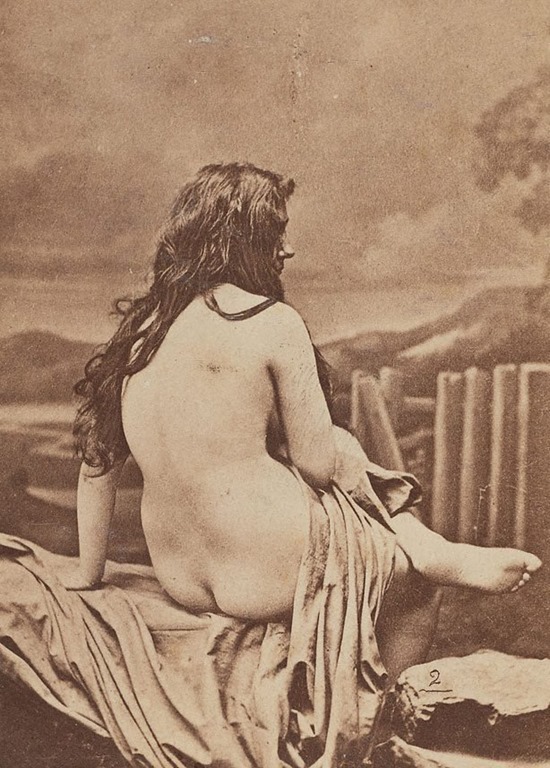
For example in this nineteenth century photograph from the Art Gallery of New South Wales, you can see how the subject’s body fat caused the body to be more solid and block like

seated woman agnsw

Despite the fact we live in a rural area, there’s actually quite a healthy life drawing scene with groups of local artists clubbing together to hire a room and a model for a couple of hours.

All good.

Of course, during the pandemic this all stopped.

And J, like other artists, turned to the web for inspiration. There are a number of websites that host collections of images for use by people practising life drawing.

The images on these are not sexy or erotic, basically they are pictures of naked people of a variety of ages, ethnicities and genders, in a variety of poses.

This actually isn’t new or innovative.

Artists have used nude photographs of models ever since they became available, as in the work of Gaudenzio Marconi, a photographer working in Paris in the 1860 and 70s, who we knew took photographs for various artists working in Paris at the time, including Auguste Rodin.

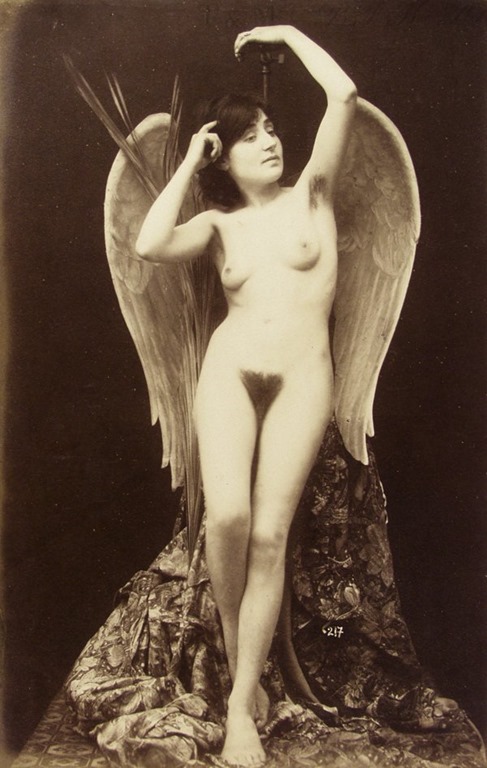
Some of Marconi’s photographs are quite arresting as in this one of a female model posing as angel

IMG_20220105_155339

I did try to find who commissioned this image, without any success, nor could I find who the model was, but using Google Lens to do a reverse image search, I did find an image on a Catalan auction site which seems to feature the same model in a less successful pose, perhaps suggesting that the artist was trying to find an image that worked.

I’m equally unsure why the image was commissioned – I’m guessing that it was for some devotional art or  a funerary monument rather than a Christmas card.

Marconi was not just a studio photographer. He was in Paris during the siege and the Commune and photographed some of the victims of both.

Back to the present day.

After the pandemic faded away, life drawing with real live humans became possible again and some of the life drawing websites shut down because they weren’t making any money, but slightly disturbingly, one of the websites that shut down said it was closing because the company hosting the site had deemed the content obscene and wished to terminate the hosting agreement.

The other thing that artists started doing was building up little collections of images such as those by Marconi, Muybridge and others, and putting them on photosharing sites.

Increasingly, they are being asked to remove these images as they are ‘not nice’.

Site owners, of course have a perfect right to change the rules as what they will and will not host.

However many of these site are run by American businesses, and there are some very strange things happening in America at the moment with the Christian right increasing in influence.

I don’t understand the ins and outs of American politics, and I’m very much of the view ‘their country, their rules’.

However, because American content hosting and sharing sites are so dominant we are at risk of importing their restrictions by default, and I think that’s something that needs discussion …


Posted in Uncategorized | Leave a comment

The Edinburgh Bristol sleeper

Earlier today I tooted about how the Scottish government had taken back control of the Caledonian sleeper from Serco. There’s an obvious parallel here with the Melbourne Adelaide train service, but that’s not my topic here.

For along time the Caledonian Sleeper was an anachronism, with elderly railcars rattling between Scotland and London depositing its unwashed passengers after an overnight journey.

Dating from a time before freeways and discount airlines it offered a way of getting from Scotland to London overnight without losing a day travelling.

When I’ve been back to the UK  I’d occasionally looked at it as a semi nostalgic way to get to Scotland from London to visit family, but the general inconvenience of the journey counted against it – no showers, unpleasantly early arrival times into Glasgow or Edinburgh, and the sheer hassle of picking up a rental car from the central train station and battling through early morning traffic were all negatives.

Since I last looked into using it, it has been upgraded to a moderately swanky tourist experience.

Now, I’ve never actually travelled on the Caledonian sleeper as was – when I was a young man and needed to get to mainland Europe from Scotland I usually got a daytime train to London, and then the overnight boat train – no Channel tunnel then – which sounded romantic, but if you were travelling economy was a fairly basic experience invariably involving a train from Dieppe to Paris at a time you’d rather not be awake.

However, I did use the Edinburgh Bristol sleeper on a few occasions. Now forgotten, it used to run, not surprisingly, from Edinburgh to Bristol via Birmingham.

Catching it to or from Birmingham, which I did several times, was bad news as it meant a midnight or thereabouts departure before being dumped in Edinburgh at about half past six, meaning you only really got about six hours sleep. Travelling the other way meant you had to get off just before six, and where possible I tried to get a daytime or evening train the night before.

However an economy sleeper ticket was more pleasant than sitting up overnight in an economy coach, which was usually some old compartment based ex-LMS coach that looked as it had last been cleaned in 1948.

If you did travel the whole way to Bristol it was better, they gave you tea and biscuits on arrival, and they didn’t chuck you off until after seven. That, and there used to be a place on the concourse that did a decent bacon and tomato roll and a cup of coffee, before getting a train on to Wales.

Coming back wasn’t too shabby either, they had a nice waiting area for sleeper passengers with a pleasant bar and you could get something half decent to eat. Unfortunately, the arrival in Edinburgh wasn’t quite so pleasant, but at least you’d usually had a decent night’s sleep.

I used to find I slept well on these old rattly railcars – while the train wasn’t the smoothest or the fastest I found the rocking motion quite relaxing, much as I found the Sunlander back in 2014.

But it’s strange. While the news is full of the Caledonian sleeper’s renationalisation, there’s very little online about the old 1980’s sleeper services, it’s almost as if they never were …

Posted in Uncategorized | Leave a comment

21st century espionage fiction

It’s no secret I like crime novels. In fact one of my favourite forms of relaxation at the end of the day is to read some decent well written crime fiction for half an hour or so before dropping off to sleep.

It can’t be any old rubbish. It has got to have a plot complicated enough to engage and well written to allow me to suspend my disbelief

Basically it has got to feel real.

At it’s best, good crime fiction tells you things, sometimes uncomfortable things, about a society and how it works.

Much the same can be said for these foreign language cop shows on SBS. They’re a society talking to itself, and in search of verisimilitude, they mention those aspects of life that are less than stellar, such as the prejudice against black Israelis and overseas guest workers in Israel, or the exploitation of illegal migrant workers in the Spanish fruit and vegetable industry.

And so it used to be with spy fiction. It had to feel real, You had to smell the dark tobacco smoke and black espresso at some meeting to make things seem real. And when I went to Budapest a few years ago I was astounded at how Keleti station was still just as shabby and atmospheric as I had imagined it.

But spy fiction doesn’t work anymore. The world’s changed. Carrying out an SQL injection attack against some unsecured foreign database from an anonymous open plan office in a building in a business park on the outskirts of Novosibirsk or Basingstoke doesn’t have the same drama as a furtive meeting in a Bucharest cafe to pass over a film cartridge containing pictures of some secret document.

There’s no atmospheric exotic scene to conjure, there’s no secret police watching – apart from the Serco guys watching the CCTV, and they’re supposed to be on your side, and at the end of the day, your paid hacker gets in their car and drives home to a microwave lasagne and a glass of wine.

Yes, obviously you could make drama there, and there have been some credible attempts to write modern spy fiction but they lack the grittiness of classic espionage fiction, and in a sense slide into crime fiction – you hacker’s partner is kidnapped in an attempt to find out who knows what about what, but many of these really play on how, quite often, the traditional authorities don’t quite understand what is going on.

Events such the Marcus Hutchins saga and Clifford Stoll’s, tracking down of a hacker don’t seem to have inspired much in the way of spy novels, perhaps because some authors are uncomfortable with explaining the technology, or even perhaps they fear that some of the technical details might be beyond their audiences.

Whatever the reason, we don’t yet seem to have a George Smiley or Harry Palmer for the twenty first century …

Posted in Uncategorized | Leave a comment

A winter walking trip

It was the end of Autumn, and one of these weekends where the garden turns from a golden symphony of reds and yellows to a mess of sodden rain soaked leaves and bare branches.

When we had gone to Apollo Bay earlier in year we had conceived the madcap scheme of walking some bits of the Great Ocean Coastal walk at the start of winter.

Yes, it’ll be cold we told ourselves, but equally the weather’s often fine then after the Autumn storms have passed.

Looking out on the wet garden the day before departure, we began to regret our ambition, but it was too late to back out now.

So, we were up before the sun, loading the car in the dark, and off by 8.30 in the morning. The weather had cleared more or less, with only the odd smirr of rain, and while cold and blowy, the sun began to peep through the clouds.

Rather than drive through Melbourne, we turned off at Broadford, and heading west via Kilmore made for Woodend, where we stopped for lunch at an unassuming but excellent cafe – more than decent coffee, and one of the best Reuben toasted sandwiches I have tasted outside of New York. J’s rather more prosaic cheese and tomato toastie was also excellent with a decent dash of a strong mustard in with the tomato.

Then on to Geelong heading down through Gisborne and Bacchus Marsh on a stretch of road that seemed to go on forever, and we then followed the upgrade Princes Highway to somewhere west of Winchelsea, where we turned off to Birragurra.

When we had come down in March, there had been diversions, road closures and endless roadworks, but this time we reached Birragurra without any detours, only to find ourselves detoured after Birragurra, with various roadworks on the way through the Otways to Skenes Creek. And the rain came back in great pelting winter squalls to add to the fun.

We had planned to be at the Food Works in Apollo Bay for three or just after but we ended up reaching Apollo Bay just before four.

Supplies bought, we set off on the final rain soaked seventy or so kilometres to our remote destination – the owners had warned us that we needed to bring everything – hence the stop to stock up in Apollo bay. We were conscious that the light would begin to go just after five and we finished the journey in the dark.

Fortunately, the owners had left the heating on and an outside light making finding it and unloading a relatively straight forward exercise.

A couple of glasses of wine, a veggie pasta and an early night, and we were fine.

The next morning we woke to howling rain screaming in off the southern ocean. Other than a family of kookaburras hiding in a tree on the edge of the property there was no life to be seen at all. No seabirds, no parrots, no cockatoos, zilch.

We had our own problems, we discovered we’d forgotten to bring any ground coffee. Fortunately the owners had provided a nespresso machine and a complimentary box of capsules, so while I’m not a fan of capsule machines, thinking them wasteful and the coffee poor quality on the whole, for once I put up with them.

says it all

Around lunchtime the weather cleared and we walked down to Moonlight Head in the hope of perhaps seeing an early season migrating whale, but no, no such luck. As we got back to our unit it began to spit with rain suggesting that the rest of the day was probably going to be tea, biccies, and books …

rainy tuesday

And yes, it seriously rained and blew a gale for most of the night, meaning after a tuna bake and a glass of pinot noir for dinner,we curled up and read books. While there was TV in the unit, we could only get the standard broadcast channels, and nothing appealed, meaning an early night..

By sunrise the next morning, the rain had gone but the trees were still being whipped by the wind, but gradually the wind began to ease, and by mid morning it was simply blowy, rather than a full on gale.

So we set off to Princetown with the intention of following the walking track maybe as far as Clifton beach. In the end we didn’t quite get there but had a pleasant few kilometres of up and down, at first across the boardwalk across the reedbeds and then an extended walk through dense scrub, which while it meant we couldn’t see anything, sheltered us from the wind.

We got as far as Brown Mountain (perhaps a kilometre short of Clifton Beach) before turning back to have a pleasant break on a clifftop overlooking the sea, then back to the car.

We then drove down to Port Campbell for a late lunch, and then played tourists for a bit stopping off at the Twelve Apostles and Gibson’s steps, before heading back to the unit for a cup of tea and some diary writing while watching rain squalls zip over the ocean.

That night, the wind came back and it rained heavily again. We woke to a grey dawn, enlivened by a group of three or four kangaroos grazing on the grass in front of the unit. Having lived in a bush suburb in Canberra it wasn’t exactly an unusual sight to us, but it was a reminder that there was wildlife out there, especially if one got out early enough to look…

After some humming and hawing we decided to try the Wreck Beach walk. Having checked the tides, we reckoned we had a chance of being able to see the anchors of the Fiji and Marie Gabrielle, but no chance, the wind was pushing the waves onto the beach making it foolhardy to even venture down onto the beach. The surge was even worse than when we had tried in 2018, so as in 2018, we had a walk through the scrub to Gable Head and some dramatic views of the surging sea.

gable head june 01

Unlike previously, we walked down the dirt road from the Gable Head car park to the Moonlight cemetery under the misapprehension that the victims from the wrecks were buried there. Wrong! the cemetery only opened in 1901 meaning the grave sites are elsewhere, most probably close to the monument to the wreck of the Fiji that is now buried in bush above the wreck site and almost impossible to access – Parks Victoria are building a spur off the clifftop section of the Great Ocean walk, and clearing and refencing the site but as yet there’s no access as such. Hopefully it’ll be a quite reflective place like the Ly-ee-moon site at Green Cape.

Then back along the track to the car park and back to the car and the unit for a late lunch. On the way back to the car the clouds parted for a moment and we had a glorious sunlit view of the surging sea, but then the clouds came in with a hint of rain, suggesting that perhaps games were off for the rest of the day.

The next morning we checked out and drove to Port Fairy, meandering gently with a picnic lunch at Peterborough and stopping to take photos at the Bay of Martyrs and the little visited Childers cove. The sea was still wild and wind driven, and the temperature was only just in double figures.

We’d planned for a walk out to the island, but the cloud was thickening an threatening rain so we wimped out after checking into our motel, and instead drank tea and went for a wander round the town.

That night we went to Blake’s restaurant in town. We’d promised ourselves a decent meal out as a reward for actually doing this mad thing, and Blake’s certainly did not disappoint.

Saturday, and we woke to heavy rain. Breakfast at Bank St &Co – a little too egg fixated for my taste so I settled for fruit toast and a coffee – and then a long drive cross country trying to avoid driving through any major cities and Saturday traffic, so we drove via Terang and Skipton to Beaufort to take the freeway to Ballarat and then cut off cross country again via Daylesford and Woodend to join the Hume freeway heading north. It rained until we reached Beaufort and then cleared to a lovely sunny winter’s day.

Lunch was in Creswick – we’d planned to avoid stopping in trendy Daylesford or Trentham where we expected there would be a lot of competition for tables anywhere decent.

Unfortunately when we got to Creswick it was just after 12.30 and, being country, cafes were closing up. However we had a pretty good lunch at Meg’s Place, which seemed to be the only place open in town – avocado and bacon on toast (D) cheese ham and tomato toastie (J). We’d been there before, before the pandemic, when it was called something else and the management was different.

It was a slightly odd experience – the furniture and the counter were the same, but somethings had gone and other things had replaced them, but the food was good and the coffee was decent, and it did the job.

Then home, arriving after sunset to a beautiful clear moonlit night. We’d bought a home style lasagne that morning in Port Fairy that morning and stuffed it in our esky for the dive home. It was still cold so dinner was lasagne and a couple of glasses of red. An excellent end to an excellent trip.

Posted in Uncategorized | Leave a comment

Another legacy of nineteenth century migration

A long time ago I went down an internet rabbit hole while researching the use of Linux in education in Latin America, and instead came up with something else entirely – a story of the legacy of Anglo Irish migration to Latin America in the 1800s.

Well today I’ve just come across something similar.

A news article I was reading about inflation in Argentina was illustrated with a picture of the new 2000 peso banknote

Like many banknotes around the world it has images of historical personages on it, usually ones who are conveniently dead.

I noticed that one of the pictures was named as Cecilia Grierson, which is not a Spanish name, but one that screams ‘Scottish heritage’.

Cecilia Grierson was in fact a pioneer of women’s health and the first woman in Argentina to graduate from medical school.

She graduated from Buenos Aires medical school in 1889. To give that context the date is a little before Iza Coghlan and Grace Robinson, the first women to graduate in medicine from the University of Sydney, and five years before Marion Gilchrist became the first women to graduate from medical school in Scotland.

All these women were strong characters. Some were active feminists, some were not, but all campaigned for improvements in healthcare.

And it is important to realise that they were all part of a movement towards women’s emancipation around the world.

Historians have an understandable tendency to focus on the Anglophone world. But by doing so we tend to forget that one of the legacies of the large scale migration from Europe in the nineteenth century, was not just the movement of people, but also the spread of ideas.

Posted in Uncategorized | Leave a comment

John Harvey of Caithness (or not)

This morning, when I was scrolling through my RSS feeds, I came across an article on the ABC website, about how John Harvey, one of the founders of Salisbury in South Australia had African heritage, yet had been born in Wick in Caithness way up in the north of Scotland.

My first question was why would a person of African heritage be born in Wick?

Given that he was said to have migrated in 1839 at the age of 18, he would have been born in 1821 or thereabouts, something which should be reasonably easy to check.

And then I came across a problem. If you search Scotland’s People, there are 25 John Harveys (or Harvies) born in the period 1820 – 1822 but none were born in Caithness.

So, why the connection?

My guess is that he indeed spent most of his early life in Caithness, and may genuinely have thought he was born there, but was in fact born somewhere else.

And of course, the sugar trade is probably the answer.

One of my distant ancestors, Robert Fairweather, was born in humble circumstances in Stracathro in Angus. He was obviously clever and somehow got noticed and ended up as a planter’s attorney in Jamaica.

He had a mixed race partner, who was probably the result of a liaison between a European person and an African person. The convention was that the offspring of such unions were acknowledged by the father, and that daughters were considered free and often had reasonable dowries (Miss Lambe in Jane Austen’s Sanditon would be an example)

Robert Fairweather’s partner had the rather Scottish sounding name of Catherine Allen, suggesting that her father was Scottish.

John Harvey sound like a typical Caithness name and there were certainly Harvey’s involved in the sugar trade, and by extension slavery, but most of them seem to have come from Aberdeenshire and worked in Grenada.

However, the will of one of the Grenada Harveys shows how things worked:

After various bequests to (white) family members comes the following

Also that a mulatto boy named David and two mulatto girls named Sally and Rachel may be bought from the estate of Josiah Marten Esquire and made free. A negroe boy and a [?] negroe girl be bought and given to each of them, the boy to David and the girls to Sally and Rachel. The boy to work on trade and the girls to be made shempstresses to help to support the said David, Sally and Rachel. David put to learn any trade and the girls Sally and Rachel bound to some good school mistress of good reputation to learn to be shempstresses and milliners and that they should also be taught to read and write and do every thing necessary about housekeeping, that they may be fit for service to gain their livelihood with ease. The expense of their education to be paid by my executors out of their division of my estate at Antigua and £20 currency be allowed each of them annually to keep them in clothes until they are able to so for themselves. £500 currency to each of the girls if they should behave well and be married to a free white man or a free mulatto.

(will of John Harvey, Antigua https://www.ucl.ac.uk/lbs/person/view/2146639897)

So where there’s one Harvey who was successful, there could be others who did not become estate or slave owners, and  who lived and worked in Jamaica.

And I am guessing, and it is only a guess, that the John Harvey who migrated to South Australia in 1839, had been sent to Wick, or been brought to Wick by his father, to learn a trade, and had then migrated.

By 1839 slavery had been abolished, but I suspect that he had been born free in the West Indies and brought to Scotland at an early age.

Update

I didn’t know what a shempstress or sempstress was – it’s an archaic word for seamstress. In a world where all clothes were hand made, someone who could sew and sew well would never lack work…

Posted in Uncategorized | Leave a comment